Vranduk Fortress
Tvrđava Vranduk
Bosnia · Zenica-Doboj Canton, Bosna River gorge, between Zenica and Maglaj · Near Zenica
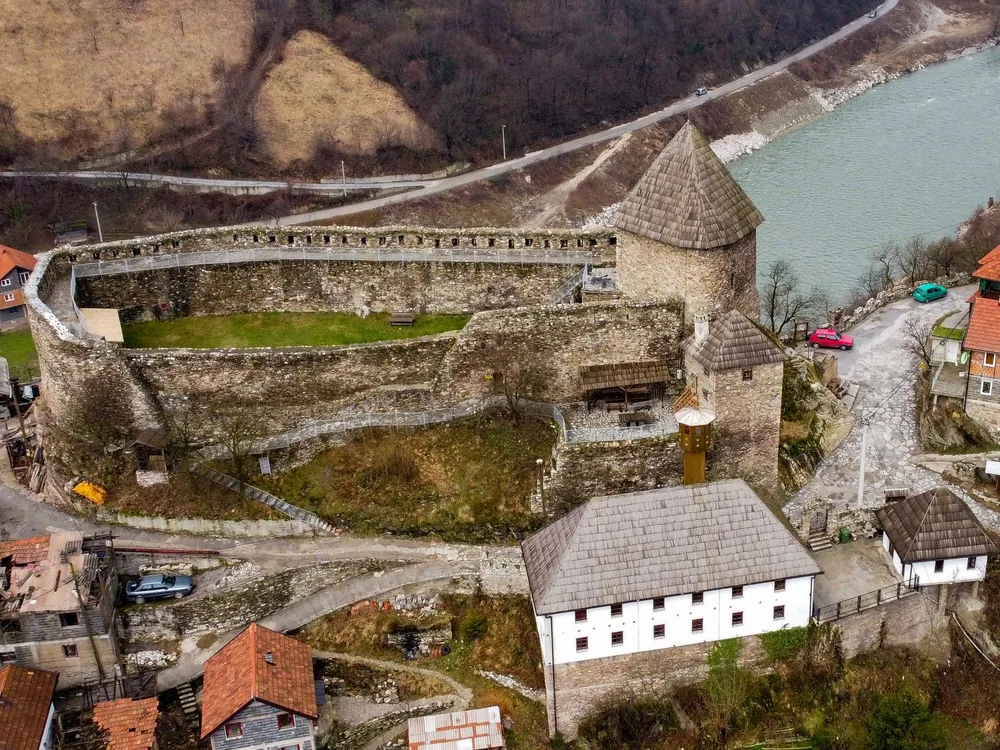
Built 1390 · Medieval Bosnian royal fortress — compact curtain-wall enclosure following the natural contour of a limestone rock spur above the Bosna River; the walls reach their greatest height on the riverside face, where the cliff below provides the natural outer defense; surviving fabric includes portions of the original curtain wall, tower remnants at the corners, and the main gate structure; the fortress interior is small, reflecting its primary role as a defended royal residence and gateway post rather than a major garrison installation; the settlement below the walls (historically known as 'sotto Vranduch') is the location of the diplomatic and mercantile activity recorded in 15th-century Bosnian and Venetian documentary sources; restored 1999–2005 under the national monument conservation programme
This page is part of an independent travel guide and is not affiliated with, endorsed by, or operated by Vranduk Fortress.
© Castles & Palaces
Quick Facts
- Hours
- Daily 09:00–17:00
- Guided tour from
- €116
- Duration
- 1–1.5 hours (fortress and gorge views); 12 hours (GetYourGuide full Bosnia castle circuit including Tešanj and Srebrenik)
- Best time
- April to October
- Nearest city
- Zenica
Featured Tour
Sarajevo: Vranduk, Tešanj & Srebrenik — Bosnia's Medieval Fortresses (Full Day)
Cancellation available · Instant confirmation
Highlights
- ✦The Bosna River gorge setting — the fortress occupies a rock spur at the exact point where the Bosna River narrows most sharply between limestone cliffs; the medieval road through central Bosnia ran directly below the walls, making this a gateway that controlled all north-south movement through the valley
- ✦Residence of King Stjepan Tomaš — one of the last independent rulers of the medieval Bosnian kingdom (r. 1443–1461), Tomaš used Vranduk as both a residence and a diplomatic hub; Venetian documents refer to 'sotto Vranduch' as the settlement below the walls where the king received foreign delegations
- ✦First documented in 1410 — the earliest written reference appears in a letter from King Ostoja; the fortress almost certainly predates this, given the gorge's obvious strategic value, but the medieval Bosnian documentary record is sparse enough that the 1410 reference is the earliest surviving evidence
- ✦National Monument of Bosnia and Herzegovina (2005) — designated after the 1999 rediscovery and conservation project that stabilized the surviving walls and made the site accessible; the restoration is one of Bosnia's most significant medieval heritage conservation efforts
- ✦GetYourGuide 12-hour Bosnia castle circuit — the only tour covering all three central Bosnian medieval fortresses: Vranduk, [Tešanj Castle](/castles/bosnia/tesanj-castle), and [Srebrenik Fortress](/castles/bosnia/srebrenik-fortress), with drone video and all entrance fees included
Skip the queue with a guided tour
Skip-the-line tickets & expert guides
Vranduk Fortress sits on a rock spur where the Bosna River narrows into one of the most constrained gorges in central Bosnia — the limestone cliffs pressing in from both sides until the river has almost no room, and the road that once ran through the valley had no alternative path except directly beneath the fortress walls. This geography made Vranduk a gateway in the strict sense: not a place you could route around, but a chokepoint that whoever held could close at will. Every caravan, every diplomatic mission, every military column moving between the northern Bosnian lowlands and the kingdom's heartland in the south passed through this gorge, within range of the walls above.
The first written record of the fortress appears in 1410, in a letter from King Ostoja of Bosnia. But the fortress almost certainly predates this reference by a generation or more: the gorge's military value was too obvious to have been overlooked before the 15th century, and the documentary record of medieval Bosnia is thin enough that absence from surviving written sources says nothing reliable about when building began. The parish of Brod, one of medieval Bosnia's seven administrative župas, encompasses the Vranduk area, and by the early 15th century the whole of this Bosna valley stretch was organized under royal Bosnian administration.
The period of the fortress's greatest documented significance came under King Stjepan Tomaš, who ruled the medieval Bosnian kingdom from 1443 until his death in 1461. Tomaš used Vranduk as a residence — one of several royal castles he moved between — and as a center for diplomatic activity. Venetian documents of this period refer to the settlement below the fortress as 'sotto Vranduch': a small town or village below the walls where the king received foreign delegations. Representatives from Venice, Ragusa (Dubrovnik), Hungary, and the papacy all passed through here during Tomaš's reign, the international community of the mid-15th century conducting business in the shadow of the gorge walls. The records of these encounters — letters, treaty documents, trade agreements — constitute some of the most detailed surviving evidence of how the medieval Bosnian kingdom functioned at the highest level in its final decades.
Those final decades were overshadowed by the relentless Ottoman advance through the Balkans. The fall of Constantinople in 1453 had restructured the eastern Mediterranean's political geography overnight, and the Ottoman pressure on Bosnia — always present but previously manageable through tribute and diplomacy — became existential. Stjepan Tomaš's son and successor, Stefan Tomašević, tried and failed to secure decisive military support from the papacy and the Hungarian kingdom. In 1463, Ottoman forces under Sultan Mehmed II conquered Bosnia in a campaign of weeks. Stefan Tomašević was captured and executed. Vranduk passed from royal Bosnian into Ottoman administration, and the medieval kingdom that Stjepan Tomaš had received foreign ambassadors beneath its walls ceased to exist.
Under Ottoman control, the fortress served as a military post for a generation or more, but its strategic significance declined as the Ottoman administrative system consolidated northern Bosnia and the old gorge road's importance shifted. The fortress was eventually abandoned to weather and time — not deliberately demolished but left to collapse under the weight of neglect, overgrown by vegetation, its walls slowly losing structure as mortar failed and stones shifted. By the 19th and 20th centuries, the site was substantially ruined and largely unknown outside the immediate area.
The rediscovery came in 1999, when archaeological work at the site revealed the extent of surviving fabric beneath centuries of growth and collapse. A national conservation project followed, supported by Bosnia and Herzegovina's cultural heritage institutions; the site was formally declared a National Monument of Bosnia and Herzegovina in 2005. The restoration work stabilized surviving walls, cleared the grounds, and established visitor access — the Vranduk of today, with its restored curtain walls above the gorge and the Bosna River visible directly below, is a direct result of this conservation programme.
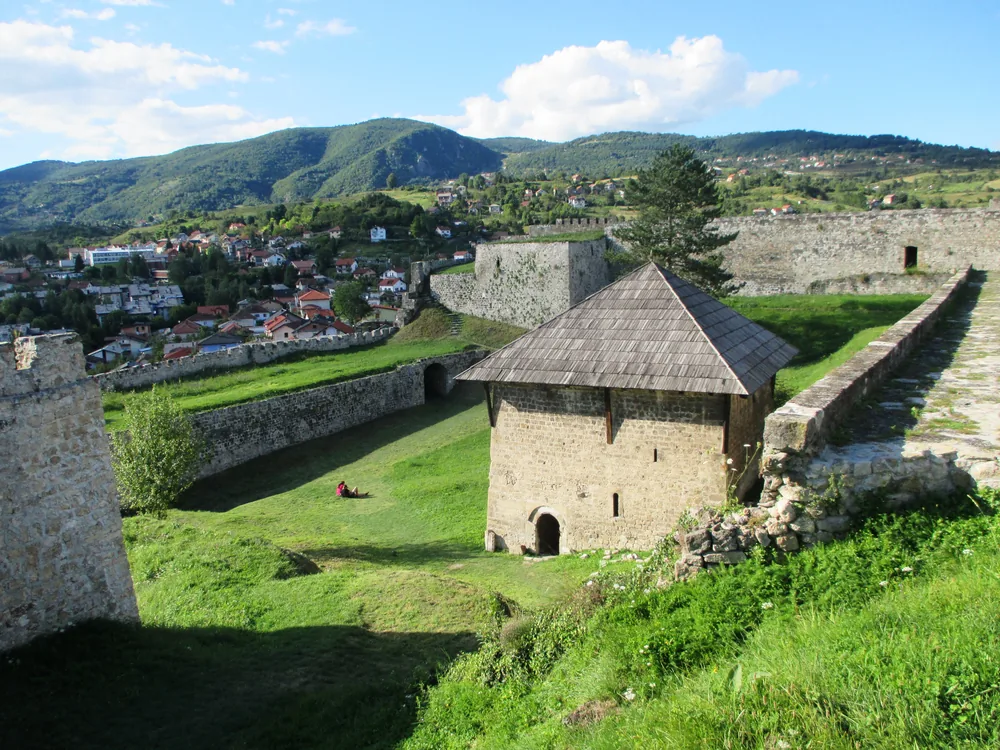
The fortress itself is compact by the standards of major medieval fortifications: a curtain wall following the rock spur's contour, tower remnants at the corners, the outline of the main gate preserved, and the footprint of the royal buildings that stood inside. The gorge view from the walls is the defining experience of the site — the river channeled tightly between the limestone faces below, the opposite cliff rising at almost the same height as the fortress walls, the sense of having found the precise point where the valley was most vulnerable to control. 'Sotto Vranduch' — the diplomatic settlement that once hummed with Venetian merchants and Hungarian ambassadors — has left almost no trace below the cliff; the medieval kingdom that gave it life survived only thirteen years after Stjepan Tomaš's death.
For central Bosnia's other medieval fortifications: [Tešanj Castle](/castles/bosnia/tesanj-castle), approximately 30 kilometres northeast, is the fortress that repelled Prince Eugene of Savoy's 1697 army — the same campaign that destroyed Sarajevo — and still rises above a living Ottoman-era bazaar. [Srebrenik Fortress](/castles/bosnia/srebrenik-fortress), in Tuzla Canton to the northeast, occupies one of the most dramatically sited clifftop positions in the Balkans, accessible only by a stone bridge across a deep artificial trench. The GetYourGuide 12-hour circuit covering all three (private group, drone video, all entrance fees included) remains the most substantive medieval history day trip available from Sarajevo.
History
At the narrowest point of the Bosna River gorge, where the limestone cliffs press in on both sides until the medieval road had almost no room to pass, the lords of the Bosnian kingdom built Vranduk Fortress in the late 14th century. The position was a gateway in the literal sense: anyone moving through central Bosnia by road had to pass directly beneath the fortress walls. The first written record comes from a 1410 letter by King Ostoja of Bosnia — by which time the fortress was already established enough to appear naturally in royal correspondence.
Vranduk reached its most politically active period between 1443 and 1461, when King Stjepan Tomaš used it as a royal residence and diplomatic hub. The settlement below the walls, known in Italian commercial records as 'sotto Vranduch,' served as a staging area for foreign delegations — a detail that suggests the fortress functioned not only as a defensive position but as a carefully managed point of access to the Bosnian court.
The Ottoman conquest of 1463 ended this chapter abruptly. Stefan Tomašević was captured and executed; Vranduk passed to Ottoman military administration and gradually fell from active use. Centuries of abandonment left the gorge fortress in a romantic ruin state that attracted archaeological attention only in the late 20th century. A conservation project launched in 1999–2000 led to its declaration as a National Monument of Bosnia and Herzegovina in 2005, and subsequent restoration work on the surviving walls has established visitor access to what remains one of the most dramatically positioned medieval fortresses in the country.
How to Visit
Getting there: Vranduk is approximately 80 km north of Sarajevo by car (1 hour 20 minutes via the M17, following the Bosna River valley through Visoko and Zenica). Local buses from Zenica reach Vranduk in about 20 minutes. Park at the base of the rock spur and climb the access path to the walls.
Tickets: Adult €2, child €1. Tickets collected at the site — no advance booking needed. The GetYourGuide "Sarajevo: Vranduk, Tešanj & Srebrenik — Bosnia's Medieval Fortresses (Full Day)" covers Vranduk alongside Tešanj Castle and Srebrenik Fortress in a private 12-hour circuit from Sarajevo, with all entrance fees, lunch, and drone video included.
Practical tips: Allow 1–1.5 hours on site. The gorge view from the curtain walls — the Bosna River channeled tightly between limestone cliffs directly below — is the defining experience. The access path involves steps and uneven stone; not suitable for visitors with mobility limitations. The drive from Sarajevo along the Bosna River valley is itself scenic.
Combine with: Tešanj Castle is 30 km northeast and pairs naturally in the same day as part of the Bosnia medieval fortress circuit. Srebrenik Fortress completes the trio for those doing the full central Bosnia itinerary.
Frequently Asked Questions
Vranduk controlled the Bosna River gorge's narrowest point — the only road through central Bosnia ran directly below its walls, making it a gateway fortress that could close north-south movement through the valley. Beyond its strategic position, the fortress was used by King Stjepan Tomaš (r. 1443–1461) as a royal residence and diplomatic hub, where foreign delegations from Venice, Ragusa, Hungary, and the papacy met with Bosnian kings. Venetian documents refer to the settlement below the walls as 'sotto Vranduch' — the place where medieval Bosnia met the international community in its final decades of independence.
Location
Vranduk 1, 72233 Vranduk, Bosnia and Herzegovina
Nearby Castles
Tours & Tickets
Powered by GetYourGuide
From
€116/ person