
Balchik Palace
Дворецът в Балчик (Dvoretstǎt v Balchik)
Bulgaria · Dobrich Province · Near Balchik
Built 1924 · Eclectic (Art Nouveau / Bulgarian National Revival / Ottoman)
This page is part of an independent travel guide and is not affiliated with, endorsed by, or operated by Balchik Palace.
© Castles & Palaces
Quick Facts
- Hours
- Daily 08:00–20:00
- Day trip from
- €70
- Duration
- 2–3 hours
- Best time
- May to September
- Nearest city
- Balchik
Featured Tour
Balchik Palace & Kaliakra Fortress — Day Trip from Varna
Cancellation available · Instant confirmation
Highlights
- ✦Palace built 1924–1931 for Queen Marie of Romania on the Bulgarian Black Sea coast
- ✦Bulgaria's oldest botanical garden (3 hectares of cactus, rose, and water-lily collections)
- ✦Eclectic architecture blending Art Nouveau, Bulgarian National Revival, and Ottoman motifs
- ✦Teketo wine cellar and chapel embedded in the cliff above the sea
- ✦Queen Marie's heart was kept here per her final wish — the most romantic instruction in Bulgarian history
Skip the queue with a guided tour
Skip-the-line tickets & expert guides
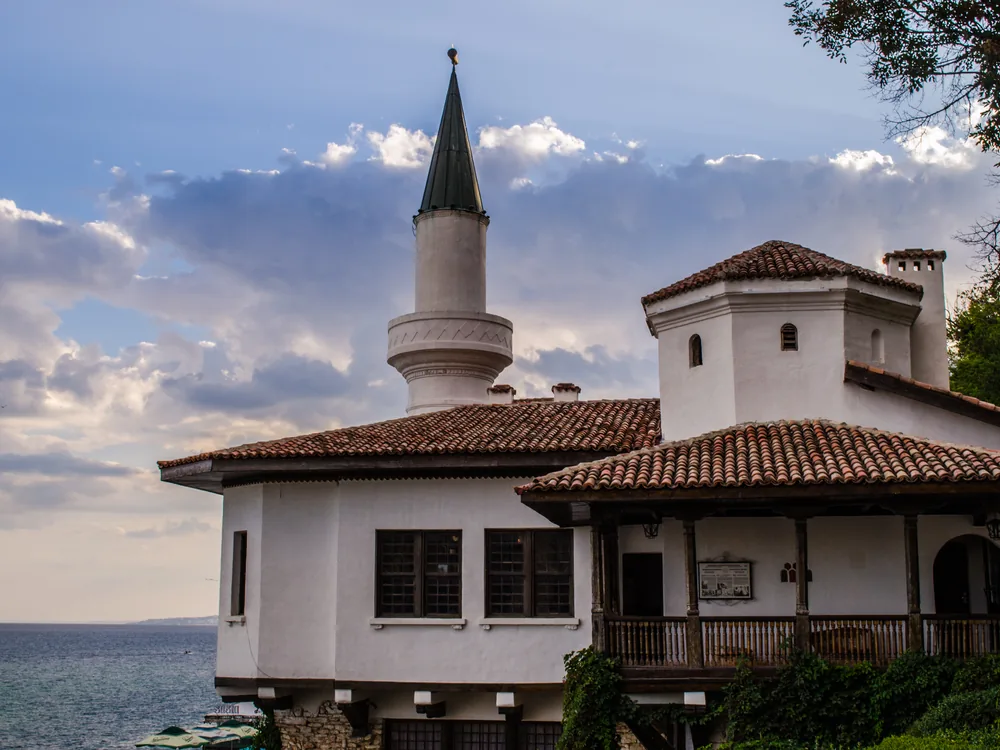
On a terraced hillside above the Black Sea at Balchik, a small white villa looks out over the water with the modesty of a Mediterranean farmhouse and the ambition of a queen's dream. This is Balchik Palace — the summer residence built between 1924 and 1931 for Queen Marie of Romania, one of the most remarkable women in early twentieth-century European royalty — and the setting, the story, and the gardens that surround it make it the most distinctive palace on Bulgaria's Black Sea coast.
Queen Marie was remarkable by any standard: born an English princess in 1875, granddaughter of both Queen Victoria and Tsar Alexander II of Russia, she married Crown Prince Ferdinand of Romania in 1893 and became Queen when he ascended the throne in 1914. Charismatic, politically shrewd, and passionately invested in Romania's interests at the post-First World War peace conferences, she also had a genuine artist's eye — she wrote memoirs, designed interiors, and collected with eclectic taste.
She first visited Balchik in 1924, when the town was part of Southern Dobruja, a territory Romania had acquired from Bulgaria after the Second Balkan War. She fell in love immediately with the setting — the dramatic limestone cliffs, the clarity of the Black Sea light, the productive vineyards on the terraces above — and commissioned a complex that grew over the following years to include the main villa, a chapel, a wine cellar (the Teketo, embedded in the cliffside), several auxiliary villas, and the botanical garden that remains Bulgaria's oldest, planted with collections of cacti, roses, water lilies, and exotic species from around the world.
The palace's architecture defies easy categorisation. The main building is a modest white two-storey villa — Marie expressly rejected grandeur, calling it a 'small palace' — with eclectic details drawn from Art Nouveau, Bulgarian National Revival, and Ottoman sources. A minaret rises behind the chapel, not as a functional tower but as an aesthetic gesture toward the landscape's layered cultural history. Every room faces the sea.
Marie died in 1938. In 1940, under the Treaty of Craiova, Southern Dobruja was returned to Bulgaria — and the palace along with it. Her heart, which she had requested be kept at Balchik, was eventually removed and returned to Romania. The botanical gardens continued under the care of Sofia University and are now the main draw for the 260,000 visitors who come each year.
History
Southern Dobruja, the coastal territory where Balchik sits, was awarded to Romania after the Second Balkan War of 1913, ending centuries of Ottoman rule and a brief Bulgarian period. Queen Marie of Romania arrived in Balchik for the first time in 1924 and immediately began acquiring land and commissioning buildings. The palace complex was constructed in phases between 1924 and 1931, growing from the main villa to include chapels, guest villas, the cliffside Teketo wine cellar, and the botanical garden that Romanian botanists began planting on the terraced hillside. Marie died in 1938, leaving instructions that her heart be preserved in a golden casket at Balchik — a wish honoured briefly until the Treaty of Craiova in September 1940 transferred Southern Dobruja back to Bulgaria under German and Italian pressure. The heart was removed and the complex passed into Bulgarian state hands. After the Second World War, Sofia University took stewardship of the botanical garden, which continued to develop into the institution it is today. The palace buildings were restored and opened to visitors, and Balchik has become one of Bulgaria's most visited heritage sites.
How to Visit
Getting there: Balchik is on Bulgaria's northern Black Sea coast, approximately 40 km north of Varna. By car from Varna, take the E87 coastal road north — about 45 minutes. Regular buses connect Varna bus station with Balchik (journey time ~1 hour); check Etap-Group or Union Ivkoni schedules. The palace complex is signposted from the centre of Balchik and is a short walk or taxi ride from the bus stop.
Tickets: Entry to the palace complex costs approximately €7 for adults and €3 for children, payable at the entrance. Tickets to specific rooms inside the main palace may be purchased separately. A GetYourGuide day trip from Varna combines Balchik Palace with Cape Kaliakra Fortress in a single organised excursion — a practical option for visitors without a car.
Practical tips: Allow 2–3 hours for the full complex including the botanical garden — the garden sections alone take an hour at a comfortable pace. The wine cellar (Teketo) embedded in the cliff is a highlight not always included in general admission; confirm access at the ticket desk. The palace is most photogenic in morning light. Summers are warm and sunny; a hat and water are recommended for the garden areas. The complex is open year-round but the botanical garden is at its most spectacular in May and June.
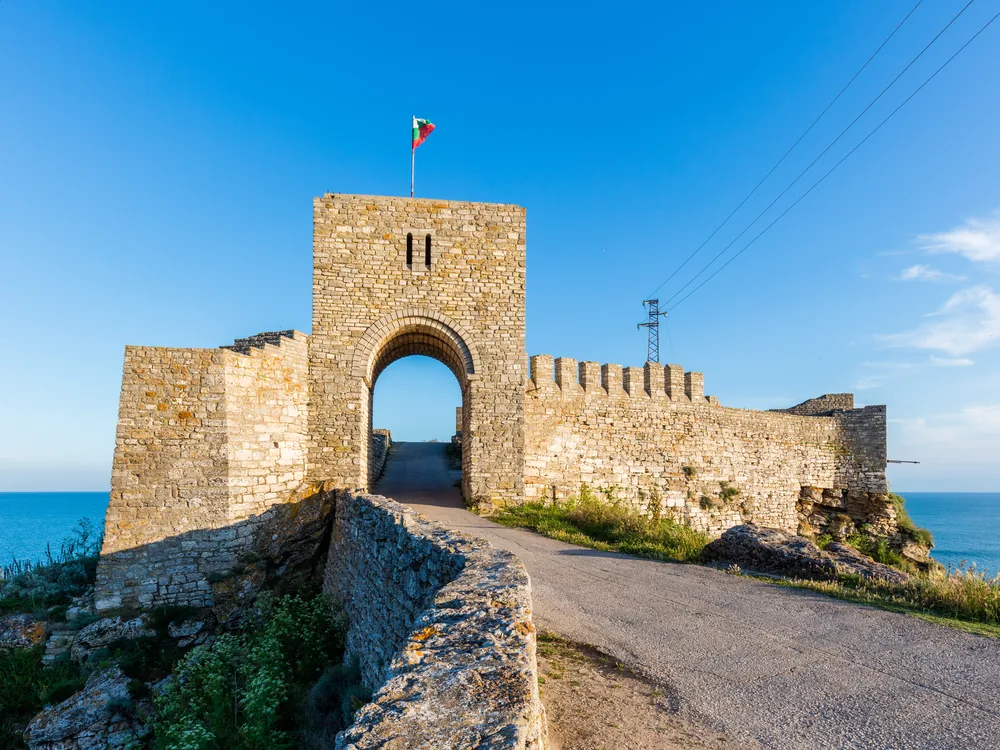
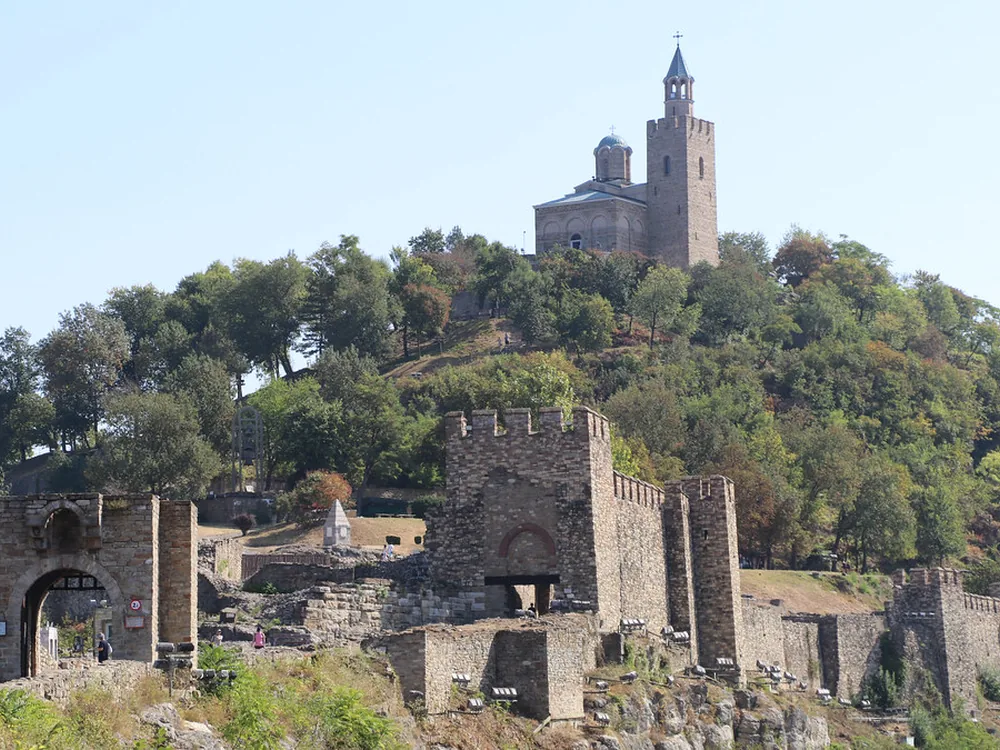
Combine with: Kaliakra Fortress (~12 km east along the coast — the clifftop Byzantine and medieval fortress at Cape Kaliakra, with the legend of the 40 maidens, views over the Black Sea, and one of Bulgaria's most important nature reserves; the GetYourGuide day trip from Varna covers both sites together) or Tsarevets Fortress (~130 km southwest in Veliko Tarnovo — the medieval capital of the Second Bulgarian Empire, a dramatically reconstructed fortress on a hilltop above the Yantra river bend).
Frequently Asked Questions
Queen Marie died in 1938 and left instructions that her embalmed heart be kept in a golden casket at the palace chapel in Balchik, which she had loved deeply. Her wish was honoured briefly, but in 1940 the Treaty of Craiova transferred Southern Dobruja (including Balchik) back to Bulgaria, and the heart was removed and returned to Romania — where it is now kept at Pelișor Castle in Sinaia. The chapel at Balchik remains, and the story of the heart has become the most romantic footnote in Bulgarian-Romanian diplomatic history.
Location
Dvoretsa Palace Complex, 9600 Balchik, Dobrich Province, Bulgaria
Nearby Castles
Tours & Tickets
Powered by GetYourGuide
From
€70/ person