
Kaliakra Fortress
Крепостта Калиакра (Krepostta Kaliakra)
Bulgaria · Dobrich Province · Near Kavarna
4th century BC · Thracian / Byzantine / Medieval Bulgarian
This page is part of an independent travel guide and is not affiliated with, endorsed by, or operated by Kaliakra Fortress.
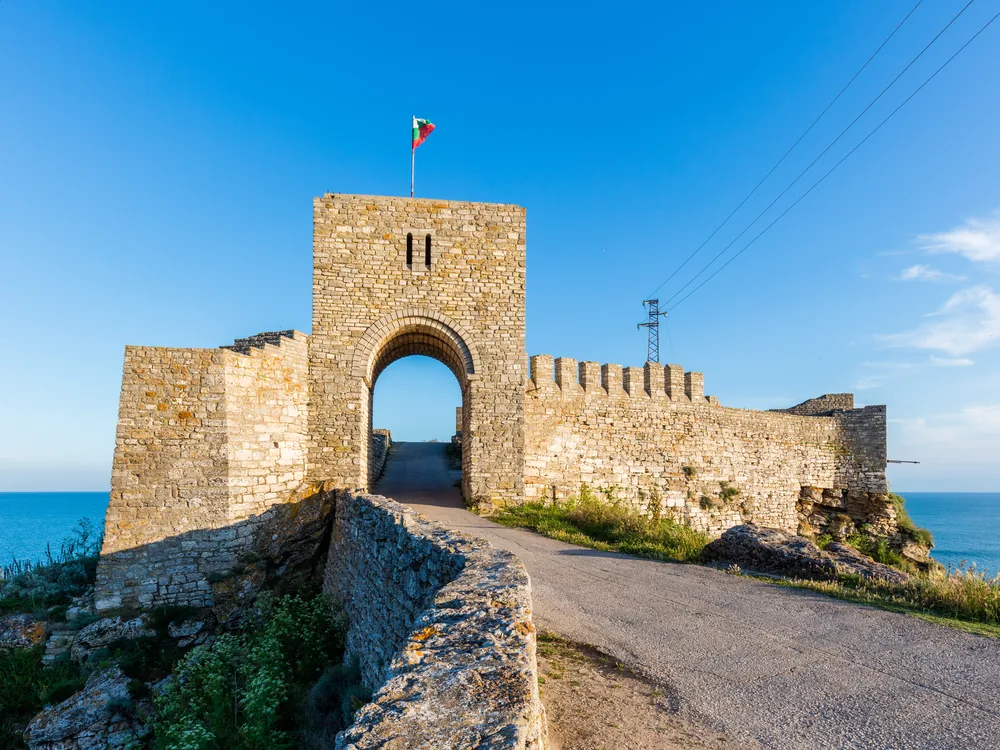
© Castles & Palaces
Quick Facts
- Hours
- Daily 09:00–18:00
- Day trip from
- €70
- Duration
- 1–1.5 hours
- Best time
- May to September
- Nearest city
- Kavarna
Featured Tour
Balchik Palace & Kaliakra Fortress — Day Trip from Varna
Cancellation available · Instant confirmation
Highlights
- ✦Clifftop fortress on a narrow Black Sea promontory with sheer drops on three sides
- ✦Legend of the 40 maidens: Bulgarian women who drowned together rather than submit to Ottoman conquest
- ✦Stratified history: Thracian, Roman, Byzantine, Bulgarian, and Ottoman layers in a single site
- ✦Medieval capital of Dobrotitsa's Karvuna principality (14th century)
- ✦Kaliakra Nature Reserve — one of Bulgaria's most important migratory bird sites
Skip the queue with a guided tour
Skip-the-line tickets & expert guides
Cape Kaliakra is one of those places where the land itself forces history. A narrow limestone promontory jutting two kilometres into the Black Sea, with cliffs dropping 70 metres to the water on three sides, it is a position that almost demands to be fortified — and it has been, continuously, for at least two and a half millennia.
The Thracians were the first recorded inhabitants, establishing a settlement on the cape that they called Tirizis sometime in the fourth or third century BC. The Greeks and then the Romans followed: under Roman rule the site was known as Teiretzis, and Roman walls and cisterns are still visible among the later strata. Byzantine administration brought more substantial fortifications, and the cape passed back and forth between Byzantine and Bulgarian control across the turbulent centuries of the early medieval period.
The fourteenth century brought the site to its greatest political significance. Dobrotitsa — a medieval Bulgarian lord who ruled the coastal territory known as Dobroudja — made Kaliakra the capital of his principality of Karvuna, the origin of the region's name (Dobroudja / Dobrich). His fortress, built or expanded on the ruins of Roman and Byzantine predecessors, controlled trade along the western Black Sea coast and commanded the approaches to the Danube delta. The cape's name likely derives from the Greek for 'beautiful headland' — an accurate description that has outlasted every political authority that held it.
The Ottoman conquest of the region in the late fourteenth century gave rise to the site's most enduring legend: according to Bulgarian tradition, forty maidens of the cape, facing capture by Ottoman forces, tied their hair together and leaped from the cliff into the Black Sea rather than surrender. The legend has no contemporary documentary source, but it is deeply embedded in Bulgarian cultural memory and is the reason most Bulgarians know the name Kaliakra.
In 1791, the cape witnessed another famous event: the Battle of Cape Kaliakra, in which the Russian admiral Fyodor Ushakov decisively defeated an Ottoman fleet and secured Russian naval dominance of the western Black Sea — a battle still celebrated in Russian naval history.
Today, Kaliakra is also one of Bulgaria's most important nature reserves. The cape is a critical point on the Via Pontica migratory flyway, and birdwatchers come in spring and autumn to observe raptors, storks, pelicans, and dozens of other species funnelling over the promontory. Bottlenose dolphins are regularly spotted in the waters below the cliffs.
History
Kaliakra's recorded history begins with the Thracian settlement of Tirizis in the fourth century BC, which the Greeks and Romans inherited and administered as Teiretzis. Byzantine fortification of the cape is documented from the early medieval period, when the site passed between Bulgarian and Byzantine control. In the fourteenth century, Dobrotitsa made Kaliakra the capital of his Dobrudzhan principality of Karvuna, and the name of the region (Dobroudja/Dobrich) derives from his own. The Ottoman conquest of the Bulgarian Black Sea coast in the 1390s ended the medieval Bulgarian period; the tradition of the forty maidens dates to this conquest. The cape remained under Ottoman control until the late eighteenth century, when Russia's 1791 naval victory under Admiral Ushakov at Cape Kaliakra shifted Black Sea power. Bulgarian independence and subsequent territorial changes eventually brought the cape into Bulgaria's current borders. Archaeological excavation has revealed the stratified remains of Thracian, Roman, Byzantine, and medieval Bulgarian structures, with fragments of all periods visible at the site today.
How to Visit
Getting there: Cape Kaliakra is approximately 60 km northeast of Varna and 12 km east of Balchik, at the end of a dedicated road from the village of Balgarevo. By car from Varna, take the E87 north past Albena, turn east at Balgarevo, and follow signs to 'Kaliakra' — the drive from Varna takes about 1 hour. There is no public transport directly to the cape; a rental car or the GetYourGuide day trip are the practical options for visitors based in Varna.
Tickets: Entry to the fortress site and nature reserve costs approximately €4 for adults and €2 for children. A GetYourGuide day trip from Varna combines Kaliakra Fortress with Balchik Palace in a single guided excursion — the most convenient option for visitors without their own transport.
Practical tips: The cliff edge is unguarded in several places — keep a safe distance, especially with children or in strong wind. The promontory is fully exposed; sun protection and water are essential in summer. Birdwatchers should visit in spring (April–May) or autumn (September–October) when migrant species concentrate on the cape. The small museum at the entrance is worth 20 minutes and contextualises the visible ruins. Combine with Balchik Palace (~12 km west) for a full day on the northern Black Sea coast.
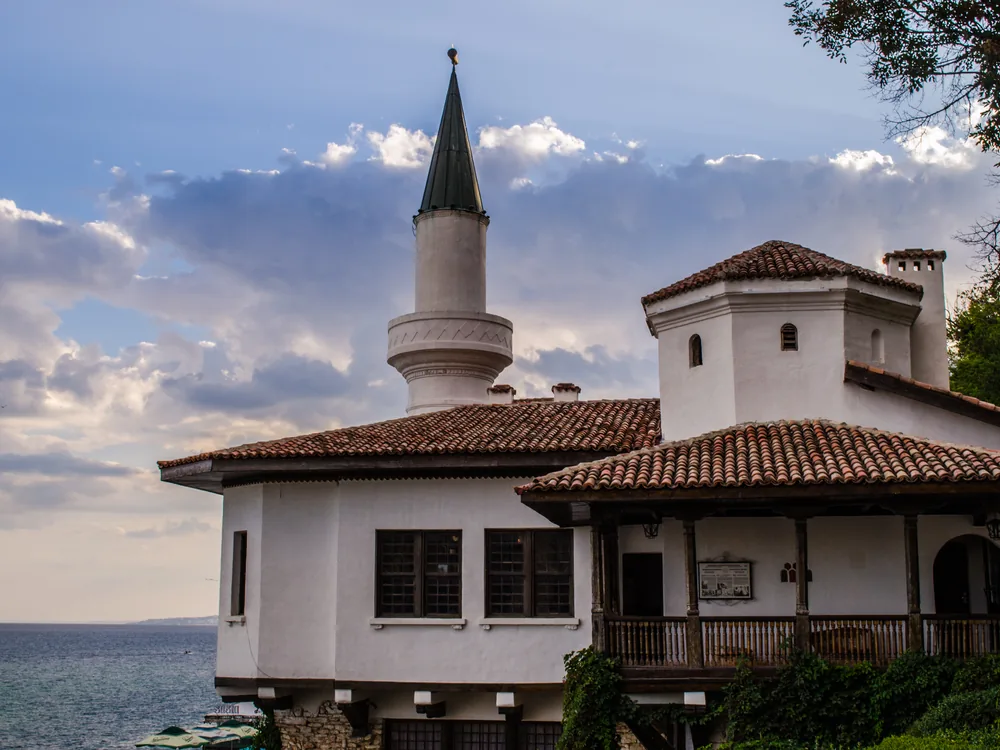
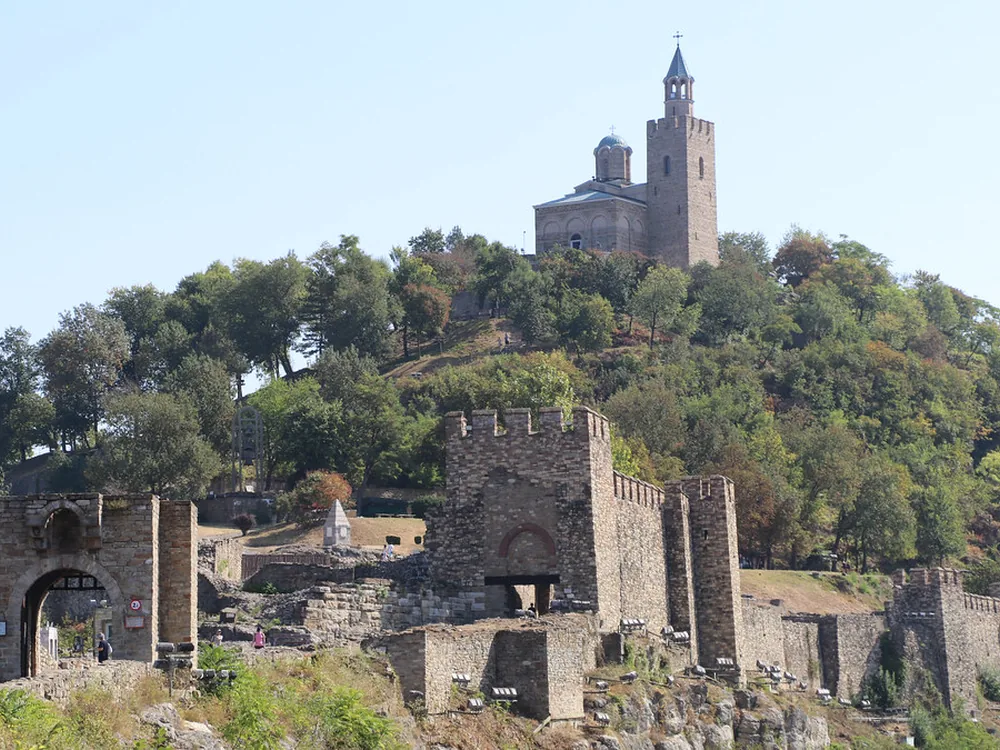
Combine with: Balchik Palace (~12 km west — Queen Marie of Romania's eclectic seaside villa set in Bulgaria's oldest botanical garden; the day trip from Varna covers both Kaliakra and Balchik in a single excursion) or Tsarevets Fortress (~130 km southwest in Veliko Tarnovo — the hilltop medieval capital of the Second Bulgarian Empire, dramatically positioned above the Yantra river, representing a very different chapter of Bulgarian history).
Frequently Asked Questions
According to Bulgarian tradition, during the Ottoman conquest of the Bulgarian Black Sea coast (late fourteenth century), forty women of the cape tied their hair together and leaped from the cliff into the sea below rather than be captured by Ottoman forces. The legend has no contemporary written source — it is a folk tradition, first recorded in writing in the nineteenth century — but it is deeply embedded in Bulgarian national memory and is the reason Kaliakra appears in school curricula and folk songs across the country. A monument on the cape marks the supposed site of the leap.
Location
Cape Kaliakra, 9650 Kavarna, Dobrich Province, Bulgaria
Nearby Castles
Tours & Tickets
Powered by GetYourGuide
From
€70/ person