Perperikon
Перперикон
Bulgaria · Kardzhali Province, Eastern Rhodopes, Bulgaria · Near Kardzhali
5th century BC · Thracian megalithic rock complex — acropolis, sanctuary, palace, and fortress city entirely hewn from the living rock of a trachyte hill; successive settlement layers from the 5th century BC through the 5th century AD, with Byzantine and medieval Bulgarian phases
This page is part of an independent travel guide and is not affiliated with, endorsed by, or operated by Perperikon.
© Castles & Palaces
Quick Facts
- Hours
- Daily 08:00–18:00
- Guided tour from
- €99
- Duration
- 1.5–2 hours
- Best time
- April to October
- Nearest city
- Kardzhali
Featured Tour
Plovdiv: East Rhodope and the Ancient City of Perperikon
Cancellation available · Instant confirmation
Highlights
- ✦One of the largest megalithic complexes in the Balkans — an entire sanctuary city carved directly from a trachyte rock hill: palace rooms, altar spaces, cisterns, staircases, and fortification walls all hewn from the living stone
- ✦Continuous occupation from the 5th century BC to the 5th century AD — Thracian sanctuary, Hellenistic-period capital, Roman-era settlement, and Byzantine hilltop church, all layered on the same rock
- ✦A possible ancient Dionysian oracle — some archaeologists identify Perperikon as the site of a Satrai Thracian oracle dedicated to Dionysus mentioned by ancient authors, which Alexander the Great is said to have consulted before his campaigns
- ✦Rediscovered by Bulgarian archaeologist Nikolay Ovcharov in 2000 and still actively excavated — the site continues to yield new finds, and major excavation trenches are visible during visits
- ✦The GetYourGuide tour from Plovdiv includes all fees and a professional guide for a 10-hour day through the Eastern Rhodopes
Skip the queue with a guided tour
Skip-the-line tickets & expert guides
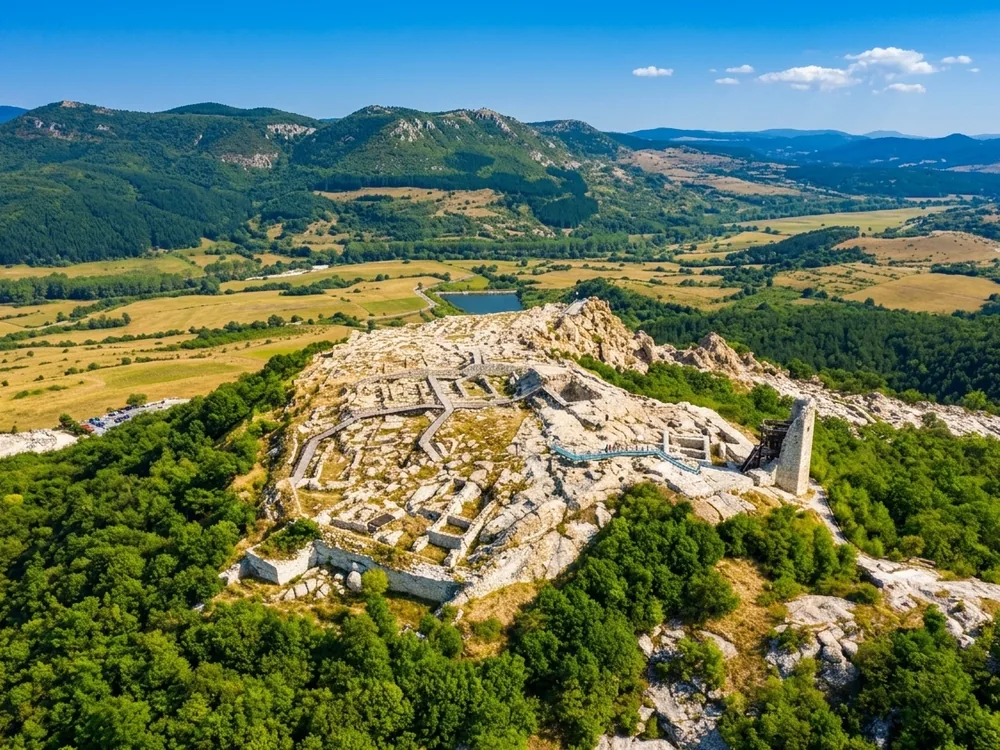
Perperikon rises from a rocky hilltop in the Eastern Rhodopes at an elevation that commands views over the surrounding river valley and — on clear days — toward the edge of the Thracian plain to the north. What makes the site unusual is not the height but the construction method: the Thracians who first developed it in the 5th century BC did not build with cut blocks brought from elsewhere but carved everything directly from the trachyte bedrock of the hill itself. Rooms, corridors, ceremonial platforms, altars, cisterns, and fortification walls are all hewn from the living rock, giving the site an organic quality absent from masonry ruins — as if the hill itself had been persuaded to take on the plan of a city.
The sequence of occupation at Perperikon runs from the Thracian period (5th century BC), through a Hellenistic-era expansion in which the site appears to have functioned as a regional political and ritual centre, into the Roman period when the settlement continued under imperial administration, and finally to Late Antiquity and the Byzantine period, which added a hilltop church and a final phase of fortification. This is over a thousand years of continuous occupation at a single rock-carved site — a rare span even by Balkan standards.
The oracle connection is the most hotly debated aspect of Perperikon's significance. The Satrai Thracians — who maintained a Dionysian sanctuary in the Rhodope Mountains according to the Greek geographer Strabo — are the most plausible candidates for the builders of Perperikon's ritual complex. Some ancient sources mention that Alexander the Great consulted an oracle in this region before his Persian campaign, and that the oracle predicted his victories. Bulgarian archaeologist Nikolay Ovcharov, who began systematic excavations at the site in 2000, has argued that Perperikon is the physical location of that oracle, based on the scale of the ritual infrastructure and the site's alignment with the Dionysian architectural tradition. The argument remains contested, but it has put Perperikon on the international map in a way that pure archaeological significance alone might not have.
Excavations are ongoing — the site continues to yield new structures and artefacts, and active trenches are visible during visits. The GetYourGuide tour from Plovdiv covers the Eastern Rhodopes in a 10-hour day from Plovdiv, with all fees and taxes included in the tour price.
History
Perperikon's archaeological sequence begins in the 5th century BC with a Thracian rock-carved sanctuary on the hilltop. The Satrai tribe — one of the Thracian peoples of the Rhodopes — maintained a religious and political centre here through the Hellenistic period, when the site was expanded with additional rock-cut structures. Roman administration of Thrace from the 1st century AD integrated the site into the provincial network; Roman-era pottery, coins, and architectural fragments have been recovered from multiple phases of the excavation. The Byzantine period added a basilica church on the hilltop and a final programme of wall fortification. The site was abandoned after the Ottoman conquest of the Eastern Rhodopes in the 14th–15th centuries. It was known to local villagers as a ruins field but not systematically investigated until Nikolay Ovcharov began excavations in 2000. Major public attention followed his identification of the site as a possible Dionysian oracle, and Perperikon has been one of Bulgaria's most closely watched active archaeological sites ever since.
How to Visit
Getting there: Perperikon is 15 km northeast of Kardzhali, the main city of the Eastern Rhodopes, and approximately 80 km southeast of Plovdiv. By car from Kardzhali, take the road northeast toward the village of Perperikon and follow archaeological site signs (the site is not in the village itself but on a hilltop beyond it). By public transport from Plovdiv, the journey requires connections via Kardzhali — the GetYourGuide tour from Plovdiv is significantly more practical.
Tickets: Walk-up entry is approximately €5 per adult, €2 per child. The GetYourGuide full-day tour from Plovdiv confirms "All Fees and Taxes" as included — the entrance to Perperikon is covered in the tour price. The tour provides hotel pickup/drop-off and a professional guide for the full 10-hour programme through the Eastern Rhodopes.
Practical tips: The site is fully exposed on a rocky hilltop — sun protection, a hat, and at least 1.5 litres of water per person are essential in summer, when temperatures can exceed 35°C. Wear sturdy shoes with ankle support for the uneven rock-cut paths. The site museum near the entrance provides context for the excavated periods before you walk the archaeological zone. Allow at least 90 minutes to cover the main excavation areas properly.
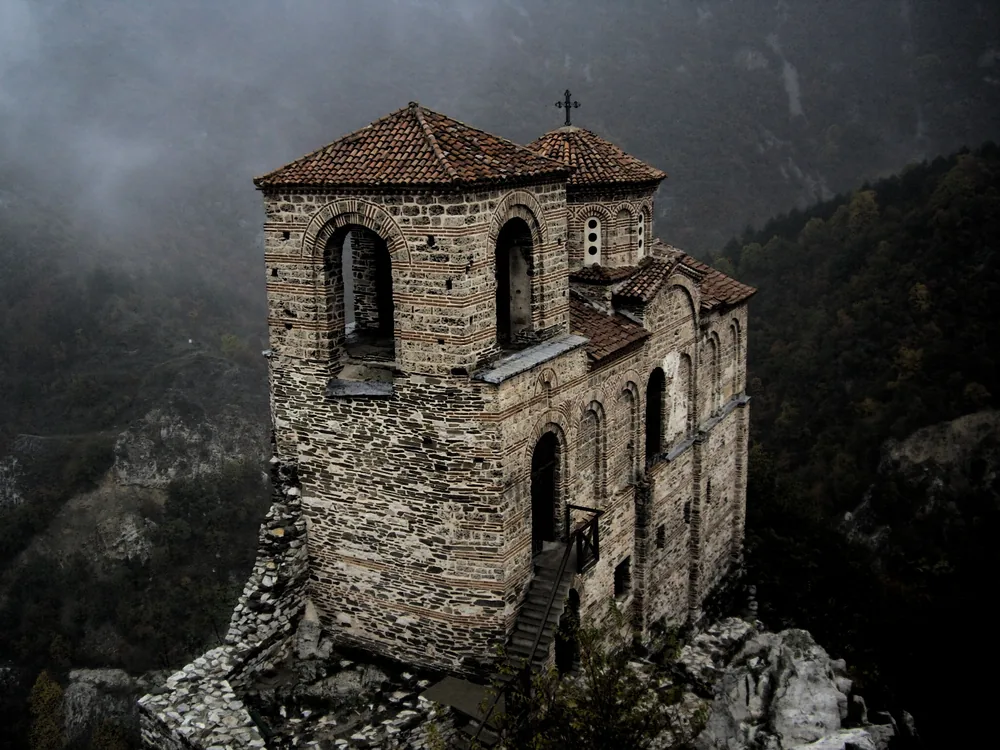
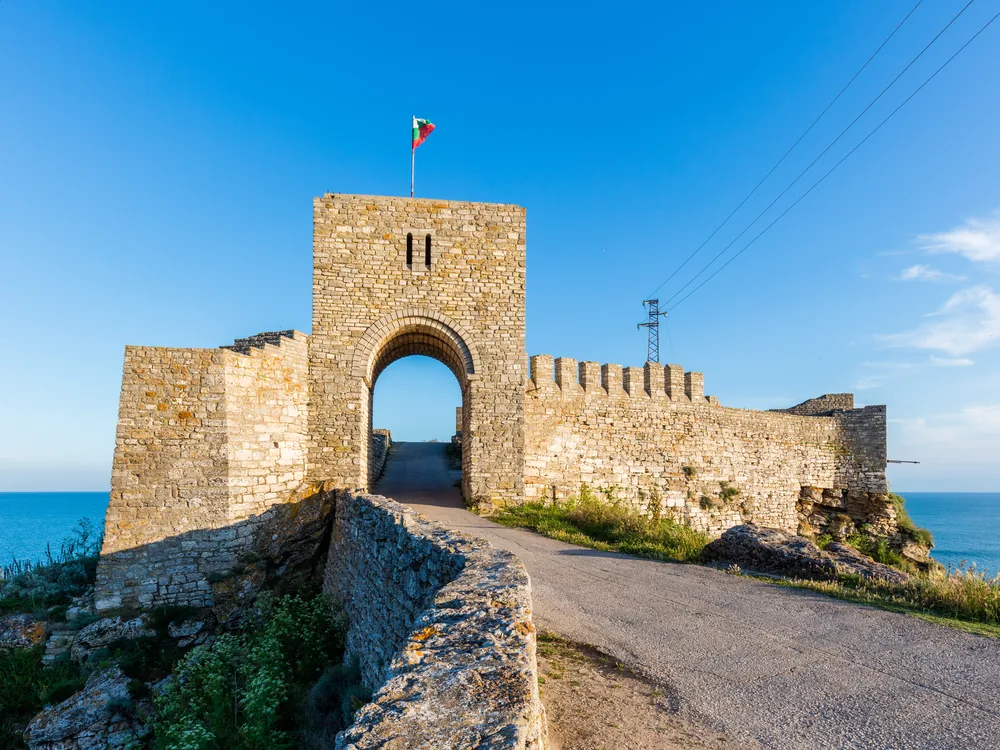
Combine with: Asen's Fortress (~120 km northwest — Tsar Ivan Asen II's medieval cliff-top stronghold above the Asenitsa gorge near Asenovgrad, in the western Rhodopes) and Kaliakra Fortress (~200 km northeast — the Thracian-to-medieval clifftop fortress on Cape Kaliakra above the Black Sea, offering a complementary perspective on Bulgaria's deep Thracian heritage).
Frequently Asked Questions
The ancient geographer Strabo and other classical sources describe a Dionysian oracle maintained by the Satrai Thracians in the Rhodope Mountains. It was reportedly one of the most authoritative oracles in the ancient Balkans, consulted before major military campaigns. Alexander the Great is said to have visited a Rhodope oracle before his Persian campaign, and Perperikon's archaeologist Nikolay Ovcharov has argued that the scale and architectural programme of Perperikon's rock-carved sanctuary complex — the altar platforms, the ceremonial hall that may have been used for ritual intoxication, and the site's regional dominance — identify it as the oracle's physical location. This remains a working hypothesis rather than a confirmed identification, but it is well-argued and the site's scale makes it a plausible candidate.
Location
Perperikon Archaeological Site, Kardzhali Province, Bulgaria
Nearby Castles
Tours & Tickets
Powered by GetYourGuide
From
€99/ person