Kavala Fortress
Κάστρο Καβάλας
Greece · Kavala, Eastern Macedonia & Thrace, Greece · Near Kavala
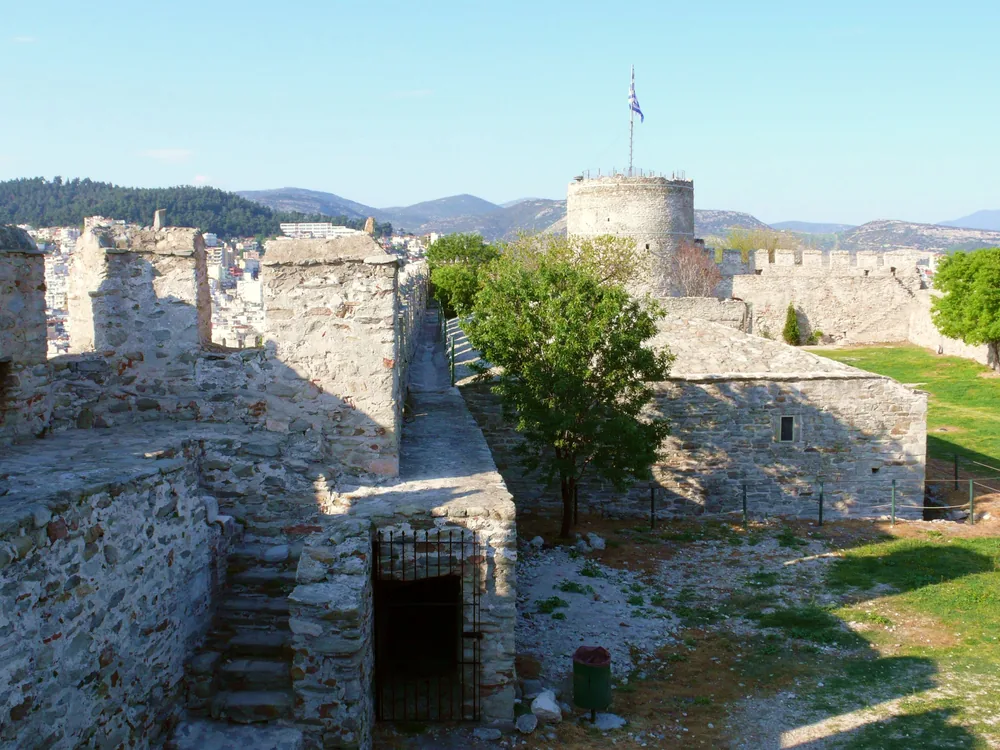
Built 1425 · Byzantine-origin hilltop fortress on the Kavala acropolis; substantially rebuilt by Ottoman forces in 1425 after the conquest of the city; polygonal curtain walls, towers, and an inner keep on the clifftop above the harbour; commands views over the port, the old town (Panagia), and the Kavala Gulf
This page is part of an independent travel guide and is not affiliated with, endorsed by, or operated by Kavala Fortress.
© Castles & Palaces
Quick Facts
- Hours
- Daily 08:00–19:00
- Guided tour from
- €70
- Duration
- 1–1.5 hours (fortress); 2–3 hours for the full Panagia old town and harbour
- Best time
- April to October
- Nearest city
- Kavala
Featured Tour
Kavala: Eco-Friendly Tuk-Tuk Tour of Historical Highlights
Cancellation available · Instant confirmation
Highlights
- ✦The birthplace of Mohammed Ali — Kavala is the birth city of Mohammed Ali Pasha (1769–1849), the Albanian-born Ottoman commander who became Wali of Egypt and founder of the dynasty that ruled Egypt until 1952; his house in the Panagia quarter below the fortress is a significant stop on the GetYourGuide tour
- ✦The Imaret — an Ottoman charitable institution (1817) commissioned by Mohammed Ali as a gift to his birthplace, now operating as a luxury hotel; its domed exterior and courtyard are the most architecturally distinctive Ottoman building in Kavala, visible from the fortress above
- ✦The Byzantine aqueduct (Kamares) — a 16th-century Ottoman reconstruction of an ancient Roman aqueduct, which supplied the old town with water and whose multi-arched span through the modern city is one of the most recognisable landmarks in Kavala
- ✦IMPORTANT — all entrance fees excluded: Entrance fees to the Kavala Fortress, Mohammed Ali's House, and the Municipal Tobacco Museum are all EXCLUDED from the GetYourGuide eco-tuk-tuk tour price. The GetYourGuide 'Know before you go' section explicitly states that entrance fees are paid in cash, on-site. Budget additional cash for each site entry.
- ✦The tobacco heritage — Kavala was the leading tobacco export port in the eastern Mediterranean in the early 20th century; the Municipal Tobacco Museum documents the industry that built the city's wealthy merchant class and its distinctive warehouses
Skip the queue with a guided tour
Skip-the-line tickets & expert guides
Kavala is built on a limestone peninsula on the Aegean coast of northeastern Greece — a city that descends in tiers from the fortress on the hilltop acropolis, through the dense cobbled lanes of the old town (Panagia), to the harbour and seafront promenade. The fortress at the summit has Byzantine origins but was substantially rebuilt by Ottoman forces after the city's conquest in 1425. What stands today is primarily an Ottoman military structure, with polygonal walls, towers, and an inner keep occupying the cliff-edge above the sea.
From the fortress walls, the city below tells a layered story: the Panagia quarter directly beneath the fortress is the densest concentration of Ottoman-era domestic architecture in Kavala, including the house where Mohammed Ali was born in 1769. Mohammed Ali is one of the most consequential figures associated with Kavala — the Albanian-born Ottoman general who rose to become Wali of Egypt and founder of the ruling dynasty that would govern Egypt until 1952. His birthplace in the Panagia quarter is maintained as a museum, and his equestrian statue stands prominently in Kavala's waterfront square.
Above the Panagia neighbourhood and visible from the fortress walls is the Imaret — an Ottoman charitable complex commissioned by Mohammed Ali in 1817 as a gift to his home city. The structure, with its sequence of small domes, arches, and courtyards, is the finest piece of Ottoman architecture in Kavala and is now in use as a luxury hotel. The tobacco warehouses along the harbour front tell a different chapter: Kavala was the dominant tobacco export port in the eastern Mediterranean in the first half of the 20th century, and the wealth of the tobacco merchants built the handsome neoclassical buildings that face the seafront today.
The GetYourGuide eco-friendly tuk-tuk tour of Kavala covers the fortress exterior, Mohammed Ali's House, the Imaret, the Kamares aqueduct, the tobacco museum, and the harbour area using electric tuk-tuks for city transport. **All entrance fees — to the Kavala Fortress, Mohammed Ali's House, and the Municipal Tobacco Museum — are confirmed EXCLUDED** from the tour price, as explicitly stated in the tour's 'Know before you go' section; entrance fees are paid in cash, on-site at each attraction.
History
Kavala occupies the site of ancient Neapolis, a Thasian colony founded in the 7th century BC and the port through which the Apostle Paul landed in Europe on his way from Asia Minor to Philippi (as recorded in Acts 16:11). Byzantine rule from the 7th century AD built the first substantial fortification on the hilltop acropolis; the city passed through Bulgarian and Serbian control before Ottoman conquest in 1425, when the fortress was rebuilt in its current form. The city developed under Ottoman administration as a tobacco-growing and trading centre from the 17th century; by the 19th century it was the most important tobacco port on the Aegean coast east of Thessaloniki. Mohammed Ali's birth in the city in 1769 and his subsequent rise to power in Egypt gave Kavala an unusual connection to the modernisation of Egypt; his donation of the Imaret to the city in 1817 was an act of identity and patronage that left a permanent architectural mark. The tobacco industry's decline in the late 20th century and the city's economic restructuring since then has not significantly altered the heritage character of the Panagia quarter and the fortress.
How to Visit
Getting there: Kavala is 160 km east of Thessaloniki, accessible by bus (2–2.5 hours) or by car on the Egnatia Odos motorway. A domestic airport (Kavala International, 'Alexander the Great') connects with Athens seasonally. The GetYourGuide tuk-tuk tour operates from a central meeting point in Kavala.
Tickets: The Kavala Fortress exterior can be walked freely; the inner keep or any interior admission areas have a small entry fee (confirm current prices locally). Entrance fees to Mohammed Ali's House and the Municipal Tobacco Museum are also paid on-site. The eco-tuk-tuk tour of Kavala covers the transport between sites and a professional guide, but all entrance fees are excluded and paid in cash on-site — as stated in the GetYourGuide 'Know before you go' section. Budget additional cash per person for each attraction entry.
Practical tips: Start at the fortress for the best overview of the city's layout — the harbour, the Panagia quarter, the Imaret domes, and the Kamares aqueduct can all be located from the fortress walls. Walk down through the Panagia lanes to Mohammed Ali's House (signposted), then to the Imaret exterior, and continue to the harbour front. The Kamares aqueduct is best viewed from the road that passes beneath its arches. The tuk-tuk tour handles the navigation between these points efficiently.
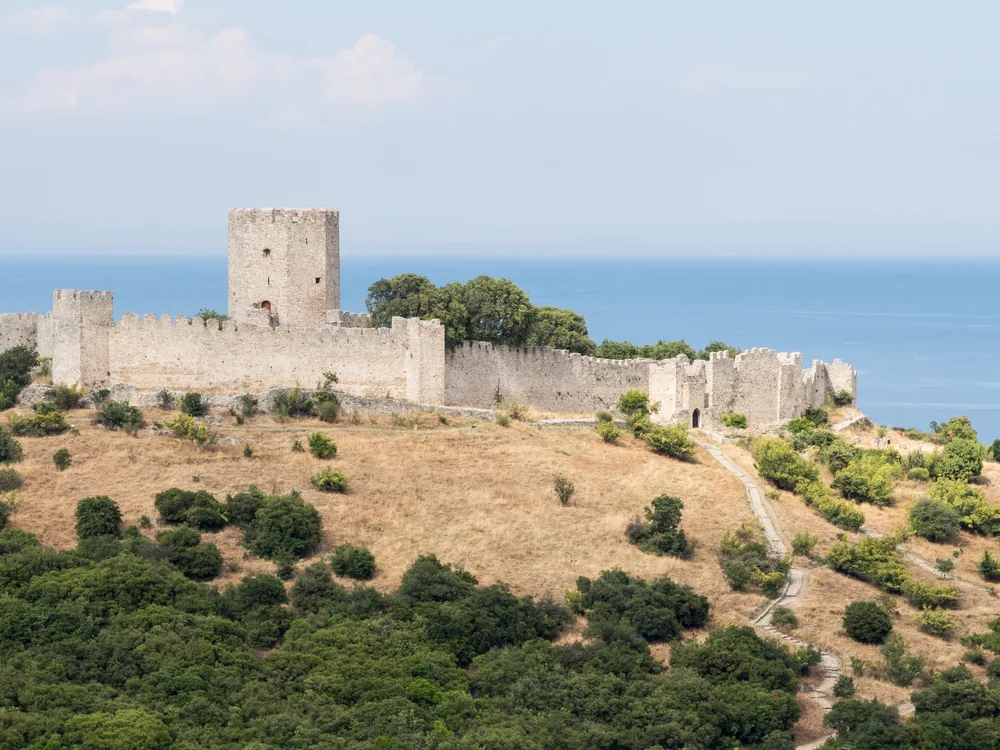
Combine with: Platamon Castle (~150 km southwest — the 14th-century Crusader-Byzantine fortress at the gateway to the Vale of Tempe, one of northern Greece's most photogenic medieval sites) and White Tower of Thessaloniki (~160 km west — the iconic 15th-century Ottoman tower on Thessaloniki's seafront, the emblem of Greece's second city).
Frequently Asked Questions
The GetYourGuide eco-tuk-tuk tour covers the electric tuk-tuk transport, the route through Kavala's key sites, and a professional guide. Entrance fees to individual attractions — the Kavala Fortress, Mohammed Ali's House, and the Municipal Tobacco Museum — are administered by separate authorities and are paid in cash directly at each site. This is standard practice for multi-site city tours in Greece, where public heritage sites and museums collect their own fees independently. Budget approximately €10–15 per adult for combined entrances (the exact figures depend on current admission prices); bring cash as many smaller Greek heritage sites do not accept cards.
Location
Kavala Acropolis, Kavala 654 00, Macedonia, Greece
Nearby Castles

Tours & Tickets
Powered by GetYourGuide
From
€70/ person