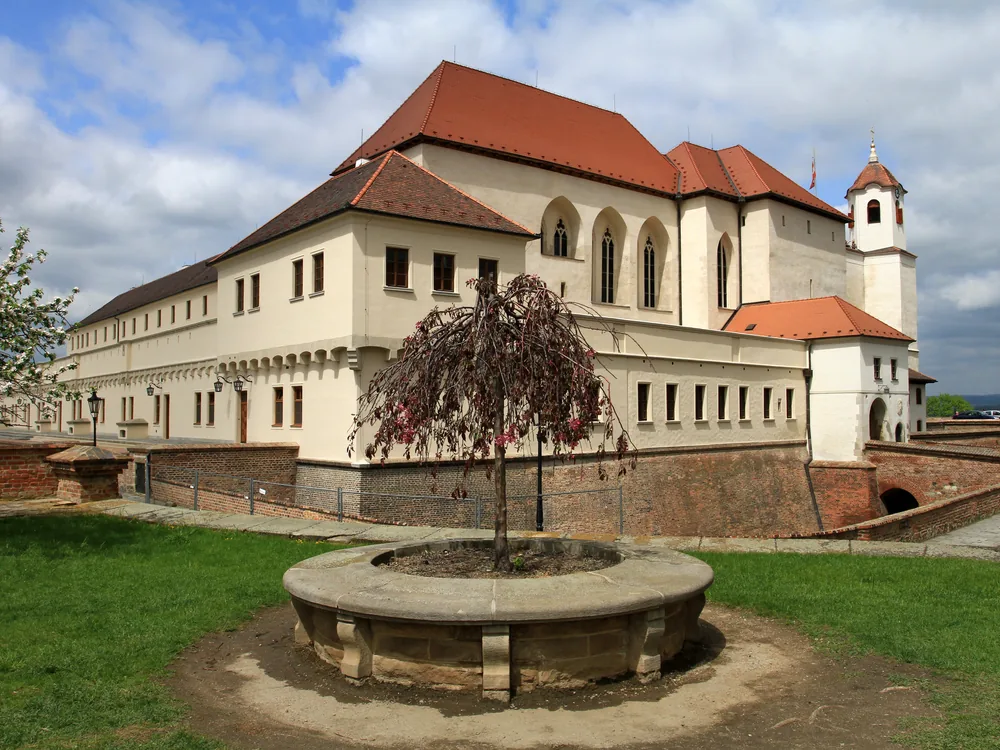
Špilberk Castle
Hrad Špilberk
Czech republic · South Moravia · Near Brno
Built 1270 · Originally Gothic — evolved through Renaissance rebuilding into a Baroque fortress system; bastioned defensive earthworks around a central late medieval palace complex; the city museum occupies the interior
This page is part of an independent travel guide and is not affiliated with, endorsed by, or operated by Špilberk Castle.
© Castles & Palaces
Quick Facts
- Hours
- Tue–Sun 09:00–18:00. Closed Mon
- Guided tour from
- €18
- Duration
- 1.5–2 hours (castle hill and panoramic views); 2.5–3 hours with museum access and casemates
- Best time
- April to October
- Nearest city
- Brno
Featured Tour
Brno: Guided Walking Tour with Špilberk Castle
Cancellation available · Instant confirmation
Highlights
- ✦Panoramic views from the castle hill — Špilberk stands 288m above sea level on a hill directly above Brno city centre, with views across southern Moravia, the Dyje valley to the south, and the Carpathian foothills to the northeast
- ✦The casemates (underground dungeons) — the barrel-vaulted stone corridors beneath the castle that served as Habsburg military prison cells from 1783 to 1855, incarcerating Italian carbonari, Polish revolutionaries, Hungarian patriots, and Czech nationalist intellectuals
- ✦City Museum permanent exhibitions — the history of Brno and Moravia from prehistoric times through the 20th century, housed in the castle's former palace and administrative buildings
- ✦The bastioned defensive system — the earthwork bastions added around the castle perimeter in the 17th–18th centuries, which give the hilltop its distinctive star-shaped plan visible from the air
- ✦Špilberk Park — the woodland park on the castle slopes, one of Brno's most popular green spaces, with marked paths ascending through the city's oldest public park to the castle terrace
- ✦Brno city walking tour access — the GetYourGuide-listed tour covers Brno's historic centre before ascending to Špilberk, providing the full Old Town context (St Thomas Church, Zelný trh market square, Capuchin Monastery, Cathedral) alongside the castle
Skip the queue with a guided tour
Skip-the-line tickets & expert guides
Špilberk Castle occupies the highest point above Brno, the capital of Moravia and the second city of the Czech Republic, on a limestone hill 288 metres above sea level. From its position the castle commands views across the flat southern Moravian plain toward Austria, across the vine-covered hills of the Pálava region, and back across the medieval city centre directly below. It is both the city's defining skyline landmark and a building whose history encodes most of Moravia's major turning points from the 13th century to the mid-19th.
The castle was founded around 1270 by the Přemyslid margrave Ottokar II of Bohemia as a royal seat for the Margraviate of Moravia — the administrative division through which the Bohemian crown governed the Moravian lands. Ottokar's original castle was a Gothic palace complex on the hilltop; subsequent Moravian margraves made Špilberk their principal seat, and the castle's role as a royal and administrative residence continued through the Luxembourg dynasty (Charles IV, Holy Roman Emperor, spent significant time at Špilberk in the 14th century) and into the early Jagiellon period.
The castle's character changed profoundly under Habsburg rule. The Habsburgs, who acquired Bohemia and Moravia in 1526, rebuilt Špilberk as a military fortress: the Gothic palace complex was reinforced, the outer perimeter was extended with Baroque-era earthwork bastions, and the casemate system — the barrel-vaulted underground corridors cut into the castle hill — was expanded for military storage. In 1783 the military conversion was completed when Emperor Joseph II converted Špilberk into a military prison for the Habsburg Empire's most dangerous political prisoners. It served in this capacity until 1855.
The Špilberk casemates became one of the most notorious prisons in Central Europe during the late 18th and early 19th centuries — a deliberate destination for political prisoners whose imprisonment the Habsburg authorities wanted to make exemplary. Italian carbonari and revolutionary patriots caught in the Napoleonic aftermath; Polish insurrectionists from the 1830 uprising; Hungarian political figures from the revolutionary movements of the 1840s; Czech intellectual nationalists — all passed through the Špilberk cells. The Italian poet Silvio Pellico, imprisoned here from 1822 to 1830, wrote the memoir Le mie prigioni (My Prisons, 1832), which made Špilberk internationally notorious and directly damaged Habsburg prestige across Europe. The book went through dozens of editions in multiple languages in its first decade.
After the prison's closure in 1855, the castle was gradually converted to civilian use. The Brno City Museum moved in during the early 20th century and remains the primary occupant of the castle's interiors. The permanent exhibitions cover Brno and Moravia's history across multiple periods; the casemate dungeons are open to visitors on a separate schedule with a distinct ticket.
The GetYourGuide-listed Brno city walking tour that includes Špilberk (€18, 3 hours, live English guide) approaches the castle from the city centre rather than directly. The tour covers Brno's historic centre first — St. Thomas Church (housing the remains of three Moravian margraves), the Zelný trh vegetable market square (Brno's oldest market, operating since the 13th century), the Marian Plague Column, the elaborate Astronomical Clock on the main square (which chimes at 11am rather than noon, commemorating a Swede-tricked-clock story from the Thirty Years' War siege), the Capuchin Monastery with its mummified monks in the crypt, the Old Town Hall with its crocodile legend, and the Cathedral of St. Peter and Paul — before concluding at Špilberk Castle. The GetYourGuide itinerary marks the Špilberk portion as optional, making clear that the tour is city-walk-led with the castle as its endpoint and viewpoint rather than the interior experience of a dedicated museum tour. Visitors wanting a fuller Špilberk interior experience should plan additional time beyond the walking tour's end for the museum and casemates.
History
Přemyslid margrave Ottokar II established Špilberk Castle around 1270 as the seat of the Moravian margraves, choosing the highest limestone hill above Brno for its obvious strategic position over the city and the southern Moravian plain. The Luxembourg dynasty, who succeeded the Přemyslids as rulers of Bohemia and Moravia, expanded the castle in the 14th century and used it as a major royal residence. The Habsburgs who followed transformed its character again, converting the medieval castle into a Baroque military fortress in the 16th and 17th centuries, surrounding it with earthwork bastions in the Italian trace moderne.
The castle's darkest period began in 1783 when Emperor Joseph II ordered its conversion to a military prison. For seven decades, Špilberk served as one of the most feared political prisons in the Habsburg Empire — a destination for criminals and political prisoners from across the imperial domains, its casemates housing Italian carbonari, Polish insurgents, and Czech nationalist activists alongside common offenders. The prison closed in 1855, and the castle eventually passed to civic use.
The Brno City Museum, established in the castle in the early 20th century, has managed the complex ever since, and the casemates — the underground prison galleries that formed the core of the Habsburg detention system — are now open to visitors as a separate exhibit within the broader castle complex.
How to Visit
Getting there: Špilberk Park entrances are a 10-minute walk from Brno's main square (náměstí Svobody) or 5 minutes from the Cathedral of St Peter and Paul. No direct public transport — the castle hill is walkable from anywhere in the Old Town.
Tickets: Walk-up entry to the castle courtyard and city museum is 130 CZK adult, 70 CZK child; the casemates (underground dungeons) require a separate ticket and have their own access schedule. The GetYourGuide guided walking tour covers Brno's historic centre over 3 hours and ends at Špilberk, with the castle portion marked as optional on the itinerary.
Practical tips: Visitors wanting the full castle interior and casemate experience should plan additional time beyond the GetYourGuide walking tour. The casemates involve significant stairs and can be cold — check current access schedules at spilberk.cz before visiting, as maintenance closures are common.
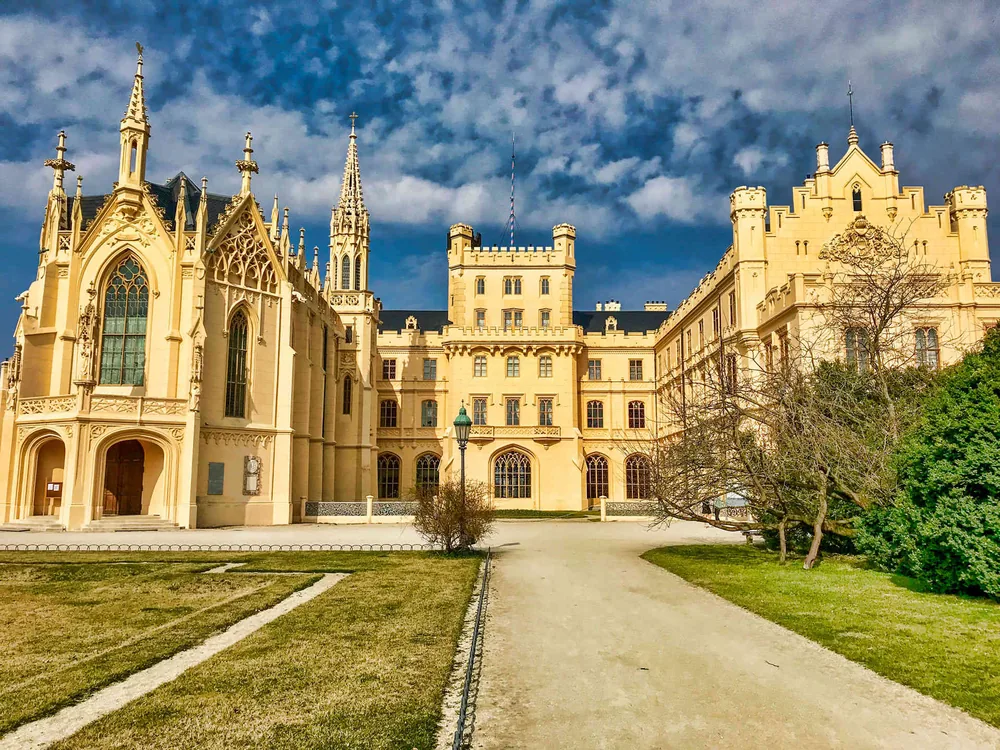
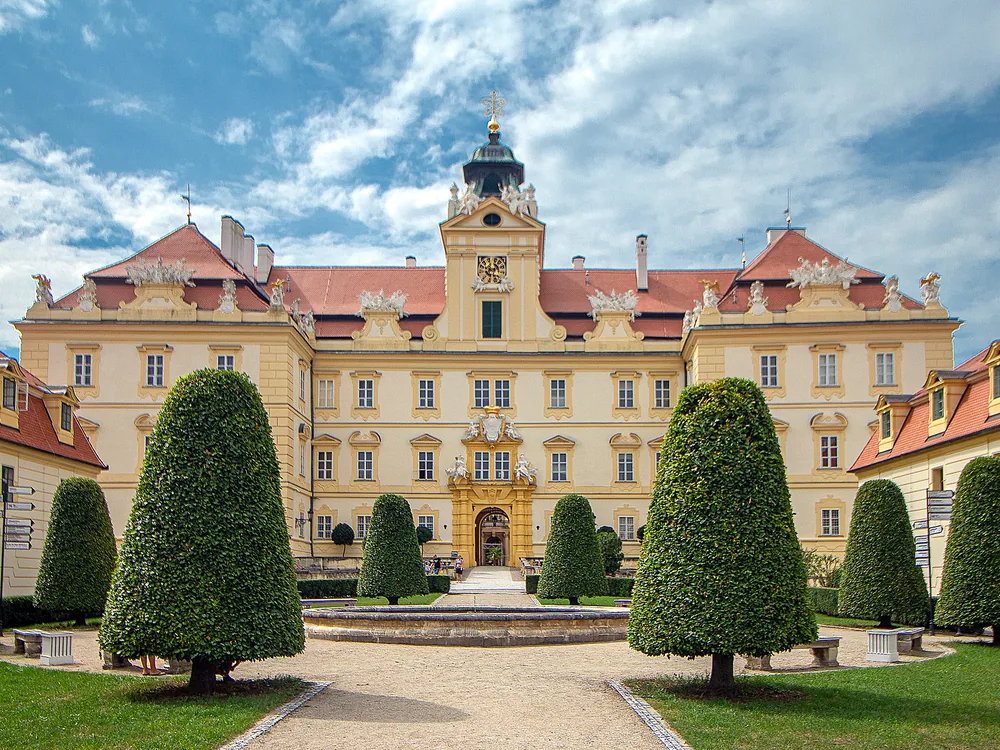
Combine with: Silesian Ostrava Castle is 170 km northeast — a medieval border fortress with a very different industrial-city setting, best saved for a separate overnight trip to Ostrava. Within the Brno area itself, the UNESCO-listed Lednice–Valtice Cultural Landscape and Pernštejn Castle are natural Moravian castle extensions for visitors spending more than a day in South Moravia.
Frequently Asked Questions
No — the GetYourGuide Brno tour (€18, 3 hours) is primarily a historic city centre walking tour covering St. Thomas Church, Zelný trh market, the Capuchin Monastery, Astronomical Clock, Old Town Hall, and the Cathedral. Špilberk Castle is the final stop, listed as optional. Visitors wanting a comprehensive guided tour of the castle museum and casemates should plan additional time after the walking tour.
Location
Špilberk 210/1, 662 24 Brno, Czech Republic
Nearby Castles
Tours & Tickets
Powered by GetYourGuide
From
€18/ person