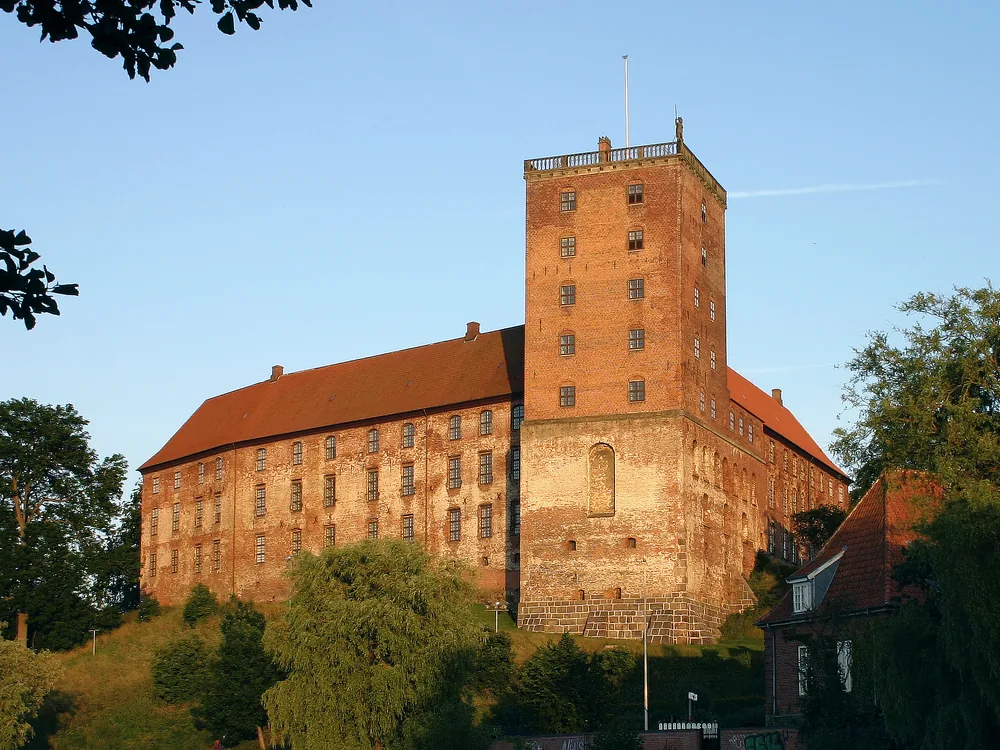
Koldinghus Palace
Koldinghus
Denmark · Southern Denmark · Near Kolding
Built 1268 · Medieval royal fortress founded in 1268 to guard Denmark's southern border, rebuilt multiple times through the 16th century as a major royal residence; devastated by fire in 1808 when Spanish troops billeted inside accidentally ignited stored ammunition while lighting fires to keep warm; restored between 1972 and 1993 by Danish architects Inger and Johannes Exner in a now internationally cited approach that combined the preserved medieval ruins with visibly contemporary new construction rather than historical reconstruction — a deliberate design philosophy that reads ruins as ruins and new building as new building rather than pretending the fire never happened
This page is part of an independent travel guide and is not affiliated with, endorsed by, or operated by Koldinghus Palace.
© Castles & Palaces
Quick Facts
- Hours
- Daily 10:00–17:00
- Entry via GetYourGuide
- €18
- Duration
- 1.5–2 hours
- Best time
- Year-round
- Nearest city
- Kolding
Featured Tour
Kolding: Koldinghus Palace Entry Ticket
Cancellation available · Instant confirmation
Highlights
- ✦Built in 1268 to guard Denmark's southern border against Germany, Koldinghus became one of the most important royal residences in Danish history — used by Christian II, Frederick I, Christian III, and later as a staging point for major Danish military campaigns
- ✦Destroyed in 1808 by one of the more improbable accidents in Danish architectural history: Spanish troops billeted inside during the Napoleonic Wars lit fires to keep warm in the January cold, unaware that ammunition was stored within the walls. The resulting blaze consumed the castle chapel, the Giants' Tower, and most of the interior
- ✦The restoration of 1972–1993 by Inger and Johannes Exner has become an internationally cited landmark of conservation architecture — a deliberate decision to insert new, visibly modern construction into the ruins rather than reconstructing what was lost, making the building's post-fire history as legible as its pre-fire history
- ✦Run by the Royal Danish Collection (Den Kongelige Samling), the museum covers Danish royal history across multiple centuries of exhibitions included in the ticket price with a guided tour
- ✦Located on the main Hamburg–Copenhagen rail corridor in southern Jutland, making Koldinghus a natural stop for travellers moving between Scandinavia and northern Germany who want a genuine historical site rather than a motorway service station
Skip the queue with a guided tour
Skip-the-line tickets & expert guides
The fire of 1808 began, by most accounts, because the soldiers were cold. A detachment of Spanish troops — serving under Napoleon's reorganisation of European military alliances, billeted in a Danish royal castle they had been assigned to garrison — lit fires in the ground-floor rooms of Koldinghus to survive a brutal January. They did not know, or did not check, whether ammunition was stored in the walls around them. It was. The fire that resulted in the early hours of 29 January 1808 burned for hours, consuming the castle chapel, the Giants' Tower, the major reception rooms, and the greater part of the interior that had accumulated across 400 years of Danish royal use. The shell of the outer walls survived. Koldinghus has been a ruin, and then something more deliberately complex than a ruin, ever since.
The castle's origins reach back to 1268, when it was established as a royal stronghold to guard Denmark's southern border against what was then the southern German frontier. The geographical logic was straightforward: Kolding sits on an inlet of the Little Belt strait in southern Jutland, controlling the overland routes between the Danish peninsula and the territories to the south. For the next four centuries, successive Danish kings used Koldinghus as a primary residence, an administrative centre, and a military staging post. Christian II held court here in the early 16th century. Frederick I made significant additions. Christian III established a Protestant chapel within the walls after the Reformation restructured Denmark's religious and institutional life. By the later 16th century, Koldinghus was one of the most important royal residences in the kingdom, substantially enlarged and equipped with the range of halls, towers, and residential accommodation that befitted a major royal court.
After the fire of 1808, the ruins sat largely untouched for well over a century. The practical question of what to do with a major medieval site that had been catastrophically damaged — whether to demolish, stabilise, partially reconstruct, or do something else entirely — remained unresolved through much of the 19th and early 20th centuries. When a serious restoration programme was finally initiated in 1972, the architects appointed were Inger and Johannes Exner, who brought to the project a philosophical position that would make Koldinghus an internationally discussed case study in conservation architecture.
The Exner approach, developed across a restoration that took until 1993 to complete, was to make the building's post-fire history as legible as its pre-fire history. Rather than reconstructing destroyed elements in historical materials and historical styles — the approach that produces the kind of result where a knowledgeable visitor cannot tell which parts are original and which are 20th-century interpolation — the Exners inserted new construction that is visibly contemporary: concrete and steel in forms that respond to the medieval shell without pretending to be medieval. The Giants' Tower, rebuilt, carries a new upper section that reads immediately as a 20th-century addition to a medieval base. Exhibition rooms occupy spaces within the ruins without mimicking the rooms that were there before the fire. The result is a building that shows its full history rather than suppressing one chapter of it, and the Exner restoration has been cited in architectural conservation discourse internationally as a model of honest intervention.
The museum operated within the complex by the Royal Danish Collection (Den Kongelige Samling) covers Danish royal history across the centuries of Koldinghus's significance. The ticket price includes both museum access and a guided tour of the complex. Kolding itself is on the main rail corridor between Hamburg and Copenhagen — a direct InterCity train stops here — making the castle a practical stop for travellers who want more than a transit city. Aarhus is an hour north by road or rail; the Danish Wadden Sea UNESCO World Heritage coast is to the west.
History
Koldinghus was founded in 1268 as a royal fortress to guard Denmark's southern border against German expansion. Over the following three centuries it became one of the most important royal residences in Denmark, used by successive kings from Christian I through to Christian IV, and significantly expanded through the 15th and 16th centuries.
The defining catastrophe in the castle's history came on 29 January 1808, when Spanish troops billeted in the castle during the Napoleonic Wars accidentally ignited stored ammunition by lighting fires to warm themselves. The fire destroyed the castle chapel, the Giants' Tower, and most of the interior, leaving the outer shell of the walls standing. The castle remained a ruin until a systematic restoration was undertaken between 1972 and 1993 by Danish architects Inger and Johannes Exner, who combined the preserved medieval ruins with deliberately contemporary new construction in an approach now internationally cited in architectural conservation. The museum within is run by the Royal Danish Collection.
How to Visit
Getting there: Kolding is on the main InterCity rail line between Hamburg and Copenhagen/Aarhus — trains stop regularly, and the journey from Copenhagen is approximately 1 hour 40 minutes. Koldinghus is a 10-minute walk uphill from Kolding station. By car, the E20 motorway passes directly through Kolding; the castle is well signed from the ring road.
Tickets: Adult approximately DKK 150 (≈€20), children free. Includes museum access and a guided tour. The GetYourGuide "Kolding: Koldinghus Palace Entry Ticket" provides the same access with convenient online booking; tickets are also sold at the door. No advance booking required.
Practical tips: Koldinghus is open year-round with consistent hours, making it a reliable stop on the Hamburg–Scandinavia route in any season. Focus on the Exner restoration details — the visibly contemporary new construction inserted into the medieval ruins tells its own story about how architects chose to address the 1808 fire damage. Allow 1.5–2 hours.
Combine with: Kronborg Castle in Helsingør is about 2.5 hours north by train — the Shakespeare Hamlet fortress on the Øresund strait, completing a Denmark castles itinerary. The Trapholt design museum in Kolding (short walk from the centre) is an excellent same-day addition for a full Kolding visit.
Frequently Asked Questions
Koldinghus was destroyed on 29 January 1808 in a fire caused by Spanish troops who had been billeted in the castle as part of Napoleon's reorganisation of European military alliances. They lit fires in the ground-floor rooms to keep warm in January temperatures, unaware — or heedless — of the ammunition stored within the castle walls. The resulting blaze burned for hours, destroying the castle chapel, the Giants' Tower, and most of the interior. The fire is one of the most dramatically specific accidents in Danish architectural history.
Location
Rådhusstræde 1, 6000 Kolding, Denmark
Nearby Castles
Tours & Tickets
Powered by GetYourGuide
From
€18/ person