
Appleby Castle
England · Cumbria — Appleby-in-Westmorland, Eden Valley · Near Penrith
Built 1170 · Norman motte-and-bailey castle on a site with Roman-era origins; the Keep is one of only three complete, intact Norman keeps surviving in England
This page is part of an independent travel guide and is not affiliated with, endorsed by, or operated by Appleby Castle.
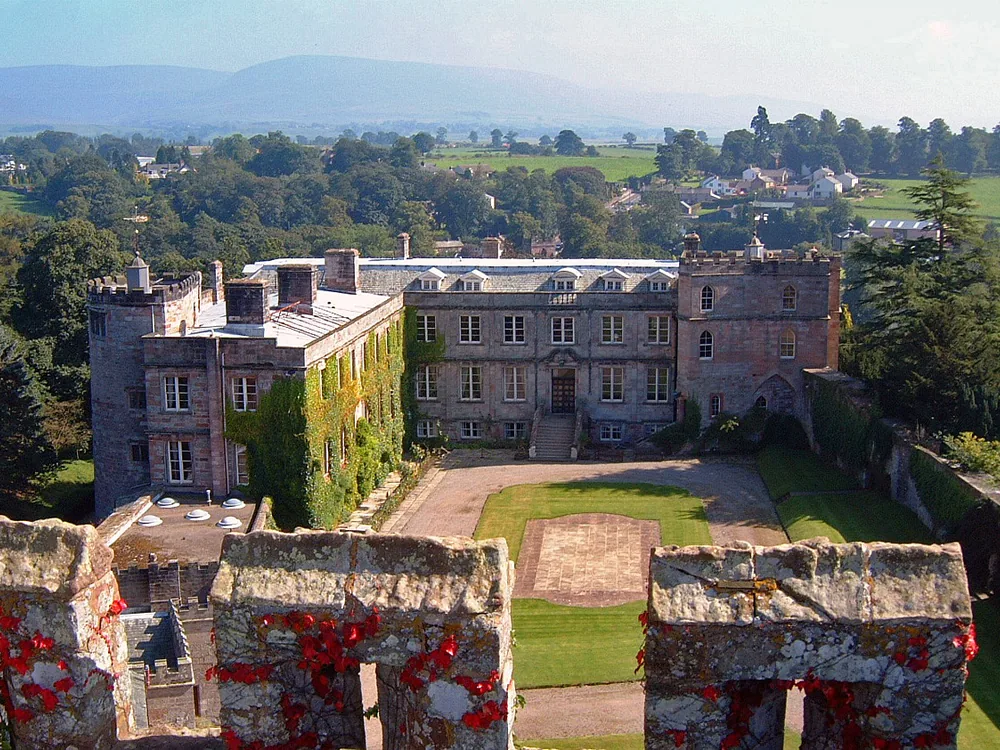
© Castles & Palaces
Quick Facts
- Rooms from
- £93 / night
- Day-visit entry
- £10
- Hotel rating
- 3-Star Hotel
- Duration
- The Norman Centre and grounds: 1–1.5 hours, daily 10:30–14:30 (closed in winter); guided tours by advance booking, max. 20 people
- Best time
- Spring through autumn
- Booking
- Required — book 1+ days ahead
- Nearest city
- Penrith
Stay Here
Appleby Castle
3-Star HotelBooked via Booking.com · Free cancellation on most rates
Open to day visitors without booking a room — see How to Visit below.
Highlights
- ✦The site has origins reaching back to the Roman era, when a fort here guarded the crossing of the River Eden; the Normans raised a motte-and-bailey castle on the same ground
- ✦Passed to the Clifford family in 1269 with Roger de Clifford, and served as a key Lancastrian stronghold during the Anglo-Scottish wars
- ✦Damaged during the Civil War; from 1649 to 1676 it was the favourite home of Lady Anne Clifford, Dowager Countess of Pembroke, Dorset and Montgomery, who extensively remodelled it
- ✦The only Clifford castle that is not a ruin; its Norman Keep is one of only three complete, intact Norman keeps surviving anywhere in England
- ✦Sells genuine day tickets — not through a third-party tour platform — for The Norman Centre inside the Keep, with guided tours (maximum 20 people, advance booking) often including traditional afternoon tea, and 27 acres of grounds to explore
Stay in the castle itself
Book a room via Booking.com
Appleby Castle stands above the town of Appleby-in-Westmorland in Cumbria's Eden Valley, on ground whose defensive use reaches back to the Roman era, when a fort here guarded the strategically important crossing point of the River Eden. The Normans built a motte-and-bailey castle on the same site, and the property passed into the hands of the Clifford family in 1269 with Roger de Clifford, beginning a long association between one of medieval England's most powerful Border families and this particular stretch of the Eden Valley. Appleby played a significant role as a Lancastrian stronghold during the ongoing Anglo-Scottish wars of the medieval period, a frontier conflict that shaped so much of Cumbria's castle-building history.
Like many Border fortifications, Appleby suffered damage during the English Civil War, but its most significant later chapter belongs to one of English history's most formidable female landowners: Lady Anne Clifford, Dowager Countess of Pembroke, Dorset and Montgomery, made Appleby her favourite home from 1649 to 1676, and undertook an extensive remodelling of the castle during her long residence. Lady Anne was a genuinely remarkable figure — she spent decades fighting to reclaim her inherited Clifford estates against determined opposition, eventually restoring and personally overseeing several castles across the north of England, and Appleby's surviving character owes a great deal to her direct personal attention during this period.
What makes Appleby genuinely distinctive today, both within this collection and among England's castles more broadly, is twofold. It is the only Clifford castle that survives as something other than a ruin, giving visitors a rare opportunity to experience a substantially intact example of a castle this family once controlled across the region. And its Norman Keep is one of only three complete, intact Norman keeps surviving anywhere in England — an extraordinary claim for a building of this age, and one that places Appleby in genuinely rarefied architectural company among the country's surviving medieval fortifications.
Unlike most other properties in this collection, Appleby Castle offers a real, independently ticketed visitor experience rather than relying solely on hotel dining or afternoon tea to justify a day visit. The Norman Centre, housed inside the Keep itself, sells genuine day tickets directly through the castle's own website rather than a third-party tour platform — a meaningfully different model from the restaurant-and-afternoon-tea access found at most other castle-hotels in this pilot. The grounds and Norman Centre are open daily from 10:30am to 2:30pm, though the attraction closes over the winter months, and tickets need to be purchased online in advance. Guided tours, capped at a maximum of 20 people per group, are available by advance booking and often include a traditional afternoon tea as part of the experience, giving visitors a genuinely curated, small-group way to explore the castle's history. Beyond the Keep itself, 27 acres of grounds are open for visitors to explore at their own pace.
Appleby today also operates as a hotel, offering a more conventional overnight stay option for visitors who want to base themselves within the castle grounds rather than simply visiting for the day. But it is Appleby's genuine, independently sold day-ticket product — comparable in spirit to Buittle Castle's Tea & Tours in the Scottish pilot — that sets it apart from the majority of England's castle-hotels, most of which offer public access only through their restaurant or bar rather than a dedicated, ticketed visitor attraction.
Appleby-in-Westmorland itself is best known nationally for the Appleby Horse Fair, one of the largest traditional Gypsy and Traveller gatherings in Europe, held annually each June and drawing visitors and participants from across Britain and Ireland. The town's compact historic centre, running along the wide medieval thoroughfare of Boroughgate up toward the castle gates, retains a genuinely well-preserved market-town character that rewards a visit beyond the castle walls alone, making Appleby a natural stop for anyone exploring the Eden Valley's quieter corner of Cumbria between the Lake District and the Yorkshire Dales.
History
Appleby Castle's site has origins in the Roman era, when a fort here guarded the crossing of the River Eden. The Normans built a motte-and-bailey castle on the same ground, and the property passed to the Clifford family in 1269 with Roger de Clifford, serving as a key Lancastrian stronghold during the Anglo-Scottish wars. The castle was damaged during the Civil War, and from 1649 to 1676 it was the favourite home of Lady Anne Clifford, Dowager Countess of Pembroke, Dorset and Montgomery, who extensively remodelled it. Appleby is the only Clifford castle that survives as something other than a ruin, and its Norman Keep is one of only three complete, intact Norman keeps surviving in England.
Frequently Asked Questions
Yes, and this is what sets Appleby apart from most other castle-hotels — it sells genuine day tickets directly through its own website, not through a third-party tour platform. Adult tickets are £10, children £5, with a £22 family ticket, and under-5s go free. The Norman Centre and grounds are open daily from 10:30am to 2:30pm, though the attraction closes over winter, and tickets should be booked online in advance.
Location
Boroughgate, Appleby-in-Westmorland, Cumbria CA16 6XH, England
Nearby Castles
Rooms from
£93/ night