Augill Castle
England · Cumbria — near Kirkby Stephen, Eden Valley · Near Kirkby Stephen
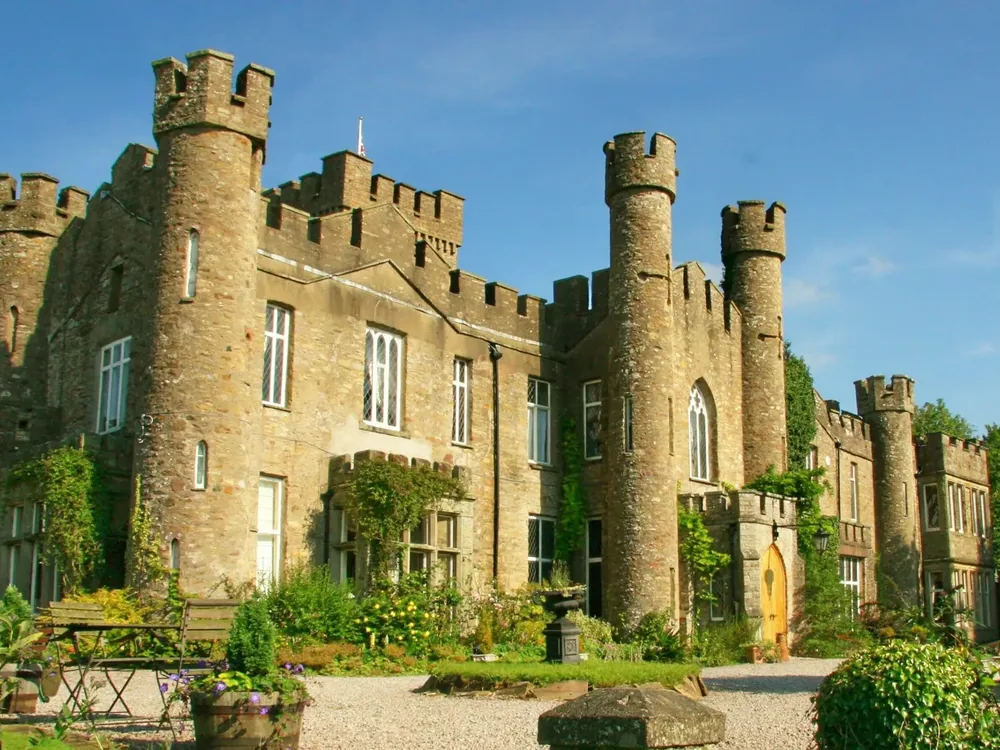
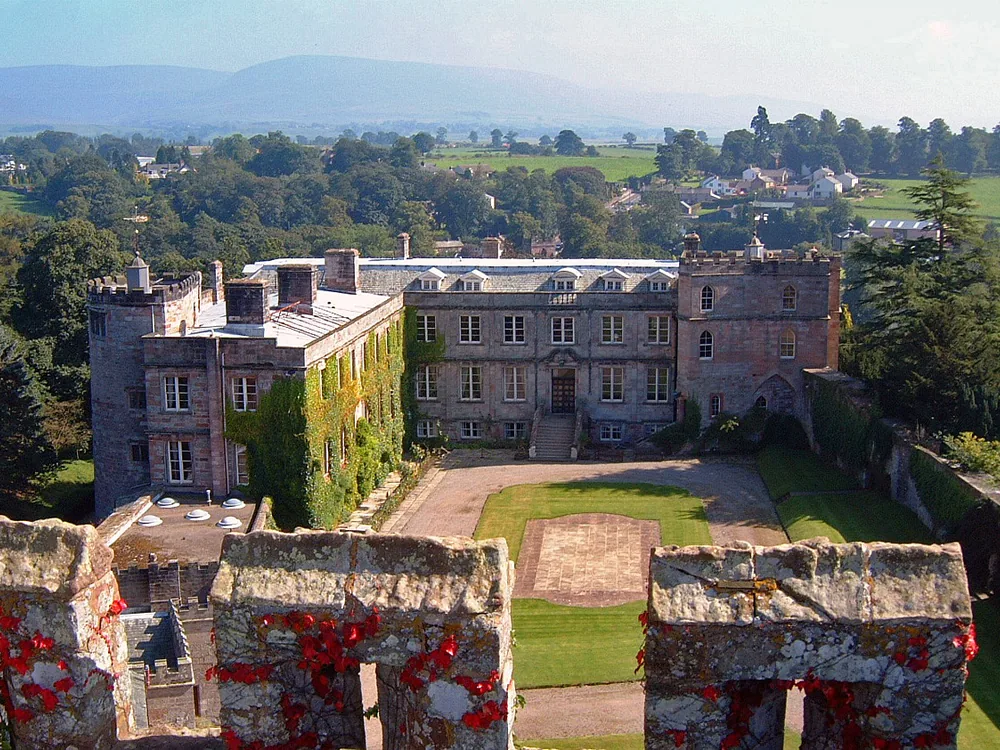
Built 1841 · 1841 Gothic Revival 'folly castle' — built purely for romantic effect rather than defence, almost entirely one room deep behind its turrets and 148 windows
This page is part of an independent travel guide and is not affiliated with, endorsed by, or operated by Augill Castle.
© Castles & Palaces
Quick Facts
- Rooms from
- £160 / night
- Hotel rating
- 4-Star Hotel
- Duration
- Afternoon tea or dinner: 1–2 hours; overnight stay separately bookable
- Best time
- Year-round
- Nearest city
- Kirkby Stephen
Stay Here
Augill Castle
4-Star HotelBooked via Booking.com · Free cancellation on most rates
Open to day visitors without booking a room — see How to Visit below.
Highlights
- ✦Built in 1841 for John Bagot Pearson of Kirkby Lonsdale, conceived explicitly as a 'folly castle' — a romantic Gothic Revival retreat for entertaining friends, not a genuine fortification
- ✦Local tradition holds that an older brother built Augill specifically to outdo his younger brother, and much of the castle is only one room deep — turrets, 148 windows and pure architectural facade rather than defensive substance
- ✦The Bennet family bought the ruined castle in 1997 and transformed it into a family-run boutique hotel, deliberately positioned as a place to slow down and feel at home rather than a conventional luxury property
- ✦Confirmed on the hotel's own site: non-residents are welcome for afternoon tea, dinner (and occasional lunch) Wednesday to Saturday, with other days available by prior arrangement
- ✦Breakfast is also available to non-residents with advance booking, priced at £12.50
Stay in the castle itself
Book a room via Booking.com
Augill Castle stands in the Eden Valley near Kirkby Stephen in Cumbria, between the Yorkshire Dales and the Lake District, and it belongs to a genuinely distinctive category of English country house: the folly castle, built purely for romantic architectural effect rather than any real defensive purpose. Constructed in 1841 for John Bagot Pearson of Kirkby Lonsdale, Augill was conceived from the outset as a Gothic Revival retreat intended for entertaining friends — a fashionable pursuit among wealthy Victorian gentlemen who wanted the theatrical romance of a castle without any of the genuine military history or defensive requirement that would have shaped a medieval fortification.
Local tradition offers a genuinely entertaining, if unverifiable, explanation for Augill's construction: the story holds that an older brother built the castle specifically to outdo his younger brother, a rivalry that would explain both the building's ambitious external appearance and a curious structural quirk that gives away its purely decorative intent. Much of Augill is only a single room deep behind its elaborate turreted facade — the castle presents an impressively castellated face to the world through its 148 windows and towers, but lacks the substantial internal depth a genuine defensive structure or even a conventional grand country house would typically possess. This makes Augill, in effect, a beautifully executed piece of architectural theatre rather than a building with any real fortified function, a genuine and recognised category of Georgian and Victorian country house construction distinct from both authentic medieval fortresses and from modern buildings that merely borrow castle styling without historical grounding.
Augill fell into ruin at some point after its Victorian heyday, and its rescue came relatively recently: the Bennet family purchased the ruined castle in 1997 and transformed it into the hotel that operates today. What distinguishes Augill's approach from many comparable castle-hotel conversions, however, is a deliberate positioning choice: rather than presenting Augill as a conventional luxury property competing on formal grandeur, the Bennets built a family-run boutique hotel explicitly intended as a place to slow down and feel genuinely at home, a warmer and more relaxed proposition than the more formal country-house-hotel model found at several comparable properties.
That welcoming approach extends clearly to non-resident visitors. The hotel's own site confirms that non-residents are welcome for afternoon tea and dinner from Wednesday to Saturday, with occasional lunch service and other days available by prior arrangement — a genuinely flexible and directly stated policy rather than an assumption based on indirect evidence. Breakfast is also available to non-residents with advance booking, priced at £12.50, extending Augill's public access beyond the more typical afternoon-and-evening window found at most comparable properties.
Set in a quiet corner of the Eden Valley between two of England's most celebrated landscapes, Augill Castle offers visitors a genuinely unusual combination: a piece of purely decorative Victorian architectural fantasy, built on a private rivalry that may or may not be entirely true, now run as a warm and deliberately unstuffy family hotel that goes out of its way to welcome guests who simply want a meal rather than a room.
The hotel's relaxed, family-oriented ethos extends into its practical amenities: Augill has become known for welcoming families with genuine enthusiasm rather than treating children as an afterthought, with games, an honesty bar, and communal dining arrangements that encourage guests to mix rather than remain isolated in a purely private, formal hotel experience. This positioning sets Augill apart from the more conventionally formal country-house-hotel model found at grander properties elsewhere in this collection, offering a genuinely distinct atmosphere for visitors seeking a castle stay built around warmth and informality rather than white-tablecloth luxury.
History
Augill Castle was built in 1841 for John Bagot Pearson of Kirkby Lonsdale, conceived explicitly as a Gothic Revival 'folly castle' for entertaining friends rather than any genuine defensive purpose. Local tradition holds that an older brother built the castle to outdo his younger sibling, and much of the building is only one room deep behind its turreted, 148-window facade. The castle fell into ruin before being purchased by the Bennet family in 1997, who transformed it into a family-run boutique hotel positioned around slowing down and feeling at home rather than conventional formal luxury.
Frequently Asked Questions
Yes. The hotel's own site confirms that non-residents are welcome for afternoon tea and dinner Wednesday to Saturday, with occasional lunch and other days available by prior arrangement. Breakfast is also available to non-residents with advance booking, priced at £12.50.
Location
South Stainmore, Kirkby Stephen, Cumbria CA17 4DE, England
Nearby Castles
Rooms from
£160/ night