
Kuressaare Castle
Kuressaare piiskopilinnus
Estonia · Saaremaa — Kuressaare, Saaremaa Island, western Estonia; the island's main town and administrative centre · Near Tallinn
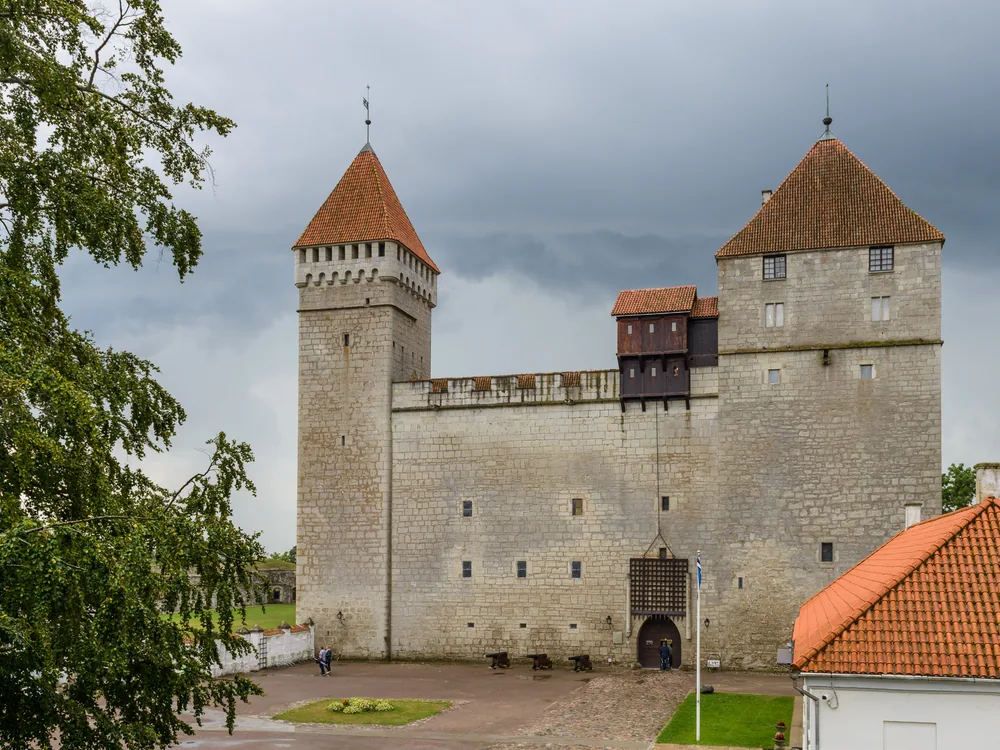
Built 1380 · Late Gothic bishop's castle — a square "convent building" (the Livonian Order's characteristic square-courtyard fortress layout) surrounded by a moat; the main keep, chapter house, chapel, and refectory are all substantially intact; now houses the Saaremaa Museum
This page is part of an independent travel guide and is not affiliated with, endorsed by, or operated by Kuressaare Castle.
© Castles & Palaces
Quick Facts
- Hours
- Tue–Sun 10:00–18:00. Closed Mon
- Guided tour from
- €189
- Duration
- 2 hours (castle museum visit, included in the GetYourGuide full-day island tour)
- Best time
- June to August
- Nearest city
- Tallinn
Featured Tour
From Tallinn: Saaremaa & Muhu Tour – 2 Islands in One Day
Cancellation available · Instant confirmation
Highlights
- ✦Widely regarded as the best-preserved medieval castle in the entire Baltic region — unlike most regional fortifications that survive as ruins or heavy 19th-century reconstructions, Kuressaare is a substantially intact original late-Gothic structure from the 14th century
- ✦Construction began around 1338 for the Bishop of Ösel-Wiek, as part of the broader effort to consolidate Christian control over Saaremaa — the island's population had resisted crusader campaigns longer than virtually any other community in the eastern Baltic
- ✦Built as a square "convent building" around a central courtyard, the defining architectural layout of Livonian Order and episcopal castles across the region — an instantly recognizable form that shows exactly the military-religious character of the Bishop's rule over the island
- ✦Changed hands with the sweeping Baltic power struggles: Danish from 1559, Swedish from 1645 — tracing the entire arc of the northern European competition for dominance over the eastern Baltic that would not be resolved until the Russian conquest of the early 18th century
- ✦Now home to the Saaremaa Museum, which covers not only the castle's own history but the island's geology, the Kaali meteorite crater, traditional windmill culture, and Saaremaa's place in Estonian history — making the castle museum one of the most comprehensive island-heritage experiences in the Baltic
Skip the queue with a guided tour
Skip-the-line tickets & expert guides
Kuressaare Castle is widely described as the best-preserved medieval castle in the Baltic states, and unlike many such claims this one has a clear architectural basis. Most fortifications built by the Livonian Order and the region's medieval bishops survive as roofless shells: walls without ceilings, towers without floors. At Kuressaare the main keep, chapter house, chapel, and refectory are all substantially intact original 14th-century fabric, their vaulted interiors preserved in a form that the vast majority of comparable sites across Estonia, Latvia, and Lithuania have long since lost. This is not a restoration or a 19th-century reconstruction — it is the original building.
The castle's existence reflects the violent final phase of the Baltic Crusade. Saaremaa's population resisted Christian conquest longer than almost any other community in the eastern Baltic, holding out until the late 13th century. Once subdued, the island came under the authority of the Bishopric of Ösel-Wiek, which began construction of a fortified episcopal seat around 1338. The first written record of the completed structure dates to 1380. Built on the classic Livonian "convent building" plan — four ranges enclosing a central courtyard — the castle served as the Bishop's administrative and military centre across the medieval period, then passed through the entire arc of Baltic power politics: to Denmark in 1559, Sweden in 1645, and the Russian Empire in the early 18th century.
Reaching Kuressaare is part of the experience. The journey from Tallinn takes three to four hours — a drive to the ferry port at Virtsu, a 25-minute crossing to Kuivastu on Muhu Island, then across the causeway connecting Muhu to Saaremaa and south to Kuressaare, the island's main town. One of Estonia's most agreeable small cities, Kuressaare has a preserved spa-town character and wooden 19th-century architecture quite unlike the more tourist-oriented mainland coast. The castle sits at the town's southern edge, still surrounded by its medieval moat.
The Saaremaa Museum inside the castle extends the visit into the island's broader history and natural character. Beyond the castle itself, the museum covers Saaremaa's geology, the Kaali meteorite crater — a 110-metre impact lake a short drive from Kuressaare — traditional windmill culture, and the island's place in Estonian history from prehistoric times to the present. Together, the intact Gothic architecture and one of Estonia's most comprehensive regional museums make Kuressaare the most rewarding castle destination in the country.
History
Saaremaa's resistance to the Baltic Crusade gave the island a particular significance in regional history. While most of the eastern Baltic coast was subdued during the 12th and 13th centuries, the islanders fought off crusading campaigns for decades, resisting longer than virtually any other community in the region before final conquest in the late 13th century. The Bishopric of Ösel-Wiek was established to administer the newly subjugated territory, and construction of a fortified episcopal seat at Kuressaare began around 1338; by the 1380s the main complex was substantially complete, forming the administrative and military heart of the Bishop's island domain.
The castle's subsequent history follows the arc of Baltic power with unusual consistency. The upheavals of the Livonian War ended the Bishopric's authority, and the castle passed to Denmark in 1559. Swedish forces acquired Saaremaa in 1645 as Stockholm built its Baltic empire, and Russian forces took the island in the early 18th century during Peter the Great's drive to the Baltic coast — completing the sequence of conquests that defined the entire region. The castle served as a garrison through the imperial period before restoration work in the 19th century established the museum function that continues in the building today.
How to Visit
Getting there: Kuressaare Castle is in Kuressaare, the main town of Saaremaa Island. From Tallinn, the standard route uses the ferry from Virtsu to Kuivastu on Muhu Island (about 25 minutes), then drives across the Muhu Causeway to Saaremaa and south to Kuressaare (about 1.5 hours more). Total one-way travel from Tallinn is around 3–4 hours. The recommended GetYourGuide day tour (from Tallinn) handles all logistics including the ferry crossing.
Tickets: The Saaremaa Museum inside the castle charges its own entry fee — approximately €10 adult; verify current pricing at saaremaamuuseum.ee. The GetYourGuide Saaremaa & Muhu full-day tour (castle admission included) — a guided day trip from Tallinn covering Kuressaare Castle, the Kaali meteorite crater, the traditional village of Koguva on Muhu Island, and the ferry crossings — includes castle entry and handles the complex island logistics.
Practical tips: This is a serious day trip, not a city hop — the ferry crossing is part of the experience. Wear comfortable walking shoes for the castle museum (several floors of the original building) and the Kaali meteorite crater (a short walk over uneven terrain). The crater is geologically unusual — a meteor impact visible as a lake about 110 m wide — and worth the stop even if you are primarily a castle visitor. Kuressaare town itself is one of Estonia's most pleasant small towns, with a preserved spa culture and wooden architecture; allow time to walk the town centre.
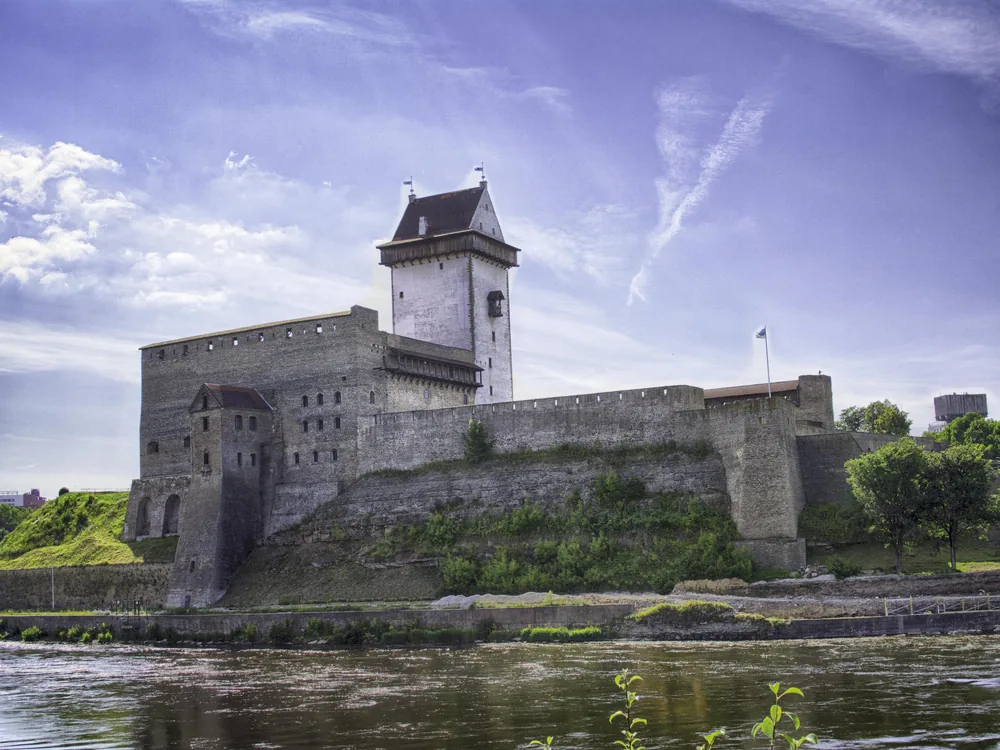
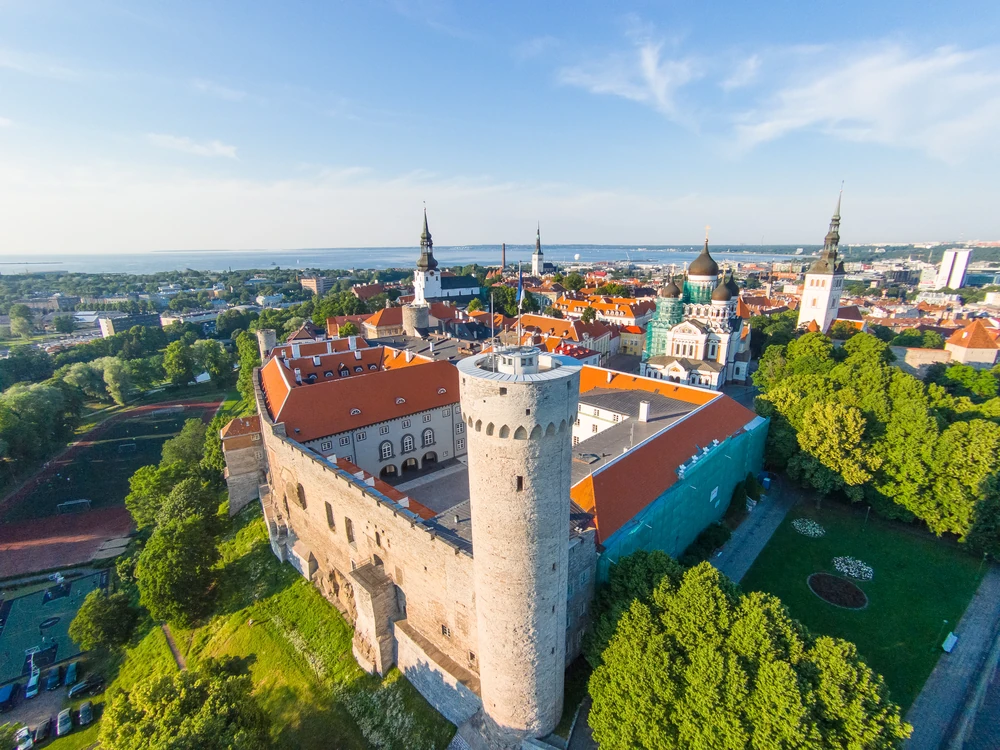
Combine with: Narva Castle (northeastern Estonia — an imposing 14th-century Livonian Order fortress facing the Russian Ivangorod Castle across the Narva River, one of Europe's most dramatic castle confrontations) and Toompea Castle (Tallinn — the medieval fortress hill at the heart of the Estonian capital, occupied continuously since the 13th century, now housing the Estonian parliament).
Frequently Asked Questions
Unlike most Livonian-era castles that survive as roofless ruins or have been heavily reconstructed in the 19th century, Kuressaare's main structure — keep, chapter house, chapel, refectory, and courtyard — is largely intact original 14th-century fabric.
Location
Lossi 1, 93815 Kuressaare, Saaremaa Parish, Estonia
Nearby Castles
Tours & Tickets
Powered by GetYourGuide
From
€189/ person