
Clos Lucé Castle
Château du Clos Lucé
France · Centre-Val de Loire · Near Amboise
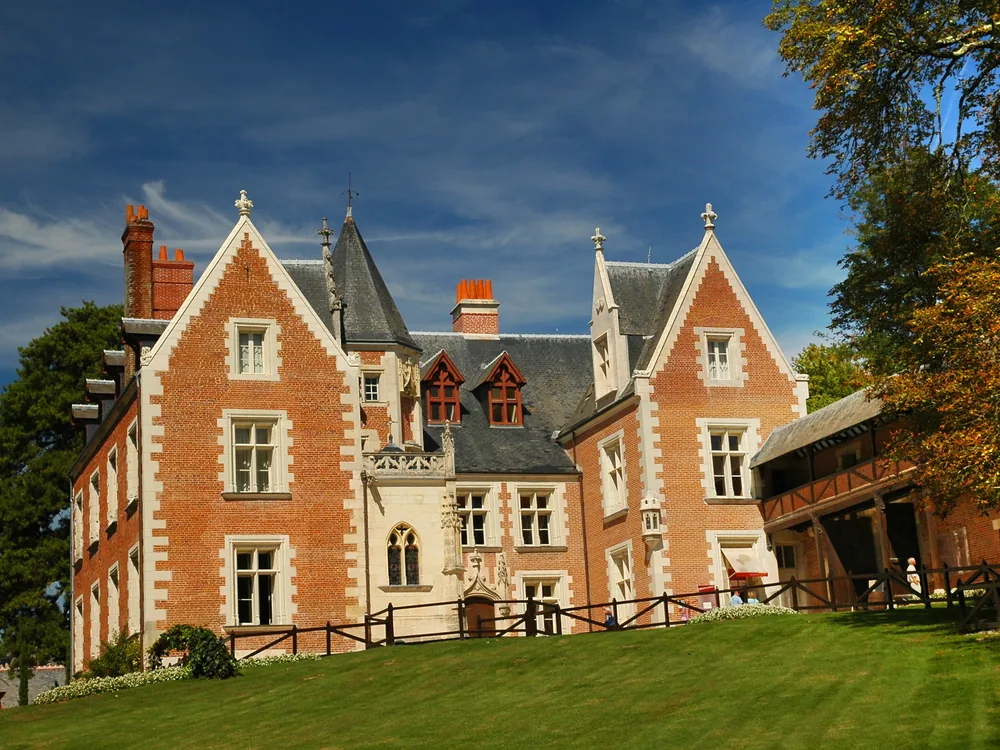
Built 1471 · Late medieval manor house of pink brick and tufa stone, rebuilt in its present form in 1471 by Étienne Le Loup for Charles VIII; Francis I gifted the property to Leonardo da Vinci in 1516 as his private residence; the manor was connected by a 500-metre underground passage to the adjacent Château Royal d'Amboise, allowing the king private access to his invited artist; the manor's original medieval chapel survives with 15th-century frescoes; the extensive park surrounding the manor was developed in the 20th century into the Leonardo da Vinci Park, featuring 40 large-scale working models of Da Vinci's mechanical inventions built directly from his notebook drawings
This page is part of an independent travel guide and is not affiliated with, endorsed by, or operated by Clos Lucé Castle.
© Castles & Palaces
Quick Facts
- Hours
- Daily 09:00–19:00
- Entry via GetYourGuide
- €20
- Duration
- 2–3 hours
- Best time
- April to October
- Nearest city
- Amboise
Featured Tour
Clos Lucé Castle, Da Vinci Park and Museum Ticket
Cancellation available · Instant confirmation
Highlights
- ✦Leonardo da Vinci lived at Clos Lucé from 1516 until his death in 1519, invited by King Francis I with a royal pension and the freedom to 'dream, think, and work' — the manor became the final home of the man whose notebooks contained designs for the helicopter, the armoured vehicle, and the solar power concentrator, centuries before any of them were built
- ✦An underground passage approximately 500 metres long connected the manor to the adjacent Château Royal d'Amboise, allowing Francis I to visit Leonardo privately and without ceremony — a specific architectural fact that illustrates the depth of the royal patronage relationship, and the passage is included in the GetYourGuide ticket
- ✦The Leonardo da Vinci Park spreads through the grounds of the manor and presents 40 large-scale working models of Da Vinci's mechanical inventions built directly from his notebook drawings — an aerial screw, a swing bridge, a mechanical knight, a multi-barrelled cannon, a tank prototype — making abstract notebook sketches physically comprehensible in a way that reproductions in glass cases cannot
- ✦The manor's 15th-century chapel retains original frescoes attributed to the school of Leonardo, connecting the private devotional space to the artistic culture that Francis I worked so deliberately to import to the Loire Valley from Renaissance Italy
- ✦Clos Lucé is a short walk from the Château Royal d'Amboise — where Leonardo is buried in the collegiate chapel of Saint-Hubert — making the two sites a natural paired visit covering both the life and the burial of the most celebrated Renaissance artist to have died in France
Skip the queue with a guided tour
Skip-the-line tickets & expert guides
In the winter of 1516, a 64-year-old Leonardo da Vinci crossed the Alps into France. He brought with him a small group of pupils, his personal library, three paintings — the Mona Lisa, the Virgin and Child with Saint Anne, and Saint John the Baptist — and the accumulated notebooks of a lifetime of observation. He had been invited by Francis I, the young and energetically cultured new king of France, who had already demonstrated his interest in Italian Renaissance art and learning through his campaigns in Italy and his active patronage of artists at the French court. The terms were generous: a comfortable manor house two minutes' walk from the royal château at Amboise, a large royal pension, and — in Francis I's formulation, or at least the formulation attributed to him — the freedom to 'dream, think, and work' without obligation to produce courtly commissions.
The manor Francis offered was the Château du Clos Lucé, a property of pink brick and pale tufa stone that had been rebuilt in its present form in 1471 for Étienne Le Loup and later passed to the crown. It was smaller and more domestic than the royal château nearby, and it was this intimacy that made it appropriate for the purpose: not a grand ceremonial residence but a working home for a scholar and artist, with a garden, a private chapel, and space for the mechanical workshop that Leonardo maintained throughout his time in France.
Francis I's interest in Leonardo was not primarily about painting. By 1516 the king already owned the Mona Lisa — whether purchased or received as a gift remains debated — and what he sought from the aging Leonardo was presence and conversation, the stimulation of proximity to the Renaissance's most synthesising intellect. The underground passage that Francis had constructed between Clos Lucé and the royal château, approximately 500 metres of tunnel through which the king could visit Leonardo without the ceremony required by a formal royal visit, illustrates the relationship's character: informal, intellectual, and conducted across a short physical distance that the two men evidently crossed in both directions. Leonardo attended court functions and festivals, contributing staging and mechanical spectacles; Francis visited the workshop. The relationship between patron and artist at Clos Lucé was as close to a genuine intellectual partnership as the hierarchies of early 16th-century Europe permitted.
Leonardo da Vinci died at Clos Lucé on May 2, 1519, aged 67. According to a tradition first recorded by Giorgio Vasari — not always the most reliable source but reporting something that was apparently in circulation within decades of the event — Francis I was present at the deathbed, holding Leonardo's head in his arms. Whatever the precise truth of this scene, the king's grief was real: he described Leonardo as 'a very great philosopher' and arranged burial in the collegiate chapel of Saint-Hubert at the Château d'Amboise, two minutes' walk away, where the presumed remains are still kept.
The manor at Clos Lucé today presents two distinct visitor experiences. The interior rooms have been restored and furnished to represent Leonardo's residency: period furniture, reproduction drawings from the notebooks, and interpretive displays in the rooms where he lived and worked. The chapel retains its original 15th-century frescoes, attributed to Leonardo's school, in a small devotional space that reflects the private religious observance of a wealthy Renaissance household. These interior spaces reward the visitor who takes time with them — the notebook reproductions in particular, showing the range of Leonardo's simultaneous interests in anatomy, hydraulics, flight, optics, and military engineering, make more sense in the context of a working residence than they do in a museum case.
The Leonardo da Vinci Park, covering the grounds of the manor, is the site's most immediately spectacular element. Forty large-scale models of Da Vinci's mechanical inventions have been constructed from his notebook drawings and installed throughout the gardens: an aerial screw (helicopter precursor) large enough to walk under; a swing bridge on a working pivot; a mechanical knight in full armour; a multi-barrelled cannon; a tank prototype with an angled hull designed to deflect incoming shot; a solar power concentrator using angled mirrors. None of these devices was built in Leonardo's lifetime — most were not built until the 20th century, when engineers working from the notebook drawings constructed them and found that most, with some adjustments, actually functioned. The park makes this argument physically: here is what the notebooks actually described, at the scale at which Leonardo imagined them.
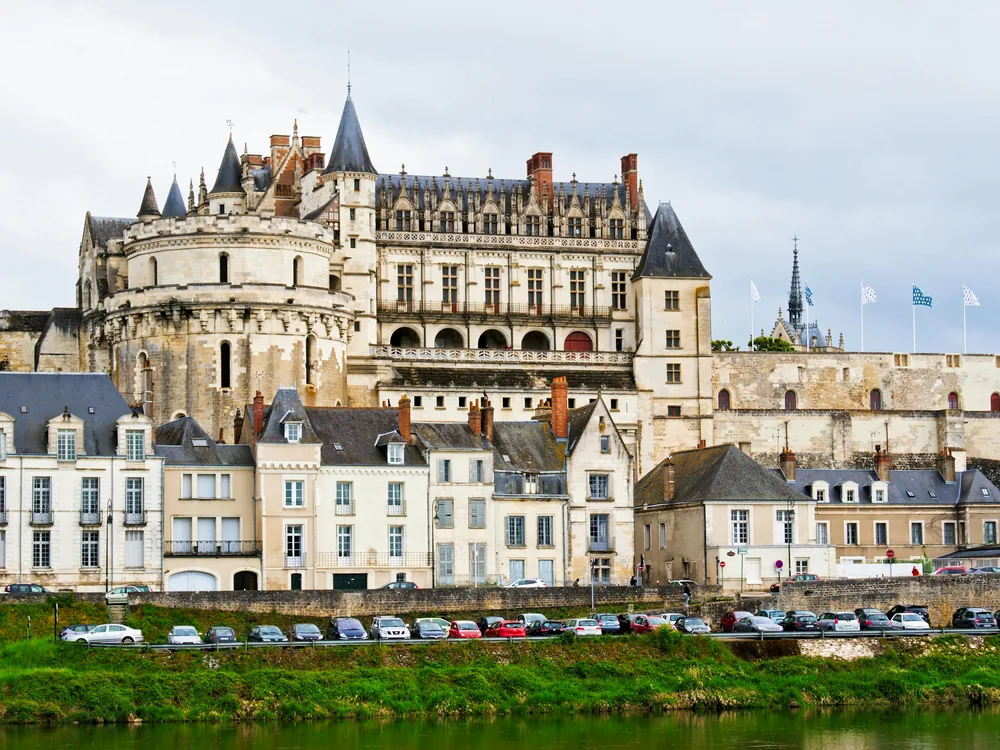
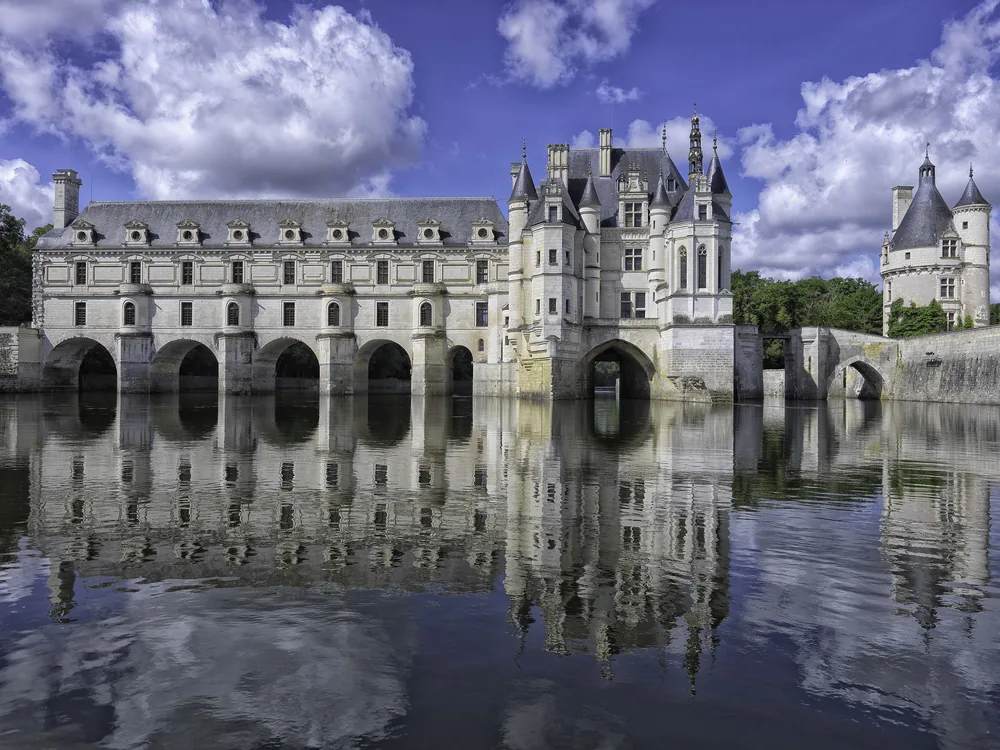
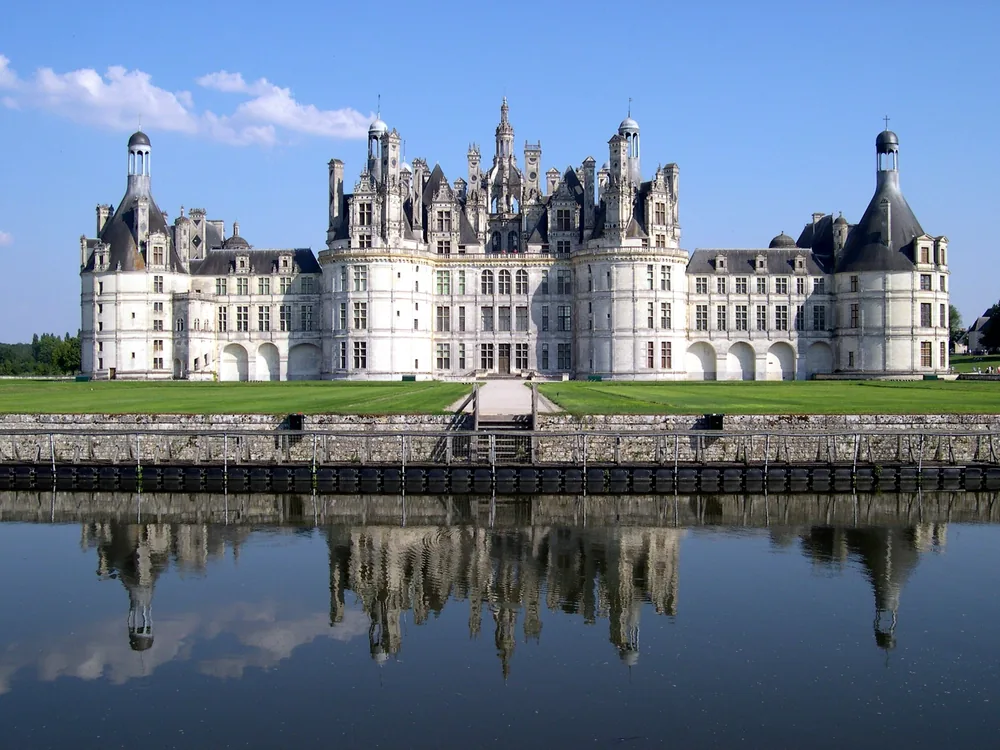
Clos Lucé sits within a 10-minute walk of the Château Royal d'Amboise — the royal château where Leonardo is buried and which contains some of the finest Renaissance architecture in the Loire Valley — and a short drive from the broader Loire château circuit: Chambord, Chenonceau, Blois, Cheverny. The Francis I connection makes Amboise a natural centre of gravity for the Loire Valley itinerary, and Clos Lucé is the site that explains why Francis was at Amboise at all.
The GetYourGuide ticket is presented under the URL slug 'da-vinci-home-and-science-museum-ticket' — a slightly outdated name for what the site now presents as the 'Clos Lucé Castle, Da Vinci Park and Museum Ticket.' The tour ID is the same; the on-site experience covers the manor house rooms, the underground passage to the Château d'Amboise, the 15th-century chapel, and the full Leonardo da Vinci Park. Visitor reviews on GetYourGuide are consistently positive across a large and diverse sample. The self-guided format and flexible opening hours — 9am to 7pm in summer, with extended August hours to 8pm — make timing straightforward: Clos Lucé and the Château d'Amboise together comfortably fill a morning, with the afternoon available for a drive to Chenonceau (25 minutes), Chambord (40 minutes), or Blois (25 minutes). Francis I's extraordinary concentration of cultural investment in the Amboise-Blois axis of the Loire Valley — importing Italian artists, commissioning châteaux, and creating what amounted to a French Renaissance court — is legible as a whole from Amboise in a way it is not from any of the individual châteaux alone.
History
The manor at Clos Lucé was rebuilt in its present form in 1471 and passed to the French crown in the late 15th century. Francis I gifted it to Leonardo da Vinci in 1516 as the artist's permanent French residence, along with a royal pension and a connecting underground passage to the adjacent Château Royal d'Amboise. Leonardo lived here from 1516 until his death on May 2, 1519. The property passed through various owners before being acquired by the Saint-Bris family in the 19th century, who undertook restorations and eventually opened the manor as a museum. The Leonardo da Vinci Park with its working invention models was developed in the 20th century. The site is part of the UNESCO World Heritage 'Val de Loire' designation.
How to Visit
Getting there: Clos Lucé is in the centre of Amboise — a 5-minute walk from Amboise train station and a 10-minute walk from the Château Royal d'Amboise. Amboise is served by trains from Tours (20 min) and Blois (20 min), both on the main Paris–Bordeaux TGV line with connections at Tours Saint-Pierre-des-Corps. From Paris by car: approximately 2 hours on the A10.
Tickets: Walk-up admission is €19 for adults, €13 for children, and includes the manor house period rooms, the 15th-century chapel, the underground passage to the Château d'Amboise, and the full Da Vinci Park. The GetYourGuide entry ticket covers the same complete visit and can be booked in advance.
Practical tips: Allow 2–3 hours for a thorough visit — the Da Vinci Park alone takes 45–60 minutes to explore the 40 working invention models. The underground passage is included in standard admission; don't miss it. Combine with the Château Royal d'Amboise (10-min walk, separately ticketed) to see Leonardo's tomb in the chapel of Saint-Hubert — the two sites together fill a full morning.
Combine with: Château d'Amboise is the essential pairing — Leonardo is buried in its chapel. Château de Chenonceau (25 min) and Château de Chambord (40 min) make Amboise a natural overnight base for the wider Loire circuit.
Frequently Asked Questions
Leonardo brought three paintings when he moved to Clos Lucé in 1516: the Mona Lisa, the Virgin and Child with Saint Anne, and Saint John the Baptist. All three remained in France after his death and eventually entered the French royal collection. All three are now in the Louvre in Paris, where they remain some of the most visited works in the museum. The Mona Lisa was already owned or in the possession of Francis I before Leonardo's arrival — the exact terms are debated — but the king's possession of it was confirmed by Leonardo's residence in France.
Location
2 Rue du Clos Lucé, 37400 Amboise, France
Nearby Castles
Tours & Tickets
Powered by GetYourGuide
From
€20/ person