
Salses Fortress
Forteresse de Salses
France · Occitanie — Pyrénées-Orientales, Roussillon, 16 km north of Perpignan · Near Perpignan
1497–1504 · Half-sunken fortress, transition from medieval castle to bastioned fort
This page is part of an independent travel guide and is not affiliated with, endorsed by, or operated by Salses Fortress.
Last updated
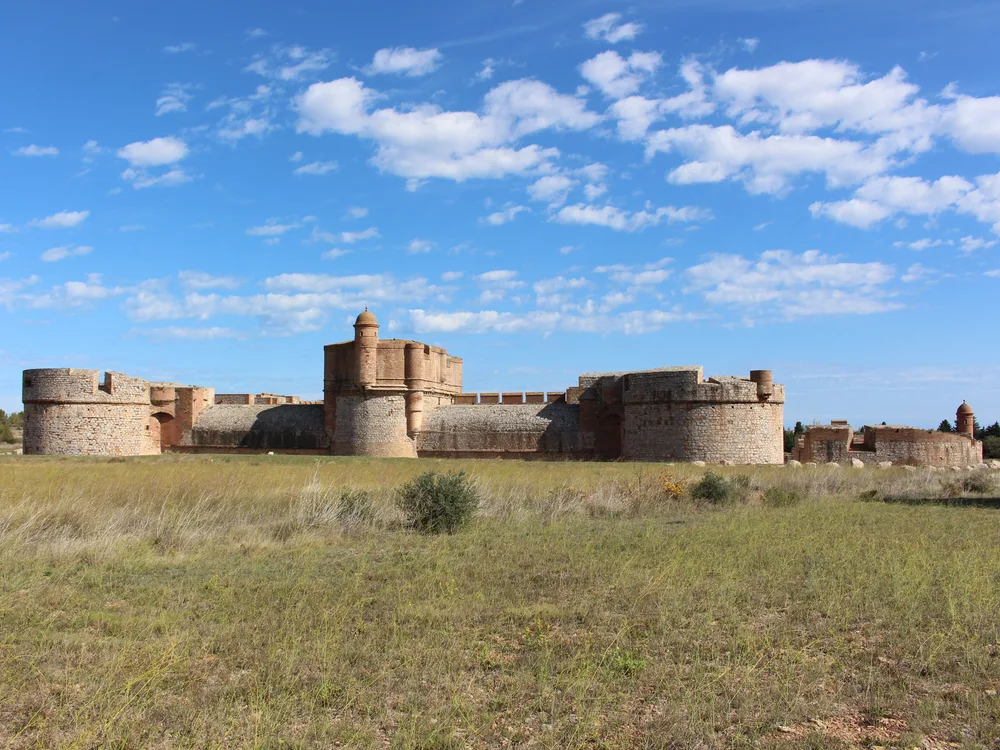
© tiger rus / Wikimedia Commons, CC BY 3.0
Quick Facts
- Hours
- Check official website
- Entry via GetYourGuide
- €35
- Best time
- Year-round
- Nearest city
- Perpignan
Featured Tour
Salses Fortress: Entry Ticket & Self-Guided Audio Tour
Instant confirmation
Highlights
- ✦Half-sunken fortress of 1497–1504, a design between the medieval castle and the bastioned fort
- ✦Moats 12 to 15 metres wide around a plan of about 115 × 90 metres
- ✦The Tour de l'Hommage, a keep with seven levels
- ✦Stables for up to 300 horses and the chapel of St Sebastian
- ✦Self-guided audio tour on your phone
Tickets & tours
Book through GetYourGuide
Salses Fortress stands on the old border between Catalonia and France, about 16 km north of Perpignan, where it guarded the narrow passage between the Corbières maritimes and the Leucate lagoon. It was built in 1497–1504 for the Catholic Monarchs, Ferdinand II of Aragon and Isabella of Castile, after the French army destroyed the village and castle of Salses in 1496. The engineer was Francisco Ramiro López. The fortress is half sunk into the ground, a design from the transition between the medieval castle and the bastioned fortress. It measures about 115 by 90 metres and is surrounded by moats 12 to 15 metres wide. The keep, the Tour de l'Hommage, has seven levels, and there are stables for up to 300 horses and a chapel of St Sebastian.
In 1503, still unfinished, the fort withstood a siege by Louis XII. During the Thirty Years' War the French took it on 20 July 1639 after 40 days of resistance, the Spanish retook it on 6 January 1640, and France conquered it for good on 5 September 1642. After the Treaty of the Pyrenees (1659) Roussillon became French and the fort lost its strategic value. It served as a prison from 1682, and Vauban judged it obsolete in 1691. It has been a listed historic monument since 1886 and is run by the Centre des monuments nationaux.
The GetYourGuide ticket includes entry and a self-guided audio tour on your phone. Bring a charged smartphone and headphones, which are not included.
History
Salses Fortress was built in 1497–1504 for the Catholic Monarchs, Ferdinand II of Aragon and Isabella of Castile, after the French army destroyed the village and castle of Salses in 1496. It defended the narrow passage between the Corbières maritimes and the Leucate lagoon, on the old border between Catalonia and France. The engineer was Francisco Ramiro López. The half-sunken design belongs to the transition between the medieval castle and bastioned fortification.
In 1503 the fort, still unfinished, withstood a siege by Louis XII; a mine explosion caused hundreds of casualties. Emperor Charles V visited in 1538.
During the Thirty Years' War the French took the fortress on 20 July 1639 after 40 days of resistance. The Spanish recovered it on 6 January 1640, and France conquered it for good on 5 September 1642. The Treaty of the Pyrenees (1659) gave Roussillon to France and the fort lost its strategic value.
From 1682 Salses was a prison. Among the prisoners were people connected with the Affair of the Poisons. In 1691 Vauban ordered the parapets lowered, judged the fort obsolete and proposed demolishing it, but the sheer mass of the work made that impracticable. It has been a listed historic monument since 1886 and is managed by the Centre des monuments nationaux.
How to Visit
Tickets: The GetYourGuide ticket includes entry to the fortress and a self-guided audio tour on your phone. Bring a charged smartphone and headphones; they are not included. According to the GetYourGuide page, the experience is wheelchair accessible.
Getting there: The fortress is about 16 km north of Perpignan, next to the A9 motorway and the RN9 road.
Opening hours: Check the official website for current opening hours.
Explore more castles in France
Frequently Asked Questions
It includes entry to Salses Fortress and a self-guided audio tour on your phone. Bring a charged smartphone and headphones, which are not included.
Location
Le Portichol, 66600 Salses-le-Château, France
Nearby Castles
Tours & Tickets
Powered by GetYourGuide
From
€35/ person