
Batonis Tsikhe
ბატონის ციხე
Georgia · Kakheti, Georgia · Near Telavi
Built 1758 · 18th-century Kakhetian royal palace-fortress in central Telavi; built by King Heraclius II (Erekle II) of Kartli-Kakheti as a royal residence and defensive complex; the outer walls form a pentagonal enclosure with corner towers typical of Kakhetian fortification; the interior contains the three-nave Church of the Holy Archangels, the royal quarters, and a museum of Kakhetian history; the complex replaced Gremi Citadel as the seat of the Kakhetian royal house following its destruction by the Persians in 1615
This page is part of an independent travel guide and is not affiliated with, endorsed by, or operated by Batonis Tsikhe.
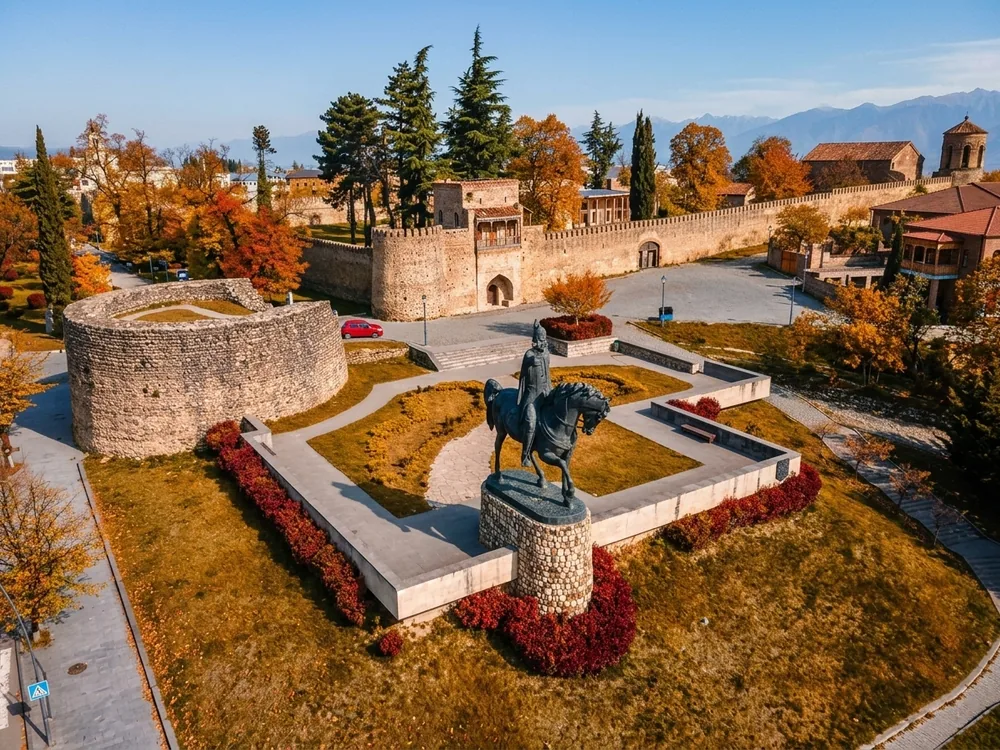
© Castles & Palaces
Quick Facts
- Hours
- Daily 10:00–18:00
- Day trip from
- €55
- Duration
- 1–1.5 hours at the palace complex; full day on the GetYourGuide wine tour
- Best time
- April to October
- Nearest city
- Telavi
Featured Tour
Tbilisi: Kakheti Wine Tour via Telavi and Gremi
Cancellation available · Instant confirmation
Highlights
- ✦The successor to Gremi — after Shah Abbas I destroyed Gremi Citadel and its royal city in 1615, the Kakhetian royal house eventually rebuilt its power base in Telavi; Batonis Tsikhe ('Lord's Fortress') was built by King Heraclius II in the 18th century as the formal royal residence, making it the direct successor of Gremi and the last palace of the independent Kingdom of Kakheti before the Russian annexation of 1801
- ✦King Heraclius II, Georgia's last significant king — Heraclius II (Erekle II) was the most consequential ruler in late Georgian history: he unified Kartli and Kakheti into a single kingdom, built Batonis Tsikhe as his palace, commissioned the Sighnaghi city walls, negotiated the Treaty of Georgievsk with Russia in 1783, and is celebrated as a national hero for his efforts to preserve Georgian statehood under pressure from Persia and the Ottoman Empire; his palace in Telavi is the primary physical monument to his reign
- ✦The palace-fortress hybrid — Batonis Tsikhe follows the Kakhetian tradition of combining royal residence with defensive fortification; the pentagonal outer wall with corner towers served as the defensive perimeter, while the interior contained the royal living quarters, the Church of the Holy Archangels, and the administrative buildings of the royal court; this combination of palace and fortress functions reflects the constant threat environment of 18th-century Kakheti
- ✦Museum of Kakhetian history — the palace complex now houses a museum with collections covering Kakhetian history from the medieval period through the 19th century; the collection includes armaments, religious objects, manuscripts, and artefacts from the royal court period; the museum provides the historical context that makes Batonis Tsikhe's role as the centre of Kakhetian political life legible to the visitor
- ✦Shared GetYourGuide wine tour with Ujarma Fortress — the Kakheti day tour from Tbilisi visits Batonis Tsikhe as a formal stop alongside Ujarma Fortress, Gremi Citadel, Alaverdi Monastery, and Gombori Pass; as with Ujarma, the 10 GEL entrance fee is explicitly excluded from the tour price — bring lari for the gate
Tickets & tours
Book through GetYourGuide
Batonis Tsikhe — 'Lord's Fortress' in Georgian — stands within central Telavi as the last royal palace of the Kakhetian kings, built by Heraclius II (Erekle II) in the 18th century on a site that had served as the royal residence since the Kakhetian kings relocated from destroyed Gremi. The palace complex, enclosed within pentagonal walls with corner towers, contains the Church of the Holy Archangels, the royal quarters, and a museum of Kakhetian history.
The history of Batonis Tsikhe begins with a catastrophe. When Shah Abbas I of Persia destroyed Gremi Citadel and its royal city in 1615, massacring or deporting a large portion of the Kakhetian population, the surviving royal house eventually relocated to Telavi, which became the new centre of Kakhetian political life. The current palace was built by Heraclius II in the mid-18th century as the formal expression of revived Kakhetian royal power — a palace that combined the residential, ecclesiastical, and defensive functions of a Caucasian royal court.
Heraclius II is the dominant figure in Batonis Tsikhe's history and one of the most celebrated rulers in Georgian national memory. He unified the kingdoms of Kartli and Kakheti into a single state, built the city walls of Sighnaghi to protect the Alazani Valley population, and negotiated the Treaty of Georgievsk with the Russian Empire in 1783 — accepting Russian suzerainty in exchange for protection against Persia and the Ottomans. The treaty ultimately led to the full Russian annexation of Georgia in 1801 under Heraclius's successor, ending the independent Kingdom of Kartli-Kakheti. Batonis Tsikhe was the royal seat throughout this critical period of Georgian history, and its walls were where Heraclius II both received foreign ambassadors and organised the military campaigns that kept Kakheti functional as a political entity.
The GetYourGuide Kakheti day tour from Tbilisi includes Batonis Tsikhe as a formal itinerary stop alongside Ujarma Fortress, Gremi Citadel, Alaverdi Monastery, and Gombori Pass. The tour confirms the stop but explicitly excludes the on-site entrance fee of 10 GEL (~€3–4), which is paid at the gate.
History
Telavi became the seat of the Kakhetian royal house following the Persian destruction of Gremi in 1615. A royal residence at the Batonis Tsikhe site is documented from the 17th century. The current palace complex was substantially built or rebuilt by King Heraclius II (Erekle II) of Kartli-Kakheti in the mid-to-late 18th century. Heraclius II used Batonis Tsikhe as his primary residence during the period of the Treaty of Georgievsk (1783) and the subsequent Russian annexation period. Georgia was formally incorporated into the Russian Empire in 1801 under Heraclius's successor George XII. The palace was used for various administrative purposes during the Russian and Soviet periods and was subsequently converted to a museum complex. The Church of the Holy Archangels within the complex has been continuously used for worship.
How to Visit
Getting there: Batonis Tsikhe is in central Telavi, the main city of Kakheti, approximately 90–100 km from Tbilisi. Marshrutka (shared minibus) service runs from Tbilisi's Samgori and Isani stations to Telavi. The GetYourGuide day tour departs from Tbilisi and includes transport to Telavi and Batonis Tsikhe.
Tickets: On-site entrance approximately 10 GEL (~€3–4), paid at the gate. The tour confirms the stop at Batonis Tsikhe but explicitly excludes this fee — bring lari. The museum inside has the same or a similar entrance fee structure.
Practical tips: The Church of the Holy Archangels inside the complex is an active church as well as a heritage site — dress appropriately (shoulders and knees covered, headscarf for women). The museum collection is informative if you have already spent time at Gremi Citadel earlier in the day, as it contextualises the historical relationship between the two sites. Telavi itself has good restaurants and wine shops in the town centre — the tour's Telavi stop typically allows time for lunch in the town.
Combine with: Gremi Citadel (~25 km north of Telavi — the 1565 royal capital that Batonis Tsikhe replaced after the 1615 Persian destruction; visiting the two together makes the narrative of Kakheti's political displacement physically legible) and Sighnaghi Fortress (~35 km southeast of Telavi — the 1762 city walls built by the same King Heraclius II who built Batonis Tsikhe).
Frequently Asked Questions
'Batonis Tsikhe' translates from Georgian as 'Lord's Fortress' or 'Master's Fortress' — batoni means lord/master and tsikhe means fortress or castle. The name identifies the complex as a royal or noble residence rather than a purely military installation, distinguishing it from purely defensive fortifications. This naming convention is common in Georgian fortress architecture: Narikala Fortress ('Little Fortress'), Ananuri Fortress, and Khertvisi Fortress all use the same term tsikhe, while structures associated with the royal house or nobility are often additionally named with a reference to their owner or function.
Location
Batonis Tsikhe, Telavi, Kakheti, Georgia
Nearby Castles
Tours & Tickets
Powered by GetYourGuide
From
€55/ person