
Sighnaghi Fortress
სიღნაღის გალავანი
Georgia · Kakheti, Georgia · Near Sighnaghi
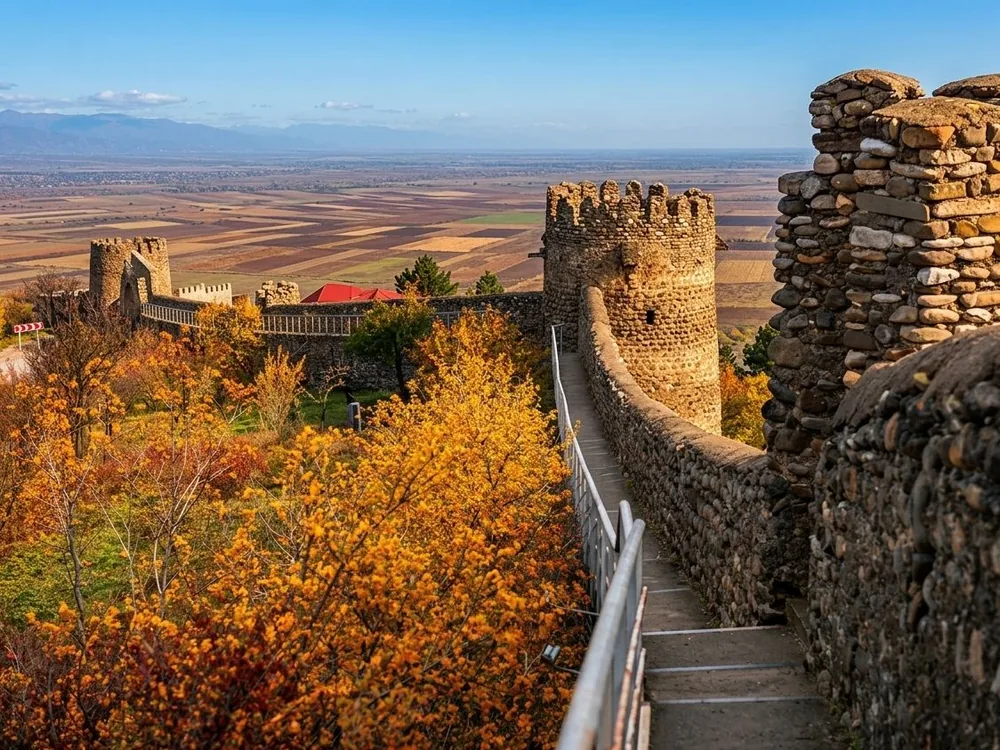
Built 1762 · 18th-century defensive city wall circuit built by King Heraclius II (Erekle II) of Kartli-Kakheti; the walls enclose the hilltop town of Sighnaghi on a ridge above the Alazani Valley, with 23 towers set at intervals along approximately 4.5 km of walled perimeter; the circuit wall uses local stone and follows the natural contours of the ridgeline; unlike most fortress walls in Georgia, the Sighnaghi wall circuit encloses an entire living town rather than a separate citadel — the 1,000 residents of Sighnaghi live within the walls
This page is part of an independent travel guide and is not affiliated with, endorsed by, or operated by Sighnaghi Fortress.
© Castles & Palaces
Quick Facts
- Hours
- Mon–Sun open
- Day trip from
- €91
- Duration
- 1–2 hours for a walk along the wall circuit and towers; full day on the GetYourGuide Kakheti excursion
- Best time
- April to June, September to November
- Nearest city
- Sighnaghi
Featured Tour
Tbilisi: Day Trip to Kakheti and Sighnaghi with Lunch
Cancellation available · Instant confirmation
Highlights
- ✦A fortress that is still a city — Sighnaghi's wall circuit, built by King Heraclius II in 1762, was designed to protect the entire town rather than a separate citadel; the roughly 4.5 km of walls with 23 towers enclose the town and all its residents, making Sighnaghi one of the very few fully walled and still-inhabited hilltop towns in the Caucasus
- ✦The Alazani Valley panorama — the wall circuit follows the ridgeline above the valley, and the view from the towers and wall-top walk over the Alazani plain and the Greater Caucasus range beyond is one of the most photographed landscapes in Georgia; on clear days the snow-capped peaks of the Greater Caucasus are visible 150 km to the north across the agricultural expanse of the valley
- ✦King Heraclius II's defensive response — the walls were built in the context of the Kakhetian-Persian wars and the persistent threat of raids from the Lezgi people of Dagestan to the north; Heraclius II, one of the most significant rulers in late Georgian history, built the Sighnaghi walls as part of a broader programme of fortifying Kakheti's population centres against attack; the wall is as much a monument to the political and military pressures of 18th-century Caucasus geopolitics as it is a piece of military architecture
- ✦Free and open access — unlike most Georgian fortress sites, the Sighnaghi wall circuit is freely accessible at all times with no entrance fee; visitors can walk sections of the wall and climb the towers without purchasing a ticket; the Kakheti day tour confirms a stop at the fortress walls in the itinerary ('climb the fortress wall, and visit one of the towers'), combining Sighnaghi with Bodbe Monastery and a winery visit
- ✦Georgia's 'City of Love' and the Tbilisi-Sighnaghi wedding tradition — Sighnaghi has been promoted as the 'City of Love' by Georgian tourism authorities in part because its Civil Registry Office operates 24 hours a day, making it the destination for impulsive weddings among Georgian couples; the combination of the beautiful hilltop setting, the open-air architecture, and the round-the-clock registry has made Sighnaghi both a romantic destination and a running reference in Georgian popular culture
Tickets & tours
Book through GetYourGuide
Sighnaghi sits on a long ridge above the Alazani Valley in Kakheti, its 18th-century wall circuit following the natural contours of the hillside for approximately 4.5 km, punctuated by 23 towers at intervals along the perimeter. The town within the walls has about 1,000 permanent residents — making Sighnaghi one of the very few fully enclosed and still-inhabited hilltop towns in the entire Caucasus region.
The walls were built by King Heraclius II of Kartli-Kakheti in 1762, in the context of two persistent threats: the Lezgi raids from Dagestan to the north and the ongoing Kakhetian-Persian confrontation to the south. Heraclius II (Erekle II in Georgian) was one of the most consequential rulers in Georgian history — the king who eventually negotiated the Treaty of Georgievsk with the Russian Empire in 1783, accepting Russian protection in exchange for suzerainty. The Sighnaghi walls were part of his broader programme of fortifying Kakheti's population centres against the threat environment that made the Russian alliance ultimately necessary.
The architectural logic of the Sighnaghi walls is different from most Georgian fortress sites. Rather than a separate citadel on a defensible rock, the walls here enclose the entire town — houses, streets, churches, and all — within a single perimeter. This was a response to the nature of the threat: Lezgi raids were fast-moving, and the population needed shelter within seconds rather than minutes. The wall circuit was designed to be reached from anywhere in the town quickly, and the 23 towers gave defenders overlapping fields of fire along the wall faces between them.
Today the walls are freely accessible at all hours with no entrance fee, and walking sections of the circuit is the defining activity in Sighnaghi. The views from the towers over the Alazani Valley and toward the Greater Caucasus are exceptional in the early morning and late afternoon light, when the haze that often sits over the valley floor in summer has cleared. The GetYourGuide Kakheti day tour stops at Sighnaghi's fortress walls and includes a tower visit confirmed in the tour description, combining it with Bodbe Monastery and a winery visit in a full-day Kakheti programme from Tbilisi with lunch included.
History
The Sighnaghi ridge has been settled since antiquity, with evidence of occupation from the Bronze Age. The current wall circuit was commissioned by King Heraclius II (Erekle II) of Kartli-Kakheti and built in 1762, during a period of intensified Lezgi raids and Persian pressure on the kingdom. The walls enclose a town that had developed on the ridge in the preceding centuries. Kakheti was incorporated into the Russian Empire in 1801 under Heraclius's successor, ending the independent Kingdom of Kartli-Kakheti. Sighnaghi declined in economic importance during the 19th century as the railway bypassed the ridge route. The town was substantially rehabilitated by the Georgian government in the 2000s–2010s as part of a tourism development programme that also established the 24-hour Civil Registry Office, generating the 'City of Love' branding.
How to Visit
Getting there: Sighnaghi is approximately 110 km east of Tbilisi via the main Kakheti highway (passing through Gombori or Rustavi); the drive takes 1.5–2 hours. Marshrutka (shared minibus) service runs from Tbilisi's Samgori station. The GetYourGuide Kakheti day tour departs from Tbilisi and handles all transport including the Sighnaghi stop.
Tickets: The Sighnaghi fortress walls and towers are freely accessible with no entrance fee — walk up to the wall from any point in the town. The GetYourGuide day tour (from Tbilisi with lunch) includes a stop at the fortress walls with tower access confirmed in the tour description, alongside Bodbe Monastery and a winery visit.
Practical tips: The wall circuit is a 4–5 km walk at a comfortable pace; most visitors cover a section along the south-facing ridge (giving the best Alazani Valley views) rather than the complete circuit. Early morning before 9am gives the clearest mountain views and the quietest streets. The town is small enough that the wall walk, a visit to the Sighnaghi Museum (which houses a significant Niko Pirosmani collection), and a meal in one of the wine-bar restaurants can be combined in a full but unhurried day.
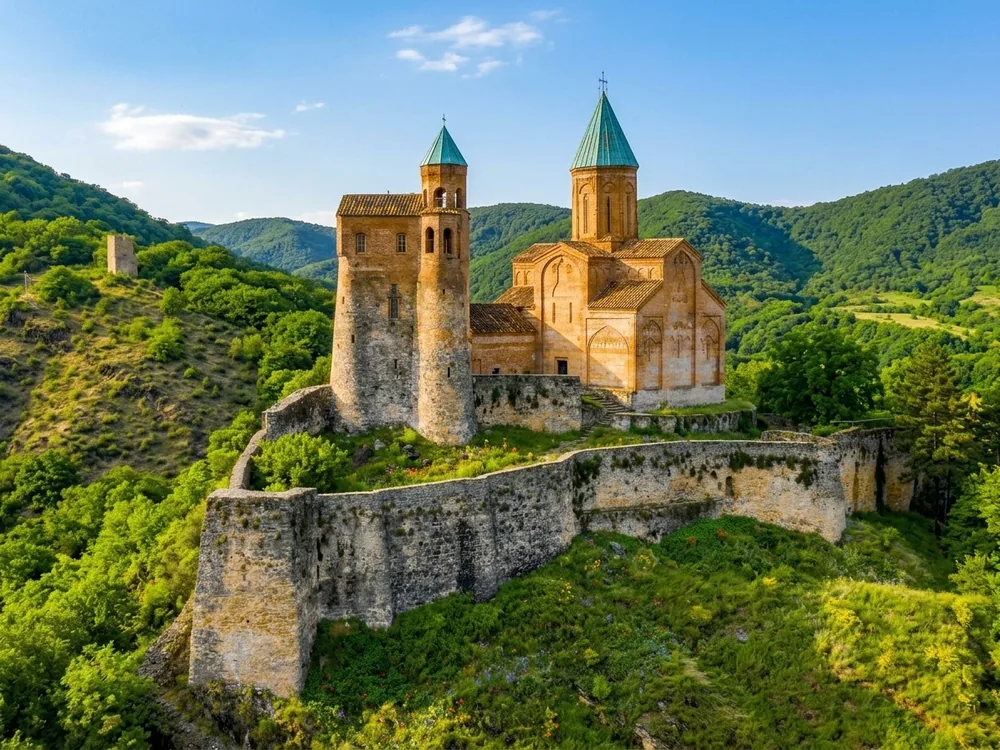
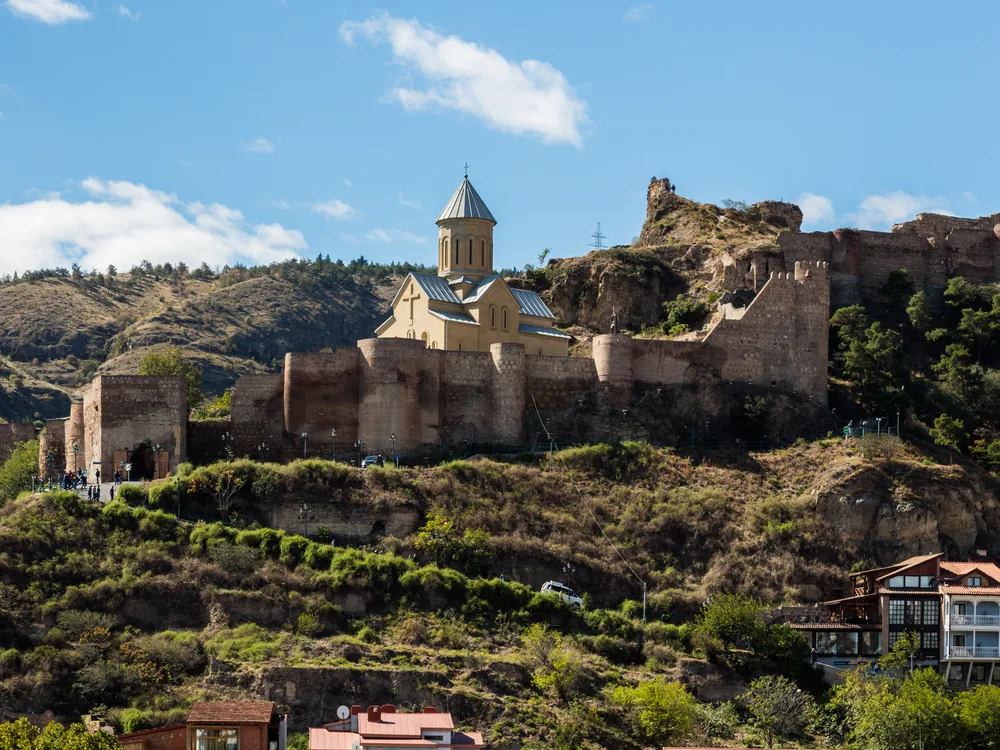
Combine with: Gremi Citadel (~35 km north in Kakheti — the 1565 royal citadel of the Kingdom of Kakheti, destroyed by Shah Abbas I in 1615, with the Church of the Archangels intact on its rocky outcrop; the two together cover the full range of Kakheti's historic fortifications) and Narikala Fortress (in Tbilisi — the medieval fortress above the Old Town that is the natural starting or ending point for any Kakheti day trip).
Frequently Asked Questions
The 'City of Love' name was introduced as a Georgian government tourism marketing initiative in the 2000s-2010s, coinciding with the rehabilitation of Sighnaghi's old town. The tagline was backed by a practical policy: the local Civil Registry Office was made the only 24-hour marriage registration office in Georgia, allowing couples to get married at any time of day or night. The combination of the romantic hilltop setting, the 24-hour registry, and the government's active promotion of Sighnaghi as a wedding destination gave the nickname real purchase in Georgian popular culture. The town has become a genuine short-break destination for Georgian couples from Tbilisi, and the registry office does conduct weddings at all hours.
Location
Sighnaghi, Kakheti, Georgia
Nearby Castles
Tours & Tickets
Powered by GetYourGuide
From
€91/ person