
Khertvisi Fortress
ხერთვისის ციხე
Georgia · Samtskhe-Javakheti, Georgia · Near Akhaltsikhe
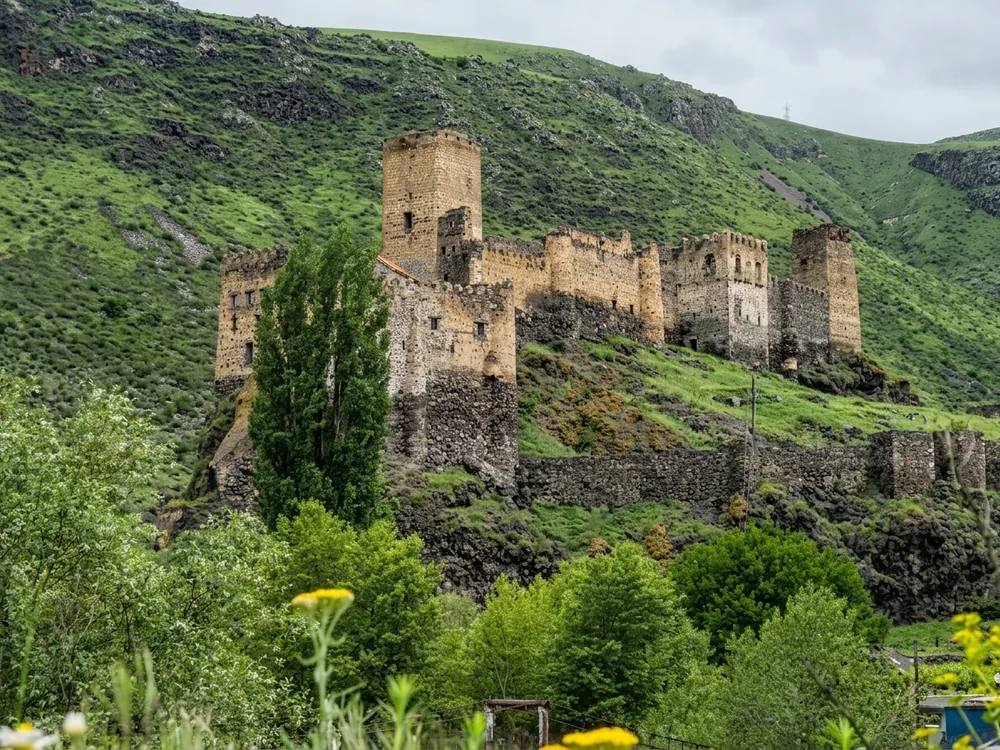
Built 914 · Multi-period hilltop fortress on a steep rocky promontory at the confluence of the Mktvari and Paravani rivers; documentary evidence dates the current fortress to 914 CE, though occupation of the strategic site is significantly older; the walls use the layered stone-and-mortar construction technique characteristic of medieval Georgian military architecture, with successive rebuilding during the Bagratid, Mongol, Timurid, and Ottoman periods leaving traces in different wall sections; the fortress's sheer rocky approach gave it a natural defensive strength requiring minimal architectural reinforcement on three sides
This page is part of an independent travel guide and is not affiliated with, endorsed by, or operated by Khertvisi Fortress.
© Castles & Palaces
Quick Facts
- Hours
- Mon–Sun open
- Day trip from
- €60
- Duration
- 1–1.5 hours at the fortress; full day on the GetYourGuide tour from Kutaisi
- Best time
- April to October
- Nearest city
- Akhaltsikhe
Featured Tour
Kutaisi: Vardzia and Beyond — Historical Day Tour
Cancellation available · Instant confirmation
Highlights
- ✦Documented since 914 CE — a royal decree from 914 CE refers to Khertvisi, making it one of the oldest dated fortifications in Georgia; the strategic importance of its position — guarding the confluence of the Mktvari and Paravani rivers and the road to the Javakheti Plateau — ensured continuous military use across the Bagratid, Mongol, Timurid, Ottoman, and Russian periods
- ✦The unscalable promontory — Khertvisi's rocky outcrop is sheer on three sides, with the Mktvari and Paravani rivers forming natural moats below; the fortress required only minimal defensive architecture on three sides and concentrated its construction on the single approachable face; this natural defensive strength allowed the fortress to hold against siege forces that overwhelmed more conventionally positioned strongholds
- ✦The geological drama — the setting at the river confluence, with the fortress walls rising directly from the sheer rock face above the rushing water, is one of the most visually dramatic of any Georgian fortress; the approach along the gorge road gives a view of the fortress seen against the rocky ridgeline that looks impregnable even from a distance
- ✦The Kutaisi-based historical day tour includes a guided stop at Khertvisi Fortress; note that the on-site entrance fee of 10 GEL is paid separately on arrival and is not included in the tour price. The tour also visits Green Monastery and Timotesubani Monastery
- ✦En route to Vardzia — Khertvisi is on the road to Vardzia Cave Monastery, the famous medieval cave-city 25 km to the south; most visitors to Khertvisi are combining it with Vardzia on the same day, and the GetYourGuide tour follows this same logic, positioning Khertvisi as the fortification stop on a historical day that also covers the monastic cave complex
Tickets & tours
Book through GetYourGuide
Khertvisi Fortress rises from a sheer rocky promontory at the confluence of the Mktvari (Kura) and Paravani rivers in Samtskhe-Javakheti, southwest Georgia. It is one of the oldest dated fortifications in the country — a royal document from 914 CE refers to the fortress by name — and its strategic position guarding the river confluence and the road to the Javakheti Plateau ensured that it remained militarily relevant across more than a millennium of Georgian, Mongol, Timurid, and Ottoman conflict.
The fortress's setting is its most striking feature. Three of its four sides descend directly into the river gorges below — the Mktvari to the west and north, the Paravani to the south — leaving the rock face itself as the defensive barrier. The wall builders concentrated their efforts on the single approachable side, and the result is a fortress that looks genuinely impregnable from the river road below, the walls rising from the rock with no visible approach or foothold. This is not an illusion: Khertvisi withstood multiple siege attempts over its long history, with attackers typically abandoning the effort rather than face the combination of natural and constructed defences.
The recorded history of the fortress includes occupation during the period of the Bagratid Kingdom of Georgia (when the 914 CE document was written), subsequent periods under Mongol and Timurid control, Ottoman possession from 1578 to 1625 (part of the Ottoman-Safavid struggle over the eastern Caucasus), and eventual incorporation into the Russian Empire in the early 19th century. Each occupying power left traces in the wall fabric — the visitor can distinguish between different building periods by the stone-cutting technique and mortar composition in different sections, though the fortress's ruined state means these distinctions are more accessible to an archaeologist than a casual visitor.
The GetYourGuide historical day tour from Kutaisi includes a guided stop at Khertvisi as one of several sites on a route that also covers monastic sites and continues south toward Vardzia. The on-site entrance fee of 10 GEL (~€3–4) is paid directly at the fortress gate and is not bundled into the tour price.
History
A fortified position at the Mktvari-Paravani confluence is documented from at least the 10th century CE; a 914 CE royal document is the earliest dated reference to Khertvisi by name. The fortress was part of the medieval Kingdom of Georgia during its 12th–13th century peak under Queen Tamar and was subsequently occupied by Mongol forces following the 1220s invasions. Timur (Tamerlane) passed through the region in the late 14th century. The Ottoman-Safavid struggle for the Caucasus in the late 16th and early 17th centuries included an Ottoman occupation of Khertvisi from 1578 to 1625, when Persian forces recaptured it. The fortress passed to Russian imperial control in the early 19th century as part of the annexation of Georgian territories. It has been a protected historical monument since the Soviet period and was partially consolidated in the 20th century.
How to Visit
Getting there: Khertvisi is approximately 80 km south of Akhaltsikhe on the road toward Vardzia, in the Mtkvari river gorge. From Tbilisi the drive to Khertvisi takes approximately 3.5 hours; from Kutaisi it is also approximately 3–4 hours via the mountains. The GetYourGuide day tour departs from Kutaisi and includes all transport.
Tickets: On-site entrance fee approximately 10 GEL (~€3–4), paid at the gate — bring Georgian lari as card payment is not available. The tour includes a guided stop at Khertvisi Fortress, but the 10 GEL entrance fee is explicitly excluded from the tour price and paid separately on arrival.
Practical tips: The best views of the fortress from below are from the road that runs along the river gorge — stop before reaching the fortress gate to appreciate the full visual impact of the walls rising from the rock face. The interior of the fortress is partially ruined and the most interesting element is walking the wall circuit for the river views and the sense of the strategic position. The road continues south to Vardzia Cave Monastery (25 km), which the tour also visits.
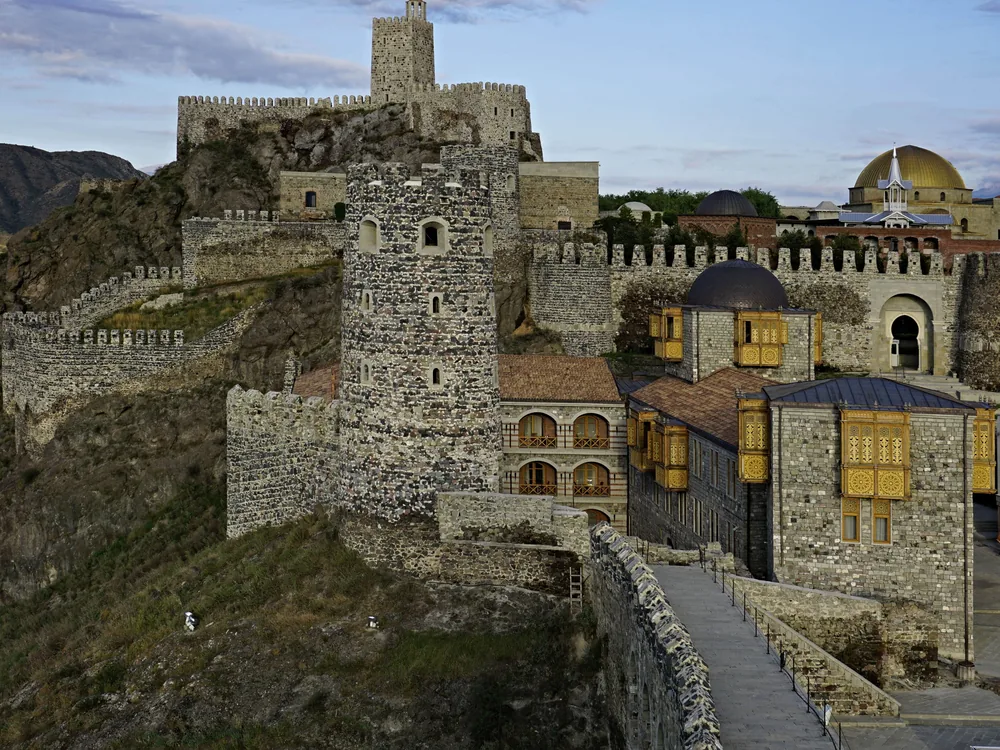
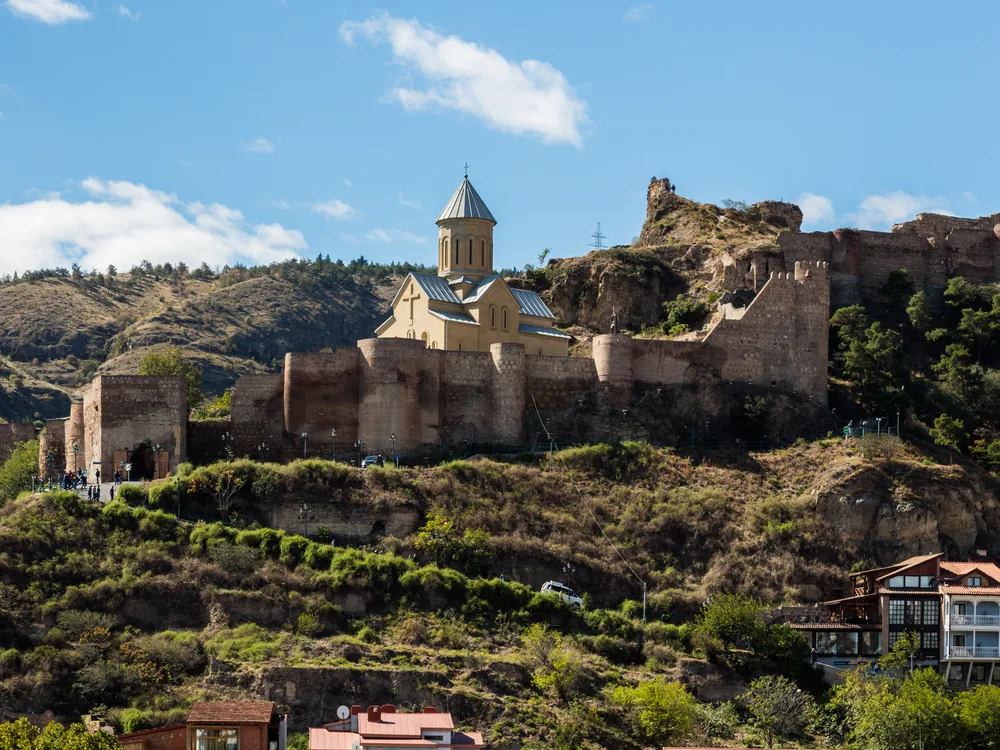
Combine with: Rabati Castle (~80 km north in Akhaltsikhe — the massive restored Ottoman-era castle complex on a ridge above the city, the most visited and most extensively restored fortress in Samtskhe-Javakheti) and Narikala Fortress (in Tbilisi — the city-defining fortress above the Old Town, the most practical starting point for any journey into Samtskhe-Javakheti).
Frequently Asked Questions
The 914 CE royal document that mentions Khertvisi by name is one of the earliest dated documentary references to a named fortress in Georgian historical records. While the strategic position at the Mktvari-Paravani confluence was certainly used for defensive purposes before 914 — the site's natural advantages would have been apparent from any period of settlement — the 914 CE document provides a fixed date that establishes Khertvisi among the oldest named and documented fortifications in Georgia. Comparable early medieval fortresses in Georgia (Shuakhevi, Tmogvi) share similar rocky promontory positions along the Mktvari river valley, suggesting a systematic approach to fortifying the waterway during the Bagratid kingdom's consolidation period.
Location
Khertvisi, Samtskhe-Javakheti, Georgia
Nearby Castles
Tours & Tickets
Powered by GetYourGuide
From
€60/ person