
Hertefeld Castle
Schloss Hertefeld & Hertefeldhof
Germany · North Rhine-Westphalia — Weeze, on the River Niers, near the Dutch border · Near Kleve
Built 1322 · First mentioned as a manor house in 1322, converted into a moated castle in 1700, destroyed in 1945, rebuilt from the ruins from 2005
This page is part of an independent travel guide and is not affiliated with, endorsed by, or operated by Hertefeld Castle.
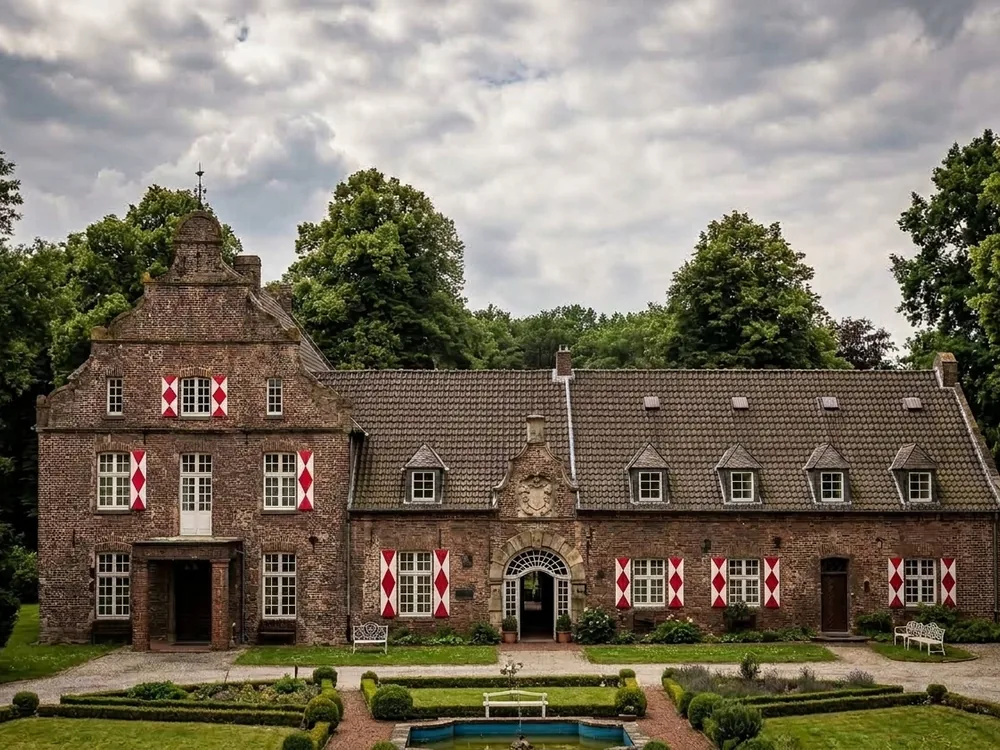
© Castles & Palaces
Quick Facts
- Rooms from
- €99 / night
- Duration
- Overnight stay only
- Best time
- Year-round
- Nearest city
- Kleve
Stay Here
Schloss Hertefeld & Hertefeldhof
Rooms are split between the historic building and a newer wing
Booked via Booking.com · Free cancellation on most rates
Marketed as 'the only inhabitable castle ruin in the country' — only 6 of the 24 rooms are around the castle building itself (including a Turmzimmer/tower room); the remaining 18 are in the Hertefeldhof guesthouse on the same grounds
Highlights
- ✦First recorded as a manor in 1322, held by the same family (the Princes of Eulenburg and Hertefeld) for roughly 700 years
- ✦Converted into a moated castle in 1700 for better defensibility; destroyed in 1945 and rebuilt from the ruins starting in 2005
- ✦Marketed as "the only inhabitable castle ruin" in Germany
- ✦Only 6 of the 24 rooms — including a genuine Turmzimmer (tower room) — are around the castle itself; 18 more are in the Hertefeldhof guesthouse on the grounds
- ✦Sits directly on the River Niers near the Dutch border
Stay in the castle itself
Book a room via Booking.com
Hertefeld Castle traces its documented history back to 1322, when it first appears in records as a manor house on the River Niers in North Rhine-Westphalia, close to today's Dutch border. Remarkably, the estate remained in the hands of a single family lineage — the Princes of Eulenburg and Hertefeld — for roughly 700 years, an unusually long continuous tenure even among Germany's aristocratic estates. In 1700, the property was rebuilt as a proper moated castle for improved defensibility, a form it retained until the Second World War.
The castle was destroyed in 1945, and its ruins stood largely untouched for six decades before a substantial rebuilding project starting in 2005 brought the property back into use — a restoration distinctive enough that the hotel markets itself as "the only inhabitable castle ruin" in Germany. Today's 24 rooms are split unevenly between the two structures on the grounds: just 6 rooms, including a genuine tower room, sit around the castle building itself, while the remaining 18 rooms are in the Hertefeldhof, a guesthouse elsewhere on the estate.
The near-700-year single-family ownership of Hertefeld stands out even among the longer continuous tenures found elsewhere in this collection, giving the estate a genuinely unbroken thread of family history running from its 14th-century origins through its wartime destruction and eventual 21st-century rebuilding. Few properties covered here can claim ownership continuity across such a span of German history, from the medieval period through two world wars and into the present hospitality operation.
The castle's marketing claim of being "the only inhabitable castle ruin" in Germany deserves a moment of scrutiny: it reflects the specific way the 2005 rebuilding preserved and incorporated genuine ruin elements from the 1945 destruction into a functioning, liveable structure, rather than either leaving the site as an inaccessible ruin or fully erasing the ruin's character through a complete ground-up reconstruction. That middle path — habitable rooms built directly into and around surviving ruin fabric — is what distinguishes Hertefeld from castles that were either left as pure ruins or entirely rebuilt to their pre-destruction appearance.
The River Niers, on which the castle directly sits, is a modest tributary river characteristic of the flat, agricultural Lower Rhine region near the Dutch border — a landscape considerably different from the steep river gorges and vineyard slopes associated with much of western Germany's more famous castle country. This proximity to the Netherlands gives Hertefeld a genuinely cross-border appeal, with Dutch towns just across the frontier offering an easy day-trip option unavailable to castle-hotels further inland.
Given the uneven split of accommodation between the castle building and the separate Hertefeldhof guesthouse, prospective guests specifically drawn by the "inhabitable ruin" concept should book one of the 6 castle-adjacent rooms directly rather than assume any room on the property offers that particular experience — the majority of guests at Hertefeld in fact stay in the more conventional guesthouse rather than the historically distinctive castle structure itself.
The surrounding Lower Rhine countryside, flat and heavily agricultural, contrasts sharply with the steep, dramatic river gorges most commonly associated with German castle tourism, giving Hertefeld a genuinely different rural character — quiet farmland and waterways rather than vineyard-terraced hillsides — for visitors seeking a more understated countryside stay away from the busier Rhine and Moselle tourist routes.
History
Hertefeld Castle was first recorded as a manor house in 1322 on the River Niers in North Rhine-Westphalia, and remained in the hands of the same family — the Princes of Eulenburg and Hertefeld — for roughly 700 years. It was rebuilt as a moated castle in 1700, then destroyed in 1945. A substantial rebuilding project starting in 2005 brought the property back into use, incorporating surviving ruin fabric into a habitable structure — the basis for its marketing as "the only inhabitable castle ruin" in Germany. Today's 24 rooms are split between the castle building and the separate Hertefeldhof guesthouse.
How to Stay
Getting there: Weeze, North Rhine-Westphalia, on the River Niers near the Dutch border.
Rooms & rates: Only 6 of the 24 rooms — including a tower room (Turmzimmer) — are around the rebuilt castle building itself; the remaining 18 rooms are in the Hertefeldhof, a separate guesthouse on the same grounds. From €99/night (the official site also quotes rates from €46 per person on a half-board basis — this per-room figure reflects standard double-occupancy Booking.com pricing).
On-site: Restaurant, gardens.
Good to know: If sleeping inside the actual castle structure is the priority, specify one of the 6 castle-adjacent rooms (or the tower room) explicitly — the majority of the property's rooms are in the separate Hertefeldhof guesthouse.
Combine with: The Dutch border towns just across the frontier, an easy day trip.
Frequently Asked Questions
The castle was destroyed in 1945, and a rebuilding project starting in 2005 incorporated the surviving ruin fabric directly into a habitable structure, rather than either leaving it as an inaccessible ruin or fully reconstructing it to its pre-destruction appearance — the basis for the property's marketing claim.
Location
Hertefeld 1, 47652 Weeze, Germany
Nearby Castles
Rooms from
€99/ night