
Royal Palace Het Loo
Paleis Het Loo
Netherlands · Gelderland · Near Apeldoorn
Built 1686 · Dutch Baroque palace designed by Jacob Roman and Daniel Marot for William III of Orange, built 1684–1686 and expanded with flanking wings by 1692; the interior was adapted and expanded over two centuries of Orange-Nassau royal use, with successive monarchs from William III through Queen Wilhelmina adding rooms and collections; the palace and its grounds were fully restored from 1977 to 1984 to their original William-and-Mary-era layout, with the formal Baroque gardens reconstructed from historical records — one of the most extensive royal garden restorations in Europe; opened as a national museum in 1984
This page is part of an independent travel guide and is not affiliated with, endorsed by, or operated by Royal Palace Het Loo.
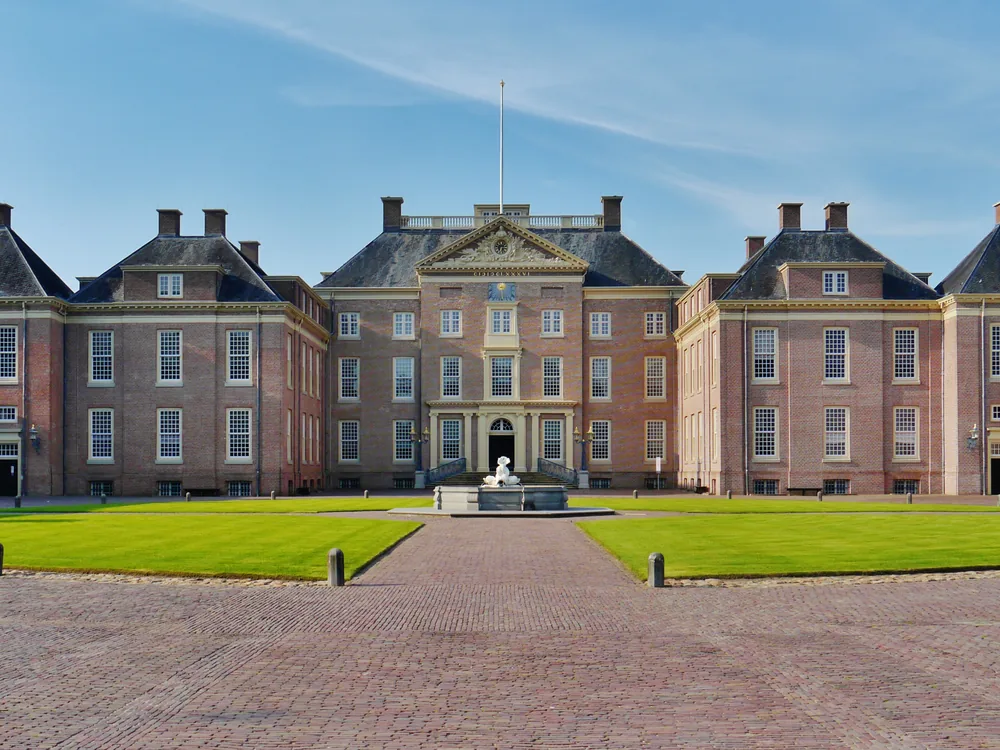
© Castles & Palaces
Quick Facts
- Hours
- Daily 10:00–17:00
- Entry via GetYourGuide
- €21
- Duration
- 2–4 hours
- Best time
- April to October
- Booking
- Required — book 7+ days ahead
- Nearest city
- Apeldoorn
Featured Tour
Apeldoorn: Royal Palace 'Het Loo' Entry Ticket
Cancellation available · Instant confirmation
Highlights
- ✦Het Loo was built for William III of Orange and his wife Mary Stuart, the couple who crossed the Channel in 1688, deposed James II, and became joint monarchs of England, Scotland, and Ireland — making the palace effectively the Dutch seat of a cross-Channel dynastic revolution that reshaped British constitutional history and created the framework for the constitutional monarchy that still exists today
- ✦The formal Baroque gardens, restored from 1977 to 1984 using historical drawings and records, are widely considered the finest example of restored Dutch Baroque garden design in Europe: precisely clipped parterres, fountains, gravel paths, and topiary arranged on strict geometric axes in the manner prescribed by French garden theory but executed with Dutch restraint and botanical precision
- ✦The palace's House of Orange-Nassau museum collection covers nearly three centuries of Dutch royal history — from William III and Mary through Queen Wilhelmina, the last monarch to use the palace as a royal residence before its conversion to a museum — with personal objects, court dress, royal portraits, and historical documents accumulated across an unusually long continuous family ownership
- ✦A comprehensive restoration completed in 1984 returned Het Loo to its William-and-Mary-era configuration — stripping out 19th-century modifications, rebuilding the original garden layout from historical records, and restoring interiors to their late 17th-century decorative scheme — making it one of the most thorough royal palace restorations of the 20th century and a reference point for later European restoration projects
- ✦Het Loo is approximately 1 hour from Amsterdam and receives 700,000 visitors annually, making it significantly more visited than most Dutch heritage sites — advance booking through GetYourGuide is strongly recommended in spring and summer, when queues without a timed ticket can be substantial
Skip the queue with a guided tour
Skip-the-line tickets & expert guides
William III of Orange arrived in England in November 1688 with a fleet of 463 ships and an army of approximately 14,000 men, invited by a coalition of English Protestant nobles who wanted James II removed from the throne. The crossing, carefully staged for maximum political effect, was completed in favourable winds in just two days. James fled to France. William and his wife Mary Stuart — James's own Protestant daughter — were crowned joint monarchs in April 1689 in a ceremony that inaugurated what the English called the Glorious Revolution and what constitutional historians recognise as a foundational moment in the development of parliamentary sovereignty over royal prerogative. The Bill of Rights followed the same year, establishing limits on royal power that formed the template for constitutional monarchy across the next three centuries.
Het Loo Palace was built two years before all of this, in 1684–1686, for William in his capacity as Stadtholder of Holland — the head of the Dutch Republic's executive apparatus rather than its king. The architects were Jacob Roman and Daniel Marot, the latter a French Huguenot who had fled France after the revocation of the Edict of Nantes in 1685 and brought with him the French court style in architecture and garden design that Louis XIV had made the European standard. The result was a building of Dutch Baroque restraint — no Versailles-scale grandeur, no theatrical facades — but with interior rooms and gardens that matched the ambitions of the major European royal residences of the period. William and Mary used Het Loo as their favourite private retreat until Mary's death from smallpox in 1694; William died in 1702 after a horse-riding accident, and the palace passed to the House of Orange-Nassau that would produce successive Dutch stadholders and, after 1815, Dutch kings and queens.
The formal gardens are the feature that most directly distinguishes Het Loo from other Northern European royal palaces of similar scale. Marot brought to Apeldoorn the French parterre garden tradition — geometric beds defined by clipped box hedging, gravel paths radiating from central axes, fountains at focal points, topiary providing vertical punctuation — and adapted it to the Dutch landscape and Dutch botanical culture. The Netherlands in the late 17th century was at the centre of European horticulture: Dutch East India Company trade brought plant specimens from Asia and the Americas, the Dutch bulb industry was already producing the tulip and hyacinth varieties that would dominate European garden fashion for the next century, and Dutch botanical expertise was unmatched. The gardens at Het Loo reflected this: precisely maintained, botanically sophisticated, and organised on geometric principles that expressed the Enlightenment-era conviction that nature could be ordered by reason.
The gardens were modified by successive owners across the 18th and 19th centuries — most damagingly by Louis Napoleon, Napoleon's brother, who served as King of Holland from 1806 to 1810 and ordered the formal Baroque gardens filled in and replaced with an English landscape park in the Romantic fashion then sweeping Europe. This obliteration of the original design is what made the 1977–1984 restoration remarkable: working from historical drawings, surveys, and written records, restorers rebuilt the formal garden layout from scratch, recreating the parterre patterns, replanting the box hedging and topiary, and restoring the fountains. The result is a Baroque garden of a quality and completeness that would not exist without the 20th-century reconstruction — a paradox that the palace openly acknowledges, and that raises honest questions about what 'restored' means when the original was deliberately destroyed.
The palace interior covers the full span of Orange-Nassau royal use. The William-and-Mary rooms reflect the late 17th-century decorative language of Delftware tiles, silk hangings, and Dutch still-life paintings. Later rooms document the modifications made by successive monarchs as the palace adapted from a working royal residence to a family seat. The collection associated with Queen Wilhelmina — who abdicated in 1948 in favour of her daughter Juliana and spent her final years at Het Loo — gives the palace its most recent and most personally documented royal chapter: Wilhelmina lived through both World Wars, led the Dutch government in exile from London from 1940 to 1945, and returned to the Netherlands to a role that was partly political and partly symbolic, entirely characteristic of how European constitutional monarchies navigated the 20th century.
For visitors from Amsterdam, the journey to Apeldoorn by train takes approximately one hour, with regular services from Amsterdam Centraal. The final stretch from Apeldoorn station to the palace is covered by bus or taxi (20 minutes). The GetYourGuide entry ticket is time-slotted, allowing entry at a selected time — advance booking is strongly recommended, particularly in spring and summer, when the palace's 700,000 annual visitors create significant demand for timed slots.
The visit itself takes two to four hours depending on pace. The formal gardens alone can absorb an hour in spring and early summer, when the parterres are in full display and the fountains are operating. The interior circuit covers the staterooms, the House of Orange-Nassau exhibition, and the royal collections in a sequence that traces the palace's three-century history from William and Mary's original rooms through Wilhelmina's later additions. The palace café and restaurant are in the former kitchen and service buildings, and the bookshop has the most thorough selection of Orange-Nassau dynastic history in English that you are likely to find outside a specialist library.
Het Loo's significance for British visitors specifically is worth noting directly. The constitutional arrangements that William and Mary established in 1689 — parliamentary sovereignty, a standing Bill of Rights, the principle that the monarch governed with rather than over Parliament — are the foundations of the British constitutional settlement that remains in force today. Het Loo is, among other things, the house where those arrangements were conceived and where the couple who created them lived and worked. For a palace of this constitutional significance, it is surprisingly unknown in Britain, where the 1688 settlement is frequently described without much attention to its Dutch origins.
History
Het Loo was built in 1684–1686 for William III of Orange and his wife Mary Stuart by architects Jacob Roman and Daniel Marot. William and Mary became joint monarchs of England, Scotland, and Ireland after the Glorious Revolution of 1688. The palace served as a favourite retreat during their joint reign and remained a working royal residence of the House of Orange-Nassau through successive stadholders and, after 1815, Dutch kings and queens. Queen Wilhelmina spent her final years at the palace before her death in 1962. In 1977 the Dutch government undertook a comprehensive restoration to return the palace and gardens to their original 17th-century configuration; the restored palace opened as a national museum in 1984.
How to Visit
Getting there: Train from Amsterdam Centraal to Apeldoorn (approximately 1 hour), then bus or taxi from Apeldoorn station (20 minutes). By car: approximately 1 hour from Amsterdam via the A1 motorway to the A50, exit Apeldoorn-Noord. The palace has a large car park on site.
Tickets: The GetYourGuide entry ticket is time-slotted — advance booking strongly recommended in spring and summer. Walk-up tickets may be available but queues can be long.
Visit length: 2–4 hours for palace and gardens. Allow the upper range in spring when the parterres are at their best.
Practical tips: April to October. Book at least 7 days ahead.
Combine with: The palace is the principal heritage site in Apeldoorn. The broader Veluwe national park surrounds the town and offers cycling and nature trails as a contrast to the formal palace gardens.
Frequently Asked Questions
Het Loo was the home of William III of Orange and his wife Mary Stuart, who became joint monarchs of England, Scotland, and Ireland after the Glorious Revolution of 1688. The constitutional settlement they established — including the Bill of Rights (1689) and the principle of parliamentary sovereignty over royal prerogative — forms the basis of the British constitutional system that remains in force today. William used Het Loo as his preferred private retreat throughout his reign as King of England from 1689 until his death in 1702.
Location
Koninklijk Park 1, 7315 JA Apeldoorn, Netherlands
Nearby Castles
Tours & Tickets
Powered by GetYourGuide
From
€21/ person