
Moorish Castle
Castillo Árabe
Gibraltar · Gibraltar · Near Gibraltar Town
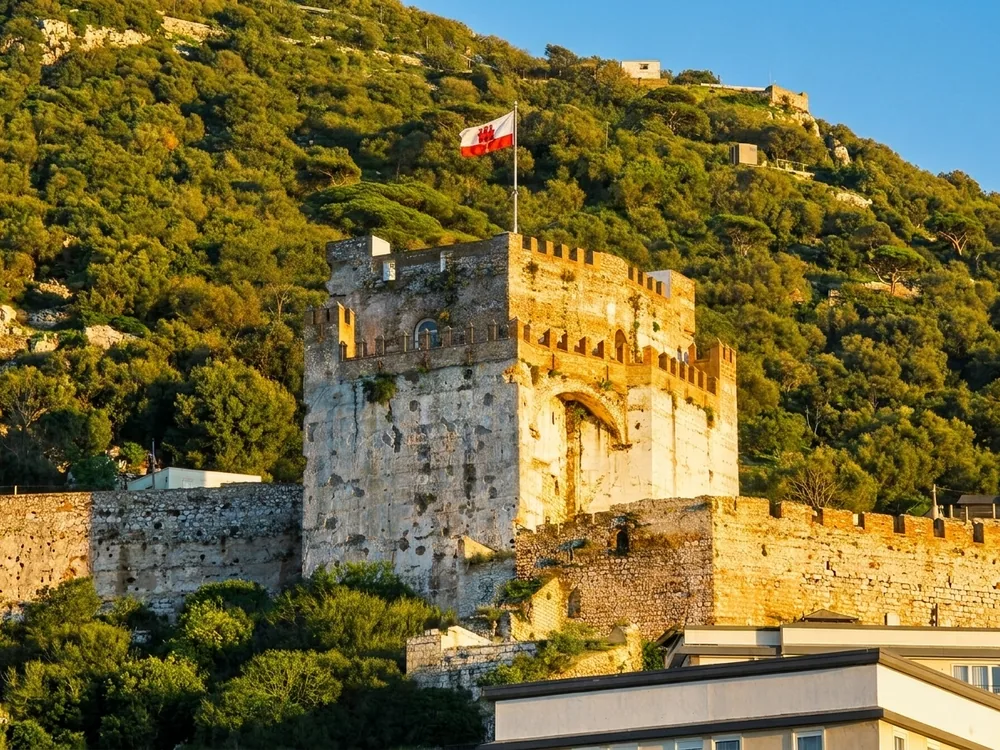
Built 711 · Moorish fortress built from 711 CE by the Umayyad forces who crossed from Morocco and established the Gibraltar garrison that gave the Rock its name; the Tower of Homage is the most intact surviving medieval structure on the Rock, built in the 14th century by the Marinid dynasty of Morocco during their occupation of Gibraltar; the tower's distinctive brickwork alternating red and buff courses in the Marinid North African style is unlike anything else on the Iberian Peninsula; the castle has been in continuous use as a military installation from 711 CE to the 20th century, passing through Moorish, Castilian, Spanish, and British hands
This page is part of an independent travel guide and is not affiliated with, endorsed by, or operated by Moorish Castle.
© Castles & Palaces
Quick Facts
- Hours
- Daily 09:30–17:00
- Entry
- £15
- Duration
- 45 minutes – 1 hour at the Moorish Castle; 3–4 hours for the full Gibraltar Nature Reserve All-Attractions Pass
- Best time
- March to May, October to November
- Nearest city
- Gibraltar Town
Featured Tour
Gibraltar: Official All-Attractions Nature Reserve Pass
Covers this site along with other attractions included in the pass. Worth it if you plan to visit several.
Book This Tour →Cancellation available · Instant confirmation
Highlights
- ✦The name behind Gibraltar — when Umayyad commander Tariq ibn Ziyad crossed from Morocco in 711 CE and established his garrison at this strategic Rock, the Arab forces named their position Jabal al-Tariq ('Mountain of Tariq'); the name in Arabic, then Castilian, then English, produced 'Gibraltar' — and the Moorish Castle is the direct physical descendant of that 711 CE garrison, making it the oldest named landmark in the western Mediterranean
- ✦The Tower of Homage's Marinid brickwork — the Tower of Homage, the castle's most prominent surviving structure, was built in the 14th century by the Marinid dynasty of Morocco during their rule of Gibraltar; the distinctive alternating courses of red and buff brick in the North African Marinid style are archaeologically unique in Gibraltar and give the tower an appearance unlike any other medieval military architecture on the Iberian Peninsula
- ✦The All-Attractions Pass for the Upper Rock — the GetYourGuide Gibraltar Nature Reserve pass includes the Moorish Castle alongside St. Michael's Cave (a natural cave system with a concert hall inside it), the Great Siege Tunnels (18th-century British military tunnels carved through solid rock), and Apes' Den (home to the famous Barbary macaques); the combined visit covers the full historical span of the Rock from 711 CE to the 20th century
- ✦Continuous military use from 711 to the 20th century — no other medieval fortress in Europe has been in uninterrupted military use for as long as the Moorish Castle; it has been garrisoned by Umayyad Arabs, Marinid Moroccans, Castilian Spaniards, Habsburg Spanish forces, and since 1704 by the British, whose Royal Navy and garrison used parts of the complex until the late 20th century; the Tower of Homage served as a military prison under British rule
- ✦The Great Siege of 1779–1783 — Gibraltar's Moorish Castle stood at the centre of the most significant military episode in British Gibraltarian history, the 'Great Siege' in which Spanish and French forces besieged the Rock for three years and seven months (the longest siege in British history) without successfully taking it; the British tunnelled through the Rock during this siege to create gun emplacements that saved the garrison, and those same tunnels are now part of the All-Attractions Pass
Tickets & tours
Book through GetYourGuide
The Moorish Castle on the upper slopes of the Rock of Gibraltar is the oldest standing structure in Gibraltar and the direct descendant of the fortress established by Umayyad commander Tariq ibn Ziyad in 711 CE. The castle's Arabic name — Jabal al-Tariq, meaning 'Mountain of Tariq' — is the etymological source of the word Gibraltar in every subsequent language that inherited it, making the Moorish Castle the founding monument of one of the most strategically significant places in European history.
The castle complex has been continuously occupied and modified since 711 CE, passing through Umayyad Arab, Marinid Moroccan, Castilian, Habsburg Spanish, and British hands over fourteen centuries of use. The most intact and distinctive surviving medieval structure is the Tower of Homage, built in the 14th century by the Marinid dynasty of Morocco during their period of control over Gibraltar. The tower's alternating courses of red and buff brick — a characteristic Marinid North African building technique — give it an appearance unlike anything else in Iberian medieval military architecture, immediately distinguishing it from the Spanish and British construction that surrounds it on the Upper Rock.
The Moorish Castle's history is inseparable from Gibraltar's extraordinary strategic significance. The Rock controls the entrance to the Mediterranean — the narrowest point between the Atlantic and the inland sea — and every power that has contested Mediterranean supremacy has wanted the Rock. The castle has been besieged, taken, retaken, besieged again, and garrisoned continuously, with the last significant military siege being the Great Siege of 1779–1783, in which Spanish and French forces failed over three years and seven months to dislodge the British garrison. The British tunnelled through the Rock during this siege to create gun emplacements that broke the siege — those tunnels, now called the Great Siege Tunnels, are part of the Gibraltar Nature Reserve All-Attractions Pass that also includes the Moorish Castle.
Gibraltar is a compact destination that visitors typically cover in a single day from the Costa del Sol or Algeciras in southern Spain. The All-Attractions Pass gives access to the Moorish Castle, St. Michael's Cave, the Great Siege Tunnels, and Apes' Den — a complete survey of the Rock's natural and military history in a 3–4 hour visit.
History
The Rock of Gibraltar was first fortified by the Umayyad forces under Tariq ibn Ziyad in 711 CE as a staging post for the Islamic conquest of the Iberian Peninsula. A castle was established on the Rock's slopes in this period; the current structures date primarily from the Marinid occupation of the 14th century. Gibraltar was taken by Castilian forces under Henry IV of Castile in 1462. The Castilians held the Rock until 1704, when an Anglo-Dutch fleet captured it during the War of the Spanish Succession. The 1713 Treaty of Utrecht ceded Gibraltar to Great Britain in perpetuity; Britain has held it since. The Moorish Castle was used as a British military prison for much of the 18th and 19th centuries. Gibraltar became a British Overseas Territory with its own parliament; its population voted overwhelmingly to remain British in 1967 and 2002 referenda. The Moorish Castle and related Upper Rock sites are managed by the Gibraltar Nature Reserve and open to visitors as part of the All-Attractions Pass.
How to Visit
Getting there: Gibraltar is at the southern tip of Spain, accessible by foot across the border from La Línea de la Concepción (15-minute walk from the Spanish border town). From Málaga or the Costa del Sol, drive to La Línea (~90 km) and cross on foot — taking a car into Gibraltar is not recommended due to limited parking. The airport runway famously crosses the main road into Gibraltar. Once in Gibraltar Town, the Moorish Castle is on the Upper Rock, accessible by cable car from Grand Parade (recommended) or by road taxi.
Tickets: The Gibraltar Nature Reserve All-Attractions Pass (€52 or equivalent in GBP) covers the Moorish Castle, St. Michael's Cave, Great Siege Tunnels, and Apes' Den — all on the Upper Rock. This is the standard way to visit the Upper Rock; the GetYourGuide pass provides a per-person all-attractions ticket. Note: the cable car is a separate ticket purchase at the bottom station in Gibraltar Town.
Practical tips: Wear comfortable shoes — the Upper Rock involves significant walking on uneven paths between the cable car top station and the various attractions. The Barbary macaques at Apes' Den will approach visitors and have been known to grab bags and food; keep belongings closed and secure. The Tower of Homage can be entered; it is the most architecturally distinctive element and should not be skipped. Gibraltar uses GBP (British pounds) alongside Euros — both are widely accepted but GBP gives better value at most sites.
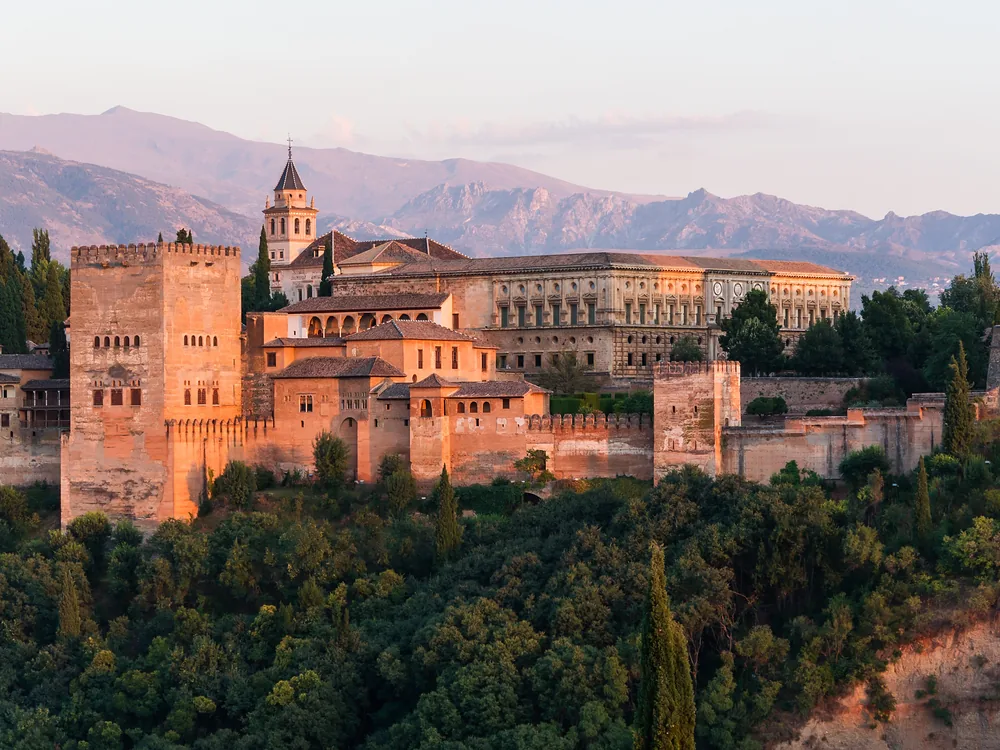
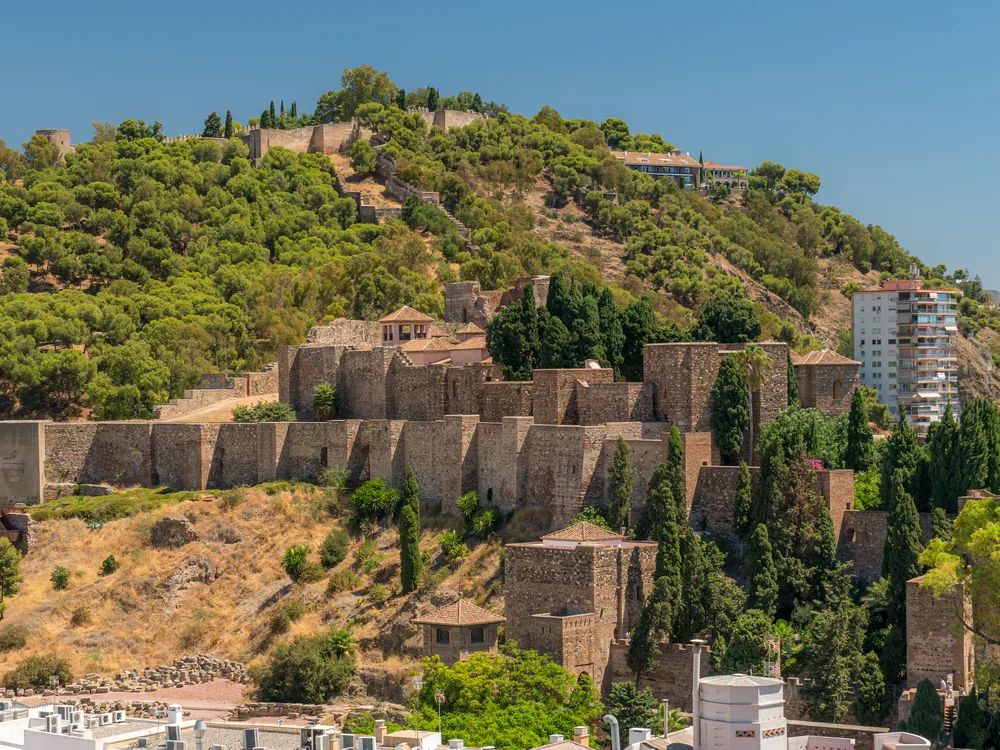
Combine with: Alhambra (~125 km northeast in Granada — the most celebrated example of Moorish palatial architecture in Europe, built by the Nasrid dynasty that the Marinids who built the Tower of Homage were contemporary with; the two together give a picture of the full scope of Moroccan Marinid and Spanish Nasrid Islamic architectural achievement in the western Mediterranean) and Castillo de Gibralfaro (~125 km northeast in Málaga — the hilltop Moorish fortress above Málaga connected by a fortified causeway to the Alcazaba below, built by the same Marinid dynasty and sharing the same North African construction traditions as Gibraltar's Tower of Homage).
Frequently Asked Questions
Gibraltar is a British Overseas Territory — it is under British sovereignty but is not part of the United Kingdom itself. It has its own parliament (the Gibraltar Parliament), its own constitution, and its own legal system. The territory was ceded to Britain 'in perpetuity' by the 1713 Treaty of Utrecht, ending the War of the Spanish Succession. Spain has consistently claimed sovereignty over Gibraltar, but the Gibraltar population has voted overwhelmingly to remain British in referenda in 1967 (99.6% British) and 2002 (98.5% British). Gibraltar is not part of the EU following Brexit, but EU citizens do not require a visa to visit. The currency is the Gibraltar pound, which is pegged to sterling; British pounds are also accepted everywhere.
Location
Willis's Road, Gibraltar GX11 1AA
Nearby Castles
Tours & Tickets
Powered by GetYourGuide
Pass
From €52