
Chlemoutsi Castle
Κάστρο Χλεμούτσι
Greece · Western Greece · Near Kyllini
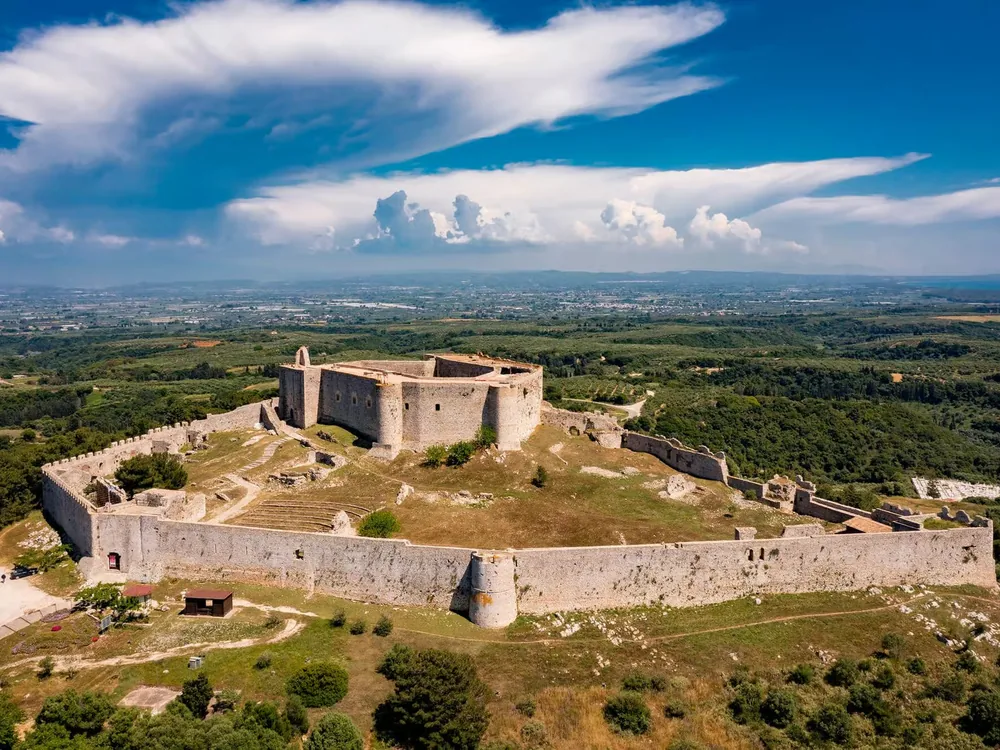
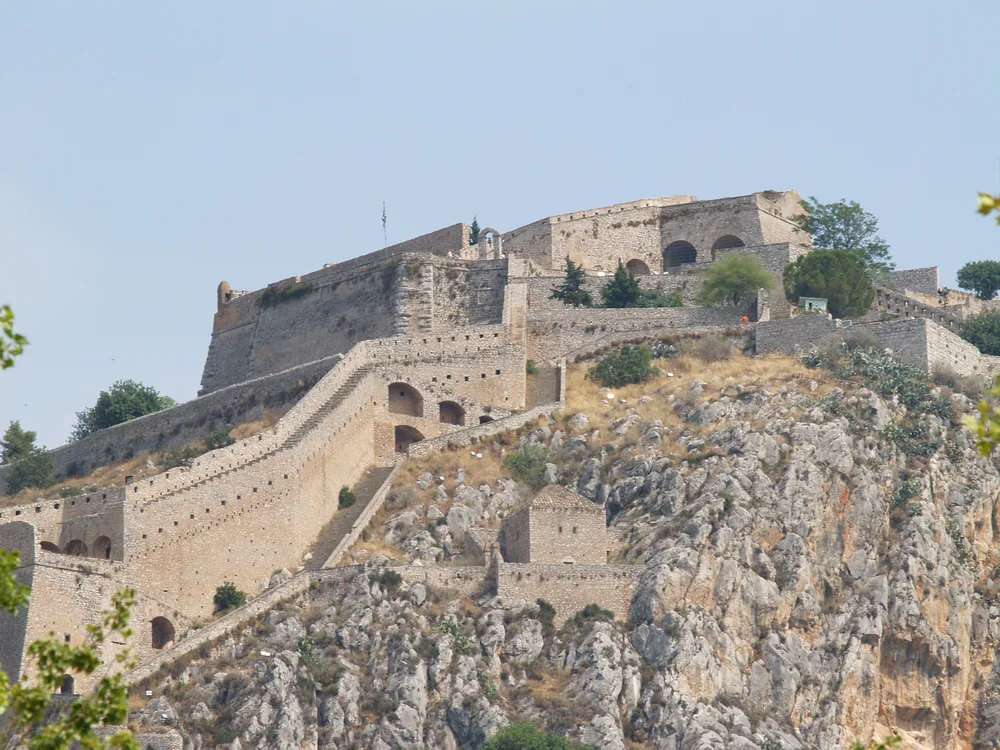
Built 1220 · Frankish (crusader-era) hilltop fortress built between 1220 and 1223 by Geoffrey I of Villehardouin, ruler of the Principality of Achaea, as the principal stronghold of Frankish Morea (the medieval Peloponnese); the fortress occupies a commanding hilltop position above the Ionian Sea with a large polygonal outer enclosure, a hexagonal inner court, and surviving vaulted halls that once housed the court of the Achaean princes; houses the only museum in Greece dedicated to the Frankish period (13th–15th century), with more than 500 artefacts from the surrounding Ilia region including coins, pottery, sculpture, and textiles
This page is part of an independent travel guide and is not affiliated with, endorsed by, or operated by Chlemoutsi Castle.
© Castles & Palaces
Quick Facts
- Hours
- Tue–Sun 08:00–15:00. Closed Mon
- Guided tour from
- €160
- Duration
- 1.5 hours
- Best time
- April to October
- Booking
- Required — book 1+ days ahead
- Nearest city
- Kyllini
Featured Tour
Chlemoutsi Castle: A Knight’s Legacy– Archaeologist-Led Tour
Cancellation available · Instant confirmation
Highlights
- ✦The best-preserved Frankish (crusader-era) castle in Greece — and home to the only museum in the country dedicated specifically to the Frankish period (13th–15th century AD), making Chlemoutsi the primary physical site in Greece for understanding an often-overlooked chapter of medieval Mediterranean history
- ✦Built between 1220 and 1223 by Geoffrey I of Villehardouin, ruler of the Principality of Achaea — the crusader state carved from Byzantine territory following the Fourth Crusade, which for roughly 200 years governed much of the Peloponnese from courts and castles of which Chlemoutsi was the most formidable
- ✦The castle's commanding position above the Ionian Sea served both defensive and commercial purposes: its proximity to the port of Glarentza made it the gateway to Frankish Morea's trade networks, and the castle's own mint issued coinage used in commerce reaching from Venice to the Crusader states of the eastern Mediterranean
- ✦The museum's 500+ artefacts — coins, pottery, architectural sculpture, ceramics, and textiles excavated from the surrounding Ilia region — give material substance to the documentary record of Frankish daily life in ways that are otherwise absent from public view in Greece
- ✦The GetYourGuide archaeologist-led tour (€160 per group of up to 10 people) is a private guided experience with a licensed archaeologist — a fundamentally different experience from self-guided castle visits, and limited enough that it's listed as 'Rare find — usually unavailable' on GetYourGuide
Skip the queue with a guided tour
Skip-the-line tickets & expert guides
In the northwestern corner of the Peloponnese, on a hilltop above the Ionian Sea with views extending on clear days to Zakynthos and the Greek island chain beyond, stands the most intact Frankish castle in Greece. Chlemoutsi — its name a Greek rendering of the French 'Clermont,' the settlement that grew around it — was built between 1220 and 1223 as the principal stronghold of the Principality of Achaea, the crusader state established after the Fourth Crusade's catastrophic redirection away from the Holy Land and toward the sack of Constantinople in 1204.
The Fourth Crusade's consequences for Greece are less discussed than its consequences for Byzantium, but they were substantial. In the years following Constantinople's fall, the Frankish crusaders divided the conquered Byzantine territory among themselves, establishing a patchwork of Latin statelets across Greece: the Latin Empire at Constantinople itself, the Duchy of Athens, the Duchy of the Archipelago, and the Principality of Achaea — which, at its height, governed most of the Peloponnese from its capital at Andravida and its network of castles across the peninsula. The Achaean princes were Frankish in culture, Catholic in religion, French-speaking in court life, and feudal in their social organisation — a Western European transplant onto Byzantine soil that lasted, in various forms, for roughly two centuries before Greek and Ottoman forces systematically reclaimed the territory.
Chlemoutsi was the strongest fortress of this world. Geoffrey I of Villehardouin, who built it, was the ruler of Achaea at the height of its power, and the castle's scale reflects its intended function: the large polygonal outer enclosure, the hexagonal inner court, and the surviving vaulted halls that once housed the Achaean court were designed to be the seat of a prince, not merely a military installation. The castle's proximity to the port of Glarentza — the major commercial harbour of Frankish Morea, from which Achaean trade goods and coinage circulated east to the surviving Byzantine states and Crusader territories and west to Venice and the Italian merchant city-states — gave it an economic as well as a strategic centrality that few fortresses in medieval Greece matched. The castle's own mint struck coin that was recognised and used in trade networks spanning the eastern Mediterranean.
The museum that now occupies part of the castle's interior is the only institution in Greece dedicated specifically to the Frankish period of Greek history — the two centuries between the Fourth Crusade and the Ottoman conquest during which much of Greece was governed by Western European lords whose language, religion, and material culture left traces that Greek national historiography has not always been eager to emphasise. The five thematic sections of the museum cover Frankish daily life, castle architecture, economic life (including the mint), military culture, and the material evidence of cultural exchange between the Frankish settlers and the Byzantine population they governed. The 500+ artefacts — coins, pottery shards, architectural sculpture, ceramic tiles, and textile fragments excavated from the castle and the surrounding Ilia region — give the abstract historical narrative a concrete material grounding.
The GetYourGuide archaeologist-led tour is the specific way to experience Chlemoutsi with expert interpretation: a private group experience for up to 10 people, guided by a licensed archaeologist, running approximately 1.5 hours. The total price is €160 for the group regardless of how many participants up to the maximum — a structure that makes it substantially more affordable for groups than for solo visitors. GetYourGuide lists the tour as a 'Rare find — usually unavailable,' which reflects genuinely limited slot availability rather than poor quality. Book well in advance. The tour is not suitable for visitors with mobility impairments or wheelchair users — the hilltop site involves significant uphill walking and uneven stone terrain throughout.
Practical guidance from the GetYourGuide listing: wear comfortable shoes, bring sun protection (the hilltop is exposed), no flash photography inside the museum, and no food or drinks inside the castle rooms. The surrounding Ilia region — Olympia is 50 km to the east — gives the castle a natural position within a broader Peloponnese itinerary.
History
Chlemoutsi Castle was built between 1220 and 1223 by Geoffrey I of Villehardouin, ruler of the Principality of Achaea — the crusader state established in the Peloponnese following the Fourth Crusade of 1204. It served as the principal stronghold and, at times, the court of the Achaean princes, combining defensive, administrative, and commercial functions through its proximity to the port of Glarentza and its own mint.
After the decline and eventual end of the Principality of Achaea through Byzantine reconquest and Ottoman expansion, the castle passed through Byzantine, Despotate of the Morea, and Ottoman hands before falling into the disrepair from which modern restoration and archaeological work have partially recovered it. It is now a Greek state archaeological site housing the only museum in Greece dedicated to the Frankish period of Greek history.
How to Visit
Getting there: Chlemoutsi Castle is near the village of Kastro in the Ilia regional unit, approximately 85 km from Patras and 50 km from Olympia. The site is most easily reached by car — the hilltop is not served by regular public transport. From Patras, take the E55 coast road south toward Kyllini and follow signs to Kastro/Chlemoutsi.
Tickets: Entry to the castle and museum is free. The GetYourGuide "Chlemoutsi Castle: A Knight's Legacy — Archaeologist-Led Tour" (€160 per group of up to 10 people) is a private archaeologist-led experience of approximately 1.5 hours — the only way to explore the site with expert interpretation. GetYourGuide lists slots as 'Rare find — usually unavailable'; book well in advance.
Practical tips: Wear comfortable shoes and bring sun protection — the hilltop is fully exposed with little shade. No flash photography inside the museum rooms and no food or drink inside the castle.
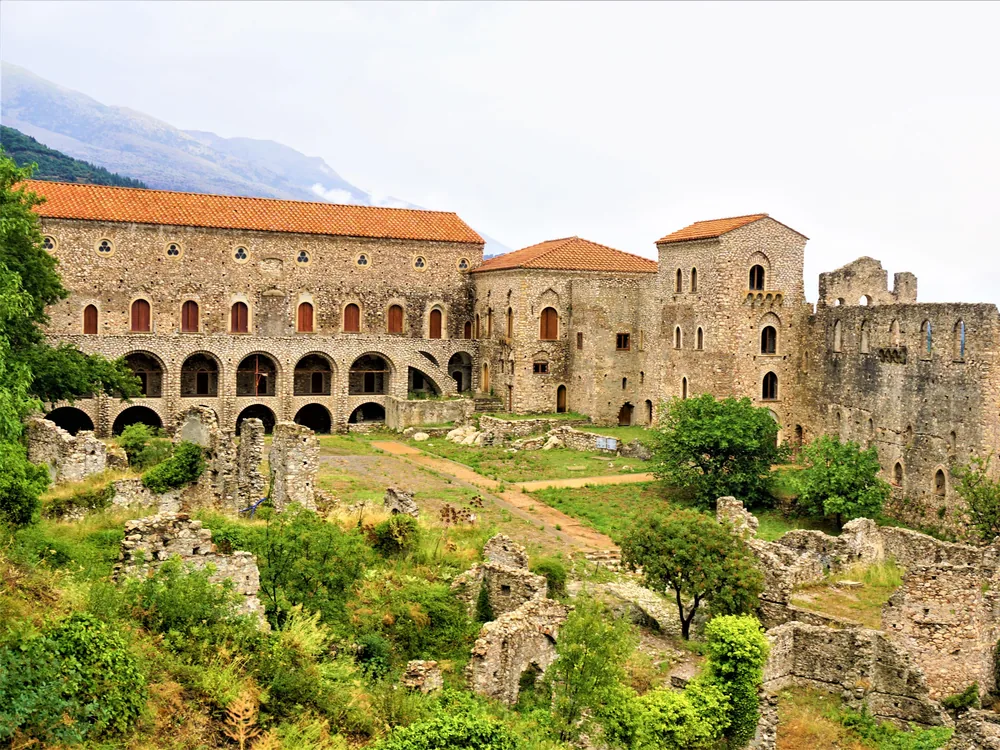
Combine with: Mystras, the ruined Byzantine city-state in the Taygetos foothills about 130 km southeast, is the essential Peloponnese counterpart — together Chlemoutsi and Mystras trace both the Frankish and Byzantine sides of medieval Peloponnese history in a single trip.
Frequently Asked Questions
The Frankish period refers to the roughly two centuries following the Fourth Crusade of 1204, during which much of Greece was governed by Western European lords — primarily French-speaking crusaders who divided the conquered Byzantine territories among themselves. In the Peloponnese, the Principality of Achaea (governed by the Villehardouin and later the Angevin dynasties) controlled most of the peninsula from feudal castles, the largest of which was Chlemoutsi. This period of Frankish rule, which ended through a combination of Byzantine reconquest and Ottoman expansion in the 14th and 15th centuries, is the subject of the only museum dedicated to it in Greece — housed within Chlemoutsi itself.
Location
Chlemoutsi Castle, 27068 Kastro, Greece
Nearby Castles
Tours & Tickets
Powered by GetYourGuide
From
€160/ group