Methoni Castle
Κάστρο Μεθώνης
Greece · Messenia / Peloponnese · Near Kalamata
Built 1209 · Venetian Medieval
This page is part of an independent travel guide and is not affiliated with, endorsed by, or operated by Methoni Castle.
© Unsplash
Quick Facts
- Hours
- Daily 08:30–15:30
- Guided tour from
- €107
- Duration
- 1.5–2 hours
- Best time
- April to June and September to October
- Nearest city
- Kalamata
Featured Tour
Mystical Messinia: Voidokilia, Pylos & Methoni Wonders
Cancellation available · Instant confirmation
Highlights
- ✦One of the largest and best-preserved Venetian sea fortresses in the Mediterranean
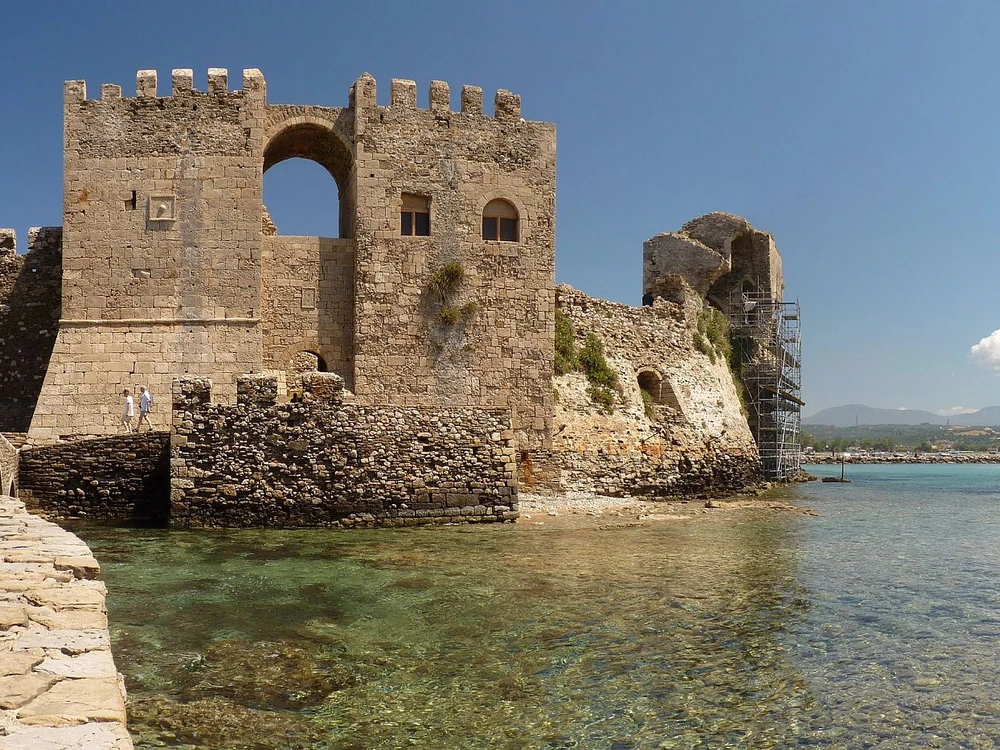
- ✦The Bourtzi — an octagonal Ottoman tower on a tiny offshore island, connected to the fortress by a stone bridge
- ✦Free entry — one of Greece's most spectacular fortifications at no cost
- ✦Set on a peninsula at the tip of the Messenian Peninsula, surrounded by the Mediterranean on three sides
- ✦The fortress walls, towers, and Byzantine church ruins cover an area of over 12 hectares
Skip the queue with a guided tour
Skip-the-line tickets & expert guides
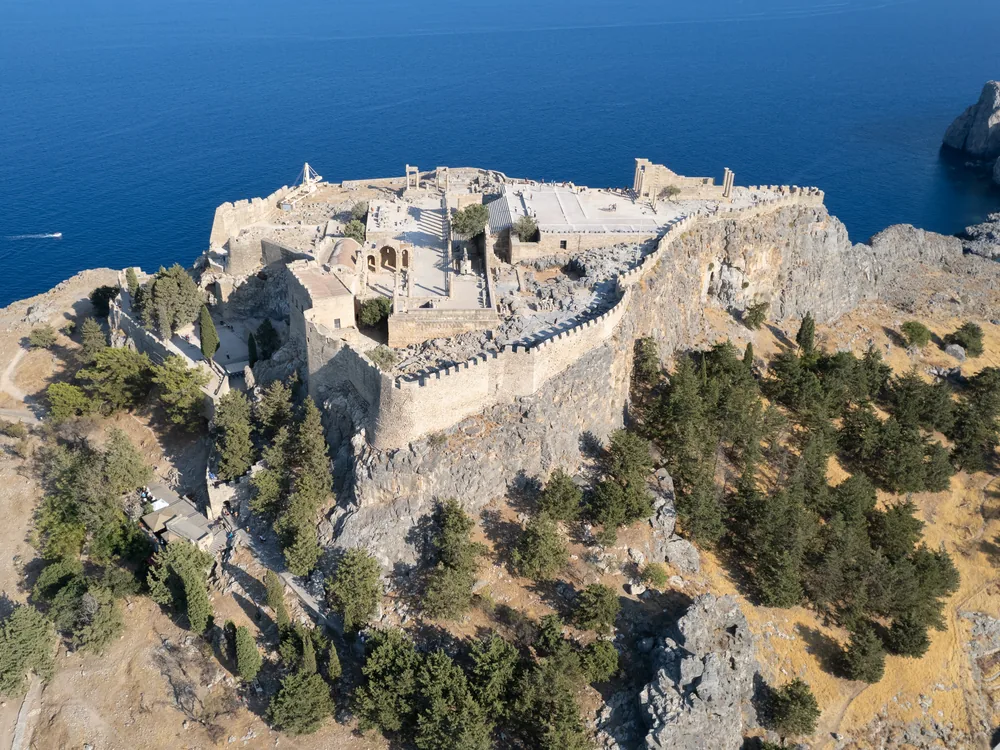
Methoni Castle occupies the entire tip of a rocky peninsula at the south-western corner of the Peloponnese, with the Ionian Sea washing against its walls on three sides. The scale is immediately striking: 12 hectares of fortress, running from the narrow isthmus that connects it to the mainland to the seaward bastions that face open water in every direction. Beyond the southernmost walls, a stone bridge extends to a tiny islet where an octagonal Ottoman tower — the Bourtzi — rises from the sea like a chess piece.
The fortress has ancient origins — Methoni (called Modon by the Venetians and by medieval travellers) was an important port on the route from Venice to the Levant. But the surviving walls are predominantly Venetian, built after 1209 when the Fourth Crusade redistributed the Byzantine Empire among western European powers and the Republic of Venice acquired a strategic chain of ports across the eastern Mediterranean. Methoni was one of the first and most important: 'the eyes of the Republic,' the Venetians called it, along with the nearby fortress of Koroni.
The interior of the fortress is a ruin, but a substantial one — several towers, the remains of a Byzantine church, cisterns, and the outline of the medieval town that once existed within the walls are all visible. The walk around the sea walls, with the Mediterranean below and, on clear days, the island of Sapienza to the south-west, is one of the finest fortress walks in Greece. Entry is free.
History
The Methoni peninsula has been fortified since antiquity — Nestor's palace at nearby Pylos controlled this coastline in the Bronze Age, and ancient Methone appears in classical sources as a significant port. The medieval castle's construction began after 1209, when Venice acquired the site following the Fourth Crusade's dismemberment of the Byzantine Empire.
Venice held Methoni for almost three centuries, using it as a crucial resupply point on the shipping routes between Venice and the eastern Mediterranean. The fortress was substantially rebuilt and expanded multiple times during Venetian rule. In 1500, after a siege of two weeks, the Ottoman Sultan Bayezid II's forces stormed Methoni — a defeat that shocked Europe and prompted the Pope to call for a new Crusade. The fall of Methoni marked the effective end of Venetian dominance in the eastern Mediterranean.
The Ottomans held Methoni for three centuries, adding the offshore Bourtzi tower and maintaining the fortress as a regional stronghold. The castle changed hands between Venice and the Ottomans twice more (briefly Venetian 1686–1715) before being definitively incorporated into the Greek state in 1828 following the War of Independence. Today it is maintained as an archaeological site with free public access.
How to Visit
Getting there: Methoni is 60 km south-west of Kalamata — about 1 hour by car via the E55 and regional roads, or approximately 4 hours from Athens. There is no train; limited bus connections run from Pylos (20 km north). A car is strongly recommended.
Tickets: Entry is free. The GYG guided tour (t1015664, from €107, 4.8★/4 reviews) covers Voidokilia beach, Pylos, and Methoni on an 8-hour Mystical Messinia day circuit.
Practical tips: Don't miss the walk across the stone bridge from the main fortress to the offshore Bourtzi tower — the view back at the castle walls from the tower platform is one of the best in the Peloponnese. Visit in spring or early autumn to avoid peak summer heat on the exposed sea walls.
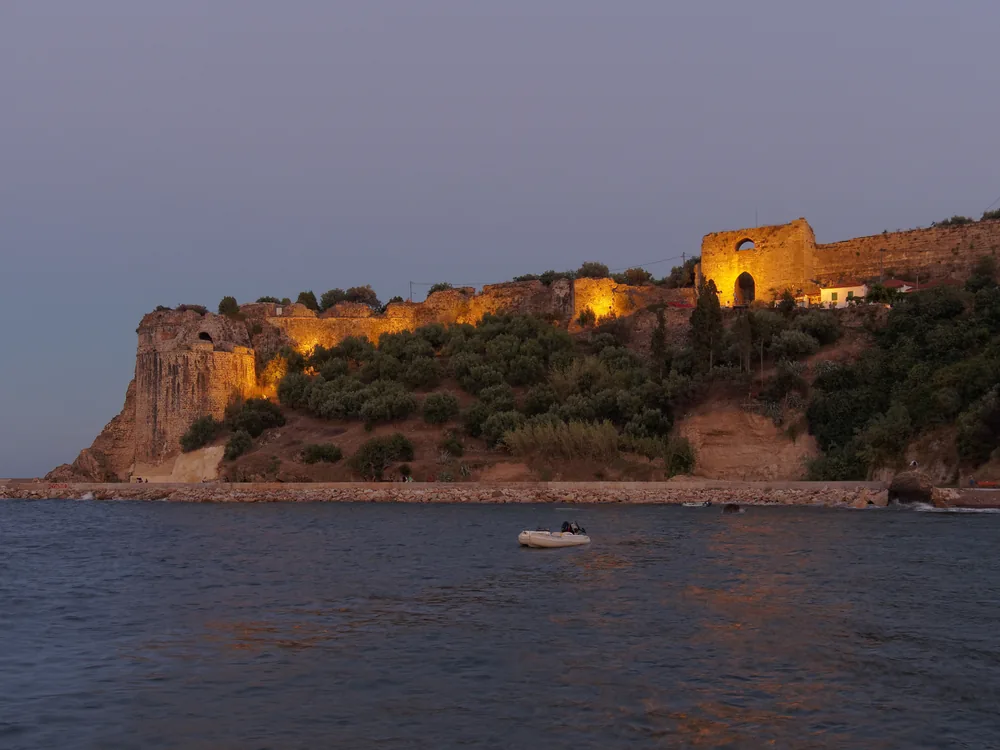
Combine with: [Koroni Castle](/castles/greece/koroni-castle) directly across the Messenian Gulf — the two Venetian 'eyes of the Republic' share the same history and the same GYG tour — or [Palamidi Fortress](/castles/greece/palamidi-fortress) for more of the Peloponnese fortress circuit.
Frequently Asked Questions
Yes — Methoni Castle has free entry. The fortress is open daily and there is no admission charge for the main site. This makes it one of the best-value major fortifications in Greece. The only potential additional cost is parking near the village.
Location
Methoni, 24006, Greece
Nearby Castles
Tours & Tickets
Powered by GetYourGuide
From
€107/ person