
Aughnanure Castle
Caisleán na hAbhann Móire
Ireland · Connemara, County Galway · Near Oughterard
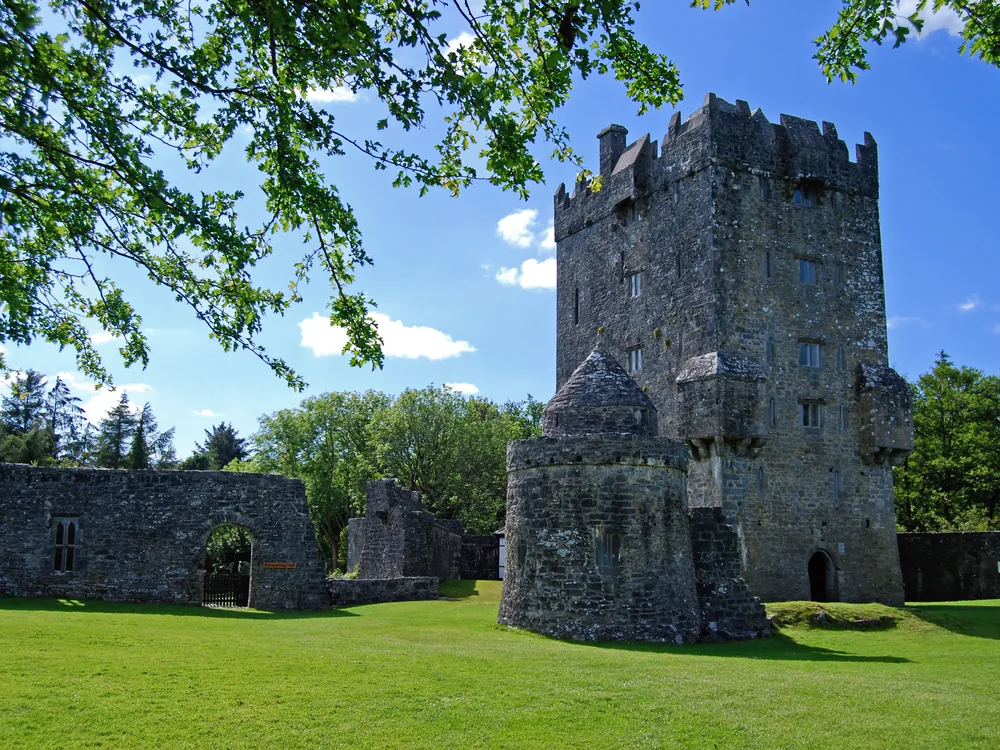
Built 1490 · O'Flaherty clan tower house on the eastern shore of Lough Corrib; built c.1490 by the dominant O'Flaherty lordship of Connacht, one of the most powerful Gaelic clans in late medieval Ireland; the site occupies a rocky promontory above the River Drimneen where it joins Lough Corrib, with a natural water-channel defence on two sides; consists of a six-storey central tower house, an outer wall enclosing a bawn (courtyard), and a second inner courtyard with a great hall (now ruined); an unusual feature is the trapdoor to a pit in the great hall floor — claimed to be a banqueting trap for unwanted guests, though its actual function may have been simply an escape route; captured by English Crown forces in 1572 and briefly retaken 'by stealth' in the 1641 rebellion; used to supply the Cromwellian siege of Galway in 1652; restored in the 1960s by the Office of Public Works (OPW) and maintained as a national monument; the Lough Corrib setting — Ireland's second largest lake, with limestone islands and a Connemara mountain backdrop — makes the approach one of the most scenic of any OPW castle in the west
This page is part of an independent travel guide and is not affiliated with, endorsed by, or operated by Aughnanure Castle.
© Castles & Palaces
Quick Facts
- Hours
- Daily 09:00–17:30
- Day trip from
- €162
- Duration
- 1 hour
- Best time
- Late April to September
- Nearest city
- Oughterard
Featured Tour
From Galway: Aughnanure, Kylemore & Ballynahinch Castles of Connemara
Cancellation available · Instant confirmation
Highlights
- ✦The O'Flaherty clan built Aughnanure as the administrative centre of their Iar-Connacht (West Connacht) lordship — the most powerful Gaelic clan in western Ireland in the late medieval period, whose territorial authority extended from Lough Corrib to the Connemara coast; the clan's power is summed up in the rhyme recorded about the gates of Galway city: 'From the ferocious O'Flaherties, good Lord deliver us'
- ✦The tower house contains a banqueting trapdoor in the great hall floor — a pit below a wooden hatch in the main reception room, claimed in local tradition to have served as a disposal mechanism for unwanted dinner guests; its actual function may have been more mundane (an escape route, a storage pit, a garderobe), but the trapdoor is the castle's most discussed architectural feature and invariably the first thing guides mention
- ✦The castle was captured by English Crown forces in 1572 — part of the systematic reduction of Connacht's Gaelic lordships under the Presidency of Connacht established by the Tudor administration — but retaken 'by stealth' by the O'Flaherties in the 1641 rebellion, a detail that appears in the historical record with the brevity that usually means the retaking was violent and the documentation unsympathetic
- ✦During the Cromwellian siege of Galway (1651–1652) — the last major military operation of the Irish Confederate Wars — Aughnanure Castle was used as a supply base to support the besieged Galway garrison; after Galway fell, the castle came under Cromwellian control along with the rest of western Connacht's Gaelic infrastructure
- ✦The Lough Corrib approach to Aughnanure — Ireland's second largest lake at 176 km², with a western shore that extends directly into the Connemara landscape — gives the castle one of the most dramatically natural settings of any OPW site in Ireland; the view from the tower over the lake toward the Connemara mountains (Binn Mhairg, Cnoc Breac, the Maumturks) is one of the most specifically Connacht things the western landscape offers
Tickets & tours
Book through GetYourGuide
Aughnanure Castle stands on a rocky promontory on the eastern shore of Lough Corrib, near the village of Oughterard in County Galway. The promontory juts into the River Drimneen at the point where it leaves Lough Corrib, providing natural water-channel defence on two sides and a lake view that stretches westward toward the Connemara mountains. The castle was built c.1490 by the O'Flaherty clan — the lords of Iar-Connacht (West Connacht) and one of the most powerful Gaelic lordships in late medieval Ireland.
The O'Flaherty clan's reputation preceded them in ways that were not entirely meant as compliments. The inscription above the western gate of Galway city — 'From the ferocious O'Flaherties, good Lord deliver us' — captures the attitude of the Norman-Irish merchant oligarchy of Galway toward their Gaelic neighbours who controlled the territory surrounding the town. The O'Flaherties' response was to consolidate their lordship of Iar-Connacht from exactly this kind of fortified position: a tower house on Lough Corrib, controlling the lake's eastern approaches, with the resources of the Connemara coastal territory behind them.
The castle as it stands consists of a six-storey central tower house — the residential and defensive core — enclosed by a bawn (defended courtyard) with a second inner courtyard containing the remains of a great hall. The tower house's top floors are in reasonable condition, with intact battlements and the internal floor structure largely survives to mid-height; the great hall is ruined, with only the walls standing. The bawn wall completes the enclosure, with the lake and river channel providing the outer defence on two sides.
The tower house's most discussed architectural feature is the trapdoor in the great hall floor — a pit below a hinged wooden hatch in the reception room's floor, interpreted in local tradition as a mechanism for disposing of guests whom the O'Flaherties wished to remove from a banquet without the social awkwardness of a visible confrontation. The pragmatic alternative explanations (escape route, storage pit, garderobe) are more probable but less entertaining, and guides at the castle do not generally discourage the more dramatic interpretation. Whatever its function, the trapdoor is the first thing most visitors ask about and the last thing most guides mention.
The castle's political history reflects the pressure that the Tudor administration in Ireland exerted on Gaelic Connacht from the mid-16th century. The Presidency of Connacht, established in 1569, was the institutional mechanism through which the English Crown attempted to replace the Gaelic lordship system with direct royal administration, and the O'Flaherties were among the primary targets of this policy. Aughnanure was captured by Crown forces in 1572, but the O'Flaherties' connection with the castle persisted: when the 1641 rebellion broke out across Ireland — a coordinated uprising of Gaelic and Catholic interests against the Protestant planter establishment — the castle was retaken by the clan 'by stealth,' a phrase in the historical record that generally indicates a military operation whose details were recorded by the losing side with some economy.
The castle's final military role came during the Cromwellian siege of Galway (1651–1652), when it was used as a supply base for the besieged garrison of the town. Galway was the last major Irish Confederate stronghold to fall; after its surrender in 1652, the Cromwellian land settlement redistributed most of Connacht's Gaelic property to English Protestant settlers or soldiers.
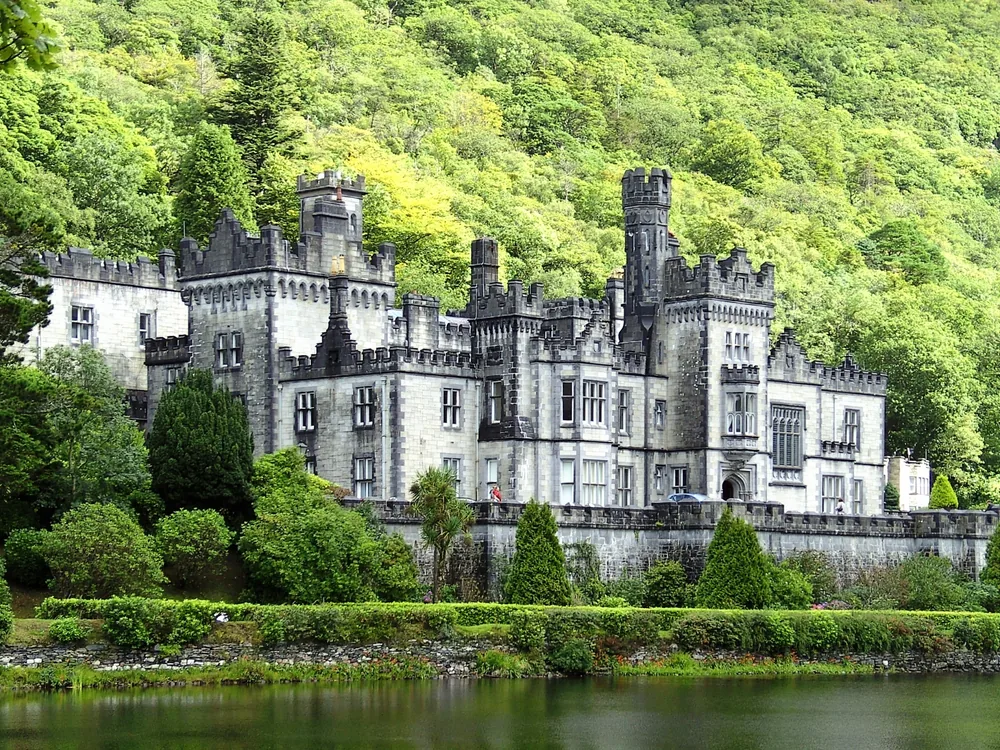
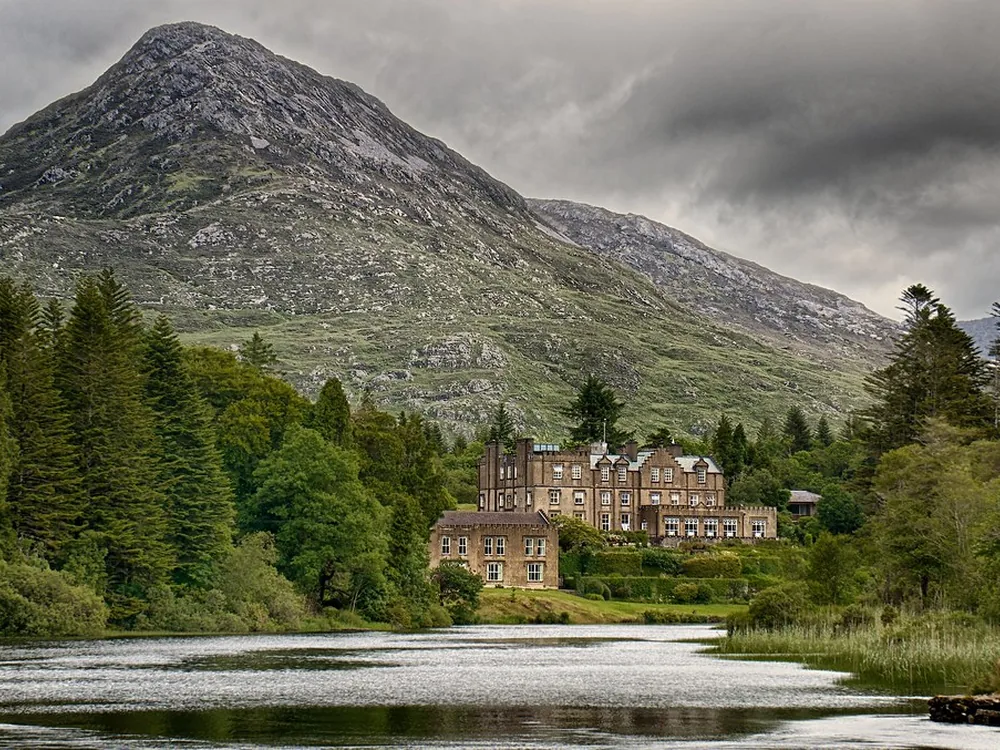
The Office of Public Works restored the castle in the 1960s and maintains it as one of the few surviving O'Flaherty clan tower houses in its original location. The visit is an hour at moderate pace: the tower house interior, the bawn, the hall ruins, and the view over Lough Corrib from the promontory. The GetYourGuide Connemara Castles Tour from Galway combines Aughnanure with [Kylemore Abbey](/castles/ireland/kylemore-abbey) and [Ballynahinch Castle](/castles/ireland/ballynahinch-castle) in a full day — a circuit that covers three completely different castle types (Gaelic tower house, Victorian romantic mansion, 18th-century hotel estate) in one Connemara day.
History
The O'Flaherty clan established their dominance over Iar-Connacht — the rough, lake-studded territory west of Galway — across the 14th and 15th centuries, consolidating control through a network of tower houses. Around 1490 they built Aughnanure as the administrative centre of their lordship: a fortified complex on a rocky promontory where the River Drimneen drains into Lough Corrib, with natural water-channel defences on two sides and commanding views across the lake.
English Crown forces captured the castle in 1572 during the Tudor campaign to reduce the Connacht Gaelic lordships. The O'Flaherties recovered it by stealth during the 1641 rebellion, but the Cromwellian settlement that followed the conquest of Galway in 1651–52 — during which Aughnanure served as a supply base for Crown forces — effectively ended their ownership of the site. The castle passed out of O'Flaherty hands and fell into disrepair over the following centuries.
The Office of Public Works restored the tower and outer bawn in the 1960s. Aughnanure is now managed as an OPW national monument, open from late April to early October.
How to Visit
Getting there: Aughnanure is 3 km southeast of Oughterard on the R336 (Galway–Clifden road). Oughterard is 27 km from Galway city (30 minutes by car). By bus: Bus Éireann services from Galway to Oughterard (Clifden route); the castle is a short taxi or walk from the village — no direct public transport to the gates.
Tickets: Entry costs €5 (children €3) payable at the gate; open late April to early October daily. The GetYourGuide day trip covers Aughnanure, Kylemore Abbey, and Ballynahinch Castle on a 9-hour Connemara circuit from Galway.
Practical tips: The tower house has a narrow circular staircase for the upper floors; the bawn and grounds are accessible on uneven terrain. Allow about an hour for the tower interior, the ruined great hall, and the Lough Corrib view from the promontory — the trapdoor in the hall floor is the castle's most-discussed feature.
Combine with: Kylemore Abbey 35 km west and Ballynahinch Castle 30 km west — all three covered by the same GetYourGuide Connemara Castles Tour.
Frequently Asked Questions
The trapdoor is a hinged hatch in the floor of the castle's great hall, opening to a pit below. Local tradition describes it as a banqueting trap — a device for disposing of unwanted dinner guests by dropping them into the pit during a feast. More prosaic explanations (escape route, storage pit, garderobe) are more historically plausible, but the dramatic version is more entertaining and is what most guides lead with. It remains one of the most discussed features of any OPW castle in Connacht.
Location
Aughnanure Castle, Oughterard, Co. Galway, H91 T6X3, Ireland
Nearby Castles
Tours & Tickets
Powered by GetYourGuide
From
€162/ person