
Kylemore Abbey
Mainistir na Coille Móire
Ireland · Connemara, County Galway · Near Letterfrack
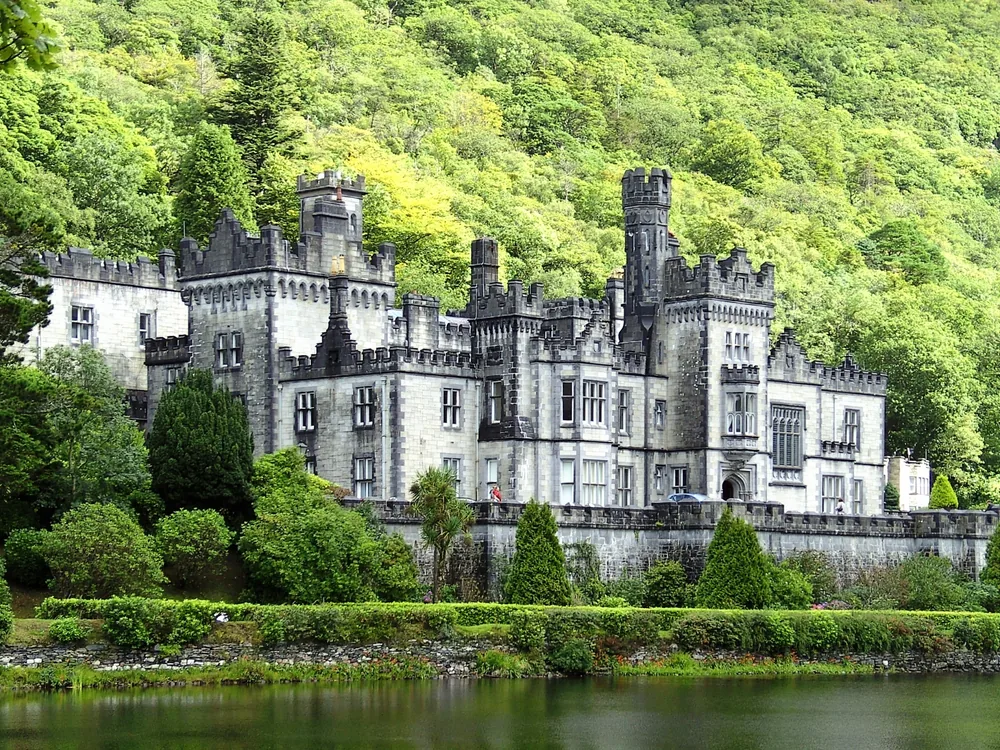
Built 1864 · Victorian Neo-Gothic castle and estate on the shore of Lough Pollacapall in the Kylemore valley, Connemara; built 1864–1871 for Dr Mitchell Henry, a wealthy Manchester-Irish cotton merchant and later Liberal MP, as a permanent residence inspired by his honeymoon in Connemara; 70 rooms in Dalkey granite and Ballinasloe limestone, with four towers, a Gothic chapel (built as a memorial to his wife Margaret after her death in 1874), and a 6-acre Victorian walled garden; cost approximately £18,000 at construction — over €3 million in modern terms; the Henry family sold the estate in 1902 after Mitchell Henry's financial decline; briefly owned by the Duke and Duchess of Manchester, then sold again in 1914 to Irish-American James A. Jennings; Benedictine nuns from the Abbey of Our Lady of Ypres, Belgium, displaced by WWI bombardment of their monastery in 1914, settled at Kylemore in 1920 and converted the castle into the working Kylemore Abbey it remains; the nuns ran a girls' boarding school here from 1923 until 2010; now a major Connemara heritage attraction managed by the Benedictine community with restored walled garden, Gothic chapel tours, and castle ground floor access
This page is part of an independent travel guide and is not affiliated with, endorsed by, or operated by Kylemore Abbey.
© Castles & Palaces
Quick Facts
- Hours
- Daily 09:00–17:30
- Day trip from
- €50
- Duration
- 2–3 hours
- Best time
- Year-round
- Nearest city
- Letterfrack
Featured Tour
Connemara and Kylemore Abbey Day Tour from Galway
Cancellation available · Instant confirmation
Highlights
- ✦Mitchell Henry built Kylemore Castle in 1864–1871 as a permanent Connemara home inspired by the honeymoon he and Margaret had spent in the valley — 70 rooms in Dalkey granite and Ballinasloe limestone, four towers, a walled garden, and a landscape position on Lough Pollacapall that was chosen for its specific scenic quality; when Margaret died unexpectedly of Egyptian fever in 1874 during a family trip to the Nile, Henry built the neo-Gothic memorial church on the estate — one of the smallest Gothic cathedrals in Ireland — as a monument to her, with stained glass commissioned to reproduce the pattern of a medieval English Decorated window
- ✦The Benedictine nuns who occupy Kylemore today arrived in 1920 from the Abbey of Our Lady of Ypres — a Belgian monastery that had been progressively destroyed by the WWI bombardment of Ypres (the Menin Gate, the Cloth Hall, and most of the city were reduced to rubble in four years of fighting, and the convent was among the casualties); the nuns had spent years as refugees during the war before finding Kylemore and establishing it as a working Benedictine abbey, a community that has maintained an unbroken monastic life here for over a century
- ✦The Gothic chapel at the base of the lake path — a 700-metre walk from the main castle — was built by Mitchell Henry in 1881 as a memorial to his wife Margaret and is modelled on Norwich Cathedral's nave proportions at a dramatically reduced scale; the interior measures 18 metres by 10 metres but achieves the vertical character of a full-scale Gothic cathedral through the specific manipulation of proportion; it is arguably the most perfect small Gothic building in the west of Ireland
- ✦The Victorian walled garden, restored by the Benedictine community over several years at significant cost and labour, occupies 6 acres of south-facing valley floor and is enclosed by a restored wall with Victorian glass houses; it grows heritage varieties of vegetables and flowers that would have been cultivated in the original Henry estate garden, and the restoration project is considered one of the most successful examples of Victorian kitchen garden revival in Ireland
- ✦The setting — a castellated Victorian Gothic facade reflected in the still surface of Lough Pollacapall, with the Twelve Bens mountain range visible above the valley ridgeline — is among the most photographed landscapes in Ireland; the arrival from the N59 Clifden road, when the castle appears around a bend in the mountain valley, is one of those moments that consistently surprises visitors who expected something impressive but not quite this
Tickets & tours
Book through GetYourGuide
Kylemore Abbey stands on the shore of Lough Pollacapall in the Kylemore valley, one of the narrow mountain valleys that cut through the Connemara highlands between the Twelve Bens range and the coast. The valley opens from the N59 road — the main Clifden route across northern Connemara — and the first view of the castle from the road, with its grey granite facade reflected in the still lake and the mountain ridgeline above, is one of the most photographed landscapes in Ireland. The building's position in the valley was not accidental: Mitchell Henry chose this specific site because it had produced this specific view in the photographs he had seen during his honeymoon visit to Connemara.
Mitchell Henry was a Manchester cotton merchant of Irish descent who made a substantial fortune in the 1850s and 1860s — the decades when Manchester's cotton industry dominated the global textile trade — and invested a significant portion of it in a Connemara fantasy. He and his wife Margaret had honeymooned in Connemara in the early 1860s and found the landscape so compelling that he resolved to build a permanent home there. The castle was constructed between 1864 and 1871: 70 rooms in Dalkey granite (shipped from County Dublin) and Ballinasloe limestone (from County Galway), four towers, a Gothic chapel, and a 6-acre walled garden designed on the Victorian kitchen garden principle of ornamental and productive cultivation combined. The total construction cost was approximately £18,000 — substantial at the time, though estimates of modern equivalence vary widely.
Henry's architectural choice — Victorian Neo-Gothic castle rather than a Georgian country house or an Italian villa — reflected the fashionable Romanticism of the 1860s, when Gothic Revival had replaced Neoclassicism as the dominant idiom for ambitious private building. The specific model was an imagined medieval castle rather than a historical original: battlements, towers, pointed windows, and a general silhouette of chivalric aspiration in a specifically Irish western landscape.
Margaret Henry died in 1874 during a family trip to Egypt, aged 45, of what contemporary accounts describe as 'Egyptian fever' (probably enteric fever). Mitchell Henry's response was to commission a Gothic memorial church on the estate grounds — a small-scale cathedral at the base of the lake path, 700 metres from the main building. The church, completed in 1881, was modelled on the proportions of Norwich Cathedral's nave at dramatically reduced scale: 18 metres by 10 metres, but with the pointed arches, carved decoration, and stained glass of a full-size Gothic cathedral. The stained glass was commissioned to reproduce the pattern of a medieval English Decorated window. Within its modest dimensions, it is one of the most architecturally considered small Gothic buildings in Ireland.
Mitchell Henry's financial position deteriorated in the 1880s and 1890s — the collapse of the cotton market combined with his political expenditure as a Liberal MP for County Galway — and the estate was sold in 1902. It passed through two further owners before 1920, when a community of Benedictine nuns from the Abbey of Our Lady of Ypres, Belgium, arrived and settled.
The Ypres community's arrival at Kylemore was a consequence of the First World War. The Belgian city of Ypres was the centre of some of the most sustained fighting of the war — the three Battles of Ypres between 1914 and 1917 effectively destroyed the city, reducing the medieval Cloth Hall, the Cathedral of Saint Martin, and most of the urban fabric to rubble. The Benedictine convent that the nuns had occupied was among the casualties. They spent several years as refugees before finding Kylemore and establishing it as a working abbey in 1920. The community has maintained an unbroken monastic life at Kylemore for over a century, running a girls' boarding school from 1923 until 2010 and now managing the castle as a heritage attraction.
The walled garden, restored by the Benedictine community over several decades, is a significant achievement in heritage horticulture: 6 acres of Victorian kitchen garden with restored glasshouses, heritage vegetable and flower varieties, and the wall and garden infrastructure of the original Henry estate garden. The restoration project — funded by admissions income, donations, and heritage grants — is considered one of the most successful Victorian kitchen garden revivals in Ireland.
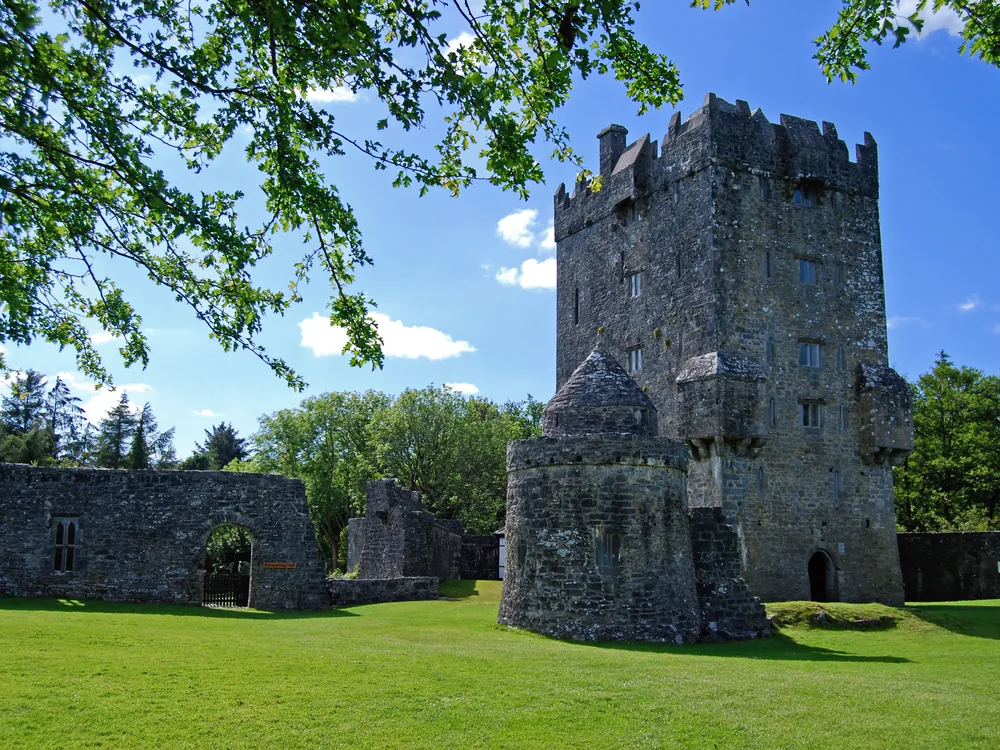
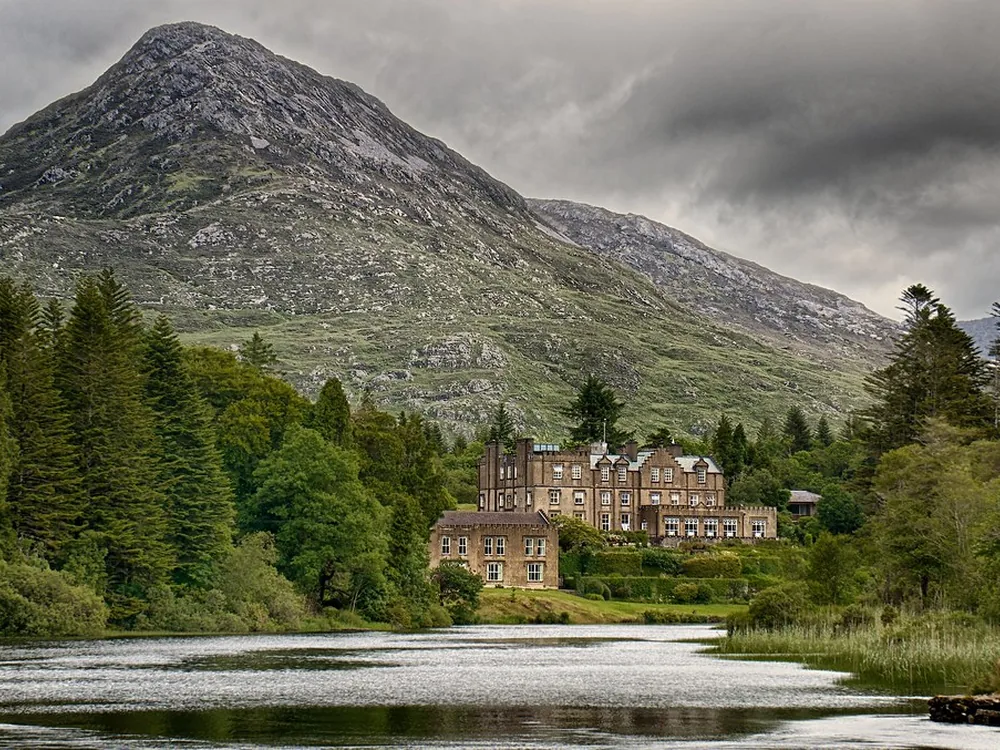
The GetYourGuide Connemara and Kylemore Abbey Day Tour from Galway provides a 3-hour stop at Kylemore as part of a full Connemara day — the main attraction rather than one stop among many. [Aughnanure Castle](/castles/ireland/aughnanure-castle) and [Ballynahinch Castle](/castles/ireland/ballynahinch-castle) are the two other Connemara castle sites accessible from Galway in a single day.
History
Dr Mitchell Henry, a Manchester physician and Liberal MP, built Kylemore Castle for his wife Margaret between 1864 and 1871 — a 70-room neo-Gothic structure on the shore of Lough Pollacapall in the Connemara highlands, conceived as a permanent home and a declaration of romantic attachment to the western Irish landscape. The decision to build at this scale, in this location, was an act of conspicuous devotion: Henry reportedly promised Margaret the most beautiful home in Ireland, and Kylemore was his attempt to deliver on it. When Margaret died in Egypt in 1874 — just three years after the castle was completed — Henry commissioned a Gothic memorial chapel on the estate grounds. The chapel, completed in 1881, is a miniature masterpiece of Victorian ecclesiastical architecture, its interior inlaid with serpentine marble.
Mitchell Henry sold the estate in 1902 after personal and financial difficulties; it passed through two further owners before the Benedictine community that would give it its current identity arrived. The Benedictine nuns of Ypres, Belgium, had maintained their convent through four centuries of continental upheaval, but the First World War finally displaced them: the 1914 German bombardment of Ypres destroyed their convent, and the community spent years in temporary accommodation before settling permanently at Kylemore in 1920. They established a girls' boarding school in 1923, which operated for 87 years until its closure in 2010.
Kylemore is now a working Benedictine abbey, open daily as a heritage attraction with access to the Victorian walled garden and the Gothic chapel.
How to Visit
Getting there: Kylemore Abbey is on the N59 road between Letterfrack and Leenane in northern Connemara, 70 km from Galway city — about 1 hour by car. Daily Bus Éireann services from Galway to Clifden stop outside Kylemore; check Citylink and Galway Bus timetables. The GetYourGuide Connemara and Kylemore Abbey Day Tour departs from Galway and includes transport on a 9-hour Connemara circuit with a 3-hour stop at Kylemore.
Tickets: Approximately €17 adult / €8 child, covering the castle ground floor, Gothic chapel, Victorian walled garden, and lakeside walk. Book online at kylemoreabbey.com in peak summer — the castle is very popular in July and August.
Practical tips: The 700-metre lakeside walk to the Gothic chapel is essential — it is one of the finest small Gothic buildings in Ireland and is easy to miss if you stay in the main castle building. The walled garden is at its best in June and July; arrive early (09:00) in peak season to see the famous lake reflection before coach groups arrive and the car park fills.
Combine with: Aughnanure Castle, 35 km east on Lough Corrib, and Ballynahinch Castle, 20 km south, extend a Connemara day trip with two more castle stops. Glenveagh Castle in Donegal is the other great Victorian lakeside castle in the west of Ireland for a longer western circuit.
Frequently Asked Questions
The Benedictine community at Kylemore came from the Abbey of Our Lady of Ypres in Belgium, which was destroyed by the sustained WWI bombardment of Ypres during the three Battles of Ypres (1914–1917). The nuns spent several years as refugees before finding Kylemore Castle in 1920 and establishing it as their permanent monastery. They have maintained unbroken Benedictine monastic life at Kylemore for over a century, running a boarding school from 1923 to 2010 and now managing the castle as a heritage attraction.
Location
Kylemore, Letterfrack, Co. Galway, H91 VR83, Ireland
Nearby Castles
Tours & Tickets
Powered by GetYourGuide
From
€50/ person