
Palazzo Barberini
Palazzo Barberini
Italy · Lazio — Rome, Rione Trevi, Via delle Quattro Fontane · Near Rome
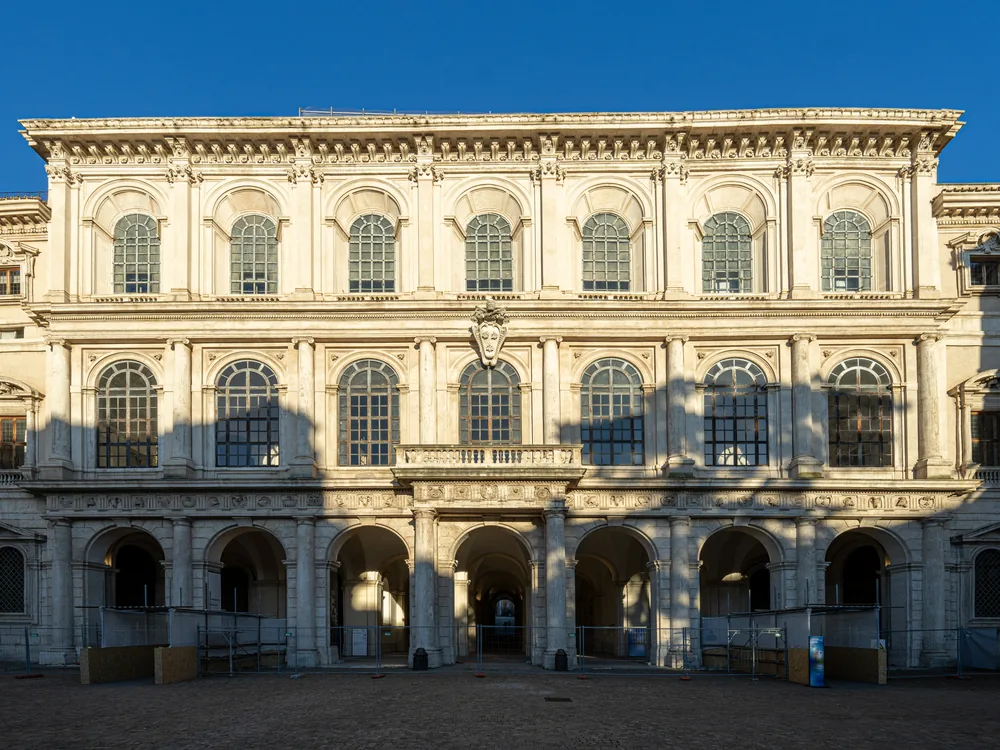
Built 1625 · Baroque palace of exceptional architectural significance, designed collaboratively by three of the greatest architects of 17th-century Rome — Carlo Maderno (principal architect at the time of commission, died 1629), Gian Lorenzo Bernini (took over on Maderno's death and designed the main entrance facade and the square staircase), and Francesco Borromini (worked under Bernini and designed the oval helical staircase) — commissioned by Cardinal Francesco Barberini for the family of Pope Urban VIII (Maffeo Barberini, elected 1623); the building is architecturally unusual among Roman palaces in that it faces an open garden rather than a street, with projecting wings framing a central loggia; the contrast between Bernini's grand rectangular staircase (square flights, classical proportions) and Borromini's oval staircase (spiral plan, compressed space, theatrical lighting) in the same building is one of the most discussed examples of architectural rivalry and contrasting approach in the entire history of European architecture
This page is part of an independent travel guide and is not affiliated with, endorsed by, or operated by Palazzo Barberini.
© Castles & Palaces
Quick Facts
- Hours
- Tue–Sun 10:00–18:00. Closed Mon
- Skip-the-line from
- €34
- Duration
- 1.5–2 hours (Palazzo Barberini); additional 1 hour if combining with Galleria Corsini (separate venue, Trastevere)
- Best time
- Year-round
- Nearest city
- Rome
Featured Tour
Rome: Palazzo Barberini + Galleria Corsini Entry + Digital Audio Guide (EN, skip-the-line)
Cancellation available · Instant confirmation
Highlights
- ✦Pietro da Cortona's 'Triumph of Divine Providence' ceiling — the Great Hall ceiling fresco (1633–1639) is one of the most spectacular Baroque illusionistic ceilings in Rome: a 900-square-metre composition that dissolves the ceiling into an apparently open sky through which the divine allegory of Providence, bearing the Barberini bees (the family heraldic symbol), ascends to heaven; the fresco's scale, bravura, and political self-confidence — it glorifies a pope's family in a private palace — make it one of the defining works of Roman Baroque propaganda
- ✦Caravaggio's 'Judith Beheading Holofernes' — the Galleria Nazionale d'Arte Antica at Palazzo Barberini holds one of Caravaggio's most viscerally affecting works: the moment of Holofernes' decapitation rendered with the artist's characteristic contrast of black shadow and raking light; the physical awkwardness of Judith's posture (she leans away even as she cuts), the old servant at her side, and Holofernes' still-conscious expression make the painting distinctly uncomfortable in a way that separates Caravaggio from all his contemporaries
- ✦Raphael's 'La Fornarina' — the portrait of a woman (traditionally identified as Raphael's mistress, Margherita Luti, the baker's daughter of the title) is one of the most discussed paintings in the Roman collections; the woman's direct gaze, the bracelet bearing Raphael's name, and the combination of idealism and physical specificity in the rendering create a painting that oscillates between portrait, devotional image, and erotic display
- ✦Two staircases by Bernini and Borromini — the two great rivals of Baroque Rome designed staircases on opposite sides of the same building: Bernini's grand square staircase (three broad flights at right angles, classical proportions, daylight flooding from above) and Borromini's oval spiral (a compressed helical rise with an oval shaft that pulls the eye upward in a manner that barely exists in Bernini's work); seeing both staircases in sequence is the best available single demonstration of the difference between the two architects' fundamental spatial instincts
- ✦GetYourGuide ticket includes Galleria Corsini (Trastevere) — the €34 GetYourGuide entry ticket covers both Palazzo Barberini and Galleria Corsini, the second venue of the Galleria Nazionale d'Arte Antica; Galleria Corsini is across the Tiber in Trastevere, in the 18th-century Corsini palace on Via della Lungara, and holds a separate but complementary collection (Caravaggio's 'St John the Baptist', works by Fra Angelico, Rubens, and Van Dyck)
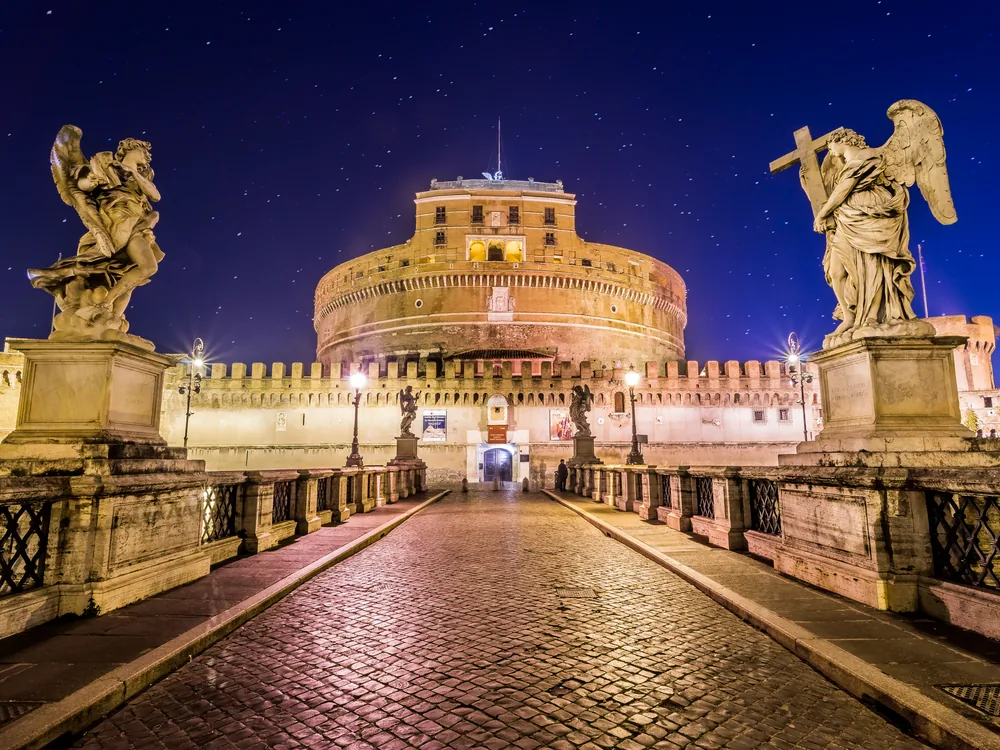
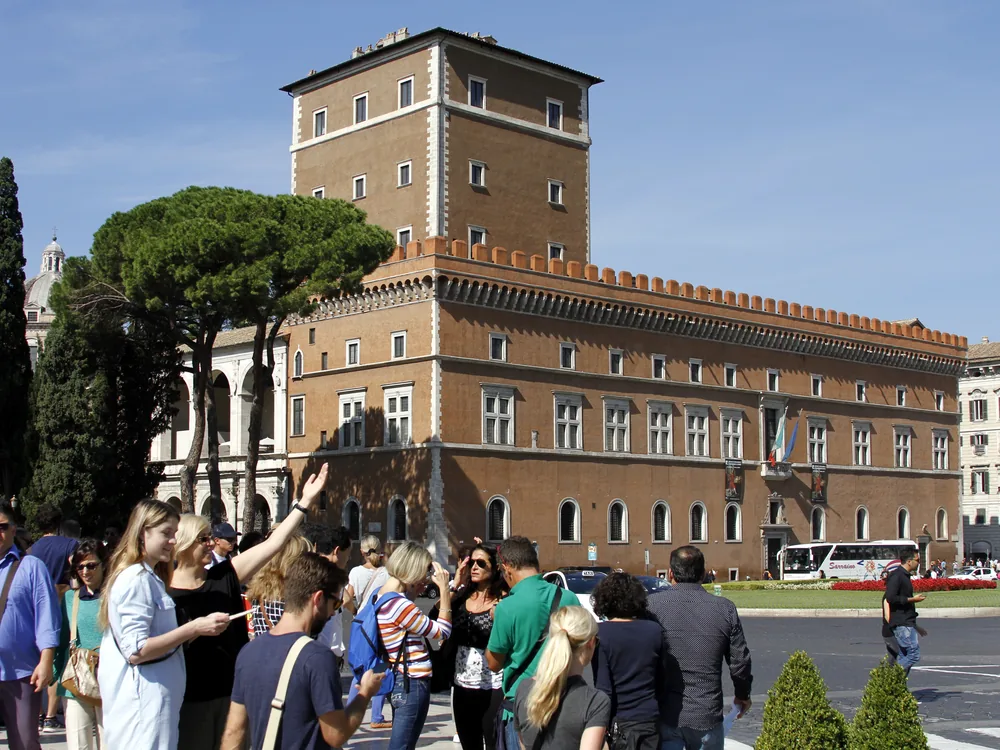
- ✦Rome cluster: Castel Sant'Angelo and Palazzo Venezia — Palazzo Barberini forms the centre of the site's Rome palace cluster; [Castel Sant'Angelo](/castles/italy/castel-santangelo), the 2nd-century mausoleum converted into a papal fortress on the Tiber, is 2km west; [Palazzo Venezia](/castles/italy/palazzo-venezia), the 15th-century papal palace and Mussolini's headquarters on Piazza Venezia, is 1.5km southwest; the three together cover the full arc of Rome's palace and fortress history from the Roman Empire to the 20th century
Skip the queue with a guided tour
Skip-the-line tickets & expert guides
Palazzo Barberini was built for power — specifically for the power of the Barberini family, whose patriarch Maffeo Barberini had become Pope Urban VIII in 1623. Urban VIII was one of the great artistic patrons of the 17th century and one of the most politically assertive popes of the Counter-Reformation period; his family palace on the Via delle Quattro Fontane was a statement of both.
The building was commissioned in 1625 and completed over three decades. Carlo Maderno, the architect who had completed the nave of St Peter's Basilica, began it; his death in 1629 brought Gian Lorenzo Bernini to the project, who redesigned the main entrance wing and designed the grand square staircase. Francesco Borromini — who had worked under Maderno and was then working under Bernini, a subordination he found increasingly intolerable — designed the oval helical staircase on the opposite side of the building. The result is a palazzo that contains within its walls the two most consequential architectural imaginations of the Roman Baroque in direct, unambiguous contrast.
Bernini's staircase is grand, accessible, and daylit: three broad straight flights rising at right angles, the classical logic of the square plan applied to vertical movement. Borromini's staircase is something else entirely: an oval shaft rising through a compressed spiral, the structural logic subordinated to a spatial experience that pulls the eye upward into a narrowing aperture of light. The contrast is not merely stylistic; it reflects fundamentally different ideas about what architecture should do. Bernini wanted buildings to impose order and express power through classical completeness; Borromini wanted them to create experiences of spatial dynamism that destabilise the viewer's sense of physical orientation. Both staircases succeed on their own terms. Seeing them in the same visit is the most efficient single lesson available in the differences between the two architects.
The building's architectural highlight, however, is neither staircase but the ceiling of the Great Hall. Pietro da Cortona's 'Triumph of Divine Providence' (1633–1639) is a 900-square-metre illusionist ceiling fresco that opens the vault of the room into an apparently infinite sky. Divine Providence descends toward the viewer accompanied by the three Theological Virtues; around the perimeter, the Fates, Time, Hercules, the Muses, and the seasons assemble; at the centre of the composition, the Barberini bees — three golden bees, the heraldic symbol of the family — rise toward heaven. The bees are enormous. The fresco is explicit about its intention: the Barberini family's elevation to papal power is divinely sanctioned and cosmically significant. It is one of the most ambitious and most politically direct works of Baroque ceiling painting in Italy.
The Galleria Nazionale d'Arte Antica, which occupies the palazzo, holds works that would anchor any European museum. Caravaggio's 'Judith Beheading Holofernes' is the most viscerally powerful: the moment of the beheading rendered with the physical specificity — the awkward posture, the old servant, the half-conscious expression — that separates Caravaggio from all his contemporaries. Raphael's 'La Fornarina' is the most enigmatic: the woman's direct gaze and the bracelet bearing the artist's name create a portrait that refuses to settle into any single category. Hans Holbein's portrait of Henry VIII and Filippo Lippi's 'Annunciation and Two Donors' complete the first tier of the collection.
The GetYourGuide self-guided audio guide entry ticket provides skip-the-ticket-line access and a digital audio guide (English, activated on your smartphone) and also covers Galleria Corsini — a second Roman historic palace across the Tiber in Trastevere, housing works by Fra Angelico, Rubens, and a second Caravaggio ('St John the Baptist'). The combined entry at €34 is among the better-value museum combinations in Rome.
Palazzo Barberini forms one point of the site's Rome palace cluster. [Castel Sant'Angelo](/castles/italy/castel-santangelo) — the 2nd-century mausoleum of Hadrian converted into a papal fortress, connected to the Vatican by the elevated corridor of the Passetto di Borgo — is 2 kilometres to the west. [Palazzo Venezia](/castles/italy/palazzo-venezia) — the 15th-century papal residence that became the Venetian embassy and then Mussolini's seat of government — is 1.5 kilometres southwest on Piazza Venezia. The three together trace Rome's palace history from late antiquity through the Renaissance to the 20th century.
History
Maffeo Barberini's election as Pope Urban VIII in 1623 brought the Barberini family into the first tier of Roman aristocratic power, and the palace that was commissioned two years later was calibrated to express that elevation. Carlo Maderno was appointed architect in 1625. When Maderno died in 1629, Gian Lorenzo Bernini took over the architectural direction, designing the main entrance wing and the grand staircase. Francesco Borromini, working in parallel, designed the oval staircase — a juxtaposition of the two great rivals of Roman Baroque architecture on a single building that was unusual even in a city where great architects routinely worked on the same projects.
Pietro da Cortona painted the 'Triumph of Divine Providence' ceiling in the Great Hall between 1633 and 1639 — one of the grandest illusionistic Baroque ceiling compositions in Rome, covering the vault with an allegory of divine favour toward the Barberini dynasty rendered in figures at a scale that fills the entire field of view from below. The Galleria Corsini in Trastevere was added to the Barberini estate through a family connection in the 1730s.
The Italian state acquired Palazzo Barberini in 1949 and established the Galleria Nazionale d'Arte Antica in the building. The Barberini and Corsini galleries are now operated jointly under a single combined entry ticket.
How to Visit
Getting there: Metro Line A to Barberini station (5-minute walk up Via delle Quattro Fontane). From the Trevi Fountain: 8-minute walk uphill on Via del Tritone. From Piazza Venezia: 15-minute walk. Bus routes 40, 64, and H stop nearby.
Tickets: Walk-up entry €12 adult, free under 18. The GetYourGuide ticket includes skip-the-ticket-line access, an English digital audio guide activated on your smartphone, and covers entry to both Palazzo Barberini and Galleria Corsini in Trastevere — the full Galleria Nazionale d'Arte Antica across both venues — book in advance, particularly in summer when ticket queues are long.
Practical tips: Open Tuesday–Sunday 10:00–18:00, last entry 17:00; closed Monday. Allow 1.5–2 hours for the Barberini collection. The two staircases — Bernini's square staircase and Borromini's oval spiral on the opposite side of the building — are worth seeking out specifically; they are the most concentrated architectural comparison available in a single Roman building. Galleria Corsini (Trastevere) is covered by the same ticket and adds around 1 hour if you cross the Tiber the same day.
Combine with: Castel Sant'Angelo — 2 km west on the Tiber — and Palazzo Venezia — 1.5 km southwest on Piazza Venezia — forming Rome's central palace and fortress circuit.
Frequently Asked Questions
Bernini's grand staircase rises in three broad straight flights at right angles — a square plan, classical proportions, daylight from above; it feels monumental and accessible. Borromini's oval staircase is a compressed spiral: an oval shaft narrowing toward the light, the flights rising in a continuous helical curve; it feels dynamic and slightly disorienting. Both are masterpieces. The contrast — two of the greatest architects of the Baroque working in the same building to completely opposite spatial instincts — is the clearest single demonstration in European architecture of what distinguished the two men.
Location
Via delle Quattro Fontane 13, 00184 Roma RM, Italy
Nearby Castles
Tours & Tickets
Powered by GetYourGuide
From
€34/ person