
Palazzo Doria Pamphilj
Palazzo Doria Pamphilj
Italy · Lazio — Rome, historic centre, Via del Corso · Near Rome
Built 1435 · Renaissance and Baroque private palace complex, evolved across multiple building campaigns from the mid-15th century through the 18th century — the Palazzo Doria Pamphilj is not a single architectural project but an accumulation: its oldest identifiable elements date to a 15th-century construction on the site of what had been a medieval tower and buildings; subsequent owners — the Aldobrandini family, then the Pamphilj through Pope Innocent X — expanded and reorganised the palace across the 16th and 17th centuries; the gallery wings facing Via del Corso and Via del Plebiscito were restructured in the 1730s–1740s under Cardinal Valenti Gonzaga to create the Spanish Wing housing the gallery; the facade on Via del Corso is Rococo in character, with a distinctive rhythm of windows and pilasters; the interior gallery rooms are disposed in a sequence of four galleries around the inner courtyard, with walls hung floor-to-ceiling with paintings in the historic accumulative manner that predates modern museum installation; the Galleria degli Specchi (Hall of Mirrors) runs along the garden side of the palace complex; the private apartments are inhabited by the Doria Pamphilj family and are not open to general visitors as part of the standard ticket, though a guided tour of the Secret Apartments is available as an optional upgrade
This page is part of an independent travel guide and is not affiliated with, endorsed by, or operated by Palazzo Doria Pamphilj.
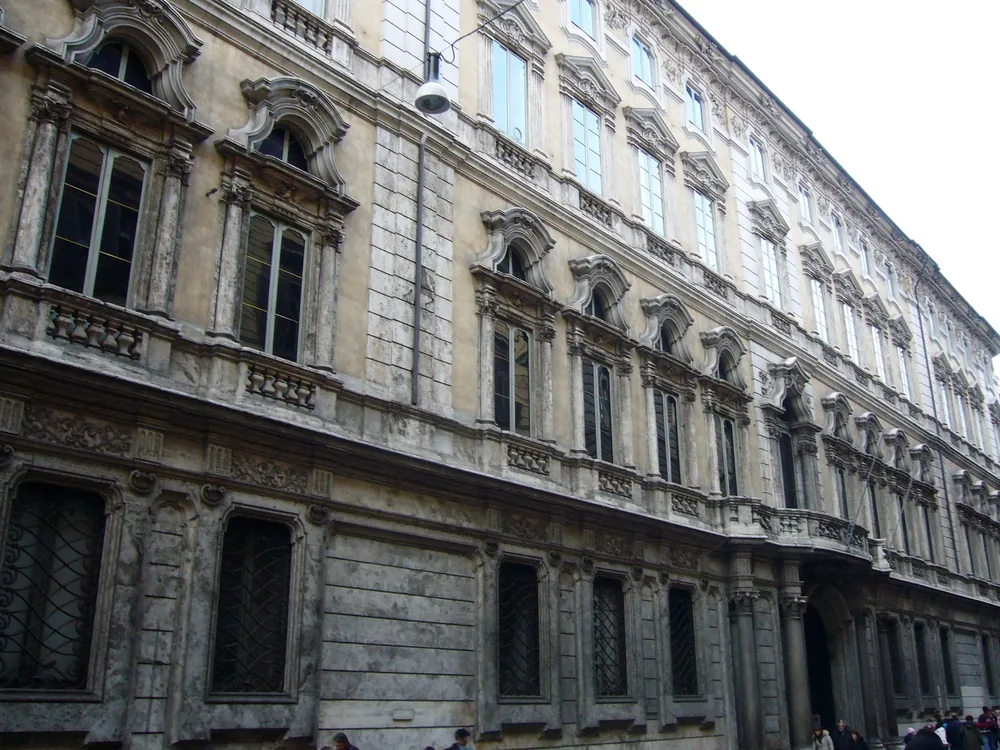
© Castles & Palaces
Quick Facts
- Hours
- Daily 09:00–19:00
- Entry via GYG
- €23.2
- Duration
- 1.5–2 hours (the four gallery wings, the Velázquez and Caravaggio rooms, the Galleria degli Specchi, and the courtyard; allow additional time for the optional Secret Apartments guided tour or evening concert if booked)
- Best time
- Year-round
- Nearest city
- Rome
Featured Tour
Rome: Doria Pamphilj Gallery Entry Ticket
Cancellation available · Instant confirmation
Highlights
- ✦The Velázquez portrait of Pope Innocent X — the masterpiece of the collection — the single most celebrated work in the Palazzo Doria Pamphilj gallery is Diego Velázquez's portrait of Pope Innocent X (Giovanni Battista Pamphilj, 1574–1655), painted in Rome in 1650 when the artist visited the city with the Spanish delegation; the portrait is a masterwork of psychological intensity: the Pope is depicted in three-quarter view with an expression of wary intelligence — aware of the painter's scrutiny, uncomfortable with its precision, and yet committed to sitting for a portraitist that Philip IV of Spain had sent him; Innocent X himself is said to have called it 'troppo vero' — too true — a reaction that acknowledges the portrait's unsparing honesty; Francis Bacon revisited the image in his 'Screaming Pope' series of the 1950s–60s, making it one of the most artistically consequential single portraits of the 17th century; the original remains in the Doria Pamphilj gallery, in the room to which the family has always assigned it
- ✦The Caravaggio works and the early Roman collections — the two paintings that define the gallery's tonal character — the Palazzo Doria Pamphilj gallery holds two of Caravaggio's early Roman works: 'Rest on the Flight into Egypt' (c. 1596–1597) and 'Penitent Magdalene' (c. 1594–1595); both were painted in the period immediately before Caravaggio developed the severe chiaroscuro that defines his mature style; they are warmer, more tender works than the St Matthew series or the Supper at Emmaus — the 'Rest on the Flight into Egypt' in particular depicts a sleeping Virgin with the softness of a domestic genre painting, the angel facing away from the viewer to play for the dreaming Madonna from sheet music held by Joseph; the two Caravaggio paintings are among the earliest and most intimate in Rome's public galleries, accessible at a fraction of the queue times required for the major Roman museums
- ✦The family still lives here — a private collection in a private home — the Palazzo Doria Pamphilj is one of a diminishing number of Roman palaces in which the owning family still inhabits private apartments; Jonathan Doria Pamphilj, a living member of the family, narrates portions of the official gallery audio guide in English — giving visitors the distinctive experience of hearing a palazzo's history explained by someone who grew up in it; the private apartments of the family (beyond the gallery rooms) are accessible only through the optional Secret Apartments guided tour, which includes rooms not on the standard visit; the family's continued residence gives the gallery a quality that public museum collections cannot replicate: the art occupies the rooms it was acquired for, in the house whose history it tells, with the institutional logic of accumulation rather than curation still apparent in how the works are hung
- ✦The four gallery wings and the Galleria degli Specchi — the experience of the historic accumulative hang — the gallery's four wings are hung floor-to-ceiling with paintings in the historic accumulative manner: works of different periods, subjects, and scales mounted edge to edge in multiple rows, as they would have been hung in the 17th and 18th centuries; this installation approach — the opposite of the modern white-wall museum convention — gives the Doria Pamphilj gallery its particular visual character; visitors move through rooms where Raphael, Titian, Tintoretto, Brueghel, Dürer, Memling, and Guercino coexist on the same wall, separated by gilded frames rather than curatorial distance; the Galleria degli Specchi (Hall of Mirrors) runs along the garden side of the complex, its mirrored walls creating the baroque spatial illusion of infinite extension
Skip the queue with a guided tour
Skip-the-line tickets & expert guides
The building at Via del Corso 305 looks, from the street, like what it is: a large Roman aristocratic palace with a rhythmic Rococo facade, its upper-floor windows framing nothing visible to the passerby. Nothing suggests that behind those windows is one of the most important private art collections in the world, or that the family whose name the building carries still lives in the apartments on the upper floors.
The Palazzo Doria Pamphilj accumulated its current form across several centuries. The site's oldest elements date to the 15th century; the palace passed through the Aldobrandini family and then to the Pamphilj through Pope Innocent X — Giovanni Battista Pamphilj — in the mid-17th century. The gallery wings were reorganised in the 1730s and 1740s to create the sequential rooms that visitors move through today. The result is a building that carries the institutional logic of aristocratic accumulation: rooms added and modified as the family's needs and resources required, hung with paintings as they were acquired, never reorganised into a museum installation because the purpose was always a private home with a notable collection rather than a public institution.
The collection is organised around a circuit of four gallery wings disposed around an inner courtyard, their walls hung floor-to-ceiling with paintings in the historic manner — works mounted edge to edge in multiple rows, of different periods and scales, as they would have been displayed in the 17th and 18th centuries. Raphael, Titian, Tintoretto, Brueghel, Dürer, Memling, and Guercino coexist on the same walls, separated by gilded frames. The curatorial distance of the modern museum — the white wall, the single work, the interpretive card — is entirely absent. This is both the Doria Pamphilj gallery's challenge and its distinctive appeal: the visitor is responsible for navigating a collection of world-class works in a setting that offers no hierarchy of importance other than the position assigned by the 17th-century hanging.
The single work that makes the gallery essential is Velázquez's portrait of Pope Innocent X, painted in Rome in 1650. The portrait depicts the Pope in three-quarter view with a psychological acuity that the subject himself reportedly called 'troppo vero' — too true. Velázquez painted Innocent X as he found him: intelligent, guarded, uncomfortable with scrutiny, exactly as wary of the portrait as the portrait makes him appear. It is the most unflinching great portrait of the 17th century, and it has remained in the Doria Pamphilj family's possession for 375 years. Francis Bacon's 'Screaming Pope' series of the 1950s–60s, which revisited the Velázquez image in a distorted mid-20th-century register, made the original one of the most artistically consequential single portraits in Western painting.
The two Caravaggio works — 'Rest on the Flight into Egypt' (c. 1596–97) and 'Penitent Magdalene' (c. 1594–95) — represent the painter's early Roman period, before the severe chiaroscuro of his mature works. They are warmer and more tender than the later paintings, and they hang at the Doria Pamphilj in the rooms the family assigned to them, accessible without the queues that afflict the major Roman museums.
The official gallery audio guide includes commentary by Jonathan Doria Pamphilj, a living family member — a distinctive institutional gesture that acknowledges the gallery's private character. An optional Secret Apartments guided tour extends the visit into rooms beyond the standard circuit. An optional evening classical concert, held in the palace's ceremonial rooms, provides a different category of experience entirely.
The GYG entry ticket (t224619, from €23, 70 minutes to 3 hours) includes the official gallery audio guide and the Rome audio guide app, with the optional Secret Apartments and concert upgrades available at booking.
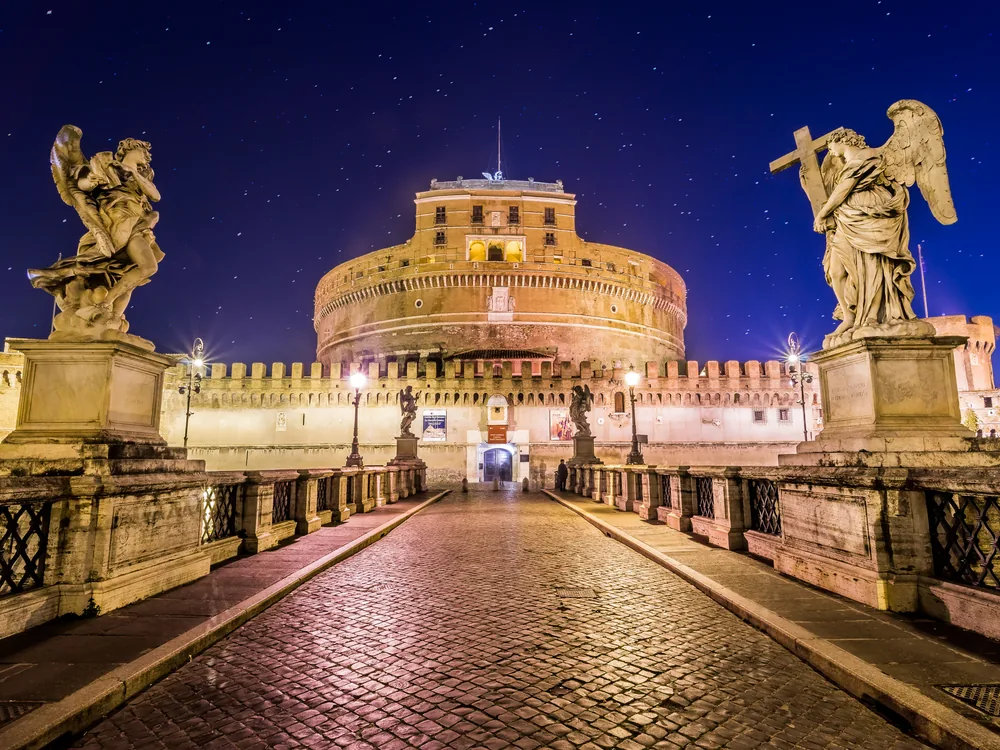
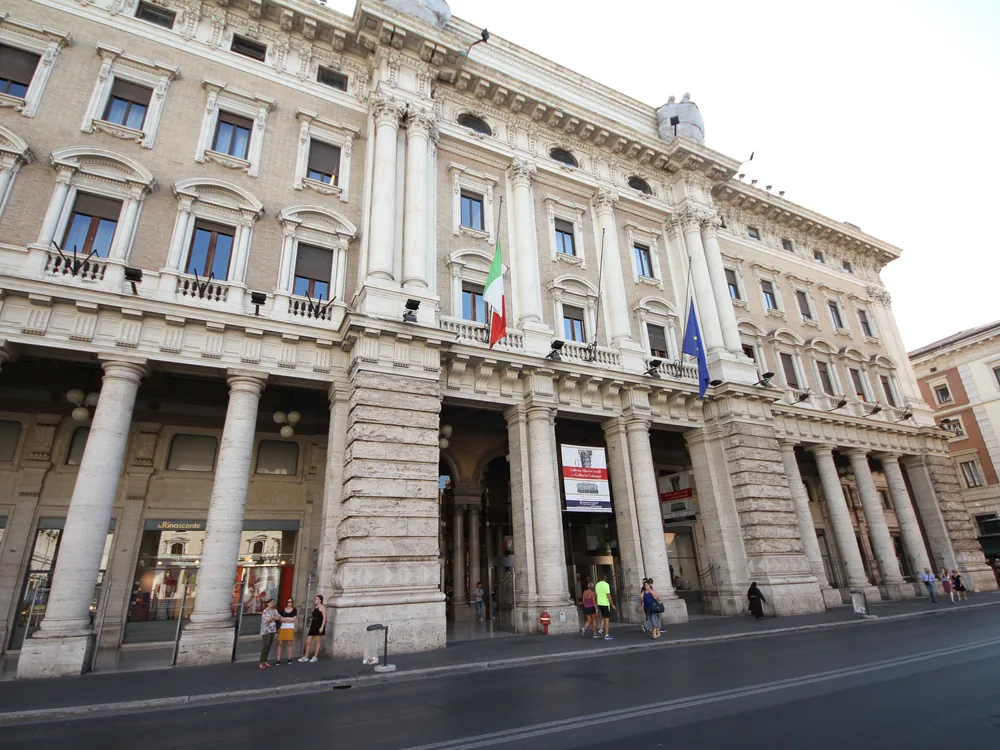
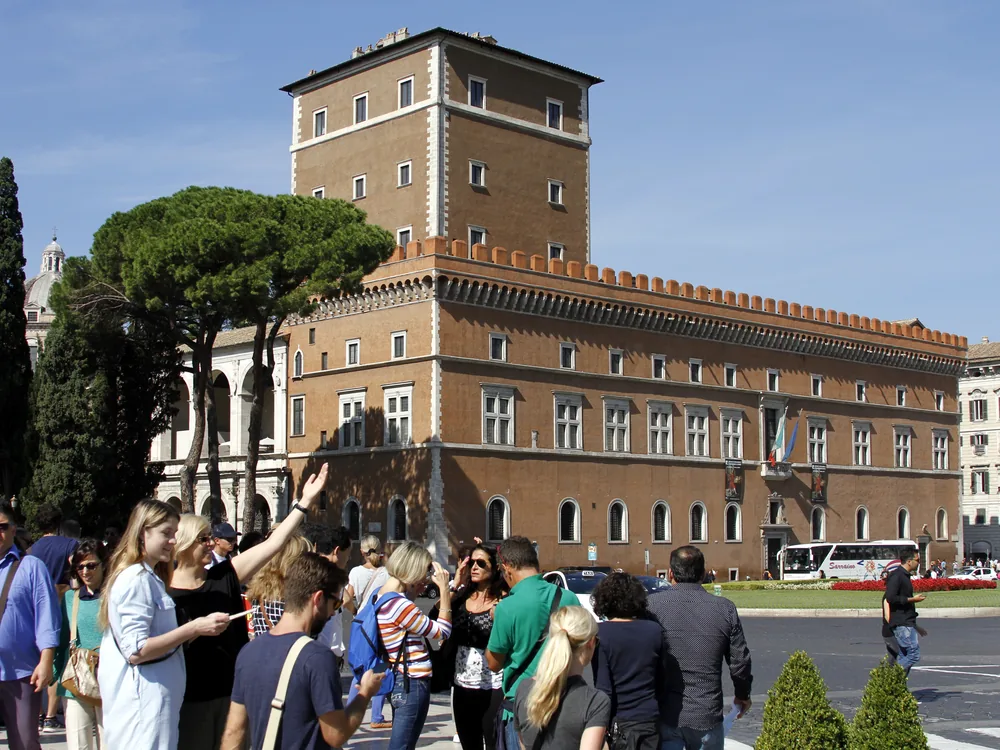
[Colonna Palace](/castles/italy/colonna-palace) — Rome's other great private noble palace gallery, half a kilometre east on the Quirinal Hill side — is the natural companion visit, offering a different family's accumulation in a similarly unmediated historic setting. [Castel Sant'Angelo](/castles/italy/castel-santangelo) and [Palazzo Venezia](/castles/italy/palazzo-venezia) extend the central Rome palace and fortress circuit.
History
1435 onward: construction of the first buildings on the current site in Rome's historic centre. 16th century: palace passes through ownership of the della Rovere and Aldobrandini families; expanded and modified across multiple building campaigns. 1647: the Pamphilj family acquires the palace following the election of Giovanni Battista Pamphilj as Pope Innocent X; the palace becomes the principal Roman residence of the Pamphilj. 1650: Diego Velázquez visits Rome with the Spanish delegation; paints his portrait of Innocent X, which remains in the palace's collection permanently. c. 1730–1740s: gallery wings reorganised under Cardinal Valenti Gonzaga; the four-wing gallery circuit around the inner courtyard takes its current form. 18th century: the Doria family (Genoese) unites with the Pamphilj family through marriage; palace becomes the Palazzo Doria Pamphilj. 19th–20th century: palace maintained as private family residence; collection preserved in historic accumulative arrangement. Present day: gallery open daily; Doria Pamphilj family continues to inhabit private apartments; optional Secret Apartments tour and evening concert available.
How to Visit
Getting there: Palazzo Doria Pamphilj sits on Via del Corso in Rome's historic centre — no metro stop is directly adjacent; nearest stations are Spagna and Barberini (both Line A, 10–15 minutes' walk). Bus routes 40, 62, and 64 stop at Largo di Torre Argentina, a 5-minute walk south. The Pantheon and Piazza Navona are both within 5 minutes on foot.
Tickets: Walk-up entry €12 adult, €8 child. The GYG entry ticket (t224619, from €23, 4.7★/1,875 reviews) includes the official gallery audio guide and the Rome audio guide app; optional upgrades — Secret Apartments guided tour and evening classical concert with welcome drink — can be added at booking.
Practical tips: The gallery is entirely indoors and open year-round, making it a reliable option in summer heat or winter rain. Audio guide commentary is partly narrated by a living Doria Pamphilj family member — allow 1.5–2 hours for the four gallery wings and add time if booking the Secret Apartments tour. Book at least a day ahead to secure entry.
Combine with: [Castel Sant'Angelo](/castles/italy/castel-santangelo) is 15 minutes' walk northwest along the Tiber; [Colonna Palace](/castles/italy/colonna-palace) is half a kilometre east on the Quirinal Hill side — Rome's other great private noble palace gallery.
Frequently Asked Questions
Yes — the Palazzo Doria Pamphilj is one of the few great Roman palaces in which the owning family still inhabits private apartments. Jonathan Doria Pamphilj, a living family member, narrates portions of the official gallery audio guide in English. The gallery's four wing circuit is open to visitors daily; the private family apartments are separately accessible through the optional Secret Apartments guided tour, available as an upgrade at booking. The family's continued residence gives the gallery an institutional character that public museum collections cannot replicate: the art occupies the rooms it was acquired for, in the house whose history it documents.
Location
Palazzo Doria Pamphilj, Via del Corso 305, 00186 Rome, Italy
Nearby Castles
Tours & Tickets
Powered by GetYourGuide
From
€23.2/ person