
Rocchetta Mattei
Rocchetta Mattei
Italy · Emilia-Romagna · Near Bologna
Built 1850 · Eclectic Revival — Moorish, Neo-Gothic, Romanesque, and Orientalist elements combined by Count Cesare Mattei between 1850 and 1905
This page is part of an independent travel guide and is not affiliated with, endorsed by, or operated by Rocchetta Mattei.
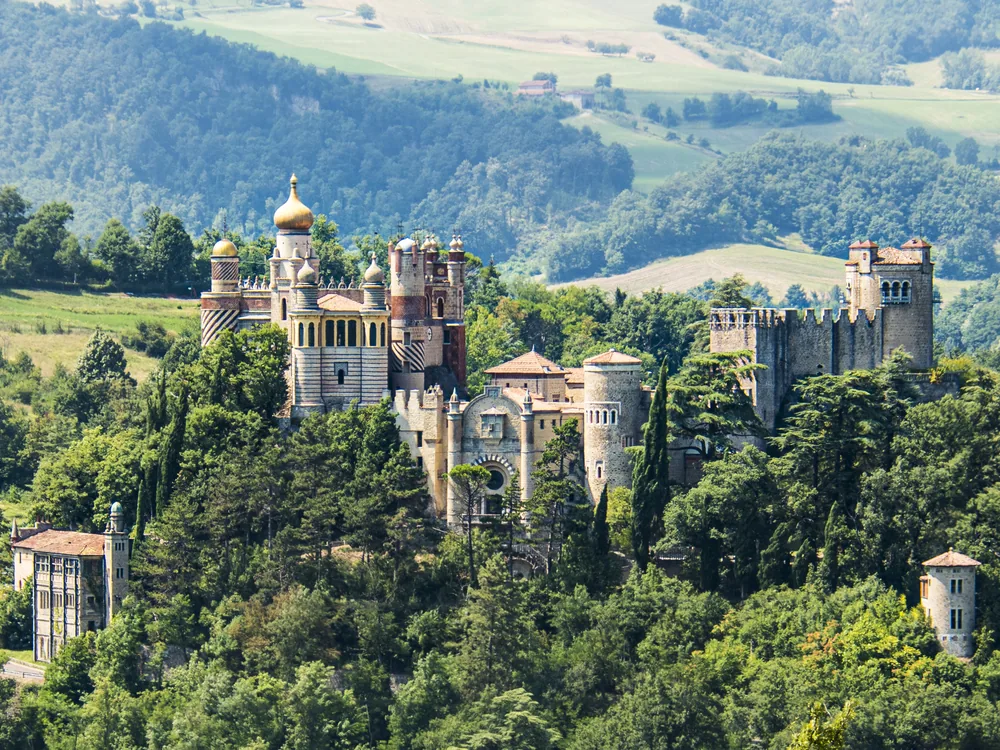
© Unsplash
Quick Facts
- Hours
- Wed–Sun By guided tour only, booked time slots. Closed Mon & Tue
- Entry from
- €13
- Duration
- 1 hour (guided tour only, groups strictly limited)
- Best time
- April to October
- Booking
- Required — book 14+ days ahead
- Nearest city
- Bologna
Highlights
- ✦Moorish stucco beside Gothic tracery, a Roman-style courtyard adjoining a medieval keep, and minaret-like towers above a Romanesque cloister — the most eccentric castle in Italy
- ✦Built by Count Cesare Mattei (1809–1896), a politician and self-styled healer who practised 'electrohomeopathy', a controversial theory that electrically charged plant extracts could cure disease
- ✦A 55-year construction (1850–1905) around a ruined medieval tower, continuing nine years after Mattei's death to complete his vision
- ✦The Moorish salon — a honeycomb muqarnas ceiling, geometric tilework and horseshoe arches that would look equally at home in Granada — set directly beside a Neo-Gothic chapel
- ✦A 25-year restoration (1986–2015) that rebuilt collapsed roofs and crumbled stucco from archival photographs after the castle was abandoned and nearly lost entirely
Skip the queue with a guided tour
Skip-the-line tickets & expert guides
In the Apennine hills 40 kilometres south of Bologna, on a ridge above the Reno valley, stands something that defies easy classification: Moorish stucco work beside Gothic tracery, a Roman-style courtyard adjoining a medieval keep, minaret-like towers rising above a Romanesque cloister. Rocchetta Mattei is the most eccentric castle in Italy, built by a man who was either a genius, a charlatan, or both, and who left behind a building that still resists being filed under any single architectural category.
Count Cesare Mattei (1809–1896) was a politician, philanthropist and self-styled healer who served in the first Italian parliament and made a substantial fortune in Bologna before retreating to the Apennines to build his vision and practise his controversial medical theories. He called his treatment 'electrohomeopathy' — the belief that electrically charged plant extracts could cure disease, a theory denounced by conventional medicine but adored by a public hungry for alternatives. Thousands of patients travelled to Rocchetta Mattei seeking cures over the decades. The castle's fame reached far beyond Italy: Dostoevsky mentioned it in his correspondence, and Pope Leo XIII reportedly received Mattei's treatments personally, lending an aura of legitimacy that conventional medicine never granted him.
Mattei bought a ruined medieval tower on the ridge in 1850 and spent the rest of his life building around it, employing craftsmen from across Italy alongside Moorish stucco artists brought in specifically for the project. The result is a layered accumulation of styles that somehow holds together: the circular courtyard owes its geometry directly to the Alhambra, the chapel copies Romanesque models, and the towers echo Sienese Gothic, with no single coherent architectural language governing the whole, yet a coherence of spirit running through every room regardless. Construction continued after Mattei's death in 1896, finally finishing in 1905 under those who carried his project forward.
The building's fortunes did not survive the 20th century intact. After the Second World War the castle fell into ruin, its last owner abandoning it in the 1970s; the intricate Moorish stucco crumbled, sections of roof collapsed, and the entire structure risked being lost entirely. In 1986, the Unione dei Comuni dell'Appennino Bolognese acquired the site and began a 25-year restoration, rebuilding entire rooms from archival photographs where the original fabric had not survived. The castle only reopened to the public in 2015, nearly 30 years after the restoration began, and its highlight remains the Moorish salon — a honeycomb muqarnas ceiling, geometric tilework and horseshoe arches that would look entirely at home in Granada — positioned, with deliberate and startling juxtaposition, directly beside a Neo-Gothic chapel with pale stone pointed vaulting. The circular courtyard at the building's heart is the spatial climax of the whole structure, the point where all of Mattei's architectural enthusiasms meet.
History
Count Cesare Mattei purchased a ruined medieval tower on the ridge above the Reno valley in 1850, beginning a construction project that would occupy the remainder of his life. Mattei was already a man of considerable means and public standing — he had served in the first Italian parliament and built a fortune in Bologna — but his consuming interest by the 1850s was 'electrohomeopathy', his own invented medical system based on the belief that electrically charged plant extracts could treat and cure disease. Conventional medicine rejected the theory outright, but Mattei's reputation as a healer spread widely; thousands of patients made the journey to Rocchetta Mattei seeking treatment, and his fame reached figures as prominent as Dostoevsky, who referenced the castle in his letters, and Pope Leo XIII, who reportedly received Mattei's remedies.
Construction proceeded for the rest of Mattei's life and beyond, employing craftsmen drawn from across Italy alongside specially engaged Moorish stucco artists, producing a building that layered Moorish, Neo-Gothic, Romanesque and Orientalist elements without ever settling into a single dominant style. Mattei died in 1896, but work continued under those who inherited his project, with the castle reaching substantial completion in 1905 — a full construction period of 55 years.
The building's decline began after the Second World War and accelerated through the following decades, culminating in its abandonment by its last owner in the 1970s. Roofs collapsed in sections, the delicate Moorish stucco work crumbled from exposure, and the castle stood at genuine risk of being lost entirely. The Unione dei Comuni dell'Appennino Bolognese acquired the site in 1986 and undertook a restoration that would last 25 years, rebuilding rooms from archival photographs where no original fabric remained and stabilising what had survived. The castle reopened to the public only in 2015, nearly three decades after the restoration effort began, with visitor access now managed through strictly limited guided tours to protect the painstakingly reconstructed interiors.
How to Visit
Getting there: No public transport serves the castle directly; a car is required, with the drive from Bologna taking about 40 minutes via the Porrettana road through the Reno valley. There is no straightforward way to combine the visit with public transit, which keeps the site relatively uncrowded compared to Bologna's better-connected attractions.
Booking is essential: Tickets must be reserved well in advance — the strictly limited group sizes mean tours sell out, particularly on weekends, and the GetYourGuide listing frequently shows a 'Likely to sell out' status during the open season. Book at least two weeks ahead if possible, and confirm the castle's current opening months before travelling, since it operates only from April to October and closes entirely in winter.
What to expect: Entry is by guided tour only, lasting about an hour, with the route taking in the Moorish salon, the Neo-Gothic chapel immediately beside it, and the circular courtyard at the heart of the building. A day trip from Bologna is the standard visiting pattern — there is little reason to stay overnight nearby, and the tour itself is brief enough to combine comfortably with other plans in the Bolognese Apennines.
Tickets: Walk-up entry €13 adult, €7 child. The GetYourGuide tour — Bologna — offers a guided visit; book in advance.
Practical tips: April to October (closed in winter. Book at least 14 days ahead.
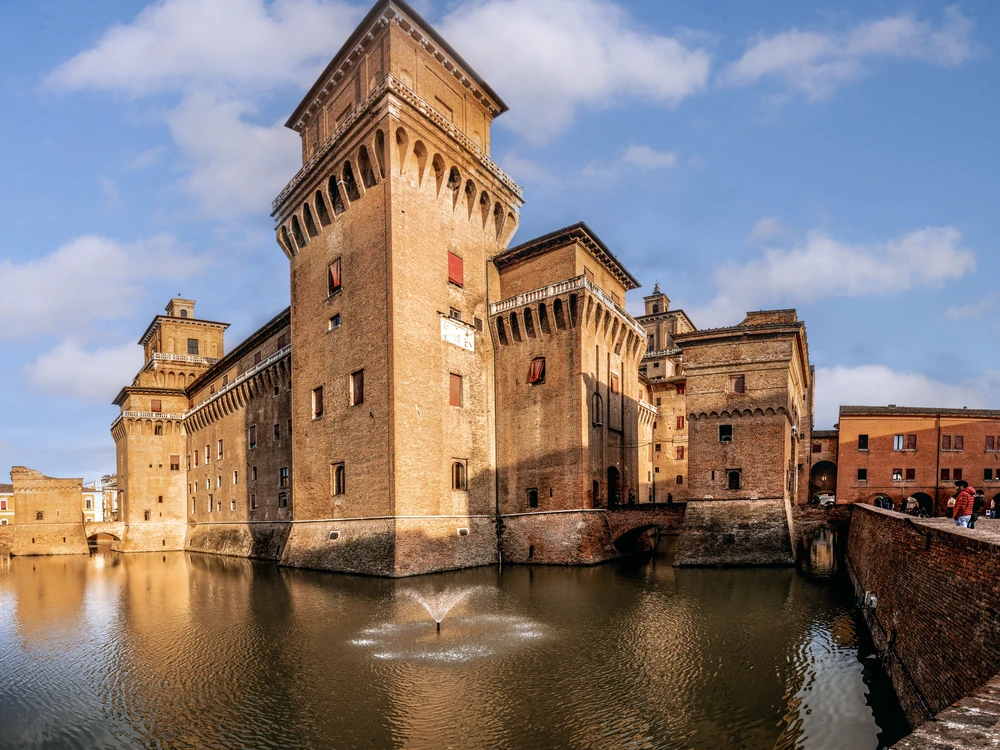
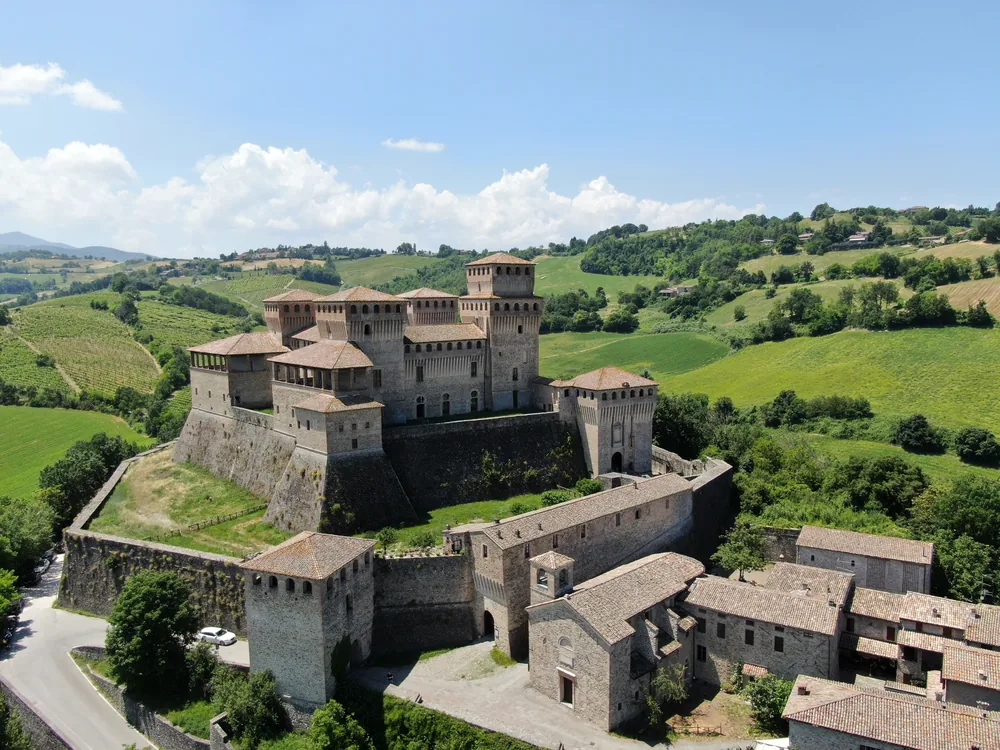
Combine with: Castello Estense, Castello Di Torrechiara.
Frequently Asked Questions
Count Cesare Mattei (1809–1896), an Italian politician and self-styled healer, bought a ruined medieval tower on the site in 1850 and spent the rest of his life building around it. He used the castle partly as a private residence and partly as a base for practising 'electrohomeopathy', his own invented medical theory holding that electrically charged plant extracts could cure disease — a practice that drew thousands of patients despite being rejected by conventional medicine.
Location
Via Porrettana, 40040 Grizzana Morandi BO, Italy
Nearby Castles
Tours & Tickets
Powered by GetYourGuide
Entry from
€13/ adult