
Elizabeth Castle
Château Élisabeth
Jersey · Jersey — Saint Helier Bay, tidal island (islet of L'Islet), Parish of Saint Helier · Near Saint Helier
Built 1594 · Early modern artillery fortress, 16th–17th century, with WWII German Occupation additions — Elizabeth Castle is a flat-plan coastal artillery fortification built on a tidal islet in Saint Helier Bay, representing the transition from the vertical medieval castle (Mont Orgueil) to the low-profile gun platform designed to accommodate cannon and resist artillery bombardment; construction began in 1594 under Governor Sir Walter Raleigh on the islet of L'Islet, which is accessible on foot via a stone causeway at low tide and by boat at high tide; the castle's plan is determined by the requirements of gunpowder warfare: low, thick walls in irregular bastioned trace able to mount and absorb artillery; the Outer Ward, Inner Ward, and Upper Ward are arranged concentrically around the tidal islet's geography rather than on a strict geometric plan; the castle was named in honour of Queen Elizabeth I following the failure of the Jersey militia to defend the island against Spanish attack in 1594, when a fort at the harbour mouth was deemed inadequate; the 17th century brought the castle into active English Civil War operations — Prince Charles (future Charles II) sheltered here for three months in 1646 after the fall of Oxford; a further stay occurred in 1649 after his father's execution; the castle was additionally the first location from which Charles II was proclaimed king, in 1649; the WWII German Occupation of Jersey (1940–1945) added substantial concrete fortifications, gun emplacements, and the underground hospital-equivalent bunker to the castle's historic structure — these remain as the castle's most recent defensive layer
This page is part of an independent travel guide and is not affiliated with, endorsed by, or operated by Elizabeth Castle.
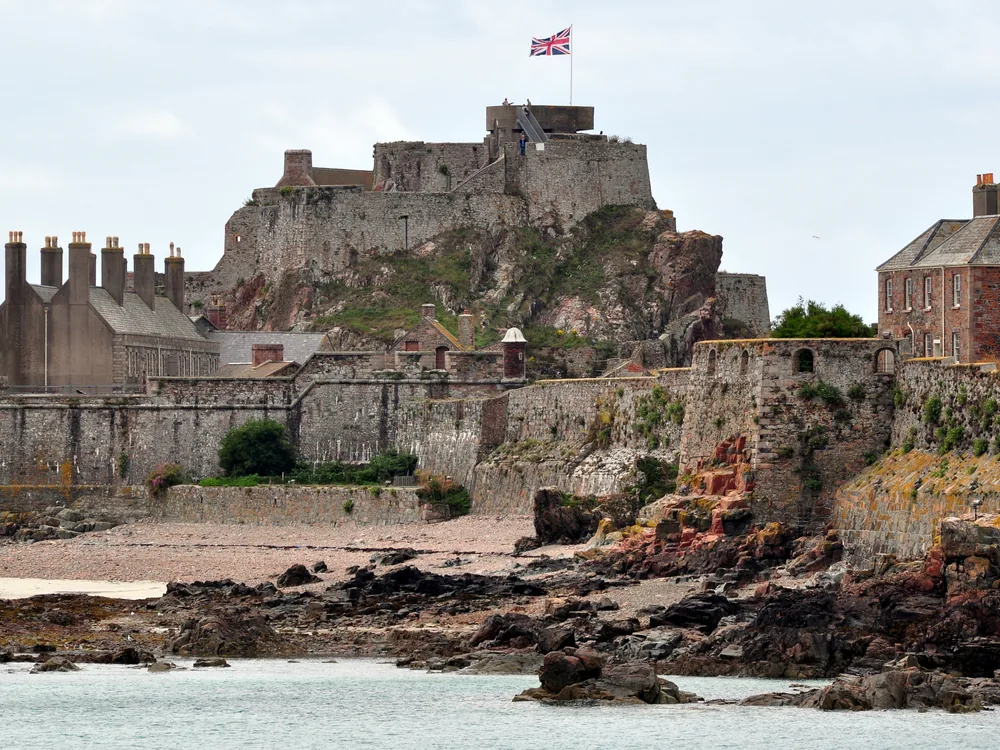
© Castles & Palaces
Quick Facts
- Hours
- Daily 10:00–17:30
- Guided tour from
- €61
- Duration
- 2–3 hours (the Outer Ward and battery displays, the Inner Ward and the main keep, the Prince's Room where Charles II sheltered in 1646 and 1649, the WWII German Occupation fortifications and bunker, and the views across Saint Helier Bay to Mont Orgueil on the east coast; the tidal island setting adds ambient experience beyond the castle itself)
- Best time
- May
- Nearest city
- Saint Helier
Featured Tour
Jersey: Heritage Pass — Mont Orgueil & Elizabeth Castle (7-Day Access)
Cancellation available · Instant confirmation
Highlights
- ✦The tidal island access — causeway or amphibious DUKW ferry, depending on the tide — Elizabeth Castle occupies the tidal islet of L'Islet in Saint Helier Bay; the islet is connected to the shore by a stone causeway that is exposed at low tide and completely submerged at high tide; the tidal approach is central to the experience: at low tide, visitors walk the 750 metres across the causeway from West Park beach, the same approach that was used for supply and access for 350 years; at high tide, visitors board the amphibious DUKW ferry from the Albert Quay slipway — the DUKW is a WWII-era vehicle that travels on both road and water, itself a piece of military history used for a heritage purpose; Jersey's tidal range is among the largest in Europe (up to 12 metres at spring tides), and the transition from causeway accessible to causeway submerged can be rapid; always check tide times at jerseymet.je before visiting, and plan crossing times with the castle's advice to avoid being caught on the islet by a rising tide
- ✦Prince Charles's sanctuary — the castle where Charles II was first proclaimed king — Elizabeth Castle was the shelter of the future Charles II during two critical periods of the English Civil War; in 1646, after the fall of Oxford to Parliamentary forces, Prince Charles (age 16) crossed to Jersey and sheltered at Elizabeth Castle for three months as the Parliamentary side consolidated control of mainland England; in 1649, following the execution of his father Charles I, the Prince returned to Jersey and at Elizabeth Castle was proclaimed King Charles II — the first proclamation of his kingship, before his restoration to the English throne in 1660; the Prince's Room in the castle, where Charles slept during both visits, is preserved and interpreted as the room in which the future king spent some of the most precarious months of his life; the detail of the English monarchy's survival being sheltered in a Jersey castle is one of those Channel Islands historical facts that most visitors find surprising
- ✦WWII German Occupation fortifications — the most complete Atlantic Wall addition to a Jersey heritage castle — the German military occupation of Jersey from 1940 to 1945 left substantial concrete fortifications at Elizabeth Castle: gun emplacements, observation posts, underground bunkers, and the additions to the artillery battery that converted the 17th-century fort into part of the Atlantic Wall coastal defence system; these WWII elements are interpreted at the castle as part of the site's 350-year defensive history rather than as separate from the 17th-century structure; Elizabeth Castle's WWII displays include the underground Occupation-era facilities that give a particularly visceral sense of what the German garrison addition to the castle meant in practice; Jersey was the only part of the British Isles occupied by German forces during World War II, and the castle's WWII layer is a significant part of its historical interest for visitors from mainland Britain
- ✦The bay view and the relationship to Mont Orgueil — the complementary half of Jersey's castle pairing — from the walls of Elizabeth Castle, Mont Orgueil is visible on the east coast of Jersey — the medieval castle on its granite headland 8km east across the island; the view connects the two sites that together define Jersey's 820-year defensive history: Mont Orgueil (built 1204, concentric medieval, eastern coast facing Normandy) and Elizabeth Castle (built 1594, artillery bastioned, bay entrance facing the Atlantic); Elizabeth Castle was built partly because Mont Orgueil's vertical medieval walls could no longer resist artillery bombardment; the two castles represent the same island's defensive programme across two different ages of warfare; the Heritage Pass covers both sites (7-day validity), and the view from Elizabeth Castle toward Mont Orgueil is the clearest visual statement of why both were needed
Skip the queue with a guided tour
Skip-the-line tickets & expert guides
The causeway to Elizabeth Castle crosses Saint Helier Bay on the same stone that has connected the tidal islet of L'Islet to the shore for over 400 years. At low tide, the approach takes 15 minutes on foot — a walk across the exposed tidal flat with the castle growing larger as you approach, and Saint Helier's harbour behind you. At high tide, the causeway disappears under up to 12 metres of water, and the crossing is made by amphibious DUKW ferry from the Albert Quay slipway: a WWII-era vehicle, itself a piece of military history, carrying passengers across the same water that has made the castle strategically significant for four centuries.
The tidal access is not incidental to the experience. It is the castle's essential character. Elizabeth Castle was built on a tidal islet because the tidal islet was the position that commanded the entrance to Saint Helier Bay — the natural harbour that gave Jersey its principal anchorage. When Governor Sir Walter Raleigh began construction in 1594, he was solving the same problem that Mont Orgueil had solved on the east coast: a French or Spanish attack by sea required a coastal fortification at the water's edge. But where Mont Orgueil had been built for a world of vertical fortifications and siege warfare, Elizabeth Castle was designed for the world of cannon. Its walls are low and thick, its bastioned trace designed to absorb and deflect artillery, its gun platforms positioned to cover the bay approaches.
The castle was named in honour of Queen Elizabeth I. It served as Jersey's principal military fortification from the late 16th century through the 17th. During the English Civil War, it twice sheltered the future Charles II: in 1646, when the teenage Prince of Wales crossed to Jersey after the fall of Oxford to Parliamentary forces, he sheltered at Elizabeth Castle for three months. In 1649, following the execution of his father Charles I, the Prince returned, and at Elizabeth Castle was first proclaimed King Charles II — his first public proclamation as king, made from a Jersey castle before his restoration to the English throne in 1660. The Prince's Room, where Charles slept during both visits, is preserved and interpreted inside the castle.
The most recent military additions to Elizabeth Castle are from the 20th century's most recent war. In 1940, German forces occupied Jersey — the only part of the British Isles to fall under German occupation in World War II. The Wehrmacht incorporated Elizabeth Castle into the Atlantic Wall coastal defence system, adding gun emplacements, observation posts, and underground bunkers to the 17th-century structure. These WWII additions remain on site and are interpreted as part of the castle's 350-year defensive history.
The GYG Heritage Pass (t1308839, from €61, valid 7 days) covers both Elizabeth Castle and Mont Orgueil Castle — the two sites that together give the most complete picture of Jersey's defensive history from 1204 to 1945. The pass is the standard product for visiting both Jersey Heritage castles; the 7-day validity gives flexibility to visit each site on different days and in different tidal conditions.
**Tidal access is the essential logistical consideration for Elizabeth Castle.** Always check tide times at jerseymet.je before visiting. The causeway transition from accessible to impassable can be rapid at spring tides. The castle's visitor information will advise on current tidal conditions and causeway timing. The DUKW ferry (paid separately from the Heritage Pass) runs from the Albert Quay when the causeway is flooded.
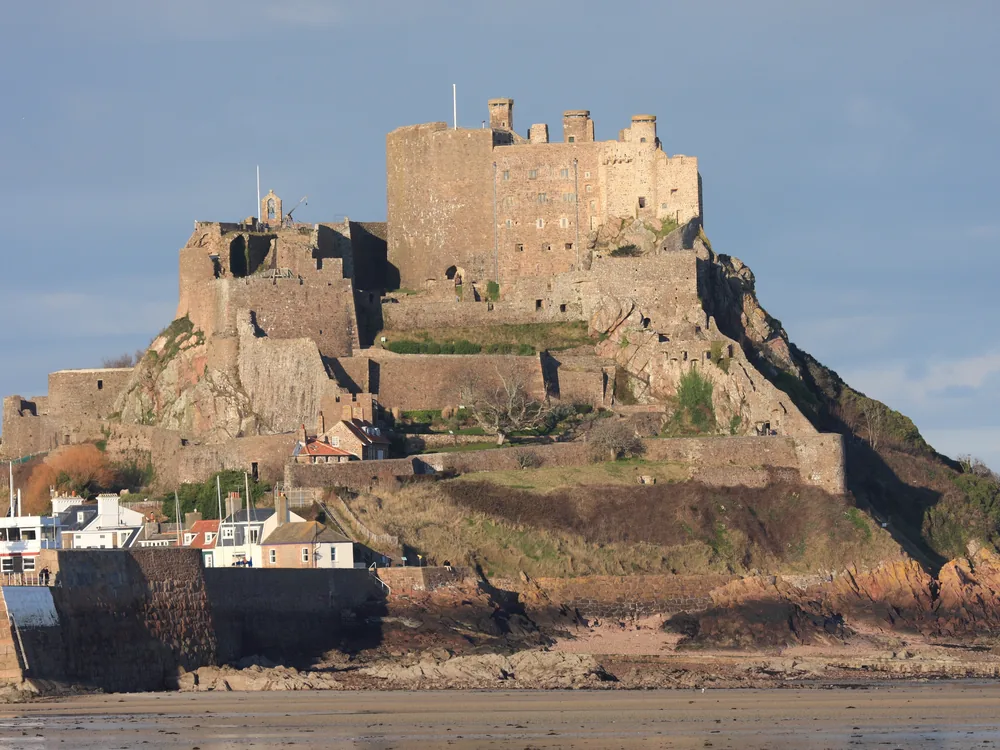
[Mont Orgueil Castle](/castles/jersey/mont-orgueil-castle) — the 13th-century medieval concentric castle above Gorey Harbour on the east coast — is the Heritage Pass companion visit and the historical predecessor. [Corfe Castle](/castles/england/corfe-castle) and [Pendennis Castle](/castles/england/pendennis-castle) extend the broader English Channel coastal fortification circuit.
History
Jersey remained under the English crown after the separation of Normandy in 1204, but the island's western harbour became strategically exposed as the threat from Spain intensified in the late 16th century. Governor Sir Walter Raleigh began construction of Elizabeth Castle on the tidal islet of L'Islet in Saint Helier Bay in 1594 — a response to both the Spanish threat and the inadequacy of existing harbour defences. The castle was named in honour of Queen Elizabeth I, and construction continued intermittently into the 17th century as batteries and bastions were added to the expanding circuit.
The castle's most historically resonant episodes came during the English Civil War. Prince Charles (the future Charles II) crossed to Jersey after the fall of Oxford to Parliamentary forces in 1646 and sheltered at Elizabeth Castle for three months. He returned in 1649 following the execution of Charles I, and was proclaimed King Charles II at Elizabeth Castle — the first proclamation of his kingship anywhere in his three realms. The Restoration in 1660 gave this proclamation retrospective constitutional weight. The castle served as Jersey's primary military fortification through the 17th and 18th centuries; French forces landed during the Battle of Jersey in 1781 but were repulsed, and the castle was not directly besieged.
The German Occupation of Jersey from 1940 to 1945 added gun emplacements, observation posts, and underground bunkers to the castle structure as part of the Atlantic Wall. Jersey Heritage now manages the castle; the Heritage Pass is valid for both Elizabeth Castle and Mont Orgueil.
How to Visit
Getting there: Both access points are within 5–10 minutes' walk of Saint Helier town centre. At low tide, walk the 750-metre stone causeway from West Park beach/slipway (approximately 15 minutes, same approach used for 400 years). At high tide the causeway is completely submerged; cross instead by amphibious DUKW ferry from the Albert Quay slipway in Saint Helier Harbour (fare paid separately). Always check tide times at jerseymet.je before visiting — Jersey's tidal range reaches 12 metres at spring tides and the causeway can flood rapidly.
Tickets: £14 adult / £8 child, purchased at the castle or at jerseyheritage.org. The GYG Jersey Heritage Pass (t1308839, from €61) covers both Elizabeth Castle and Mont Orgueil Castle for 7 days — the standard product for visiting both Jersey Heritage castles; the DUKW ferry fare is not included and is paid separately at the Albert Quay.
Practical tips: Plan your causeway crossing carefully — check that morning's tide chart and allow extra time. The Prince's Room where Charles II sheltered in 1646 and 1649 is the castle's key interpreted space. The WWII German Occupation gun emplacements and bunkers, added to the 17th-century structure, are the most visceral reminder that Jersey was the only part of the British Isles occupied by Germany in WWII.
Combine with: [Mont Orgueil Castle](/castles/jersey/mont-orgueil-castle) in Gorey on the east coast — the 13th-century medieval predecessor that Elizabeth Castle was built to supplement — is covered on the same 7-day Heritage Pass and reaches by bus Route 1/1A from Saint Helier (25–30 minutes).
Frequently Asked Questions
Access to Elizabeth Castle depends entirely on the tide. At low tide, a stone causeway from West Park beach (Saint Helier) is exposed and can be walked in approximately 15 minutes — the same approach used for four centuries. At high tide, the causeway is completely submerged under up to 12 metres of water; crossing is then by amphibious DUKW ferry from the Albert Quay slipway in Saint Helier Harbour (the ferry fare is paid separately from the Heritage Pass). Always check tide times at jerseymet.je before visiting — Jersey's tidal range is among the largest in Europe and the causeway transition can be rapid. The castle provides tidal access guidance on their website and on-site; plan your crossing window before setting out to avoid being stranded on the islet.
Location
Elizabeth Castle, Saint Helier Bay, JE2 3NU, Jersey
Nearby Castles


Tours & Tickets
Powered by GetYourGuide
From
€61/ person