
Bauska Castle
Bauskas pils
Latvia · Zemgale · Near Bauska
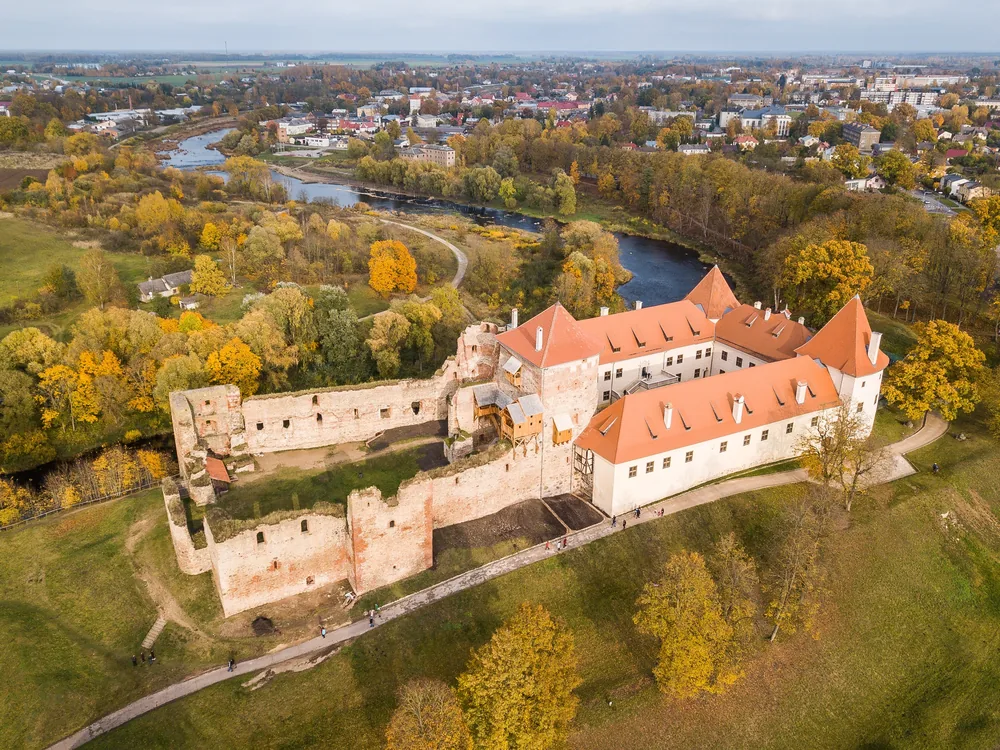
Built 1443 · Late medieval Livonian Order castle at the confluence of the Mūsa and Mēmele rivers (which merge here to form the Lielupe); the original Order castle was built by the Livonian Order between 1443 and 1456 as a river-control fortress and administrative seat for the Zemgale region; a separate ducal palace (the 'New Castle') was added adjacent to the Order fortress between 1582 and 1596 by Duke Gotthard Kettler, the last Master of the Livonian Order who became the first Duke of Courland after the Order's dissolution in 1562; the Order castle was ruined in the Great Northern War; the New Castle was damaged and later rebuilt in the late 20th century; the ensemble is now partly ruined (the Order fortress) and partly restored museum (the ducal palace); the confluence of the two rivers forms the site's defining geographical feature — the castle stands on a peninsula between the rivers, with water on three sides
This page is part of an independent travel guide and is not affiliated with, endorsed by, or operated by Bauska Castle.
© Castles & Palaces
Quick Facts
- Hours
- Daily 10:00–17:00
- Day trip from
- €99
- Duration
- 1–1.5 hours
- Best time
- May to September
- Nearest city
- Bauska
Featured Tour
From Riga: Bauska Castle & Rundale Palace Half-Day Trip
Cancellation available · Instant confirmation
Highlights
- ✦Bauska Castle sits on a natural peninsula at the exact confluence of the Mūsa and Mēmele rivers — the point where those two rivers merge to become the Lielupe — making its position simultaneously a hydrological fact and a medieval military calculation: water on three sides, the rivers as moat, and the convergence of two drainage basins as a chokepoint for river trade control
- ✦The castle embodies a specific historical hinge: Duke Gotthard Kettler, who built the New Castle adjacent to the original Order fortress, was simultaneously the last Grand Master of the Livonian Order and the first Duke of Courland — the man who dissolved the medieval military-religious Order in 1562 and converted its holdings into a hereditary duchy, in the process converting himself from a celibate Order Master to a married dynastic founder; Bauska is where that transition has its most legible architectural form
- ✦The proximity of [Rundale Palace](/castles/latvia/rundale-palace) — 12 kilometres south, designed by Bartolomeo Rastrelli (architect of the Winter Palace in St. Petersburg) — gives the Bauska visit an unusual range: Order castle, ducal palace, and a Baroque summer residence designed by the same architect as the Russian Imperial court's premier palace, all within a 30-minute drive of each other
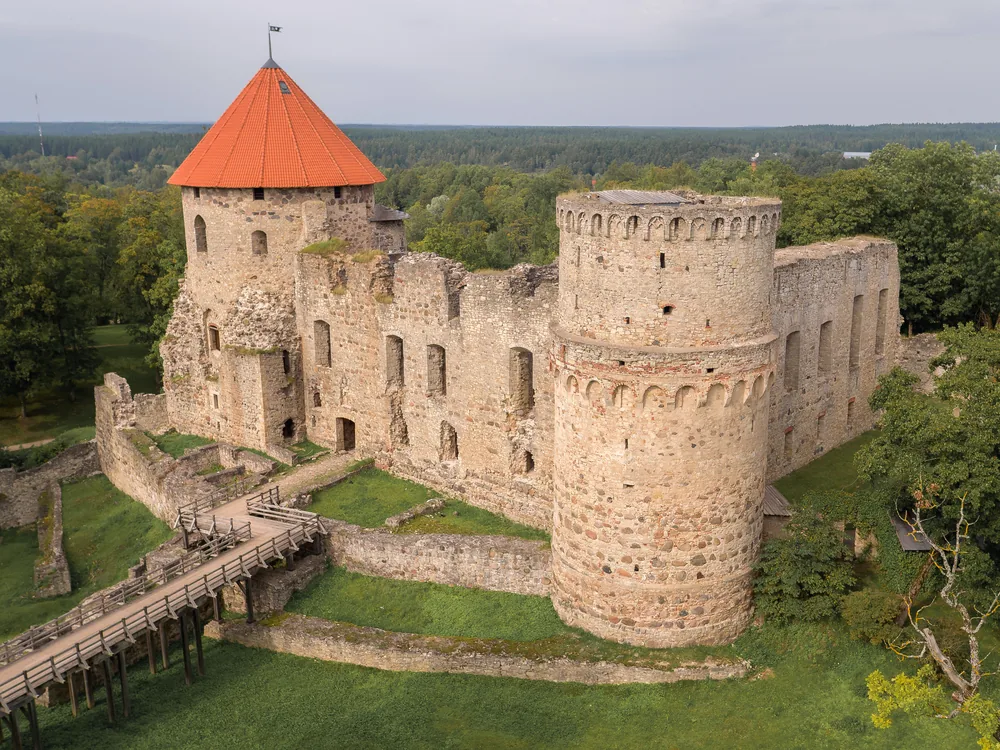
- ✦The ruins of the original Livonian Order fortress are genuine ruins — roofless, partially collapsed, stabilised for visitor access but not reconstructed — while the adjacent New Castle has been restored and operates as a museum; visiting both in sequence gives a physical understanding of what the medieval Order fortress looked like before the Great Northern War and what the ducal remodelling was attempting to achieve
- ✦The Zemgale region around Bauska is the flattest part of Latvia, a glacially-levelled plain of extraordinary agricultural fertility that made it one of the most economically productive territories in the medieval Baltic — the wealth of the land is directly reflected in the ambition of the architecture, from the Order fortress to Rundale Palace
Tickets & tours
Book through GetYourGuide
Bauska Castle stands at the confluence of the Mūsa and Mēmele rivers, on a natural peninsula where the two rivers meet and become the Lielupe. The site was not chosen by a medieval builder looking for a defensible position so much as recognised by one: a peninsula between two rivers is naturally protected on three sides, and the point where two rivers merge is a natural chokepoint for controlling river traffic on both upstream corridors. The Livonian Order, which built the first castle here between 1443 and 1456, understood both advantages perfectly.
The Livonian Order was a military-religious organisation that had controlled the territory of present-day Latvia and Estonia since the 13th century, operating as a crusading force that had converted and then colonised the Baltic tribes through the 1200s and established a theocratic state that mixed German aristocratic governance with the crusading religious mission. By the mid-15th century, when Bauska was built, the Order's military function had largely given way to an administrative one: the castle was built to govern the Zemgale region and control the river trade routes, not to fight crusades against pagans. The fortress is a late-period Livonian Order construction — functional, well-sited, without the architectural ambition of the Order's earlier castle-building.
The Order's political dissolution in 1562 — the consequence of military defeat by Russia in the Livonian War, combined with the Reformation's undermining of the religious-military concept — created the Duchy of Courland and Semigallia out of the southern part of the Order's territories. Gotthard Kettler, the last Grand Master of the Livonian Order, negotiated the transformation of the Order's land into a hereditary duchy with himself as the first Duke. This required him to dissolve his religious vows (Order Masters were celibate), marry, and produce heirs — which he did, establishing the Kettler dynasty that would rule Courland until 1737.
Kettler's construction of the New Castle at Bauska, between 1582 and 1596, is the architectural document of this transition. The new ducal palace was built directly adjacent to the older Order fortress, sharing its corner tower as a connecting element, but with a residential character entirely different from the military tower house. The ducal palace has larger windows, more elaborate interiors, and the layout of a nobleman's residence rather than a fortress — because that is what the Duke now was, a nobleman rather than a crusading military commander.
Both buildings suffered in the Great Northern War (1700–1721), the conflict between Russia and Sweden for control of the Baltic that left a trail of damaged fortifications across Latvia, Estonia, and Finland. The Order castle was ruined and never rebuilt; the New Castle was damaged but survived in partial form. The 20th-century restoration of the ducal palace, completed in stages through the late Soviet period and post-independence, returned the New Castle to habitable condition and established it as a museum.
The museum occupies the ducal palace's restored rooms and covers the history of both the Livonian Order and the Duchy of Courland — a narrative that runs from German crusaders in the 13th century to the Kettler dynastic dukes of the 17th and 18th centuries, and includes the full context of Baltic medieval and early modern history that makes Bauska legible as more than just a regional fortification. The Order castle ruins are accessible separately and give the sense of the original medieval fortress before its destruction.
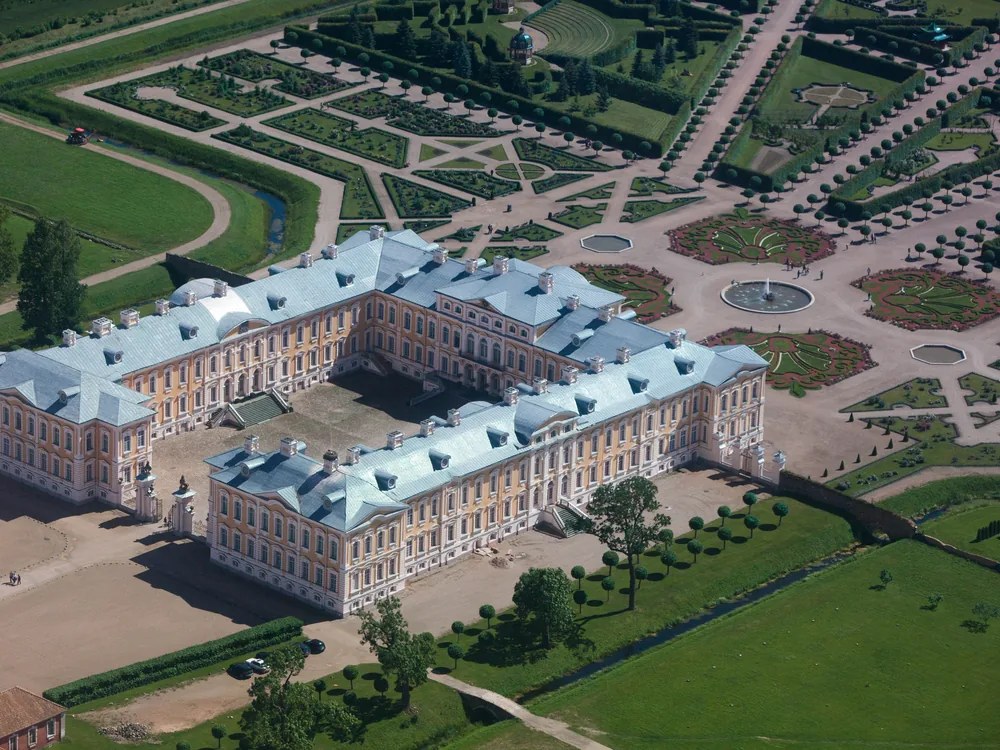
The most important context for a Bauska visit is [Rundale Palace](/castles/latvia/rundale-palace), 12 kilometres to the south. Rundale was built for Duke Ernst Johann von Biron of Courland between 1736 and 1767, designed by Bartolomeo Rastrelli — the same architect who designed the Winter Palace in St. Petersburg for Empress Elizabeth of Russia. Rundale is the most architecturally significant building in Latvia, a Baroque palace of imperial Russian-calibre ambition set in a formal garden on the Zemgale plain. The contrast with Bauska — medieval fortress to Baroque palace, Order castle to ducal residence to imperial-scale aristocratic seat, all within 12 kilometres — compresses the entire arc of Latvian aristocratic history into a single landscape.
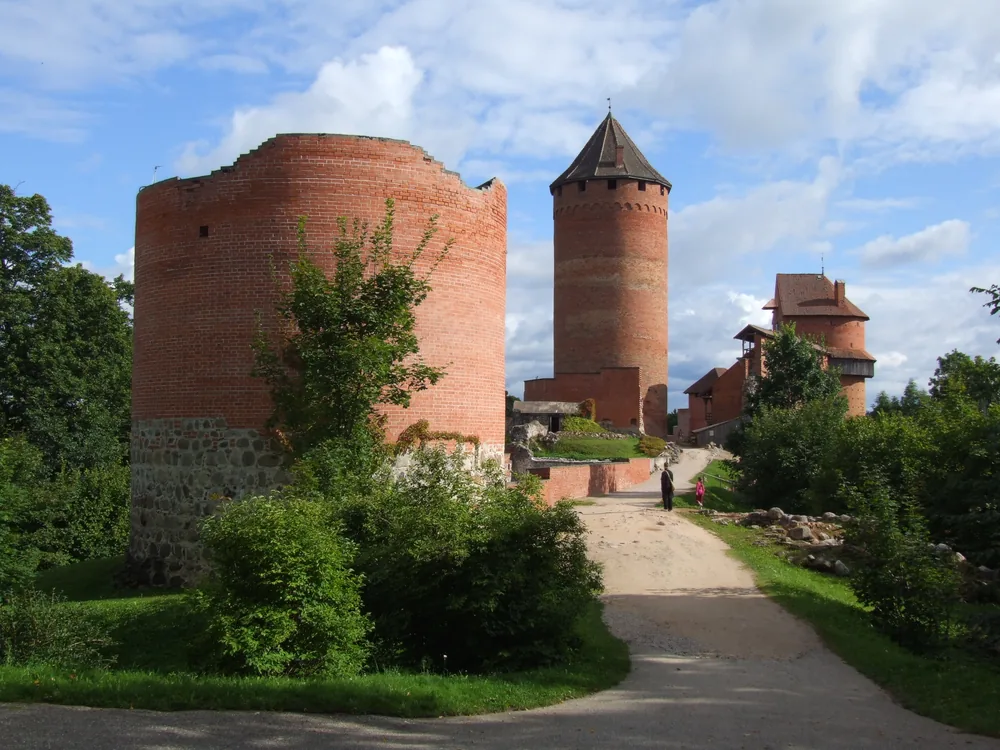
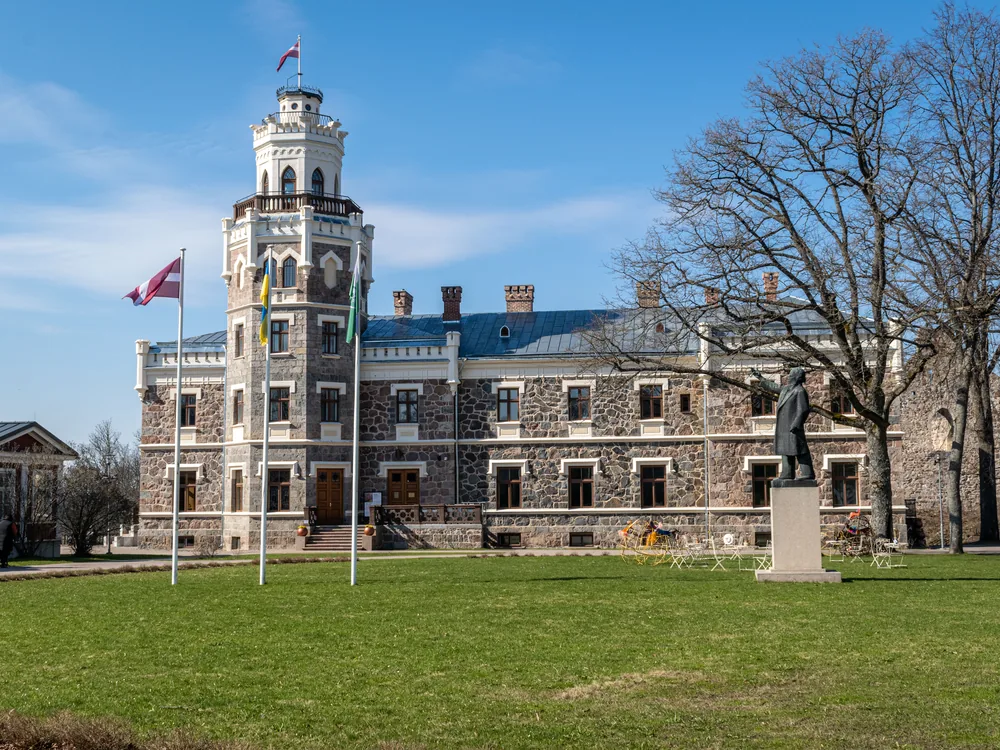
The GetYourGuide half-day tour from Riga combines Bauska and Rundale in a single half-day, which is the logical way to visit both — the distance is short, the historical connection is direct, and the contrast between the castle and the palace is the central story of Courland's evolution from Order territory to ducal state. [Turaida Castle](/castles/latvia/turaida-castle), [Sigulda Castle](/castles/latvia/sigulda-castle), and [Cēsis Castle](/castles/latvia/cesis-castle) represent the other major strand of Latvian medieval castle architecture — the Order fortresses of the Gauja valley, which are more architecturally complete than Bauska's ruins but lack the specific historical pivot that Bauska embodies.
History
The Livonian Order built the original castle on the river peninsula at the Mūsa-Mēmele confluence between 1443 and 1456, establishing a regional administrative fortress at a site whose natural defences — water on all sides where the two rivers met — made it one of the most defensible positions in Courland. The dissolution of the Livonian Order in 1562 transformed the political landscape of the eastern Baltic; Gotthard Kettler, the last Master of the Order's Livonian branch, became the first Duke of Courland and Semigallia.
Duke Kettler constructed the New Castle — a ducal palace — adjacent to the older Order fortress between 1582 and 1596, adding a comfortable residential building to the existing military complex. Through the 17th century the combined site served as a ducal residence and administrative centre of the Duchy of Courland. The Great Northern War (1700–1721) brought heavy damage; the original Order castle was ruined and abandoned, while the New Castle survived in partial form, deteriorating over the following centuries.
Restoration of the New Castle in the 20th century established it as a museum. The ruins of the Order castle remain accessible to visitors alongside the museum.
How to Visit
Getting there: Bauska is 65 km south of Riga on the A7 highway — approximately 1 hour by car. Regular bus services run from Riga bus station to Bauska (approximately 1 hour 15 minutes); the castle is a short walk from the bus station.
Tickets: Approximately €5 adult for the New Castle museum; the Order castle ruins and the New Castle museum are priced separately or as a combined ticket at the entrance. The GetYourGuide half-day trip from Riga covers both Bauska Castle and Rundale Palace on a 5-hour circuit — the recommended way to visit both in a single day.
Practical tips: Visit the New Castle museum first for context on the Livonian Order and Kettler dynasty, then walk the Order castle ruins to understand the physical scale of the medieval fortress before its destruction in the Great Northern War. The peninsula site between the Mūsa and Mēmele rivers is clearest from the riverside path — the confluence is visible from the castle grounds and explains immediately why this position was chosen.
Combine with: Rundale Palace, 12 km south — Latvia's most significant Baroque palace, designed by Rastrelli (architect of the Winter Palace), with a formal garden — is the essential pairing with Bauska. Turaida Castle and Cēsis Castle in the Gauja Valley extend a Latvia castle circuit north of Riga.
Frequently Asked Questions
Gotthard Kettler was simultaneously the last Grand Master of the Livonian Order and the first Duke of Courland and Semigallia — the man who dissolved the medieval military-religious Order in 1562 and converted its lands into a hereditary duchy. He built the New Castle at Bauska between 1582 and 1596 as his ducal residence, transforming a military Order fortress into a combination of ruined Order castle and new ducal palace. This makes Bauska the physical document of the transition from medieval crusading state to early modern duchy — two buildings in one complex representing two completely different political models.
Location
Pilskalns, Bauska, LV-3901, Latvia
Nearby Castles
Tours & Tickets
Powered by GetYourGuide
From
€99/ person