
Grand Master's Palace
Il-Palazz tal-Gran Mastru
Malta · Valletta, Malta · Near Valletta
Built 1571 · Late 16th-century Maltese Baroque palace on St. George's Square in Valletta; built by the Knights of St. John following their Great Siege victory of 1565 and the founding of Valletta; the principal facade faces St. George's Square (now Republic Square); houses the Palace Armoury — one of Europe's most complete surviving collections of Knights' armour — and the State Rooms, which serve as the official residence of the President of Malta
This page is part of an independent travel guide and is not affiliated with, endorsed by, or operated by Grand Master's Palace.
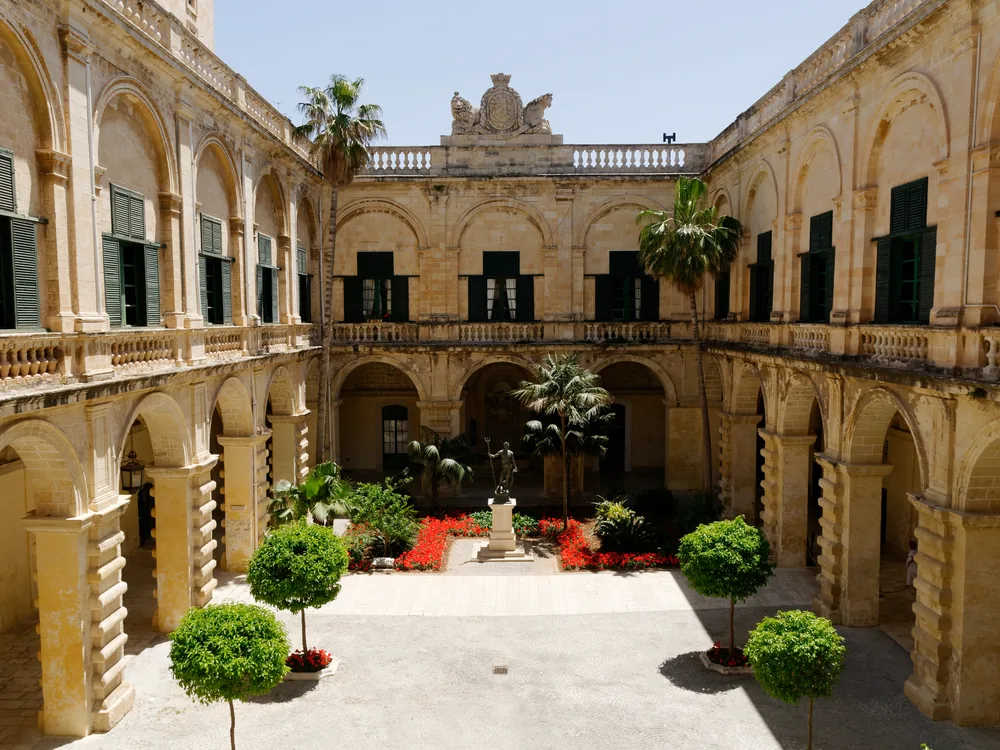
© Castles & Palaces
Quick Facts
- Hours
- Daily 09:00–17:00
- Entry
- €10
- Duration
- 1–1.5 hours for the Armoury and State Rooms
- Best time
- October to April
- Nearest city
- Valletta
Featured Tour
Valletta: Discover Malta's History with a 3-in-1 Museum Pass
Covers this site and 2 other attractions. Worth it if you plan to visit several.
Book This Tour →Cancellation available · Instant confirmation
Highlights
- ✦450 years as the Knights' seat of power — the Grand Master's Palace was built immediately after the Knights' extraordinary victory in the 1565 Great Siege of Malta and became the administrative and ceremonial centre of the Order of St. John until Napoleon expelled them in 1798; it is the single most important building in Malta's long history as the seat of one of Europe's most powerful military-religious orders
- ✦The Palace Armoury — one of Europe's most complete surviving collections of arms and armour from a single institution; the Armoury holds approximately 5,000 pieces of armour, weapons, and military equipment belonging to the Knights of St. John, including full suits of armour for individual knights, Ottoman weapons captured in battle, and the personal arms of successive Grand Masters
- ✦The State Rooms — the palace's principal ceremonial rooms, including the Throne Room (Hall of St. Michael and St. George), the Tapestry Room (hung with the Gobelins tapestry series commissioned by Grand Master Perellos), and the Council Chamber, remain furnished and maintained as official state rooms in which the President of Malta receives heads of state and formal delegations
- ✦The Heritage Malta 3-in-1 combo ticket covers Grand Master's Palace alongside the National Museum of Archaeology — home of the 'Sleeping Lady' and 'Venus of Malta' figurines, among the most important Neolithic artefacts in the world — and MUŻA, Malta's national community art museum; all three are within walking distance in Valletta, and the 30-day validity allows flexible scheduling
- ✦St. George's Square setting — the palace faces St. George's Square (Republic Square), Valletta's principal ceremonial space and the site of the changing of the guard, public ceremonies, and the outdoor cafés that make the square one of the liveliest in the Mediterranean; the palace's facade has served as the backdrop to Maltese public life for over 450 years
Tickets & tours
Book through GetYourGuide
The Grand Master's Palace stands on St. George's Square in Valletta, the capital the Knights of St. John built after their near-miraculous victory in the Great Siege of 1565. The Order of St. John — a military-religious order originally founded in Jerusalem during the Crusades, subsequently based in Rhodes before the Ottoman conquest drove them to Malta in 1530 — had just survived a four-month Ottoman siege with a defending force of approximately 6,000 against an invading army of 40,000. The victory made the Order famous across Europe and provided the political capital to build Valletta, the first planned Renaissance city in Europe, on the Sciberras peninsula above the Grand Harbour. The palace was begun in 1571 and gradually expanded to fill its entire block; it became the permanent seat of successive Grand Masters and the administrative centre of the Order's Mediterranean operations.
The palace served this function for 227 years, until Napoleon Bonaparte's fleet landed on Malta in 1798 and the Order surrendered without meaningful resistance — a capitulation that remains one of the more ignominious endings in European military-religious history. Napoleon himself stayed in the Grand Master's Palace for a few days before continuing to Egypt; the French occupation lasted two years before British forces, invited by the Maltese themselves, replaced them. The palace became the seat of the British colonial administration, the Maltese Parliament, and eventually the Office of the President of Malta, which it remains today.
The building's two principal attractions are the Palace Armoury and the State Rooms. The Armoury, installed in the former stables, holds approximately 5,000 pieces — full suits of armour for individual knights, Ottoman weapons captured in the various engagements of the 16th and 17th centuries, personal arms of successive Grand Masters, and an extraordinary collection of firearms spanning three centuries of small-arms development. It is one of the most complete collections of its type in Europe, surviving intact because the Knights kept meticulous records and the palace was never sacked or looted in the manner of comparable European institutions.
The State Rooms include the Throne Room, the Tapestry Room, and the Council Chamber — all furnished with period pieces and maintained in use for official functions. The Tapestry Room is hung with the Gobelins series commissioned by Grand Master Perellos in the early 18th century, depicting scenes of the Order's history and representing some of the finest Gobelins tapestries to survive outside France.
The Heritage Malta 3-in-1 combo ticket covers Grand Master's Palace alongside the National Museum of Archaeology and MUŻA. The National Museum of Archaeology is the most compelling of the three for visitors interested in Malta's deeper history — it houses the 'Sleeping Lady' and 'Venus of Malta' figurines from the Ħal Saflieni Hypogeum, among the most important Neolithic artefacts anywhere in the world. The 30-day validity on the combo ticket allows visitors to spread the three sites across multiple days rather than cramming all three into a single visit.
History
The Knights of St. John arrived in Malta in 1530 after their expulsion from Rhodes by Suleiman the Magnificent in 1522. They occupied the existing capital, Mdina, and the fortified peninsulas of the Grand Harbour. The Great Siege of 1565 — a four-month Ottoman assault that came close to overwhelming the Knights' defences before a relief force arrived — was followed by the decision to build an entirely new capital on the Sciberras peninsula. The Grand Master's Palace was begun in 1571 to designs attributed to Gerolamo Cassar and completed in stages through the late 16th and 17th centuries. Successive Grand Masters expanded and embellished it; the Tapestry Room's Gobelins series was commissioned in the early 18th century. Napoleon occupied the palace briefly in 1798 after the Order's surrender; British colonial administration then used it until Maltese independence in 1964. Malta became a republic in 1974; the President of Malta uses the palace's State Rooms for official functions, while the Armoury and State Rooms are open to the public. Valletta is inscribed as a UNESCO World Heritage Site.
How to Visit
Getting there: The Grand Master's Palace is on St. George's Square (Republic Square) in central Valletta. Valletta is served by ferry from Sliema and by buses from across Malta; the city gate and bus terminus are 5 minutes' walk from the palace. The city is compact and entirely walkable.
Tickets: Walk-up entry to the Grand Master's Palace (Palace Armoury and State Rooms) is approximately €10 per adult. The Heritage Malta 3-in-1 combo ticket (self-guided, 30-day validity) covers Grand Master's Palace alongside the National Museum of Archaeology and MUŻA — all within walking distance in Valletta. For visitors planning multiple Heritage Malta sites across Malta and Gozo, the Heritage Multisite Pass also includes Grand Master's Palace across other sites in Malta and Gozo, and offers significantly better value for a longer Malta stay.
Practical tips: The State Rooms are occasionally closed for official functions — the combination of the Armoury (always open during public hours) and the State Rooms (sometimes restricted) means it's worth checking before a dedicated visit if the State Rooms are a priority. The Tapestry Room and its Gobelins series are the State Room highlight. The National Museum of Archaeology (included in the combo ticket) is a 5-minute walk; its Neolithic collection, including the 'Sleeping Lady' figurine, is one of the most important archaeological displays in the Mediterranean.
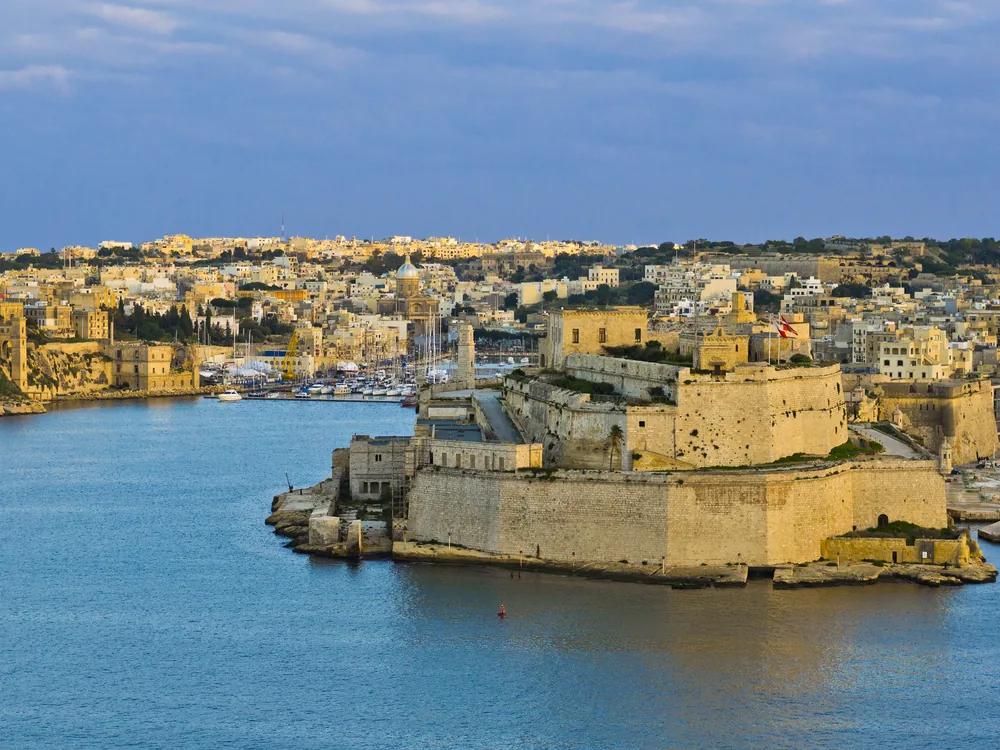
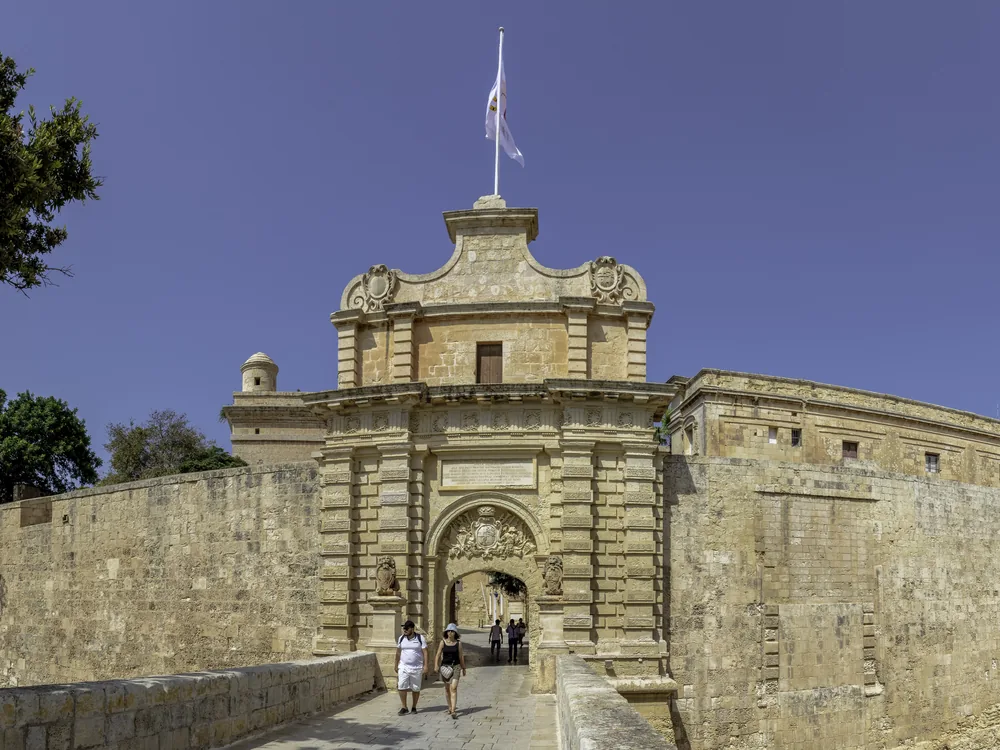
Combine with: Fort St. Angelo (directly across the Grand Harbour in Birgu — the Knights' original fortified headquarters before Valletta was built, with views back to the city from the Birgu waterfront) and Mdina (~12 km west — the Silent City, Malta's medieval walled capital on its hilltop plateau, from which the Knights operated before they built Valletta).
Explore more castles in Castles in Malta.
Frequently Asked Questions
The Palace Armoury is a collection of approximately 5,000 pieces of arms and armour belonging to the Knights of St. John, housed in the former stables of the Grand Master's Palace. The collection spans the 16th through 18th centuries and includes full armour suits for individual knights (some of the finest surviving examples of 16th-century Italian plate armour), Ottoman weapons captured in the Great Siege and subsequent engagements, personal arms of successive Grand Masters, and an extensive collection of firearms and edged weapons. The collection's completeness is exceptional — the Knights kept detailed inventories and the palace was never sacked, so the collection survives largely intact. It is one of the most significant collections of its type in Europe.
Location
St. George's Square, Valletta VLT 1190, Malta
Nearby Castles
Tours & Tickets
Powered by GetYourGuide
3-in-1 Museum Pass
From €29(3 sites)