
Inquisitor's Palace
Il-Palazz tal-Inkwiżitur
Malta · Birgu (Vittoriosa), Malta · Near Valletta
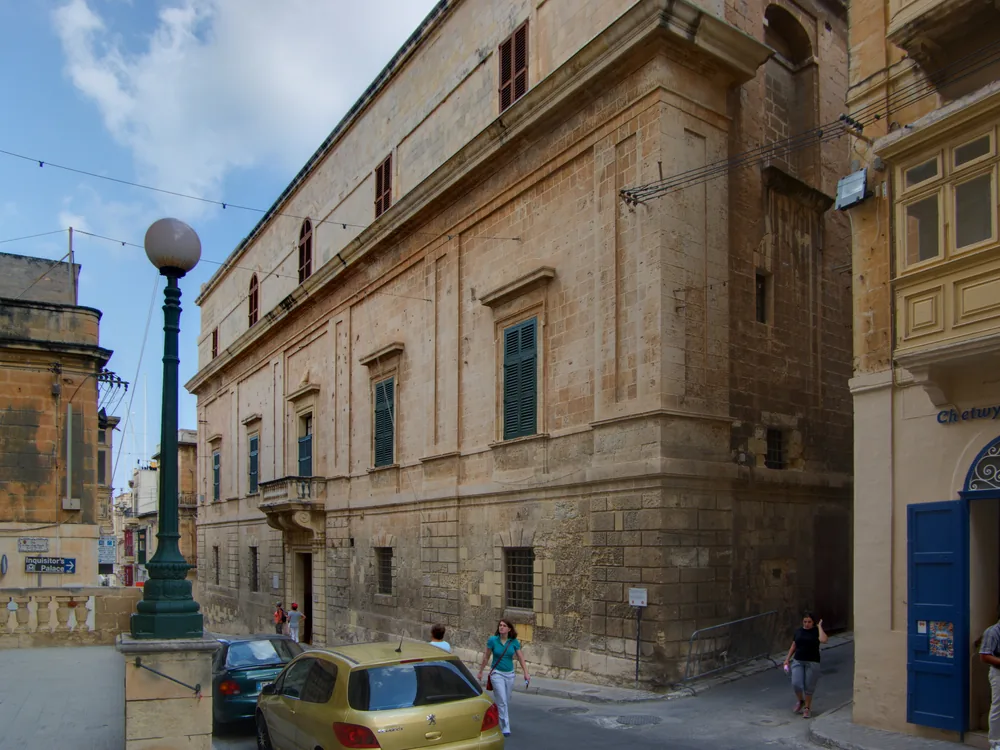
Built 1530 · 16th-century building in Birgu's Collacchio quarter; originally used as the criminal courts of the Knights of St. John, converted in 1574 into the seat of the Roman Inquisition in Malta; the building retains its tribunal chamber, the Inquisitor's private apartments, the prison cells (with prisoners' graffiti still visible on the walls), and the formal courtyard; one of only three surviving inquisitorial palaces in the world
This page is part of an independent travel guide and is not affiliated with, endorsed by, or operated by Inquisitor's Palace.
© Castles & Palaces
Quick Facts
- Hours
- Daily 09:00–17:00
- Guided tour from
- €25
- Duration
- 1–1.5 hours inside; 3 hours total on the GetYourGuide Birgu walking tour
- Best time
- October to April
- Nearest city
- Valletta
Featured Tour
Birgu: 3 Cities Walking Tour With Inquisitor's Palace Entry
Cancellation available · Instant confirmation
Highlights
- ✦One of only three surviving Inquisition palaces in the world — most inquisitorial tribunal buildings were destroyed, repurposed beyond recognition, or never purpose-built; Birgu's Inquisitor's Palace is one of a tiny number that survives substantially intact, with the tribunal chamber, the Inquisitor's private apartments, the prison cells, and documentary records from the 1574–1798 period
- ✦Prisoners' graffiti on the cell walls — the prison cells in the palace's basement retain the carved inscriptions left by those held here during the Inquisition's tenure: names, dates, crosses, prayers, and other marks scratched into the stone by prisoners who had nothing else to do while awaiting their fate; the graffiti is one of the most intimate and disturbing physical traces of the institution
- ✦The Birgu walking tour — the GetYourGuide guided tour ('Likely to sell out') covers the Inquisitor's Palace as its headline stop within a 3-hour walking programme through Birgu's historic quarter; entrance to the palace is included; the tour also covers the Couvre Porte city gate, Victory Square, and the Vittoriosa Grand Harbour waterfront
- ✦Birgu's Collacchio quarter — the Inquisitor's Palace sits in Birgu's Collacchio, the medieval quarter originally reserved for the Knights of St. John's senior officials, where the winding streets and Baroque doorways give the densest concentration of historic fabric in any of Malta's Three Cities
- ✦The Roman Inquisition in Malta — the Maltese Inquisition operated under the direct authority of Rome, not Spain (unlike the Spanish Inquisition, which was a separate institution); 64 Inquisitors served in Malta between 1574 and 1798, and two of them — Fabio Chigi (later Pope Alexander VII) and Antonio Pignatelli (later Pope Innocent XII) — subsequently became popes, giving the palace an unusual connection to the Vatican's history
Skip the queue with a guided tour
Skip-the-line tickets & expert guides
Birgu — the oldest of Malta's Three Cities, known in English as Vittoriosa — was the Knights of St. John's first fortified base after their arrival in Malta in 1530, predating Valletta by nearly four decades. The town's Collacchio quarter, originally reserved for the Knights' senior officials, contains some of the densest historic fabric in the archipelago: Baroque doorways, medieval street plans, and buildings that have been continuously inhabited since the Crusader period. In a courtyard on the Collacchio's principal street stands the building that became the seat of the Roman Inquisition in Malta — a function it held from 1574 to 1798, outlasting by 52 years the very Knights whose criminal courts the building had originally housed.
The building's pre-Inquisition history is equally interesting. The structure was originally used as the criminal tribunal of the Knights of St. John, the judicial body that handled serious offences within the Order's territory. When the Roman Inquisition established its Maltese tribunal in 1574 — a response to the Protestant Reformation's spread and the need to monitor Malta's religiously diverse population of sailors, traders, and Ottoman prisoners of war — it took over this judicial building as its permanent seat. The conversion was relatively straightforward: the tribunal chamber became the Inquisition's formal hearing room, the Inquisitor moved into the upper apartments, and the building's existing prison cells were repurposed for the institution's detainees.
The Inquisition's Malta operation ran for 224 years, serving 64 different Inquisitors — a posting that was typically one stage in a longer Vatican career. Two Inquisitors went on to become popes: Fabio Chigi (Inquisitor 1634–1639, later Pope Alexander VII) and Antonio Pignatelli (Inquisitor 1646–1652, later Pope Innocent XII). The institution's records are among the best-preserved inquisitorial archives in the Mediterranean; the palace's prison cells still carry the graffiti left by those held here — names, dates, religious symbols, prayers, and casual inscriptions scratched into the limestone by people with nothing to do while awaiting examination.
The GetYourGuide Birgu walking tour approaches the Inquisitor's Palace as the headline stop in a 3-hour circuit of Birgu's historic quarter. The guide covers the Couvre Porte gate — the monumental city gate at Birgu's landward entrance — Victory Square (formerly known as Piazza della Catena, centre of the Three Cities' community life and site of a WWII memorial), the Vittoriosa waterfront with its views back to Valletta across the Grand Harbour, and the winding Collacchio streets, before the group enters the Inquisitor's Palace with entrance included. The tour is flagged 'Likely to sell out' on GetYourGuide — advance booking is recommended.
History
Birgu (Vittoriosa) was settled by the Knights of St. John in 1530 as their first fortified base in Malta; the Collacchio quarter was reserved for the Order's senior officials from this founding period. The building that became the Inquisitor's Palace was used as the criminal tribunal of the Order in the mid-16th century. In 1574, the Roman Inquisition established its Maltese tribunal here, adapting the building for its institutional functions. The Inquisition served until 1798, when Napoleon's occupation of Malta brought the institution to an abrupt end. The palace subsequently served various administrative functions under British colonial rule. It was restored and opened as a Heritage Malta museum site in the 20th century. The Three Cities — Birgu (Vittoriosa), Senglea (L-Isla), and Cospicua (Bormla) — are inscribed as part of Valletta's UNESCO World Heritage Site buffer zone.
How to Visit
Getting there: Birgu is across the Grand Harbour from Valletta, accessible by the traditional Valletta-Birgu ferry (Dghajsa water taxi, a short crossing from Valletta's Custom House steps — one of the most scenic and enjoyable ways to travel in Malta) or by bus and on foot from Valletta (~30 minutes). The GetYourGuide Birgu walking tour meets at a point in Birgu — check the tour's exact meeting point at booking.
Tickets: Walk-up entry to the Inquisitor's Palace is approximately €8 per adult. The tour includes palace entrance as part of the guided visit. The tour also covers Birgu's historic quarter more broadly. The listing is flagged 'Likely to sell out' — book in advance.
Practical tips: The prison cells are the most affecting part of the palace — take time to read the graffiti on the walls; the carved names and symbols are more eloquent than any exhibit panel. The Dghajsa water taxi from Valletta is the recommended approach (departs from Custom House steps, takes 5 minutes, runs on demand — far more scenic than the bus route). The Vittoriosa waterfront after the tour, with views of Valletta's fortifications and the Grand Harbour, is worth time in itself.
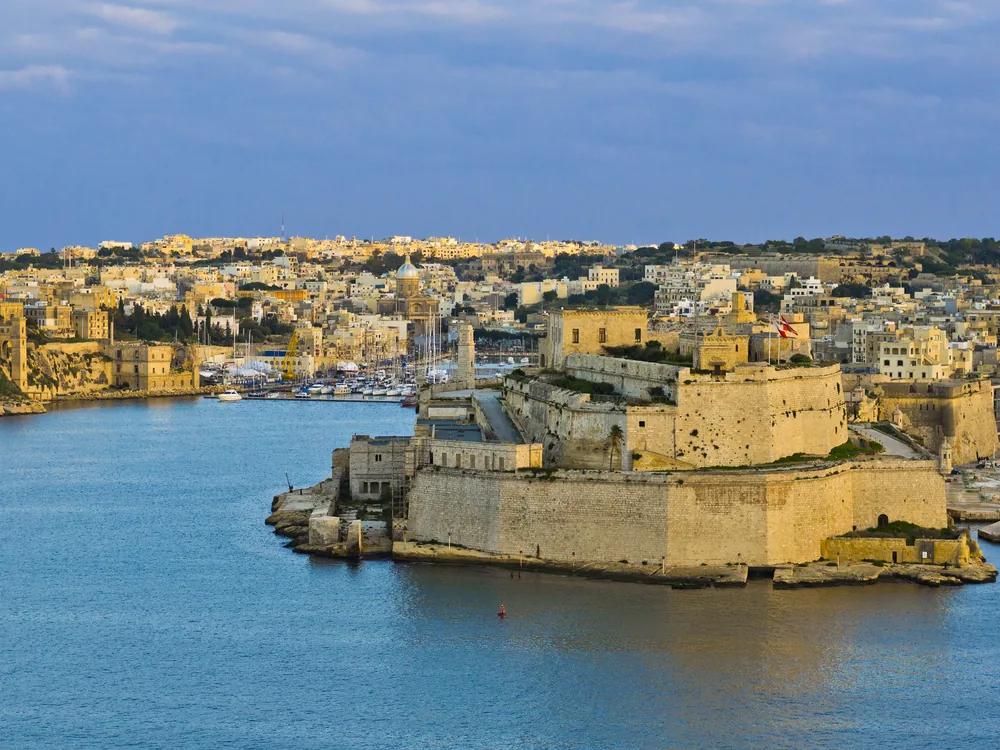
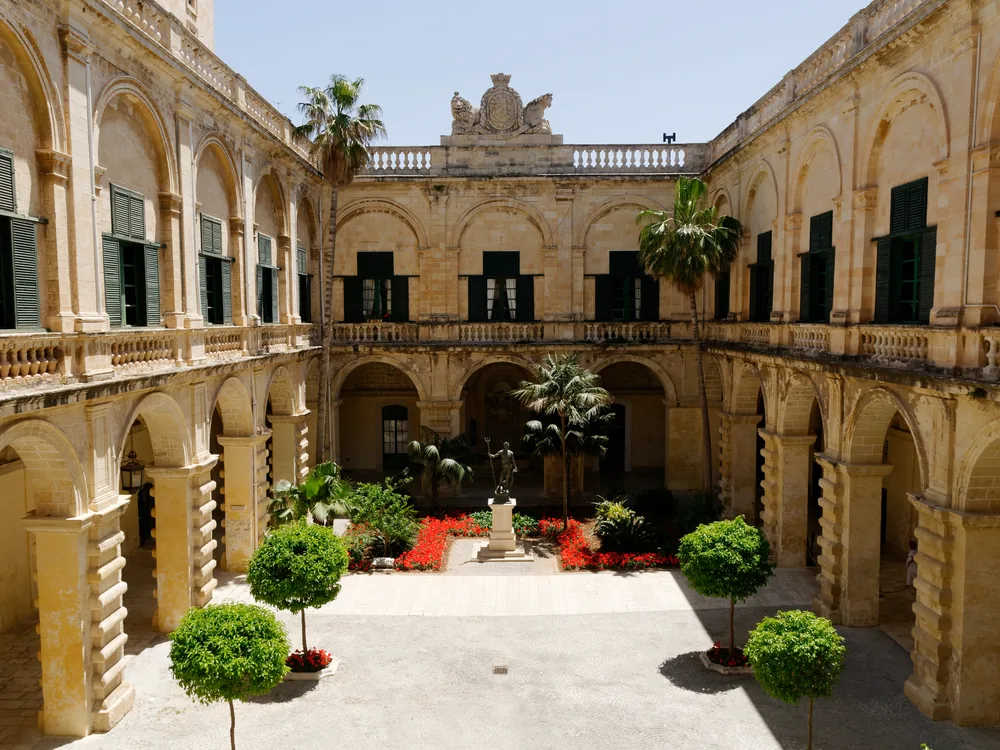
Combine with: Fort St. Angelo (at the tip of Birgu's peninsula — the Knights' original fortified headquarters and the primary defended position during the Great Siege; on the same Birgu waterfront as the Dghajsa landing point) and Grand Master's Palace (~10 minutes by ferry across the Grand Harbour in Valletta — the Knights' later, grander seat of power built after the Great Siege victory).
Explore more castles in Castles in Malta.
Frequently Asked Questions
The Spanish Inquisition (established 1478) was a separate institution from the Roman Inquisition (established 1542). The Spanish Inquisition operated under the authority of the Spanish Crown and reported to the Spanish monarchy rather than directly to the Pope; it focused primarily on converted Jews (Conversos) and Moors suspected of continuing their original religious practices. The Maltese Inquisition, which operated from this palace, was part of the Roman Inquisition — the Vatican's own institution, reporting directly to the Holy Office in Rome, focused on heresy, magic, bigamy, sodomy, and a range of other offences against Catholic doctrine. The two operated simultaneously but were institutionally distinct. Malta fell under the Roman rather than the Spanish Inquisition because it was a papal fief administered by the Knights of St. John, not a Spanish colonial territory.
Location
Triq il-Mina il-Kbira, Birgu BRG 1015, Malta
Nearby Castles
Tours & Tickets
Powered by GetYourGuide
From
€25/ person