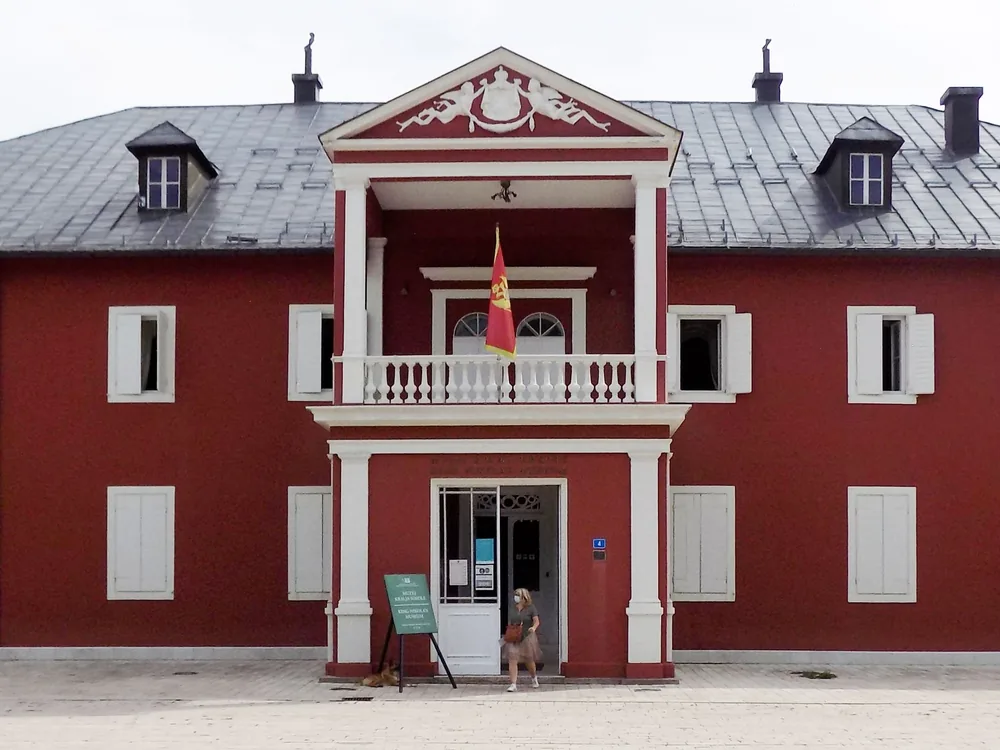
King Nikola's Palace
Dvorac kralja Nikole
Montenegro · Cetinje, Montenegro · Near Cetinje
Built 1867 · 19th-century neoclassical royal residence; two-storey symmetrical facade with arcaded ground floor; built in 1867 as the residence of Montenegro's Petrović-Njegoš dynasty; now the National Museum of Montenegro – King Nikola's Museum; situated on Cetinje's royal square alongside Biljarda (1838), the former residence of prince-bishop Petar II Petrović Njegoš
This page is part of an independent travel guide and is not affiliated with, endorsed by, or operated by King Nikola's Palace.
© Castles & Palaces
Quick Facts
- Hours
- Tue–Sun 09:00–17:00. Closed Mon
- Guided tour from
- €115
- Duration
- 1–1.5 hours (museum); 3–4 hours for Cetinje's full historic centre
- Best time
- April to October
- Nearest city
- Cetinje
Featured Tour
Cetinje: City Private Tour
Cancellation available · Instant confirmation
Highlights
- ✦The Petrović-Njegoš dynasty's 19th-century seat of power — King Nikola I (reigned 1860–1918) ruled from this neoclassical palace in Cetinje while conducting marriage diplomacy that placed his daughters on the thrones of Italy, Serbia, and Russia, earning him the nickname 'father-in-law of Europe'
- ✦The palace as a National Museum — King Nikola's Museum holds the royal family's original furnishings, personal correspondence, portraits, weapons, and diplomatic gifts, giving visitors a detailed picture of the Montenegrin court's self-presentation during its period of independence
- ✦Biljarda (1838) directly across the square — the earlier residence of Petar II Petrović Njegoš, prince-bishop, poet, and philosopher; its name derives from the billiards table he had carried across the mountains from Kotor and installed on the upper floor, and the building now houses a large detailed relief map of Montenegro
- ✦Cetinje Monastery (1701) — the spiritual centre of Montenegro and repository of the hand of St. John the Baptist (a major Orthodox relic); a five-minute walk from the palace and a standard stop on the GetYourGuide guided tour
- ✦The GetYourGuide private guide service for Cetinje provides a licensed English-speaking guide who accompanies visitors through Cetinje's historic sites — transport to Cetinje and entrance fees are paid separately by the visitor
Skip the queue with a guided tour
Skip-the-line tickets & expert guides
Cetinje is one of the smallest capitals in European history — a town of fewer than 15,000 people that served as the seat of the Montenegrin state from the 15th century until the country's unification with the Kingdom of Serbs, Croats and Slovenes in 1918. Despite its scale, the town accumulated a disproportionate amount of royal and diplomatic infrastructure: embassies from the major European powers maintained residences here, and the Petrović-Njegoš dynasty that ruled Montenegro conducted a foreign policy of considerable sophistication from a plateau surrounded by mountains and permanently outgunned by every neighbour.
King Nikola's Palace was built in 1867 as the residence of Nikola I Petrović-Njegoš, who ruled as prince and later king of Montenegro for 58 years. Nikola was one of the more remarkable figures of 19th-century European politics: he maintained Montenegrin independence through a combination of military reputation (Montenegro and the Ottoman Empire fought repeatedly, and the Montenegrins gave consistently good accounts of themselves) and dynastic marriage. His daughters married into the Serbian, Italian, and Russian royal families, making him the progenitor of a network of royal connections that stretched across Europe and earning him the term 'father-in-law of Europe.' The palace now operates as the King Nikola's Museum, with the original furnishings, royal correspondence, portraits, and diplomatic gifts largely intact, allowing visitors to read the domestic life and international ambitions of the dynasty directly from the objects.
Directly across the palace square stands Biljarda, the earlier residence of Petar II Petrović Njegoš — prince-bishop, philosopher, and the most celebrated poet in the Serbian and Montenegrin literary tradition. Njegoš ruled Montenegro from 1830 to 1851, and his philosophical poem 'The Mountain Wreath' is the central text in the Montenegrin and Serbian literary canon. Biljarda's name comes from the billiards table Njegoš had transported across the mountains from Kotor in 1838 — a feat that required dismantling the table and carrying it over the pass in pieces, which tells something about Njegoš's priorities. The building now houses a large-scale relief map of Montenegro.
The GetYourGuide private guide service for Cetinje is a licensed English-speaking guide who accompanies visitors through the historic centre: King Nikola's Museum, Biljarda, Cetinje Monastery, the Ćipuri church ruins, the Presidential Palace, and the Royal Theatre 'Zeta House.' This is a guide service, not a packaged tour — **transport to Cetinje and entrance fees to all sites are not included and are paid separately by the visitor.** Cetinje is 35 km from Podgorica (40 minutes by car or organised transfer).
History
Cetinje was established as the Montenegrin capital by Ivan Crnojević in 1478, when Ottoman pressure forced the seat of power inland from Žabljak Crnojevića on Lake Skadar. The Petrović-Njegoš dynasty took control of Montenegro in the early 18th century, ruling first as prince-bishops (combining spiritual and temporal authority) and later as secular princes and finally as kings. The palace was built in 1867 during Nikola's reign as part of a broader programme of modernising Cetinje into a recognisable European capital — foreign embassies, a theatre, a printing press, and the palace itself were all part of this project. Montenegro declared independence from the Ottoman Empire in 1878 and was recognised internationally at the Congress of Berlin. Nikola declared himself king in 1910. Montenegro's merger with the Kingdom of Serbs, Croats and Slovenes in 1918 ended the palace's royal function; it became a museum under the Yugoslav administration. Cetinje remains the cultural and ceremonial capital of Montenegro, with Podgorica serving as the administrative capital.
How to Visit
Getting there: Cetinje is 35 km southwest of Podgorica on the road over the Lovćen Pass — a winding mountain road with spectacular views, taking about 40 minutes by car. Regular buses connect Podgorica with Cetinje. The GetYourGuide private guide service does NOT include transport — visitors must arrange their own transfer from Podgorica or their accommodation before the guide meets them in Cetinje.
Tickets: Entry to King Nikola's Museum is approximately €4 per adult, €2 per child, paid directly at the museum. Entry to Biljarda and Cetinje Monastery is priced separately at each site. The private guide service covers only the licensed English-speaking guide's time (approximately 1 hour); the guide price does NOT include transport to Cetinje or entrance fees to any museum or site — these are paid by the visitor at each location, as explicitly confirmed in the GetYourGuide product's exclusions list.
Practical tips: Cetinje is a very small town — all the principal sites (palace, Biljarda, monastery, Ćipuri ruins) are within easy walking distance of each other. Allow 3–4 hours for a thorough visit to the historic centre. The Lovćen National Park and the mausoleum of Petar II Petrović Njegoš on Mt. Lovćen's summit (25 minutes from Cetinje by road) is worth adding if time allows — the panoramic views from the summit are the widest in Montenegro.
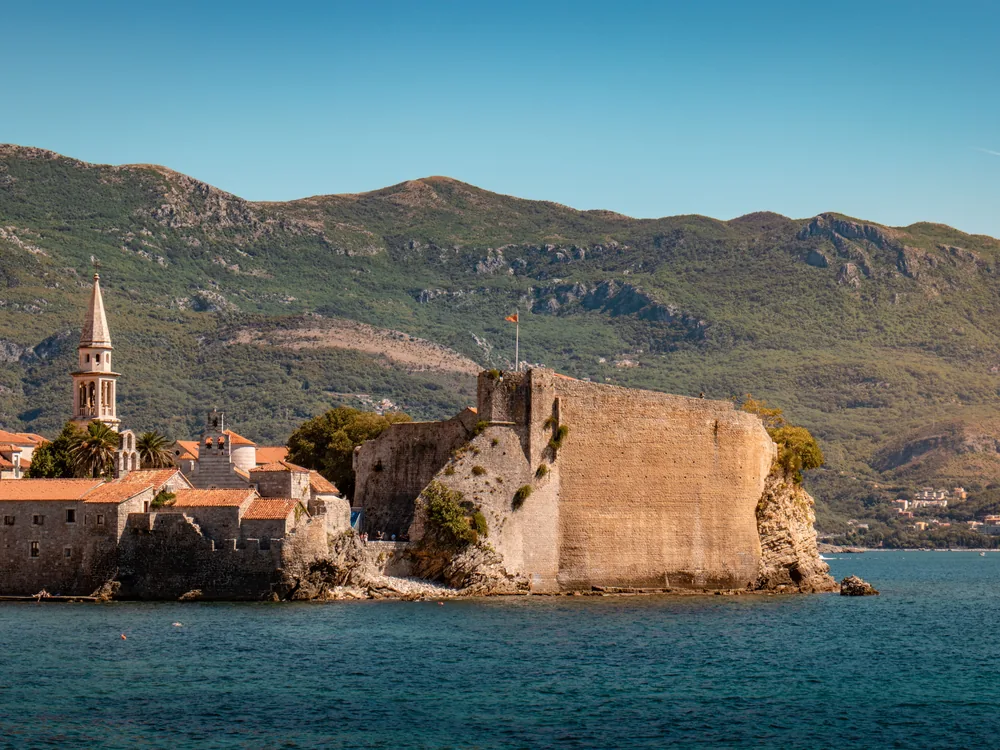
Combine with: Kotor City Walls (~35 km southwest — the UNESCO-listed Venetian city walls of Kotor in the Bay of Kotor, accessible in a half-day combined with Cetinje) and Budva Citadel (~40 km south — the medieval walled old town of Budva on the Adriatic, Montenegro's most visited coastal heritage site).
Frequently Asked Questions
Cetinje was established as the Montenegrin capital in the 15th century by Ivan Crnojević precisely because of its mountain position — the plateau is surrounded by the Lovćen massif and was far more defensible than any coastal or lowland location. Podgorica (then called Titograd under Yugoslav rule) had been a significant trading town but was not the seat of Montenegrin royal and ecclesiastical power. After Montenegro's union with the Kingdom of Serbs, Croats and Slovenes in 1918, Cetinje lost its capital status and has since remained a small ceremonial capital. Podgorica was formally designated the administrative capital after Montenegrin independence (2006). Cetinje is considered the cultural and historical capital and is the location of the Presidential Palace and key national institutions.
Location
Dvorski trg bb, Cetinje 81250, Montenegro
Nearby Castles
Tours & Tickets
Powered by GetYourGuide
From
€115/ person