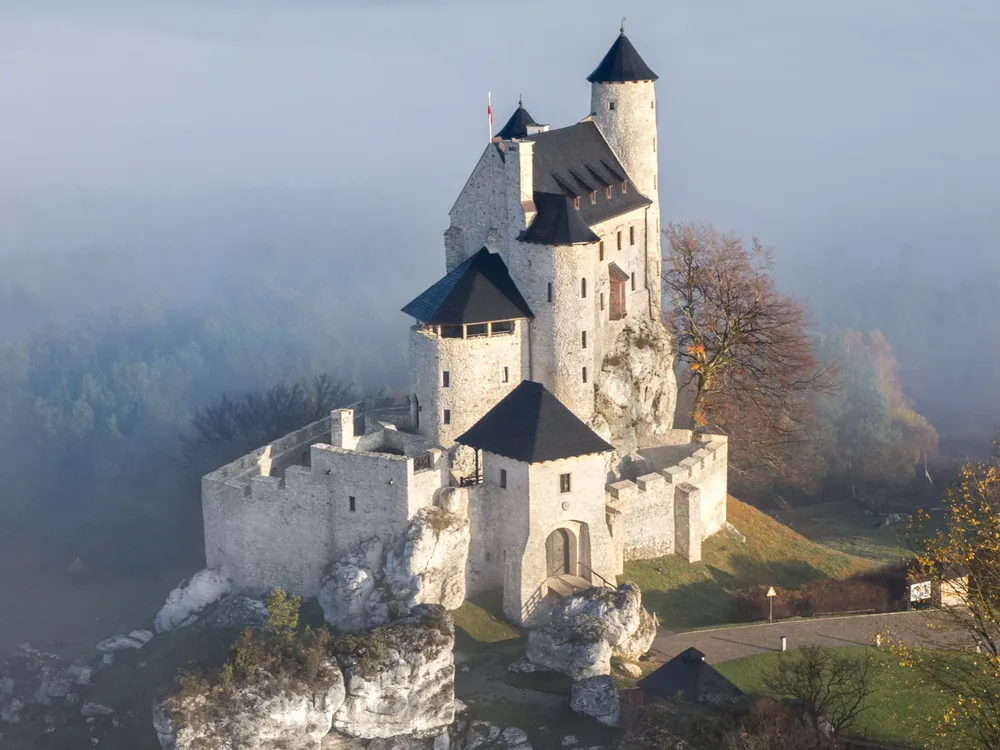
Bobolice Castle
Zamek Bobolice
Poland · Śląskie, Polish Jurassic Highland · Near Częstochowa
Built 1350 · Royal Eagles' Nests castle on a limestone outcrop in the Polish Jurassic Highland, built c.1350–1352 by King Casimir III the Great as part of the chain of 25 fortifications defending the Kraków–Wrocław trade route against Silesian and Bohemian incursion; the original Casimir-era design featured a cylindrical defensive tower and curtain walls exploiting the natural cliff face; granted in 1370 to Władysław Opolczyk, Duke of Opole, by Louis I the Great; later held by the Szafraniec and then Ostoja families, who replaced the original cylindrical tower with semi-circular towers and expanded the residential range; severely damaged during Archduke Maximilian III of Austria's 1587 invasion (the Habsburg claimant to the Polish throne, defeated at Byczyna); devastated completely by Swedish forces during the 1657 Deluge — by 1683 King John III Sobieski reportedly camped in tents below the ruined walls rather than inside; remained a roofless ruin for over three centuries; purchased by the Lasecki family in the late 20th century and fully reconstructed 2004–2011 using archaeological survey data and historical analysis, though the reconstruction approach — rebuilding the residential building, defensive walls, and gatehouse to full height without surviving original architectural plans — remains debated among heritage conservation scholars; now a privately-managed tourist castle visible from [Mirów Castle](/castles/poland/mirow-castle) approximately 700 metres to the north
This page is part of an independent travel guide and is not affiliated with, endorsed by, or operated by Bobolice Castle.
© Castles & Palaces
Quick Facts
- Hours
- Mon–Fri 10:00–18:00. Sat & Sun 09:00–19:00
- Day trip from
- €189
- Duration
- 1–1.5 hours
- Best time
- April to October
- Nearest city
- Częstochowa
Featured Tour
From Kraków: Trail of the Eagles' Nests — Medieval Castle Ruins
Cancellation available · Instant confirmation
Highlights
- ✦The legend of Bobol and Mir is the defining narrative of this pair of castles — and the single strongest reason to visit both on the same afternoon. Two brothers, Bobol and Mir, once ruled the pair of limestone fortresses, connected by a secret tunnel in which they stored their shared war treasure. When Bobol discovered that his brother Mir was having an affair with his wife, he killed Mir and bricked his wife alive into the tunnel — sealing both the treasure and the bodies of the two people who had betrayed him. Neither the tunnel, the treasure, nor the bones have ever been found; the legend persists across every account of both castles and is the reason locals say the two ruins should never be separated in a single visit
- ✦Bobolice was one of the first Eagles' Nests castles built by Casimir III the Great c.1350–1352 — part of the systematic 14th-century programme of 25 fortifications on the limestone outcrops of the Krakowsko-Częstochowska Upland that created Poland's internal border defence against Silesian and Bohemian incursion; the castle stands directly visible from [Mirów Castle](/castles/poland/mirow-castle) to the north, fulfilling the chain's signalling-network design: each castle within sight of the next, capable of relaying fire signals from Kraków to Częstochowa in a matter of hours
- ✦The 2004–2011 reconstruction by the Lasecki brothers is one of Poland's most debated castle restorations — full reconstruction of the residential range, towers, and gatehouse to full height, on the basis of archaeological survey, historical comparison with similar castles in the region, and architectural analysis of the surviving wall stubs; supporters point to the quality of the archaeological consultation and the castle's new role as a working heritage and event venue; critics argue that reconstructing a castle without surviving plans produces a plausible but ultimately hypothetical building, not a restored original; both positions are well-represented in the Polish heritage conservation literature
- ✦The Swedish Deluge of 1655–1660 — the most devastating military episode in Poland's early modern history, which depopulated large areas of the country and left a permanent mark on Polish historical consciousness — is what turned Bobolice from a damaged but functional castle into a complete ruin; Swedish forces stripped and burned the castle in 1657, and the subsequent 18th-century economic collapse of the region meant that no owner could fund repairs; by 1683, when King John III Sobieski passed through on his way to relieve Vienna from the Ottoman siege, the castle was so completely ruined that he reportedly set up his military camp in tents below the walls rather than in the building above
- ✦The Eagles' Nests Tour from Kraków combines Bobolice and Mirów as the final paired stop of the day — arriving at the castles in the mid-afternoon after Pieskowa Skała and Ogrodzieniec, when the limestone outcrop light is at its most directional; the two castles are 700 metres apart, close enough that both are visible from the other's ramparts, and the tour allows visitors to walk between them across the open highland landscape — a transition from the fully reconstructed Bobolice to the authentic medieval ruin of Mirów that makes the contrast between the two restoration philosophies physically legible in a single 30-minute walk
Tickets & tours
Book through GetYourGuide
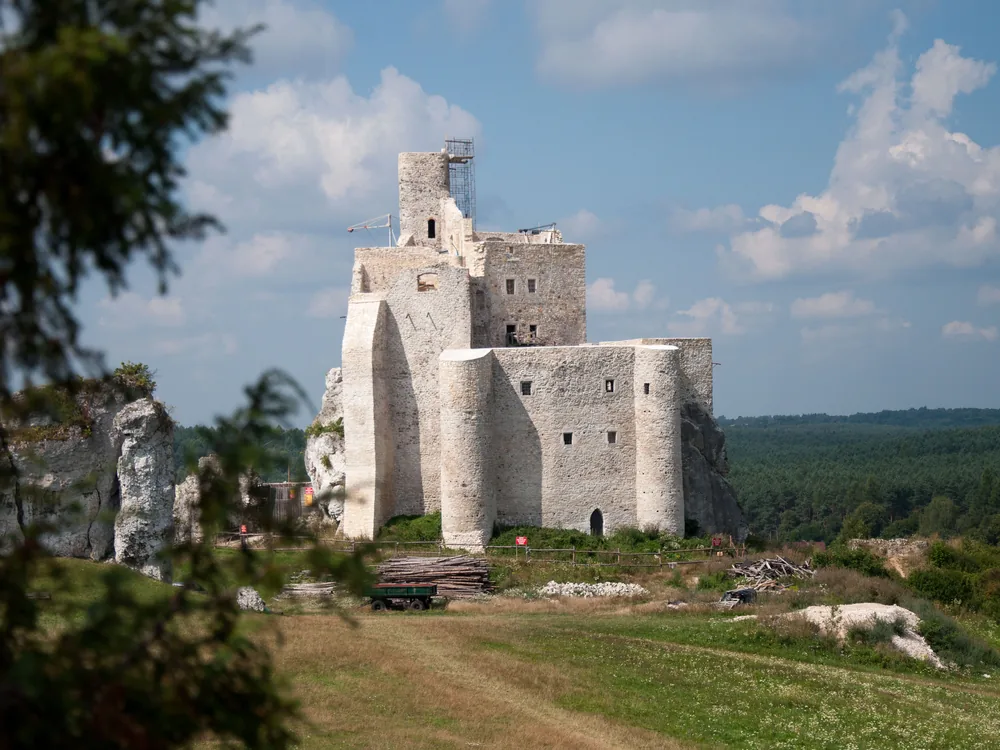
Bobolice Castle stands on a limestone outcrop in the Polish Jurassic Highland, near the village of Niegowa in Silesia, 700 metres south of [Mirów Castle](/castles/poland/mirow-castle). The two castles are visible from each other across a stretch of highland meadow and woodland — positioned close enough that a fire signal from one could be seen from the other within seconds. This proximity is not coincidental. Bobolice and Mirów were built as a paired defensive unit, part of Casimir III the Great's 14th-century Eagles' Nests chain, and the two castles have been associated in fact and legend ever since.
The legend of Bobol and Mir is the narrative that defines both sites and that every guide on the Eagles' Nests trail deploys as the entry point to the pair. Two brothers — Bobol, lord of Bobolice, and Mir, lord of Mirów — were connected not only by blood and by visible distance but by a secret tunnel beneath the highland that linked the two castle cellars. In the tunnel, the brothers stored their shared war treasure, agreed to split fairly when the time came. When Bobol discovered that his brother Mir was conducting an affair with his wife, he killed Mir and bricked his wife alive into the tunnel — sealing the entrance with her and the treasure inside. Neither has ever been found. Whether the tunnel itself exists is a question that archaeological excavation at both sites has declined to definitively answer, which is itself one of the more suggestive choices in Polish Jurassic Highland heritage management.
The historical Bobolice Castle was built c.1350–1352 by King Casimir III the Great as part of the coordinated programme that placed 25 castles on the limestone outcrops between Kraków and Częstochowa. Casimir's objective was to defend the Kraków–Wrocław trade corridor — one of medieval Poland's most commercially important land routes — against Bohemian and Silesian incursion. The limestone highland's natural advantages were exploited systematically: high outcrops with vertical cliff faces, castles spaced so they could see and signal to each other, and wherever possible the natural rock incorporated into the defensive wall structure. Bobolice's outcrop was part of this network — a position within sight of Mirów to the north and a link in the chain that ran from Kraków's Wawel Castle through Ojców, Pieskowa Skała, Ogrodzieniec, Mirów, and Bobolice before continuing toward Częstochowa.
After Casimir's death in 1370, the castle passed to Władysław Opolczyk, Duke of Opole, granted by Louis I the Great of Hungary. The subsequent Szafraniec and Ostoja families made modifications — replacing the original cylindrical tower with semi-circular towers and expanding the residential range — before the castle's decline accelerated in the late 16th century. Archduke Maximilian III of Austria's 1587 invasion, during the Polish succession crisis following Stephen Báthory's death, severely damaged the castle. The Swedish Deluge of 1655–1660 finished the job: Swedish forces stripped and burned the structure in 1657, leaving ruins that a subsequent generation of owners could not afford to repair. By 1683, King John III Sobieski — on his way to Vienna to relieve the Ottoman siege — passed Bobolice and found it sufficiently ruined that he camped in tents below the walls rather than inside.
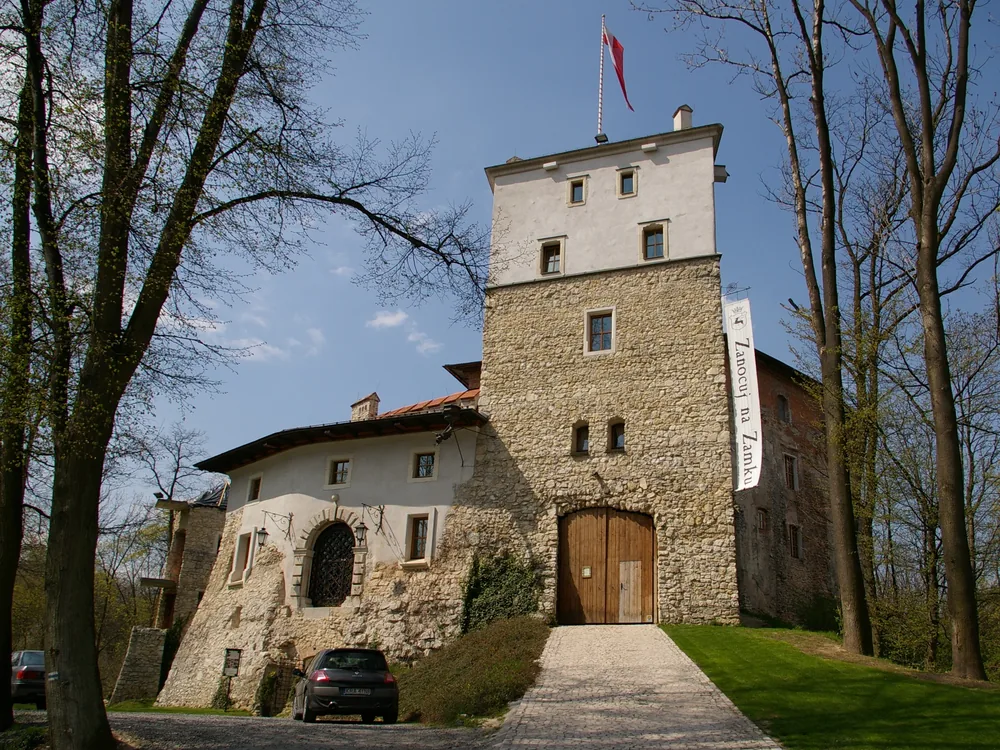
For over three centuries the ruin stood in the highland landscape, its walls progressively dismantled by local farmers seeking dressed stone. The Lasecki family purchased the property in the late 20th century and undertook a comprehensive reconstruction completed in 2011. The project rebuilt the residential building, defensive walls, towers, and gatehouse to full height, using archaeological survey data, historical comparison with similar Eagles' Nests castles, and architectural analysis of the surviving wall stubs. The result is a functioning castle that hosts events, medieval re-enactments, and visitor tours — but also a building whose historical fidelity is contested. Heritage conservation scholars have criticised the reconstruction for proceeding without surviving original architectural plans, arguing that the rebuilt structure is a plausible interpretation rather than a restored original. Supporters point to the quality of the archaeological consultation, the visible commitment to material accuracy, and the castle's new role as an active heritage site. Both positions are well-represented in Polish conservation literature, and visitors who understand the debate experience the castle differently — noticing what the reconstruction's choices reveal about what was actually known and what was imagined.
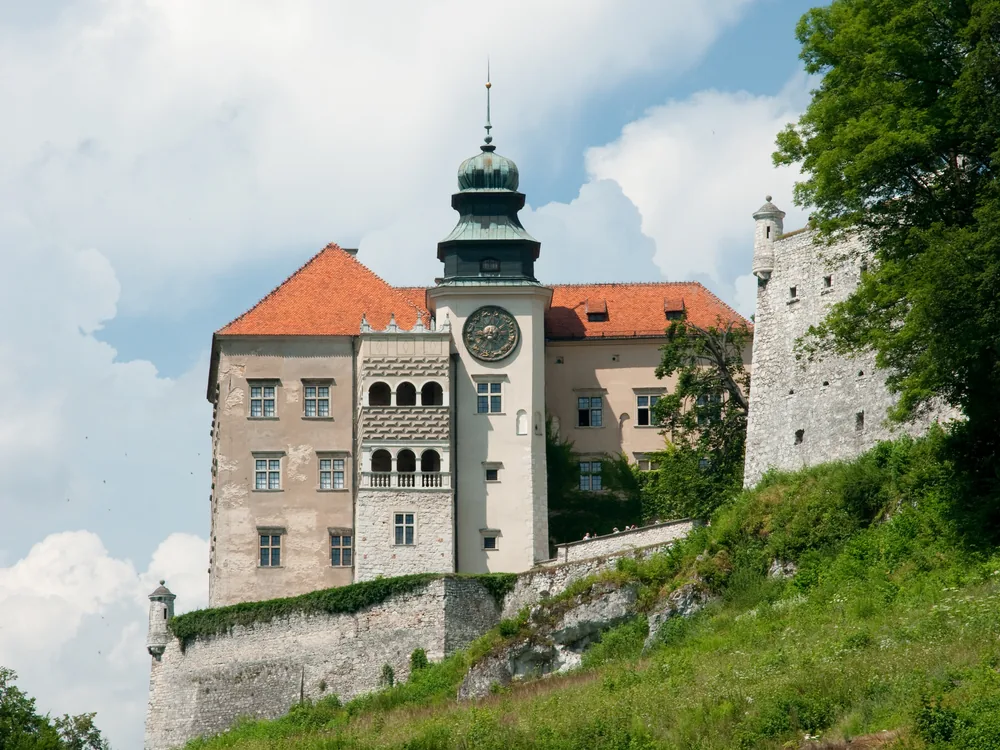
The Eagles' Nests Day Tour from Kraków stops at Bobolice and [Mirów](/castles/poland/mirow-castle) as the final paired afternoon stop after visiting [Pieskowa Skała Castle](/castles/poland/pieskowa-skala-castle) and [Ogrodzieniec Castle](/castles/poland/ogrodzieniec-castle). The GetYourGuide booking link on this page is shared across all four castles on that tour — it is not a standalone Bobolice entry ticket. Independent visitors can reach the castle by car from Częstochowa (30 minutes) or Kraków (90 minutes), buying tickets at the castle entrance.
History
King Casimir III the Great built Bobolice Castle around 1350–1352 as part of the Eagles' Nests chain — the line of limestone-outcrop fortifications along the Polish Jurassic Highland that served as the southern defensive frontier of the Polish crown. Louis I the Great granted the castle to Władysław Opolczyk, Duke of Opole, in 1370. The Szafraniec and Ostoja families held it through the 15th and 16th centuries, expanding the towers and residential range, until Archduke Maximilian III of Austria's invasion in 1587 caused severe damage. The Swedish Deluge of 1655–1660 finished what the Austrians had begun: Swedish forces devastated Bobolice in 1657, reducing it to a complete ruin. When John III Sobieski camped in tents below the walls in 1683, the condition of the castle was such that it was confirmedunfit for habitation.
Local stone-quarrying accelerated the ruin through the 17th to 20th centuries, removing structural material for other buildings. The Lasecki family purchased the ruins in the late 20th century and undertook a full reconstruction between 2004 and 2011 — a project that rebuilt the castle to its estimated medieval appearance rather than stabilising it as an archaeological ruin. The completed castle is now privately managed and open to visitors.
How to Visit
Getting there: Bobolice Castle is in Niegowa, 30 km southwest of Częstochowa and 90 km north of Kraków. By car: from Częstochowa take the DK46 toward Niegowa; from Kraków take the A1 motorway north then regional roads. No practical public transport to the castle gate — self-drive or guided tour recommended.
Tickets: Approximately adult 15 PLN, child 10 PLN. Open daily April–October; winter weekends only or closed. Check zamekbobolice.pl for current hours. The Eagles' Nests Day Tour from Kraków — Trail of the Eagles' Nests — Medieval Castle Ruins (8 hours) covers Bobolice and Mirów alongside Pieskowa Skała and Ogrodzieniec; the GetYourGuide link on this page is shared across all four castles on that tour.
Practical tips: From Bobolice, Mirów Castle is 700 metres north across open highland meadow — a flat 10-minute walk. Strongly recommended to visit both on the same trip; the contrast between the reconstructed Bobolice and the authentic ruin at Mirów is the most instructive thing the Eagles' Nests trail offers.
Combine with: Mirów Castle (700 m north — twin ruin, same legend, walk between them). Ogrodzieniec Castle (20 km north — the largest Eagles' Nests ruin).
Frequently Asked Questions
The legend holds that two brothers — Bobol, lord of Bobolice, and Mir, lord of Mirów — were connected by a secret tunnel beneath the highland between the two castles, where they stored their shared war treasure. When Bobol discovered that his brother Mir was having an affair with his wife, he killed Mir and bricked his wife alive into the tunnel, sealing both the treasure and the two people who had betrayed him inside. Neither the tunnel, the treasure, nor the bones have been found. The legend gives both castles a shared identity — the reason guides always recommend visiting them as a pair.
Location
Zamkowa 1, 42-284 Niegowa, Poland
Nearby Castles
Tours & Tickets
Powered by GetYourGuide
From
€189/ person