Mirów Castle
Zamek Mirów
Poland · Śląskie, Polish Jurassic Highland · Near Częstochowa
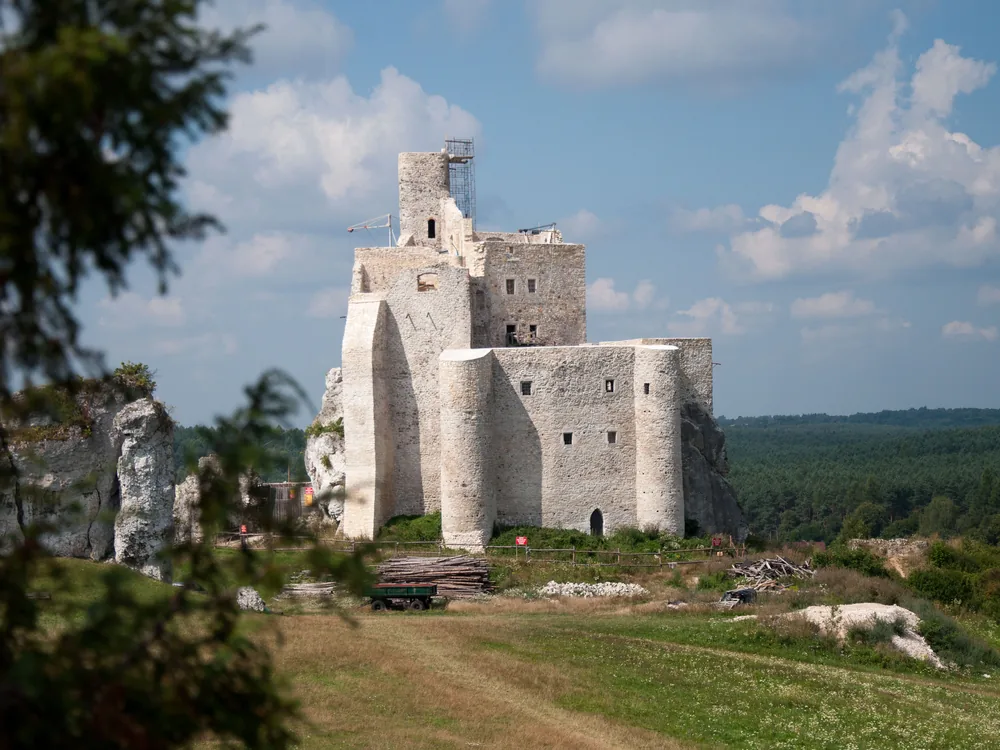
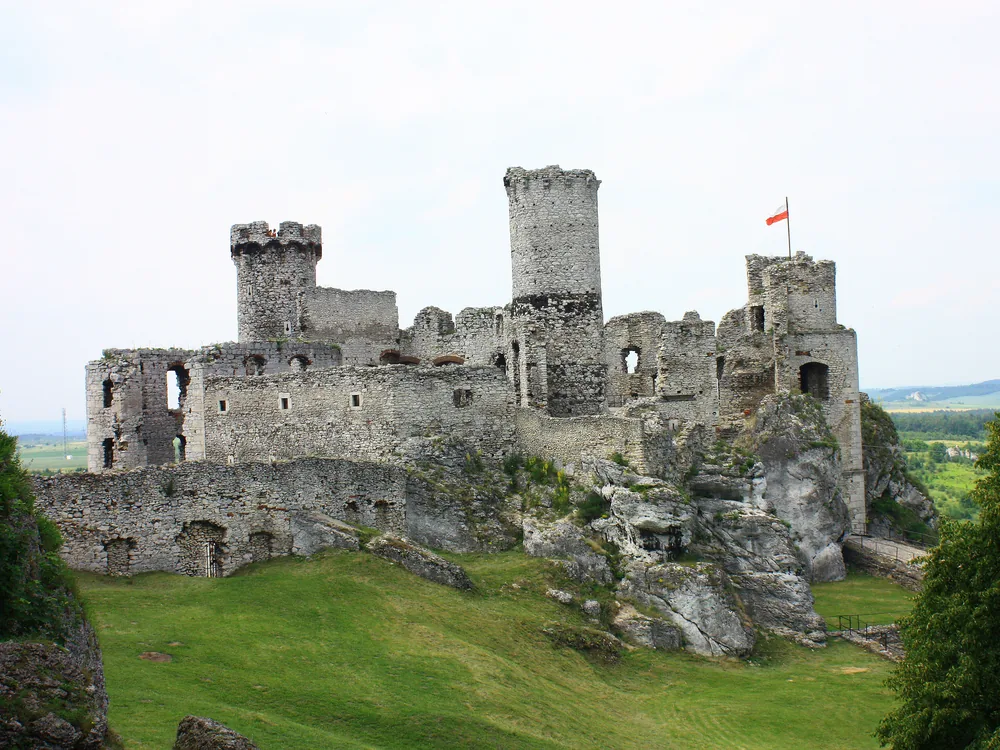
Built 1350 · Eagles' Nests castle ruin on a limestone outcrop in the Polish Jurassic Highland, built in the 14th century as a stone watchtower reporting to nearby Bobolice Castle; the Lis family converted the original watchtower into a small knightly castle; granted in 1378 as a fief to Władysław Opolczyk, Duke of Opole, by Louis I of Hungary; confiscated in 1396 by Władysław Jagiełło after Opolczyk was deemed a political threat; purchased in 1489 by the Myszkowski family, who expanded the castle with a residential tower; badly damaged during the Swedish Deluge of 1655–1660; repaired but subsequently abandoned in 1787 — local farmers and villagers then quarried stone from the ruins for construction material, accelerating the collapse; the southern wall gave way entirely in 1934; unlike its paired neighbour [Bobolice Castle](/castles/poland/bobolice-castle), Mirów was never rebuilt — the Lasecki family (same owners as Bobolice) began conservation and stabilization of the ruin in 2006 under specialist archaeological supervision, preserving the ruin's authentic medieval fabric without reconstruction; the ruined towers and wall stubs on the limestone outcrop are now among the most atmospheric unrestored ruins in the Jurassic Highland, approximately 700 metres south of Bobolice, both castles visible from each other
This page is part of an independent travel guide and is not affiliated with, endorsed by, or operated by Mirów Castle.
© Castles & Palaces
Quick Facts
- Hours
- Mon–Sun Open
- Day trip from
- €189
- Duration
- 45 minutes–1 hour
- Best time
- April to October
- Nearest city
- Częstochowa
Featured Tour
From Kraków: Trail of the Eagles' Nests — Medieval Castle Ruins
Cancellation available · Instant confirmation
Highlights
- ✦The legend of Mir and Bobol is inseparable from both castles. Mir, lord of this ruin, and his brother Bobol, lord of [Bobolice Castle](/castles/poland/bobolice-castle) 700 metres to the south, stored their shared war treasure in a secret tunnel connecting the two fortresses. When Bobol discovered that Mir was conducting an affair with his wife, he killed his brother and bricked his wife alive into the tunnel — sealing the entrance with her inside. Mir's name survives in the castle that bears it; the tunnel and the treasure survive, if they exist at all, only in the legend
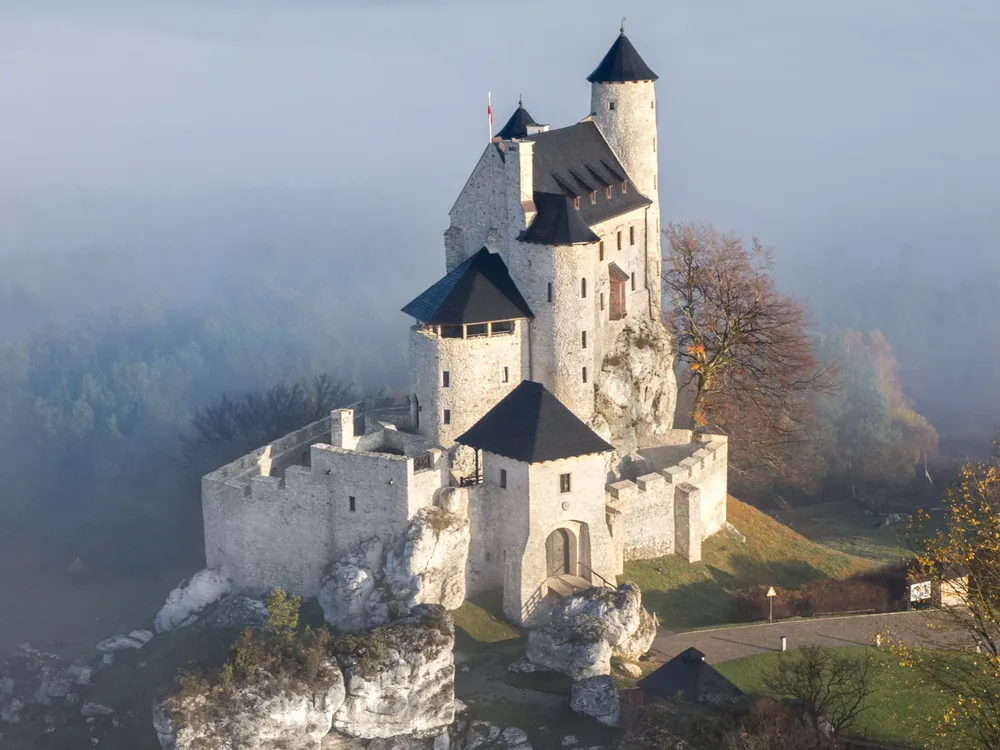
- ✦Mirów is the authentic medieval ruin that never received the reconstruction treatment applied to Bobolice next door. The two castles, 700 metres apart, are visible from each other and represent opposite answers to the question of what to do with a ruined Eagles' Nests castle: Bobolice rebuilt to full height in 2011 on the basis of archaeological inference; Mirów conserved as-is from 2006, its collapsed southern wall (down since 1934) left open to the Highland sky, its surviving towers and stubs treated with the minimal consolidation required to prevent further collapse without adding any new fabric above the surviving medieval stonework
- ✦Mirów's connection to Władysław Opolczyk and the late 14th-century political turbulence of the Polish-Hungarian border is one of the more specific documentary threads available in the Jurassic Highland's castle history: Opolczyk received both Mirów (1378) and Bobolice (1370) from Louis I of Hungary, making him the lord of the entire paired defensive position; Władysław Jagiełło — the Grand Duke of Lithuania who married Queen Jadwiga to form the Polish-Lithuanian Union in 1386 — confiscated Mirów from Opolczyk in 1396, treating the duke's pro-Teutonic political stance as sufficient grounds for forfeiture; the castle's subsequent Myszkowski ownership (from 1489) produced the residential tower addition that distinguishes Mirów's architectural profile from the simpler watchtower it was originally
- ✦The southern wall collapse of 1934 is still visible in the ruin's current form: the gaping opening in the southern circuit, where a complete wall face came down as a single event, gives the ruin a dramatic quality that more gradually decayed castles rarely achieve; the void left by the wall creates an accidental framing effect — approaching from Bobolice, the remaining towers frame the distant highland landscape through the gap, producing the view that appears on most photographs of Mirów taken from the south
- ✦The walk between Mirów and Bobolice across the highland meadow separating the two outcrops is one of the most unexpectedly pleasant short walks in the Jurassic Highland — flat, through open countryside, with both castle silhouettes visible for most of the route; it takes approximately 10 minutes and is significantly better than turning around at one castle and driving the 700 metres to the other; the Eagles' Nests Tour from Kraków stops at both and allows the walk between them as part of the afternoon schedule
Tickets & tours
Book through GetYourGuide
Mirów Castle stands on a limestone outcrop in the Polish Jurassic Highland, near the village of Mirów in Silesia, 700 metres north of [Bobolice Castle](/castles/poland/bobolice-castle). From the top of Mirów's surviving north tower, Bobolice is clearly visible to the south — and from Bobolice's rebuilt ramparts, Mirów's ruined outline is equally legible to the north. The two castles were built as a paired signalling and defensive unit in the 14th century, bound together in history by their shared construction programme, in legend by the story of the brothers who divided their treasure between them, and in the present day by the walking route that connects them in 10 minutes across open highland meadow.
The legend of Mir and Bobol is the reason most visitors come knowing both castle names rather than just one. Two brothers — Mir, lord of this castle, and Bobol, lord of Bobolice — stored their accumulated war treasure in a secret tunnel dug beneath the highland between the two fortresses, with a shared agreement to split it when the time came. When Bobol discovered that his brother Mir was conducting an affair with his wife, he killed Mir and bricked the wife alive into the tunnel entrance, sealing her and the treasure inside with the body of his brother. The tunnel, the treasure, and the bones remain unfound. The legend gives both sites a specific joint identity that neither has independently, and it is the first thing every Eagles' Nests guide mentions when both castles appear on the same day's itinerary.
Historically, Mirów began as a stone watchtower — a signalling post positioned to relay observations from Bobolice northward along the Eagles' Nests chain toward Ogrodzieniec and eventually Częstochowa. The Lis family converted the watchtower into a small knightly castle in the 14th century, adding residential elements to the existing defensive structure. In 1378, Louis I of Hungary granted the castle as a fief to Władysław Opolczyk, Duke of Opole — the same lord who had received Bobolice eight years earlier, making Opolczyk the owner of the entire paired defensive position at the same moment. Władysław Jagiełło confiscated Mirów from Opolczyk in 1396 as part of the political settlement that followed the formation of the Polish-Lithuanian Union — Opolczyk's pro-Teutonic political stance made him a liability to the new regime, and his Jurassic Highland castles were among the forfeited properties.
The Myszkowski family purchased Mirów in 1489 and added the residential tower that gives the castle its distinctive architectural profile — a taller, more substantial element added to a simpler original structure. The castle remained in use through the 16th century before the Swedish Deluge of 1655–1660 brought the damage that started its terminal decline. Unlike Bobolice, which was completely devastated in 1657, Mirów was damaged but not entirely destroyed, and was partially repaired in the later 17th century. It was finally abandoned in 1787, and subsequent decades of local stone quarrying — the dressed limestone of a ruined castle being a practical and free building material — accelerated the structural collapse. The southern wall gave way entirely in 1934, leaving the gap in the circuit that defines Mirów's current silhouette.
The contrast between Mirów and Bobolice as visitor experiences is one of the Eagles' Nests trail's most instructive pairs. Bobolice was fully reconstructed to full height between 2004 and 2011 by the Lasecki family, who also own Mirów. At Mirów, the same family made the opposite decision: beginning conservation and stabilization in 2006 under specialist archaeological supervision, the project preserved the ruin as-is — consolidating the surviving medieval masonry, preventing further collapse, but adding no new fabric above the existing wall line. The south wall remains open to the sky where it fell in 1934. The towers stand at their current reduced height, not rebuilt to imagined original levels.
The result is a site where the medieval fabric is authentic: what you see at Mirów is what remains of the actual 14th-to-17th-century castle, treated with minimum intervention to preserve it. What you see at Bobolice is what the 21st century thought the same era's castle looked like — an informed hypothesis built in stone. Walking between the two in either direction — Bobolice's complete rooflines giving way to Mirów's fragmented outlines, or Mirów's open-sky ruin giving way to Bobolice's fully articulated castle — makes the difference between restoration and conservation visible as a physical experience rather than an abstract heritage management debate.
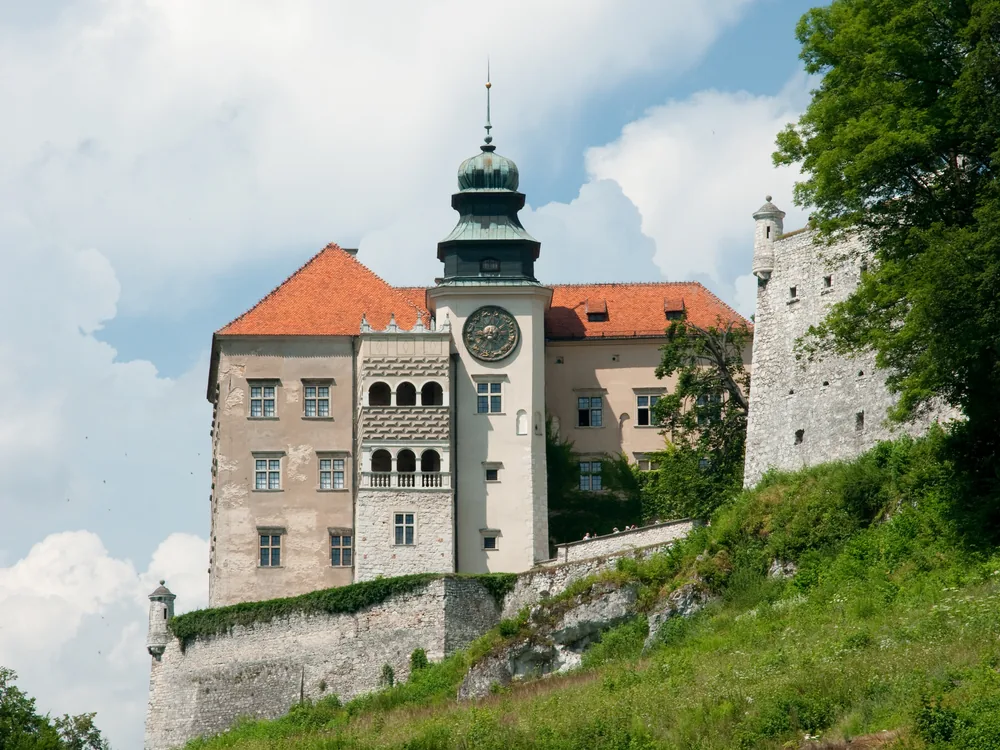
The Eagles' Nests Day Tour from Kraków stops at both castles as the final afternoon pairing after [Pieskowa Skała Castle](/castles/poland/pieskowa-skala-castle) and [Ogrodzieniec Castle](/castles/poland/ogrodzieniec-castle). The GetYourGuide link on this page is shared across all four castles on that tour — it is not a standalone Mirów ticket. The castle itself charges a small conservation entry fee in season; a box or honesty system operates at the entrance.
History
A stone watchtower was built at Mirów in the 14th century as part of the Eagles' Nests signalling network — its function to relay signals to and from Bobolice Castle, 700 metres to the south, and through the chain of limestone-outcrop fortifications that formed the Polish crown's southern defensive line. The Lis family converted the watchtower into a knightly castle; Louis I of Hungary granted it to Władysław Opolczyk, Duke of Opole, in 1378; Władysław Jagiełło confiscated it from Opolczyk in 1396 as the political landscape shifted. The Myszkowski family purchased Mirów in 1489 and added a residential tower.
The Swedish Deluge of 1655–1660 damaged the castle, and partial repairs in the late 17th century were insufficient to restore its function. Mirów was finally abandoned in 1787. Local stone quarrying accelerated the ruin through the following centuries, dismantling structural fabric for use in other buildings. The southern wall collapsed in 1934, reducing the surviving fabric to the north tower and sections of curtain wall that now constitute the ruin.
The Lasecki family — the same family that undertook the full reconstruction of adjacent Bobolice Castle — began conservation and stabilisation work at Mirów in 2006 under archaeological supervision, deliberately choosing not to reconstruct the building. The result is an authentic medieval ruin, open to visitors with a conservation access fee in season.
How to Visit
Getting there: Mirów Castle is in the village of Mirów, 30 km southwest of Częstochowa and 90 km north of Kraków. By car from Częstochowa: take the DK46 toward Niegowa, following signs for Mirów and Bobolice. No practical public transport to the site — self-drive or join an Eagles' Nests day tour from Kraków.
Tickets: Walk-up entry PLN 5 adult, PLN 3 child. Pay at the entrance point in season (approximately April–October); open access in winter. The GetYourGuide tour — an 8-hour day trip from Kraków covering Korzkiew, Pieskowa Skała, Rabsztyn, Ogrodzieniec, Mirów, and Bobolice — book in advance.
Practical tips: Bobolice Castle is 700 metres south across open highland meadow — a flat 10-minute walk; visiting both in one stop is essential. Wear sturdy footwear for the uneven limestone terrain. The ruin is unroofed and without facilities; bring water on warm days.
Combine with: Bobolice Castle 700 m south — the fully reconstructed twin, representing the opposite conservation philosophy to Mirów's authentic ruin. Ogrodzieniec Castle 20 km north — the largest Eagles' Nests ruin on the trail.
Frequently Asked Questions
Both castles are owned by the Lasecki family, who made opposite conservation choices for each site. At Bobolice (2004–2011), they rebuilt the castle to full height based on archaeological inference and comparison with similar Eagles' Nests castles — a reconstruction that is debated among heritage scholars. At Mirów (from 2006), they chose conservation of the ruin as-is: stabilizing the surviving medieval masonry, preventing further collapse, but adding no new fabric above the existing wall line. The result is that the two castles 700 metres apart represent opposite poles of heritage management, making the walk between them one of the most instructive short experiences on the Eagles' Nests trail.
Location
Mirów, 42-275 Mirów, Poland
Nearby Castles
Tours & Tickets
Powered by GetYourGuide
From
€189/ person