
Lublin Castle
Zamek Lubelski
Poland · Lublin Voivodeship · Near Lublin
Built 1200 · Round stone keep (early 13th century, oldest standing building in Lublin); Gothic Chapel of the Holy Trinity (before 1326, rebuilt 1407); neo-Gothic prison wing built 1826–1828 by Tsarist Russian authorities on the ruins of the 17th-century devastated palace complex
This page is part of an independent travel guide and is not affiliated with, endorsed by, or operated by Lublin Castle.
© Castles & Palaces
Quick Facts
- Hours
- Tue–Sun 10:00–17:00. Closed Mon
- Guided tour from
- €154
- Duration
- 1.5–2.5 hours (castle museum and courtyard); allow additional time for the Holy Trinity Chapel
- Best time
- April to October
- Nearest city
- Lublin
Featured Tour
Lublin: Old Town Highlights & Castle Private Tour
Cancellation available · Instant confirmation
Highlights
- ✦The Union of Lublin (1 July 1569) — King Sigismund II Augustus signed the union of the Kingdom of Poland and the Grand Duchy of Lithuania into a single Commonwealth at this castle; a thanksgiving service was held in the Holy Trinity Chapel; the union created one of Europe's largest states
- ✦Gothic Chapel of the Holy Trinity — 15th-century Byzantine-style frescoes painted in 1418 by Ruthenian Orthodox artists inside a Catholic royal chapel; almost unique in medieval Europe, the iconographic combination reflects the Jagiellonian dynasty's multiconfessional world
- ✦The oldest building in Lublin — the round stone keep from the first half of the 13th century, built under the Piast dynasty as the founding structure of the royal castle, survives within the later neo-Gothic complex
- ✦128 years as a prison (1826–1954) — the neo-Gothic wing built by Tsarist Russian authorities served continuously as a place of detention under three regimes; during Nazi occupation 1939–1944 it was a site of mass imprisonment and execution
- ✦Lublin Museum permanent exhibitions — covering Lublin and Lublin Voivodeship history from prehistoric times through the 20th century, with the prison history documented in full, including the Nazi-occupation period
Skip the queue with a guided tour
Skip-the-line tickets & expert guides
Lublin Castle stands on a limestone hill at the edge of the Old Town, above the gorge of the Czechówka stream, and is simultaneously three different buildings occupying the same site across eight centuries: a medieval royal fortress that was one of the most important residences in the Piast and Jagiellonian kingdom; a baroque ruin reduced to a single surviving tower and chapel by the 17th-century wars; and a neo-Gothic prison built by Tsarist Russian authorities in the 1820s that would serve, under three successive political systems, as a site of detention for over a century.
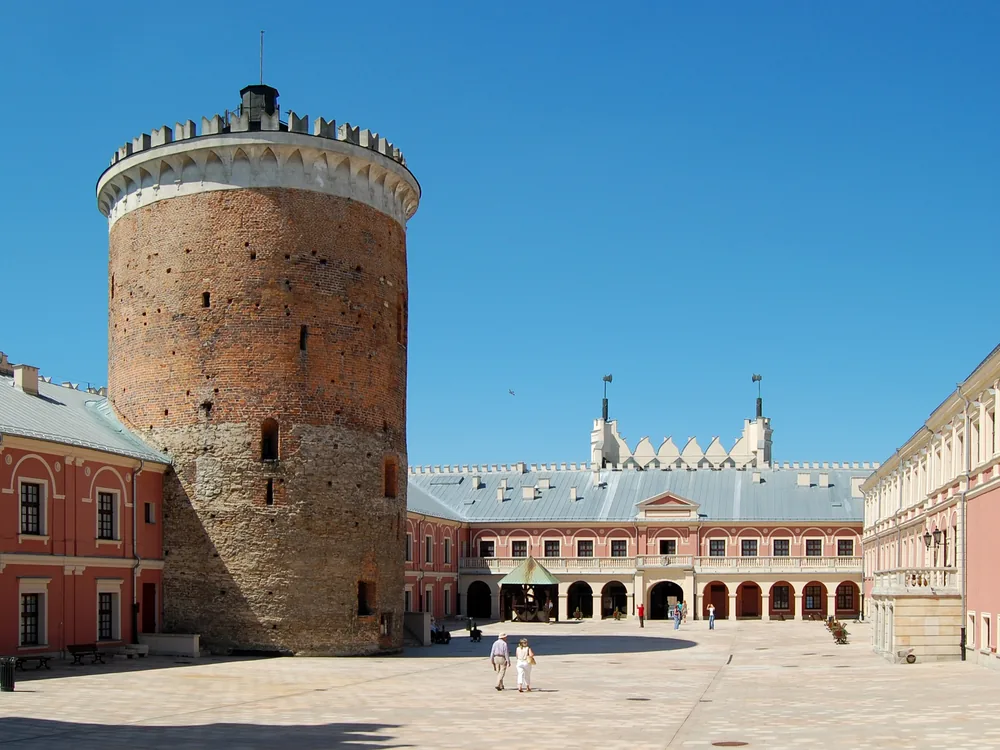
The earliest structures date to the rule of Casimir II the Just in the late 12th century. An earthen rampart was raised on the limestone hill in this period; the round stone keep — the Tower of the Donjon, the oldest standing building in Lublin — was built in the first half of the 13th century, probably during the reign of Casimir II's successors. The keep is a simple round tower in coursed stone, rising approximately 17 metres — characteristic of the Piast-period military architecture of the Lublin plateau. Casimir III the Great, the most prolific builder among the medieval Polish kings, rebuilt the castle in stone in the 1340s and expanded it substantially, creating a proper royal palace complex on the hilltop. Under Casimir III's construction the castle took on its function as a major royal residence — a function it would retain for two centuries.
The castle's most significant historical moment came in 1569, not as a siege or a battle but as a ceremony. King Sigismund II Augustus had been pursuing for years the formal union of the Kingdom of Poland and the Grand Duchy of Lithuania — two states joined since 1385 by dynastic bonds but legally still separate entities — into a single Commonwealth. The Sejm convened at Lublin to negotiate and ratify the terms, with Sigismund Augustus residing in the castle throughout the deliberations. On 1 July 1569, the Union of Lublin was signed: the two countries merged into a single Polish-Lithuanian Commonwealth with a jointly elected king, a joint Sejm, and a common foreign policy, while retaining separate armies, legal systems, and treasuries. A thanksgiving service marking the signing was held in the castle's own chapel — the Gothic Chapel of the Holy Trinity — in a ceremony contemporaries recognized as a transformative event in the political geography of eastern Europe.
That chapel is the other reason Lublin Castle occupies an exceptional place in Polish and European heritage. The Chapel of the Holy Trinity was built before 1326 — the earliest documented reference to it predates by decades the castle's great 14th-century expansion — and was rebuilt under King Władysław II Jagiełło in 1407. In 1418, the chapel received its defining decoration: a complete interior fresco programme painted by Ruthenian artists working within the Byzantine pictorial tradition, inside a chapel that was simultaneously a Catholic royal foundation. The frescoes cover the vault, walls, and apsidal space with saints, angels, narrative scenes, and devotional imagery organized around the typological conventions of Byzantine church painting. Their survival in a 15th-century Catholic context — nearly complete, minimally restored, painted in the Byzantine rather than Gothic Western style — is almost without parallel in Poland and rare anywhere in central Europe. The stylistic combination, where the Jagiellonian dynasty's Catholic commission was executed by craftsmen trained entirely in the Orthodox Eastern Christian tradition, is a material expression of the multiconfessional, multilingual world that the Jagiellonians governed.
The 17th century devastated the castle. The Swedish invasion (Deluge) of 1655–1657 and subsequent conflicts reduced the royal palace complex to ruins; only the round keep and the Chapel of the Holy Trinity survived substantially intact. What had been a major royal fortress became a disused hilltop site for over a century.
In 1826, the Russian imperial authorities who administered Lublin under the Congress Kingdom of Poland commissioned the construction of a new building on the castle hill. What they built was a neo-Gothic prison: designed in a romantic castellated style that borrowed decorative vocabulary from the surviving medieval tower while making no pretence of military function, the new building was a purpose-designed penitentiary. It opened in 1828 and served continuously as a place of detention — under Tsarist Russia, under the restored Polish republic between the wars, and finally under German Nazi occupation from September 1939 to July 1944 — for 128 years. During the Nazi occupation the castle was used as a place of mass imprisonment, interrogation, and execution: tens of thousands of people passed through its cells, and it served as a transit and processing point for victims of the Holocaust in the Lublin district. The castle museum's permanent exhibition addresses this history with documentary material and is presented in the same measured, factual register that serious Polish heritage institutions apply to this period.
The castle's final use as a prison ended in 1954; the neo-Gothic buildings were subsequently converted to house the Lublin Museum. The permanent exhibitions cover multiple strands of Lublin and regional history: the medieval and early modern royal periods, the Jagiellonian era and the Union of Lublin, the castle's prison history, and the archaeology of the castle hill from prehistoric times.
The GetYourGuide private tour (€154, 4 hours) covers the Old Town circuit and the castle, providing guide-led context for the Union of Lublin, the chapel frescoes, and the prison history. The listed rating is a provider rating (5.0) with no verified individual GetYourGuide review count; actual star display cannot be confirmed under the site's review accuracy standard. The price is per group, not per person — confirm group size and per-person cost at booking.
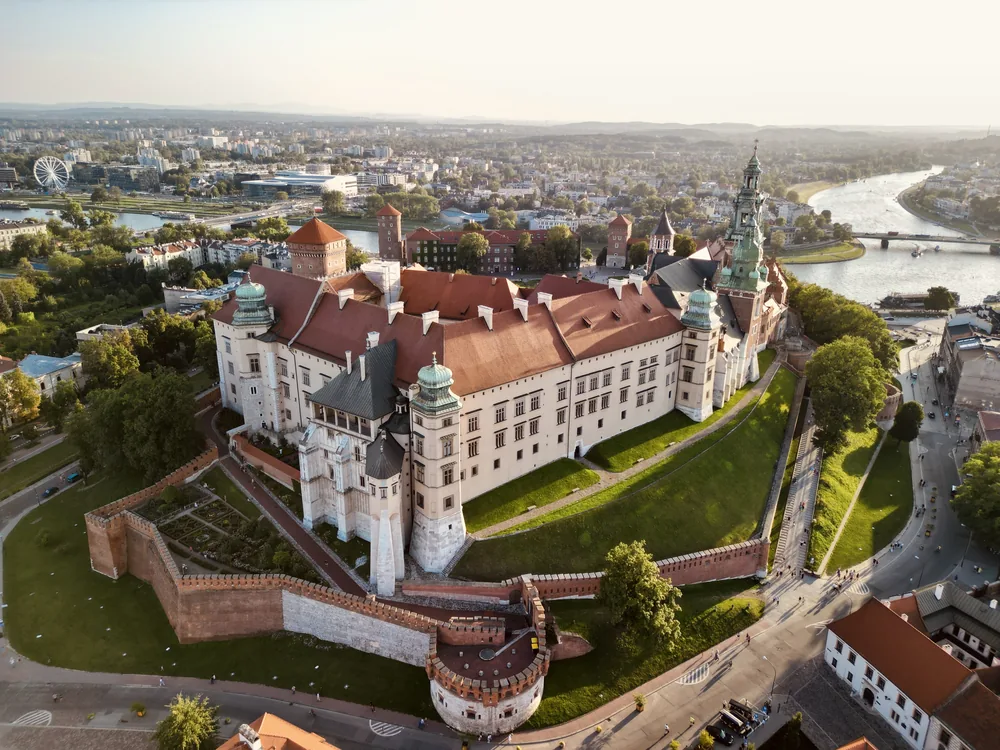
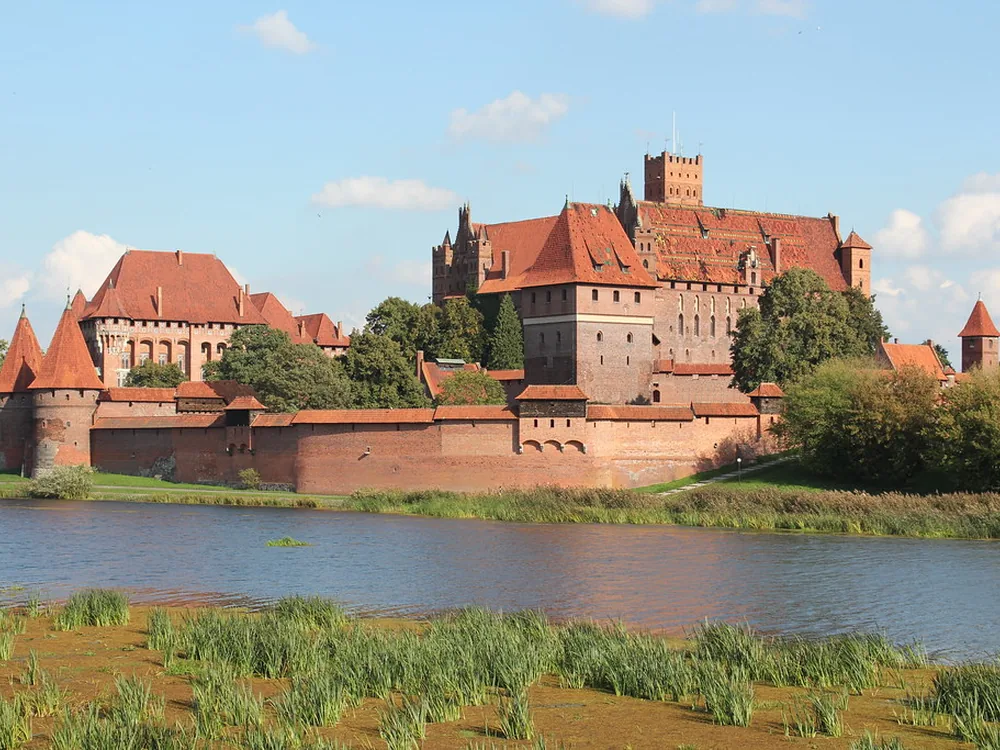
Lublin is accessible from Warsaw by PKP intercity train in 2 to 2.5 hours, or by coach (approximately 2.5 hours). The castle is a 10-minute walk from the Old Town bus stops. Wawel Royal Castle in Kraków and Malbork Castle in the north are Poland's other major castle destinations with comparable national-history significance; Lublin's contribution is the Union of 1569, the Byzantine-style chapel, and the documented 19th-century and Nazi-era prison history.
History
Earthen rampart from 12th century (Casimir II the Just); round stone keep built first half of 13th century (oldest standing building in Lublin). Royal palace complex rebuilt in stone by Casimir III the Great 1340s. Chapel of the Holy Trinity built before 1326, rebuilt 1407 under Jagiełło; Byzantine-style frescoes painted 1418 by Ruthenian artists. Union of Lublin signed at the castle 1 July 1569. Castle ruined in 17th-century Swedish wars; only keep and chapel survived. Neo-Gothic prison wing built 1826–1828 by Russian authorities; used as prison 1828–1954 under three regimes including Nazi occupation 1939–1944. Now houses Lublin Museum.
How to Visit
Getting there: Lublin is accessible from Warsaw by PKP intercity train (2–2.5 hours) or coach. The castle is a 10-minute walk from the Old Town (Stare Miasto) bus stops.
Chapel access: The Holy Trinity Chapel is on a separate ticket within the castle circuit. Confirm current chapel availability at the main ticket desk — access may be restricted for conservation during certain periods.
Tickets: Walk-up entry PLN 22 adult, PLN 11 child. The GetYourGuide tour — Lublin — offers a guided visit; book in advance.
Practical tips: April to October — the Old Town walking circuit and castle are at their best in the warmer months.
Combine with: The Old Town walking circuit (Royal Lublin Road, Grodzka Gate, Maidens' Tower) pairs naturally with the castle visit. Wawel Royal Castle in Kraków and Malbork Castle are Poland's other top-tier castle destinations.
Frequently Asked Questions
The Union of Lublin (1 July 1569) formally merged the Kingdom of Poland and the Grand Duchy of Lithuania into the Polish-Lithuanian Commonwealth — a state with a jointly elected king, a common Sejm, and a common foreign policy, while retaining separate armies, legal systems, and treasuries for the two parts. The Commonwealth it created became one of the largest states in Europe and one of the most diverse, covering modern Poland, Lithuania, Latvia, Belarus, and much of Ukraine. It lasted until the late 18th-century partitions and is considered one of the most significant acts of political union in European history.
Location
Zamkowy Plac 9, 20-117 Lublin, Poland
Nearby Castles
Tours & Tickets
Powered by GetYourGuide
From
€154/ person