
Făgăraș Fortress
Cetatea Făgărașului
Romania · Transylvania, Brasov County · Near Făgăraș
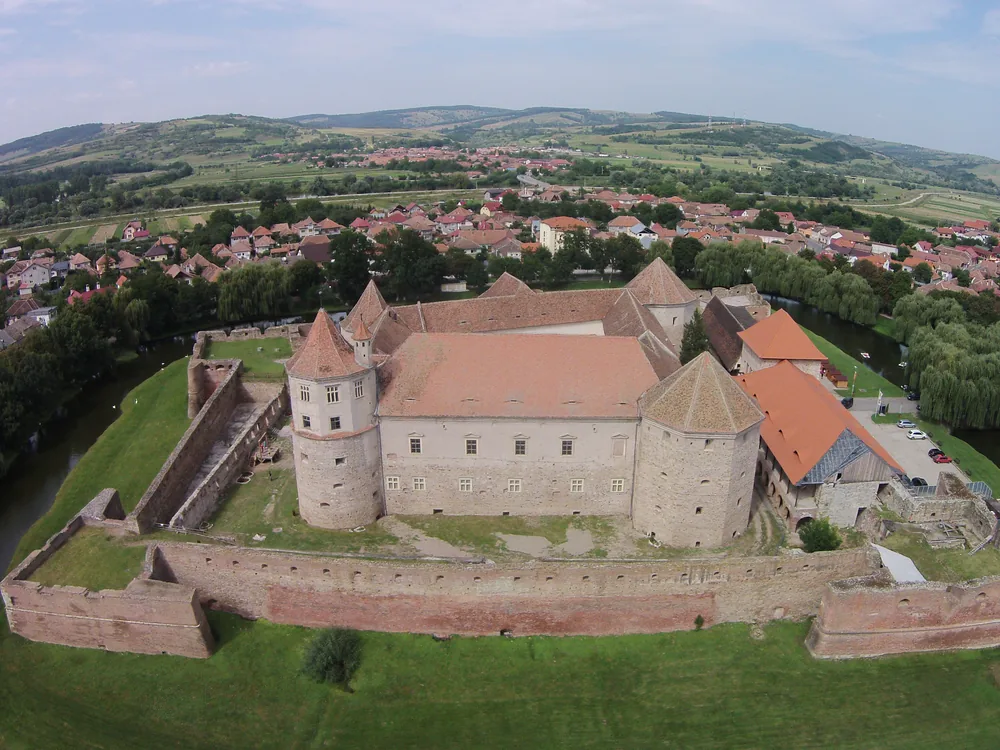
Built 1310 · Renaissance-era stone fortress with two defensive circuits, surrounded by a water-filled moat; founded as a wooden fortification in 1310 and rebuilt in stone across the 14th–16th centuries by the Voivodes of Wallachia and the princes of Transylvania; the defensive walls with corner bastions reflect Italian Renaissance fortification theory as applied to a Transylvanian context in the 16th century; a residential palace range was added within the inner circuit by Prince Gabriel Bethlen in the 17th century, combining military function with courtly residential use; the moat, fed by the Olt River, is a functioning water defence that remains filled; now houses the Valer Literat Museum of Făgăraș, with collections covering local Transylvanian history, peasant culture, and medieval arms
This page is part of an independent travel guide and is not affiliated with, endorsed by, or operated by Făgăraș Fortress.
© Castles & Palaces
Quick Facts
- Hours
- Tue–Sun 10:00–17:00. Closed Mon
- Day trip from
- €129
- Duration
- 1.5–2 hours
- Best time
- May to October
- Nearest city
- Făgăraș
Featured Tour
From Brașov: Transylvania Multi-Castle Day Trip Including Făgăraș
Cancellation available · Instant confirmation
Highlights
- ✦The Făgăraș Fortress moat is continuously fed by the Olt River and has been filled with water since the fortress was first defended in the 14th century — in an era when most European fortress moats have long since been drained and converted to parkland, Făgăraș maintains the full water-defence character of a functioning medieval castle, creating a genuine physical separation between the fortress and the town around it
- ✦The fortress was built and controlled by the Voivodes of Wallachia — the medieval Romanian principality south of the Carpathians — who held the Făgăraș domain as a territorial outpost north of the Carpathian watershed, creating an unusual situation where a Romanian ruler controlled a fortress in the ethnically mixed Transylvanian plateau that was nominally part of the Hungarian Kingdom; the fortress's history encodes the complex interaction between Wallachian, Hungarian, and Transylvanian political claims
- ✦Prince Gabriel Bethlen (reigned 1613–1629), the most capable of Transylvania's independent princes and one of the significant political figures of the Thirty Years' War period, used Făgăraș as a court residence and added the palace range within the inner circuit; his Transylvanian principality was the last major Protestant state east of the Rhine, and Făgăraș was both a military stronghold and a cultural centre during his reign
- ✦The Făgăraș Mountains visible from the fortress walls are the highest range in Romania — with peaks above 2,500 metres, including Moldoveanu at 2,544 metres (the country's highest point) — and the visual relationship between the low-lying moated fortress in the plain and the dramatic mountain wall immediately to the south is one of the most striking landscape pairings in Transylvania
- ✦The fortress and the town of Făgăraș sit at the western end of the 'Transylvania circuit' that connects the major sites of southern Transylvania — Bran Castle, Peles Castle, Poenari Fortress, and Corvin Castle are all accessible within a long day's drive, making Făgăraș the natural addition to a multi-day exploration of the region's medieval landscape
Tickets & tours
Book through GetYourGuide
Făgăraș Fortress stands in the low, open farmland of the Olt valley at the foot of the Făgăraș Mountains — the highest range in Romania, a wall of rock that rises immediately south of the town to peaks above 2,500 metres. The fortress, surrounded by its moat, sits between the flat agricultural plain and the mountains in a landscape that makes its defensive logic immediately visible: it controls the Olt valley corridor, the main route through the Transylvanian plateau toward the Carpathian passes. The moat is fed by the Olt River and has been continuously filled for approximately 700 years — one of the very few European fortresses that retains a functioning water defence. When you approach the entrance bridge over the still, green-tinted water of the moat, with the corner bastions rising from the walls and the Făgăraș Mountains behind, the fortress makes an immediate visual impression of historical seriousness that its relatively modest name recognition in Western European tourism does not fully predict.
The fortress's founding in 1310 predates the formal documentation of Wallachia as a principality; it was built as a wooden fortification by the local Wallachian rulers who controlled the Făgăraș domain as an outpost north of the Carpathians. The domain is important in Romanian national history because the Voivodes of Wallachia held it as a territorial possession in ethnically mixed Transylvania, which was nominally part of the Hungarian Kingdom — an early expression of the claim that Romanian-speaking people had historical and political stakes on both sides of the Carpathian watershed. Mircea the Elder, Vlad II Dracul (father of Vlad the Impaler), and several other significant Wallachian rulers held or contested the Făgăraș domain during the 14th and 15th centuries.
The current stone fortress was built and extended across the 14th to 16th centuries, with the two defensive circuits and the corner bastions reflecting Italian Renaissance fortification theory as it was applied to Transylvanian construction — the shift from medieval tower-house defence to the lower, angled bastion design developed to resist artillery. By the early 17th century, when Gabriel Bethlen was Prince of Transylvania, the fortress had been significantly strengthened and a residential palace range added within the inner circuit. Bethlen's Transylvanian principality was a serious political actor in the Thirty Years' War — Bethlen allied with the Protestant Union against the Habsburgs, invaded Hungary twice, and extracted substantial concessions from Ferdinand II before his death in 1629. Făgăraș under Bethlen was both a military stronghold and a centre of Renaissance court culture: the palace range was decorated with Bethlen's distinctive courtly aesthetic, and the fortress was used as a treasury and archive as well as a defensive position.
After Bethlen's death, Transylvania's independent principality steadily declined under Habsburg pressure, and the fortress passed to Austrian imperial administration in the 18th century. The Habsburgs used it as a prison — among the prisoners held here were Romanian intellectuals and national activists in the period of 18th-century national awakening — adding a layer to the fortress's history as a symbol of resistance to foreign control that resonates in Romanian national memory. The moat, walls, and bastions were maintained throughout; the water defence was never drained.
The Valer Literat Museum of Făgăraș occupies the fortress today, with collections covering local Transylvanian history, medieval arms and armour, peasant craft culture, and the history of the Wallachian rulers who held the domain. The collection is strongest in local ethnographic material and medieval objects from the fortress's own history. Romanian-language labels predominate, with some English material available.
The landscape connection is worth emphasising: Moldoveanu peak — Romania's highest point at 2,544 metres — is directly south of the town, part of the Făgăraș Mountains range that forms the wall behind the fortress. The Trans-Fǎgǎrǎşan highway, cut through the mountains under Ceaușescu in 1974 as a military emergency route and now considered one of Europe's most dramatic mountain roads, starts its ascent approximately fifteen kilometres south of the town. This combination — medieval water-moated fortress in the plain, highest mountains in Romania immediately behind it, dramatic alpine road beginning close by — makes Făgăraș an unusually rich stop on any Transylvanian itinerary.
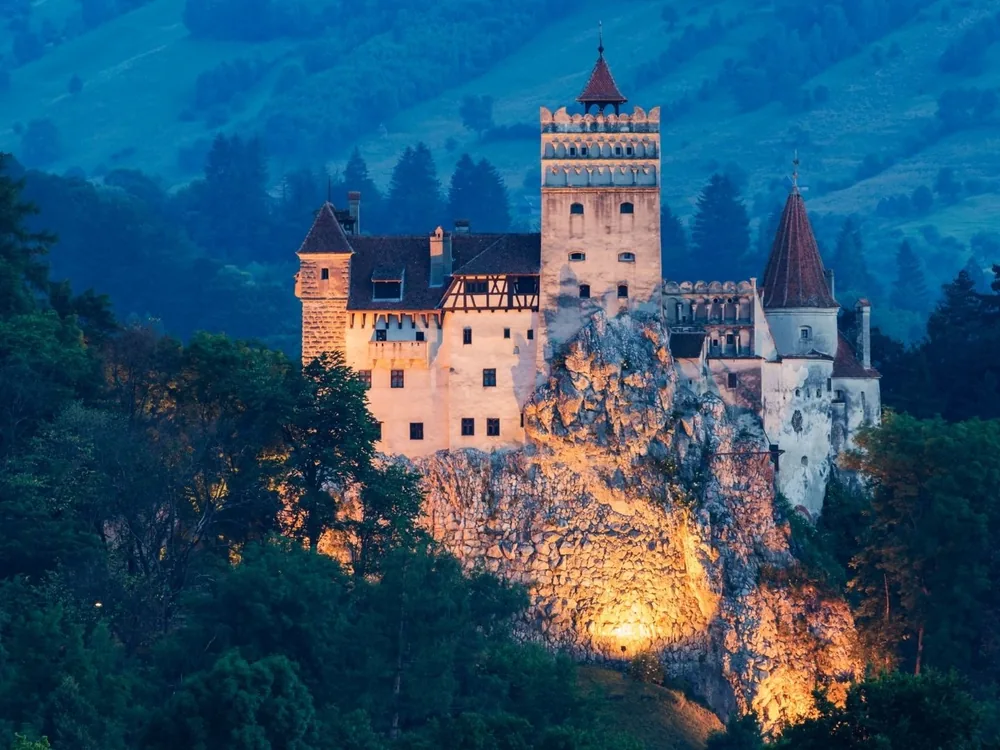
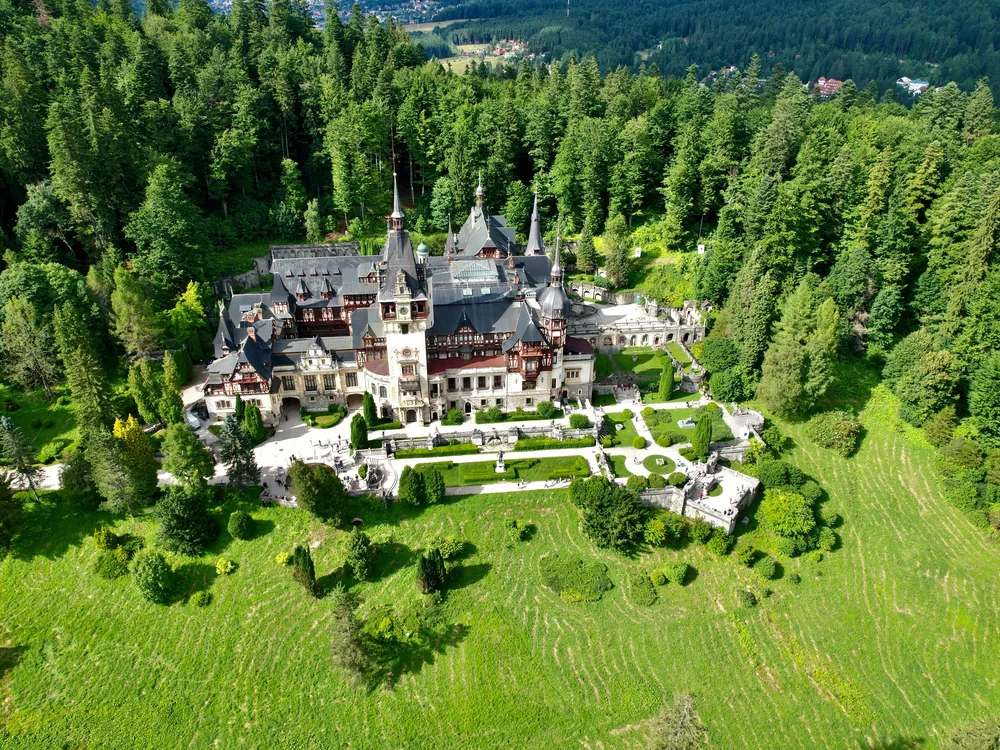
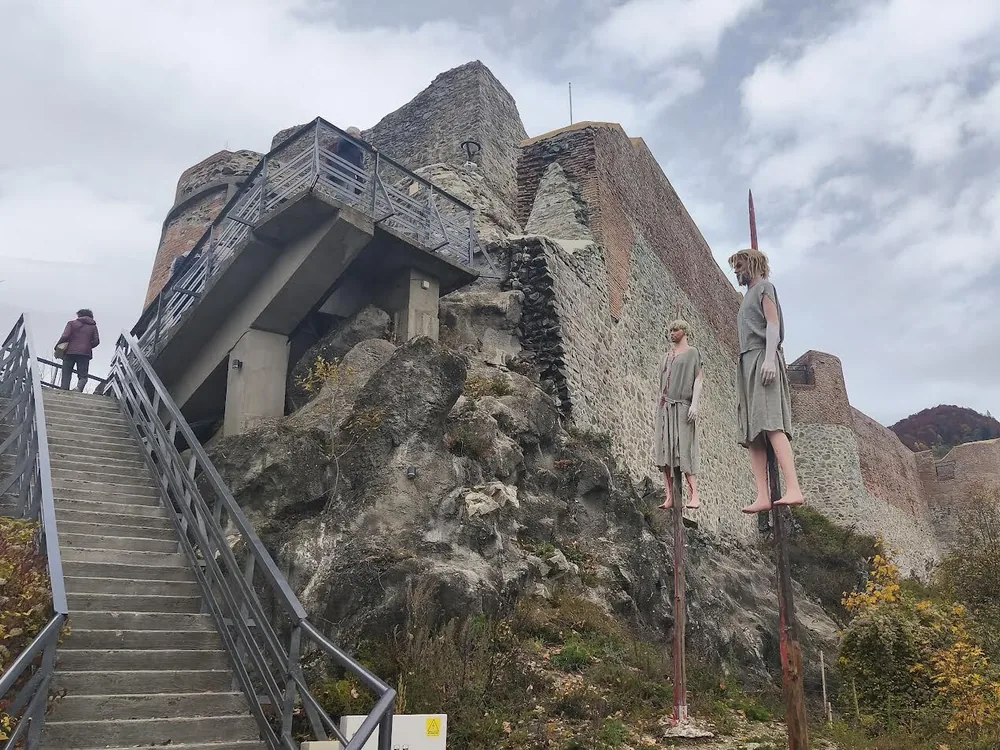
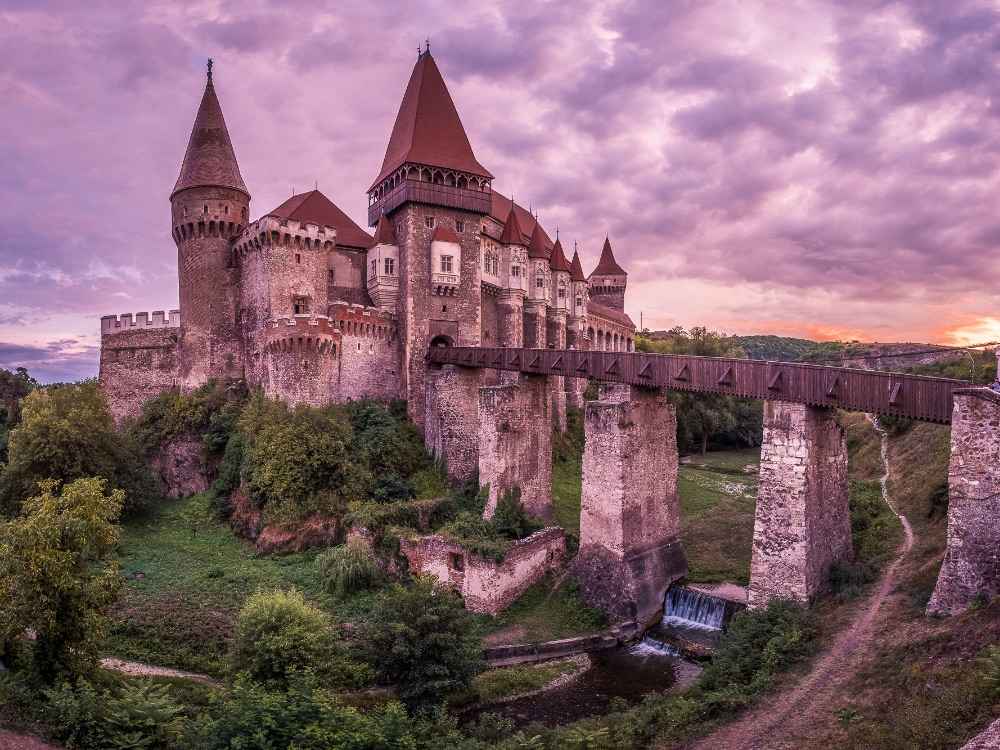
For context within the broader Transylvanian castle circuit: [Bran Castle](/castles/romania/bran-castle) (65 km east) is the most internationally visited Romanian castle, with its Dracula mythology and dramatic clifftop position. [Peles Castle](/castles/romania/peles-castle) (120 km east, near Sinaia) is the most architecturally spectacular, a Neo-Renaissance royal palace. [Poenari Fortress](/castles/romania/poenari-castle) (90 km west) is the actual Wallachian fortress most directly associated with Vlad the Impaler. [Corvin Castle](/castles/romania/corvin-castle) (130 km west at Hunedoara) is the most dramatic medieval fortress in Romania. Făgăraș is geographically central to all of them and, as the best-preserved functioning moated fortress in Transylvania, earns its place in the circuit on architectural grounds independent of any medieval association.
History
Local Wallachian rulers built the first wooden fortification at Făgăraș in 1310 to control the Olt valley domain — a strategic position at the foot of the highest mountains in Romania, where the valley provides a passage between Transylvania to the north and Wallachia to the south. Through the 14th and 15th centuries the fortress was held and contested by successive Voivodes of Wallachia, including Mircea the Elder and Vlad II Dracul, the father of Vlad the Impaler — figures whose struggles over Transylvanian border territories were inseparable from their conflicts with the Ottomans.
Transition from Wallachian to Transylvanian control in the late 15th century was followed by a major programme of stone fortification through the 16th century, in which two defensive circuits were built with corner bastions following Italian Renaissance military engineering principles — the same theories that were reshaping fortress design across Europe in response to gunpowder artillery. The fortress's political significance peaked between 1613 and 1629, when Prince Gabriel Bethlen used Făgăraș as a major court residence and a palace range was added within the inner circuit.
Habsburg administration in the 18th century converted the fortress to use as a political prison for Romanian national activists — one of the sites where the emerging Romanian national movement encountered imperial repression. The fortress is now open to the public as the Valer Literat Museum of Făgăraș, with the moat remaining continuously filled.
How to Visit
Getting there: Făgăraș sits on the DN1 highway midway between Brașov (70 km east) and Sibiu (70 km west), about 1 hour by car from either city. By train: Făgăraș CFR station is a 5-minute walk from the fortress entrance, with regular services from Brașov (1 hour) and Sibiu (1.5 hours). Direct buses run from both cities.
Tickets: Walk-up entry 15 RON adult, 5 RON child — pay at the fortress gate. Open Tuesday–Sunday 10:00–17:00; closed Mondays and national holidays. The GetYourGuide tour is a full-day multi-castle Transylvania day trip from Brașov that includes Făgăraș Fortress alongside other Transylvanian sites — book in advance.
Practical tips: Walk the full circuit of the entrance bridge to appreciate the continuously water-filled moat — one of the few in Europe still functioning as a genuine water defence fed by the Olt River. The museum labels are primarily in Romanian; pick up the English-language leaflet at the ticket desk. If visiting July–October, the Trans-Făgărășan mountain road (DN7C) begins 15 km south of town and can be added to the day — it crosses Romania's highest terrain and is one of the most dramatic alpine drives in Europe.
Combine with: Bran Castle (65 km east, clifftop fortress with Dracula mythology) and Rupea Fortress (50 km east on the Brașov road, compact hilltop stronghold with sweeping valley views).
Frequently Asked Questions
Făgăraș is the best-preserved water-moated fortress in Transylvania and one of the few in Romania with a continuously filled moat — most European fortress moats were drained in the 18th or 19th century. The water defence is fed by the Olt River and has been functional since the 14th century. Unlike Bran Castle (clifftop, Dracula associations), Peles (Neo-Renaissance royal palace), and Corvin Castle (Gothic, Gothic Revival additions), Făgăraș is primarily a military fortress that has remained intact as a fortification rather than being converted or rebuilt for residential or ceremonial purposes.
Location
Str. Mihai Viteazu 1, Făgăraș 505200, Romania
Nearby Castles
Tours & Tickets
Powered by GetYourGuide
From
€129/ person