
Royal Court of Târgoviște
Curtea Domnească din Târgoviște
Romania · Dâmbovița County, Wallachia · Near Bucharest
Built 1400 · Wallachian Princely Court — a complex of multiple construction phases from the late 14th through the 17th century; the primary surviving structure is the Chindia Tower (Turnul Chindiei, c. 1460), a 27-metre circular defensive and watchtower in late-Wallachian style; the ruins of the Princely Court church (Curtea Veche) preserve Gothic-Byzantine hybrid elements characteristic of 15th-century Wallachian religious architecture under the influence of both Orthodox tradition and Transylvanian Gothic; the archaeological ruins of the throne hall and residential wings complete the site
This page is part of an independent travel guide and is not affiliated with, endorsed by, or operated by Royal Court of Târgoviște.
© Castles & Palaces
Quick Facts
- Hours
- Tue–Sun 09:00–17:00. Closed Mon
- Day trip from
- €267
- Duration
- 1–2 hours (tower, church ruins, and princely court archaeological remains)
- Best time
- April to October
- Nearest city
- Bucharest
Featured Tour
From Bucharest: Vlad the Impaler's Royal Court & Poenari Fortress Private Day Tour
Cancellation available · Instant confirmation
Highlights
- ✦Chindia Tower (Turnul Chindiei, c. 1460) — the principal surviving structure, built by Vlad III of Wallachia (Vlad the Impaler), a 27-metre circular defensive tower that served as both watchtower and symbol of princely authority over the Wallachian plain; now houses a small museum of medieval Wallachian armoury
- ✦Vlad III's court — the Curtea Domnească was the seat of Vlad the Impaler during his central six-year reign (1456–1462), from which he directed campaigns against the Ottoman Empire and conducted the mass impalements that gave him his historical sobriquet; the courtyard where these events occurred is now archaeological open ground
- ✦Ruins of the Princely Court Church (Curtea Veche) — a Gothic-Byzantine hybrid 15th-century church built within the court complex, preserving elements of Wallachian religious architecture from the period when the principality stood between Orthodox Byzantine tradition and Western Gothic influence from Transylvania
- ✦Three centuries as Wallachian capital — Târgoviște was the primary seat of the Wallachian princes from Mircea the Elder's reign (late 14th century) through to the 1650s when Matei Basarab moved the capital to Bucharest; the site layers the reigns of multiple Wallachian princes before and after Vlad
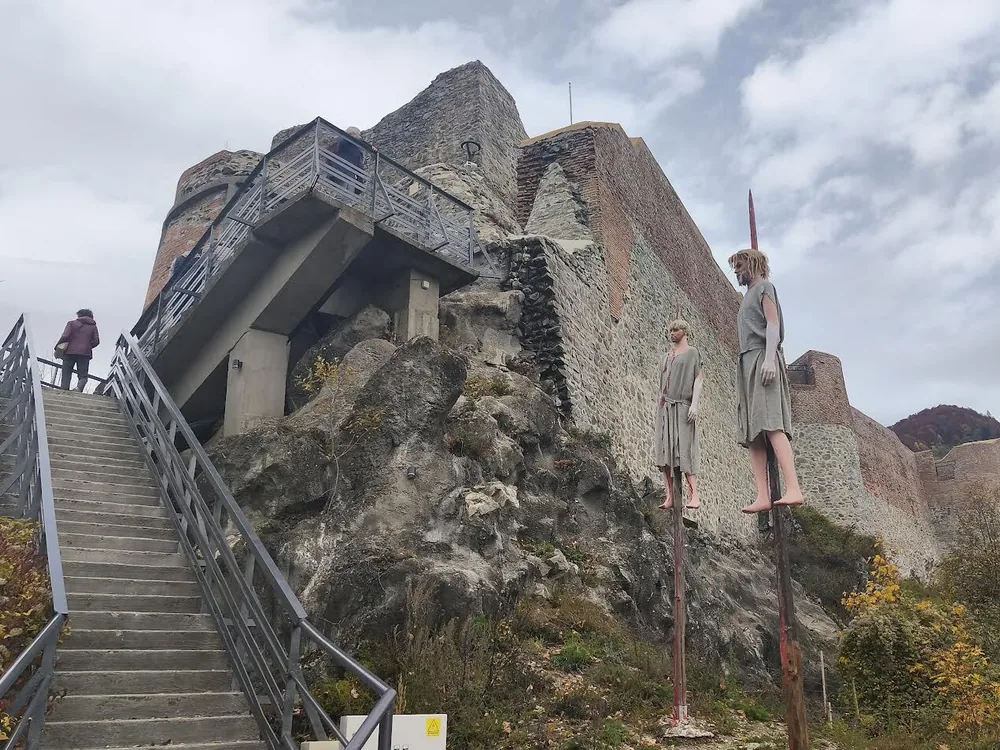
- ✦Shared private day tour with Poenari Castle — the GetYourGuide private tour (from Bucharest, 11 hours) pairs this site with Poenari Castle (Vlad's cliff-top fortress 100km south), tracing the historical thread from the court where Vlad ruled to the mountain stronghold where he made his last stand
Skip the queue with a guided tour
Skip-the-line tickets & expert guides
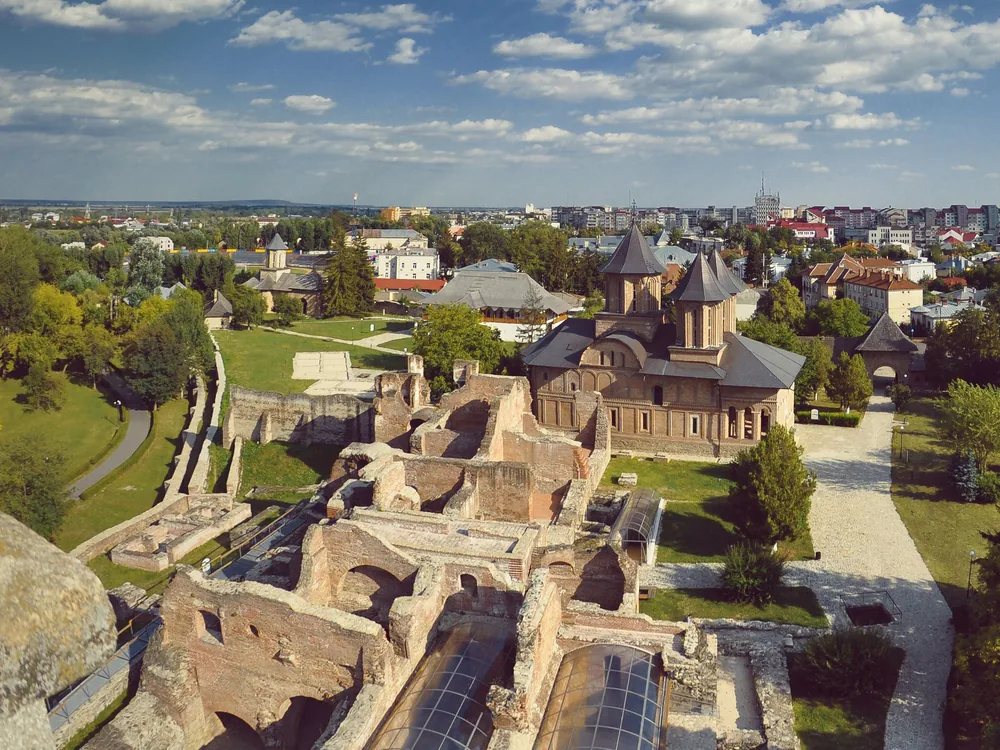
The Curtea Domnească — the Princely Court of Târgoviște — was the seat of the Wallachian princes for three centuries, from the reign of Mircea the Elder in the late 14th century until the capital moved to Bucharest in the 1650s. What distinguishes this complex from the dozens of ruined medieval courts across Eastern Europe is the specific name most strongly associated with it: Vlad III, Prince of Wallachia, known to his contemporaries as Vlad Dracula (son of the Dragon) and to history as Vlad the Impaler.
Vlad III ruled Wallachia from Târgoviște three times — briefly in 1448, for six years from 1456 to 1462, and again for a few months in 1476 before his death. The six-year central reign is the one that imprinted his methods on European consciousness. From this court he directed the campaigns against the Ottoman Empire that briefly halted Sultan Mehmed II's expansion into the Danube basin, and from this court he conducted the mass impalements of prisoners, Ottoman captives, and Wallachian nobles he suspected of treachery that gave him his historical sobriquet. A famous 15th-century German woodcut shows Vlad dining surrounded by impaled bodies in a courtyard setting — the forensic reality behind the legend of vampirism that Bram Stoker would construct four centuries later, with no direct connection to the historical Vlad.
The Chindia Tower (Turnul Chindiei) — the most prominent surviving structure on the site — was built during Vlad's reign, probably around 1460. A circular defensive tower 27 metres tall, it served as both a military lookout over the Wallachian plain and a symbolic demonstration of the prince's authority over a territory he held against both external threats and internal enemies. The tower has been partially restored and is open to climb; the view from the top takes in the modern city of Târgoviște and the rolling countryside of Dâmbovița County that Vlad surveyed from the same height. The tower now houses a small museum of Wallachian medieval armoury and period objects.
The ruins of the Princely Court proper — the throne hall, the residential wings, the courtyard — are laid out on a large archaeological open site around the tower. The Church of the Princely Court (Curtea Veche) has been partially preserved; it shows the characteristic stylistic hybrid of 15th-century Wallachian religious architecture, where Byzantine Orthodox tradition (the cross-in-square plan, the eastern apse, the liturgical orientation) meets Gothic construction technique imported from Transylvanian builders who worked along the Carpathian trade routes. Vlad himself would have attended services here.
The wider context for Târgoviște in Romanian history includes a chapter that sits in a completely different time period but has given the city a second dark entry in collective memory: it was here, on 25 December 1989, that Nicolae Ceaușescu and his wife Elena were tried in a summary military tribunal and executed, in the army barracks on the outskirts of the city, at the climax of the Romanian Revolution. The contrast between the 15th-century court's 500-year-old power and the collapse of the 20th-century Communist regime in the same city within a single afternoon is a layering of history that tour guides at the site often note.
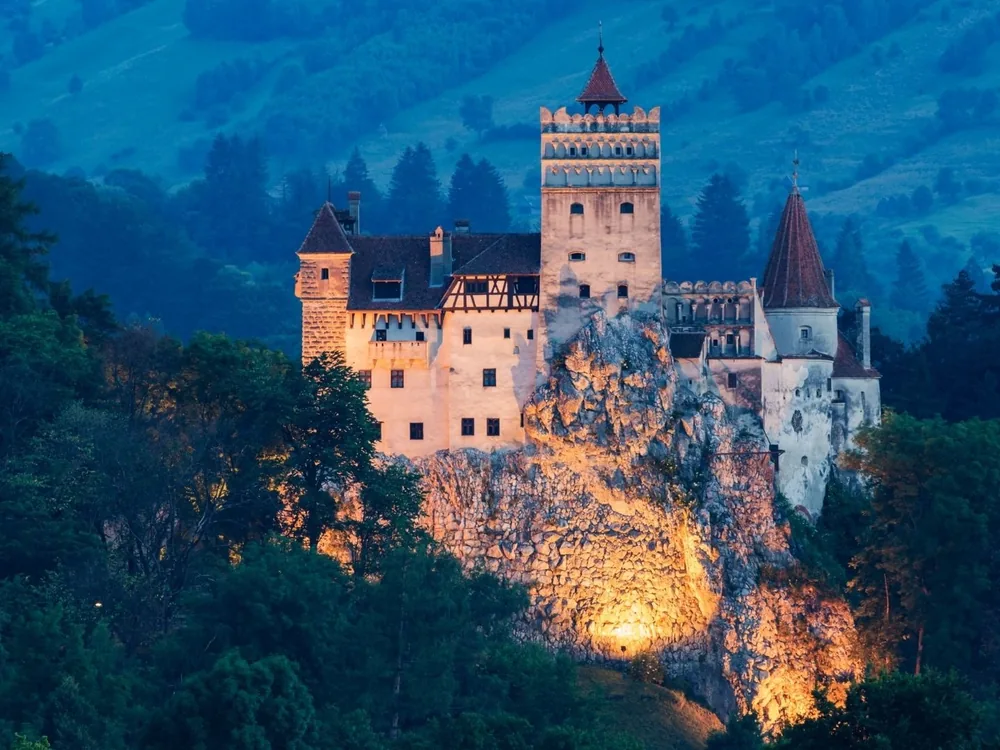
The GetYourGuide private day tour from Bucharest (11 hours) covers both this site and Poenari Castle — Vlad's cliff-top mountain fortress approximately 100km to the south in the Argeș Valley. Târgoviște is the morning stop (approximately 1.5 hours at the court and tower), and the tour then follows the Argeș Valley south and west, climbing toward Poenari Castle (see the dedicated Poenari Castle page on this site) via the Transfăgărășan scenic road. This pairing retraces, in a single day, the historical thread from the court where Vlad ruled to the mountain stronghold where he made his last stand against the Ottoman siege of 1462. It is the natural one-day itinerary for anyone following the documented historical trail of Vlad the Impaler rather than the tourist Dracula route through Bran Castle, which has no documented Vlad III connection.
Independent visitors can access the Curtea Domnească for approximately €3 (the admission fee covers the archaeological site and the Chindia Tower). No advance booking is required.
History
First documented as Wallachian capital under Mircea the Elder (ruled 1386–1418). Multiple Wallachian princes reign from Târgoviște through the 15th century. Vlad III (Vlad the Impaler, Vlad Dracula) rules from the court: 1448 (briefly), 1456–1462, 1476 (until death). Chindia Tower built c. 1460. Ottoman siege 1462 forces Vlad's retreat to Poenari and then Transylvania. Capital moved to Bucharest under Matei Basarab, 1650s. Complex gradually falls into disuse and partial ruin. 19th-century conservation attempts; major archaeological excavations in communist era. Curtea Domnească complex (tower + ruins + church) declared national monument; managed by Dâmbovița County Museum. 25 December 1989: Nicolae Ceaușescu executed in Târgoviște army barracks at end of Romanian Revolution.
How to Visit
Getting there: Târgoviște is 75 km northwest of Bucharest — approximately 1 hour 15 minutes by car via the A1 motorway then DN71 north. By bus: regular services from Bucharest's Autogara Filaret (approximately 1.5 hours). The Curtea Domnească is in the town centre, a short walk from the bus station.
Tickets: Walk-up entry €3 adult, €1 child — paid at the gate; no advance booking required. Open Tuesday–Sunday 09:00–17:00 (closed Mondays; summer hours may extend). The GetYourGuide tour is a private 11-hour day trip from Bucharest pairing this court with Poenari Fortress, the Vidraru Dam, and the Transfăgărășan scenic road — a private driver-guide for the full Vlad the Impaler historical trail — book in advance.
Practical tips: Climb the Chindia Tower's spiral staircase to the top for the view across the Wallachian plain that Vlad himself surveyed from here — the small armoury museum inside the tower is worth the few minutes. The archaeological site covers a large open area; morning visits avoid afternoon heat in summer. Confirm Monday closure and summer extended hours with the Dâmbovița County Museum before visiting.
Combine with: Poenari Castle (100 km south via the Argeș Valley, Vlad's actual cliff-top fortress where he made his last stand in 1462) and Bran Castle (120 km north in Transylvania, the 14th-century fortress marketed as Dracula's Castle — useful counterpoint to this genuine Vlad III site).
Frequently Asked Questions
Vlad III of Wallachia (1428/31–1476/77), who ruled from this court, was a real historical figure who fought the Ottoman Empire and was notorious for executing prisoners by impalement. He was called 'Dracula' (son of the Dragon) because his father, Vlad II, belonged to the Order of the Dragon. Bram Stoker borrowed the name 'Dracula' for his 1897 vampire novel but drew little from the historical Vlad — the fictional Count Dracula lives in Transylvania, not Wallachia, and the vampire mythology has no documented connection to Vlad III. Târgoviște's Curtea Domnească is part of the genuine historical trail; Bran Castle, which tourism markets as 'Dracula's Castle,' has no documented Vlad III connection.
Location
Strada Justiției 7, Târgoviște 130024, Romania
Nearby Castles
Tours & Tickets
Powered by GetYourGuide
From
€267/ person