
Linlithgow Palace
Linlithgow Palace
Scotland · Linlithgow, West Lothian — Forth Valley · Near Edinburgh
Built 1425 · Scottish late-medieval royal palace — four ranges arranged around a central courtyard, with a great hall on the east range, royal apartments on the north and west, and a chapel on the south; begun by James I of Scotland in 1425 and extended by successive Stewart kings through the 16th century; characterised by large traceried windows, projecting stair towers, and a tier of decorative wall-head ornamentation; the palace was gutted by fire in 1746 and has remained open to the sky since; the loch-side setting and the intact courtyard fountain are among its most celebrated features
This page is part of an independent travel guide and is not affiliated with, endorsed by, or operated by Linlithgow Palace.
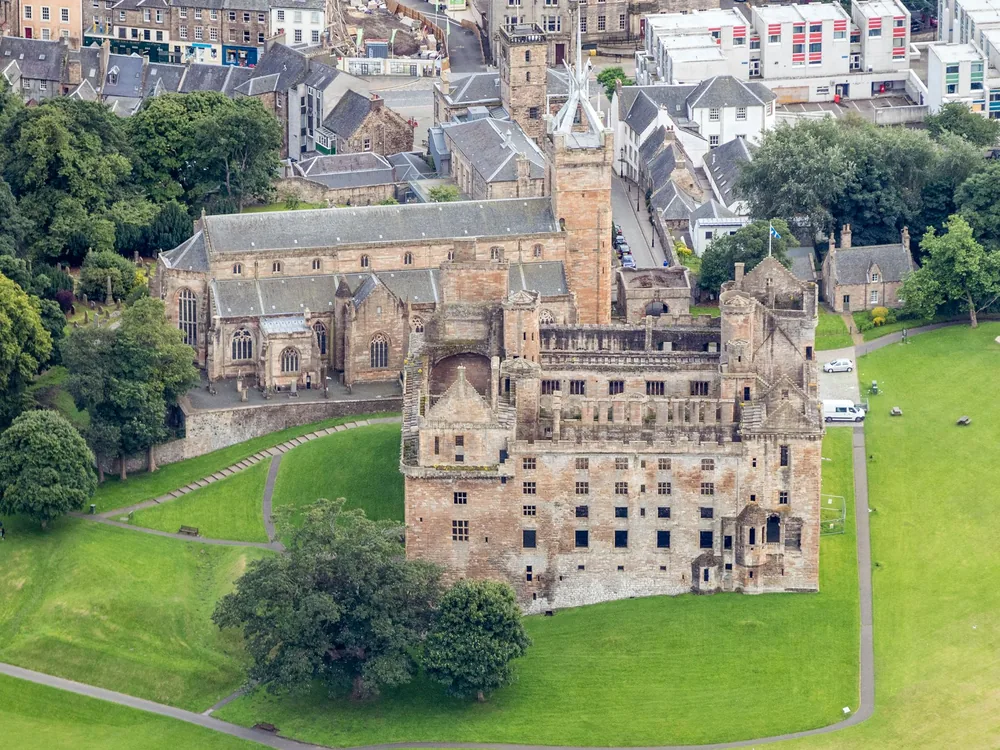
© Castles & Palaces
Quick Facts
- Hours
- Daily 09:30–17:30
- Guided tour from
- €22
- Duration
- 1.5–2 hours (self-guided; the Edinburgh half-day guided tour runs approximately 105 minutes inside the palace)
- Best time
- May to September
- Nearest city
- Edinburgh
Featured Tour
Edinburgh: Half-Day Tour of Linlithgow with Palace Visit (Admission Included)
Cancellation available · Instant confirmation
Highlights
- ✦Birthplace of Mary, Queen of Scots (8 December 1542) — born in the north range of the palace while her father James V lay dying at Falkland Palace; the room traditionally identified as Mary's birthplace is on the first floor of the north wing, its great window still intact above the loch
- ✦James V's Renaissance fountain (c.1538) — the only pre-Reformation decorative fountain in Scotland still in its original position: a tiered hexagonal structure covered in carved heraldic figures, coats of arms, and Renaissance ornamental detail; it stood at the centre of the courtyard for James V's court entertainments and was said to flow with wine at his wedding
- ✦The great hall — the east range's principal space, a double-height medieval hall running the full width of the range, with the outline of its tall traceried windows still legible in the roofless masonry; one of the largest secular halls built in medieval Scotland, it hosted royal banquets, parliaments, and receptions under the Stewart kings
- ✦Linlithgow Loch and town setting — the palace occupies a promontory on the south shore of Linlithgow Loch, creating one of the most photogenic royal ruin settings in Britain; the reflection of the palace in the loch, photographed from the north shore, is one of the defining images of Central Scotland
- ✦St Michael's Church — the adjacent medieval parish church, one of the finest examples of Scottish Gothic architecture outside a cathedral: a 15th-century building with a distinctive modern crown spire (Geoffrey Clarke, 1964) that has become an integral part of the Linlithgow skyline; accessible without charge and part of the palace visit circuit
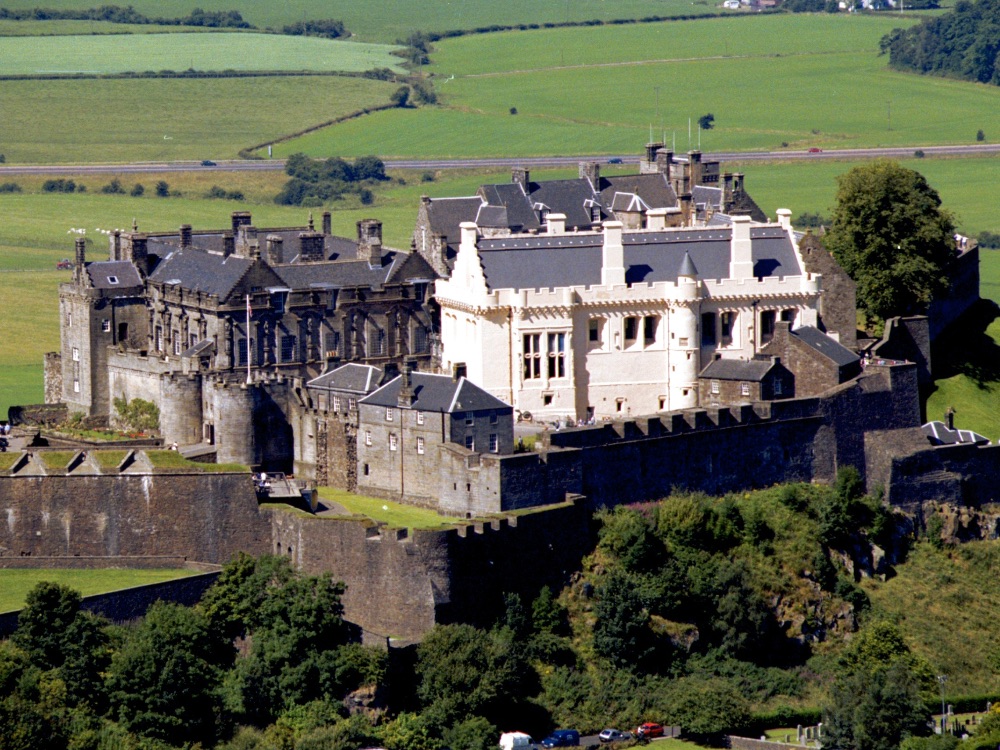
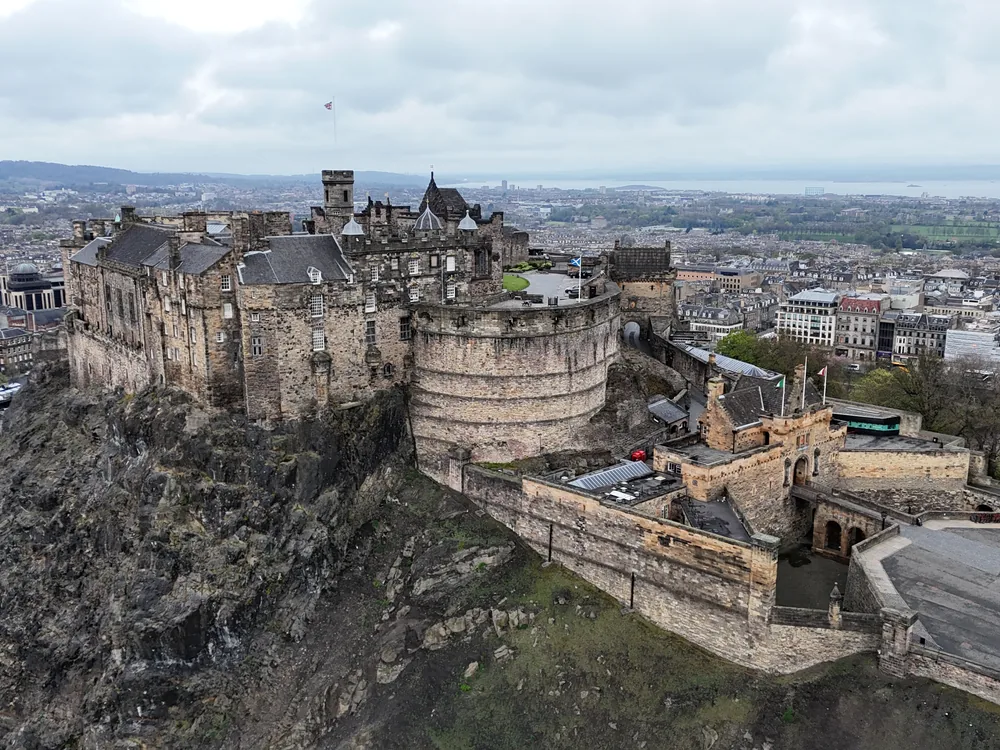
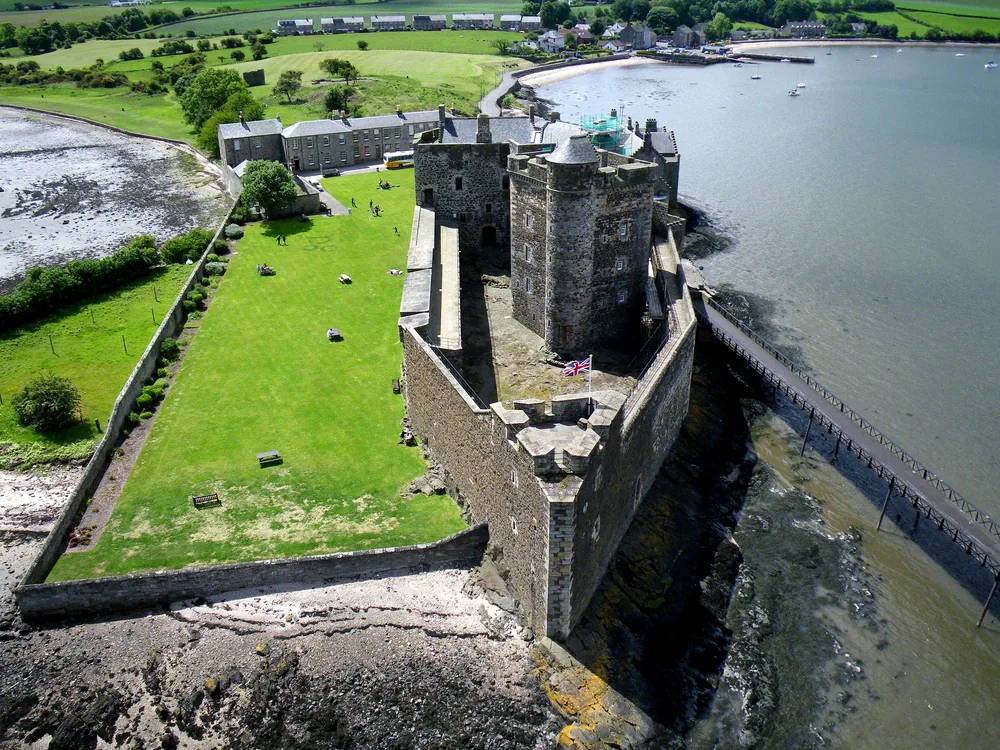
- ✦Forth Valley corridor — Linlithgow sits between [Edinburgh Castle](/castles/scotland/edinburgh-castle) (22km east) and [Stirling Castle](/castles/scotland/stirling-castle) (16km west), with [Blackness Castle](/castles/scotland/blackness-castle) (10km north on the Forth shore) completing a triangle of royal Stewart Scotland within a 30-kilometre radius
Skip the queue with a guided tour
Skip-the-line tickets & expert guides
Linlithgow Palace stands on a promontory jutting into Linlithgow Loch — a natural water body in the Forth Valley, twenty-two kilometres west of Edinburgh and sixteen kilometres east of Stirling — in one of Scotland's most strategically positioned settings, on the ancient corridor that connected the kingdom's two great royal centres. It is a substantial medieval ruin: four ranges around a central courtyard, with the great hall, royal apartments, chapel, and a decorative fountain that together formed the most sophisticated royal palace in medieval Scotland. It is best known as the birthplace of Mary, Queen of Scots, born here on 8 December 1542 while her father James V lay dying at Falkland Palace fifty kilometres north. It is maintained by Historic Environment Scotland and is the finest ruined royal palace in the country.
The site was fortified before the current palace was built. A medieval manor and peel tower stood here from the 12th century, and English troops under Edward I held it during the Wars of Scottish Independence in the late 13th and early 14th centuries. Robert Bruce recaptured it in 1313. The current palace was begun by James I of Scotland in 1425, on a fresh plan, after the earlier structure on the site was destroyed by fire in 1424. The decision to rebuild rather than abandon the site reflected Linlithgow's strategic position and the symbolic importance the Stewarts placed on a royal residence between their two great fortresses.
Successive Stewart monarchs extended and enriched the palace over the following century. James II, James III, and James IV each contributed to its development, adding ranges, improving the great hall, and expanding the kitchens and service buildings. James IV, the Renaissance-minded king who transformed Scotland's political and cultural ambitions in the early 16th century and died at the Battle of Flodden in 1513, made Linlithgow one of his principal residences and left architectural traces throughout the palace. His son James V continued the work: it was James V who commissioned the elaborate heraldic fountain in the palace courtyard around 1538, one of the finest pieces of Renaissance decorative sculpture in Scotland, to mark his marriage to Mary of Guise. Four years later, Mary of Guise gave birth at Linlithgow to the daughter who would become Mary, Queen of Scots.
The palace is the most personal monument to the Stewart dynasty in Scotland — not the most powerful (that is Edinburgh Castle) or the most beautiful by later standards (that is Stirling), but the most continuously inhabited royal residence, the one that accumulated the daily domestic life of a dynasty over more than a century. The north range, where Mary was born, preserves its window arrangement and fireplace openings against the sky. The west range's great royal apartments, with their projecting turrets and layered masonry, show the successive campaigns of construction as clearly as a cross-section. The courtyard fountain stands where it has always stood.
The palace was used regularly by the Scottish court through the 16th century. Mary, Queen of Scots returned here during her short and turbulent reign. After the Union of Crowns in 1603, Scotland's monarchs resided primarily in London and Linlithgow became a secondary residence visited occasionally by James VI and later by Charles I. By the early 18th century it was in declining use. On the night of 1 February 1746, government soldiers of General Hawley's army quartered in the palace before the Battle of Falkirk left their fires burning unsupervised. The palace caught fire; the interior was gutted overnight. The ruins have remained open to the sky since. Whether the fire was deliberate or the result of carelessness has never been definitively established — the Jacobite rising of 1745–46 had already produced considerable destruction of Highland property, and contemporaries on both sides noted the suspiciously thorough nature of the fire.
The remaining fabric is remarkable in its completeness. All four ranges survive to significant height; the courtyard is accessible; the fountain is in its original position. The roofless great hall retains its full length and the window tracery above what were its lateral walls. The chapel's east window survives. Staircases within the corner towers climb to elevated viewpoints over the loch. Historic Environment Scotland manages the site and maintains it as a preserved ruin rather than attempting reconstruction, a decision that preserves both its archaeological integrity and its atmospheric quality.
Linlithgow town is itself a coherent medieval Scottish burgh: a single main street, a market cross, the remains of the peel walls encircling the palace and loch, and a sequence of 16th–19th century townhouses. The loch is both a wildlife reserve (swans nest on the shores below the palace) and a recreational water body. St Michael's Church, immediately adjacent to the palace, is open to visitors and is one of the finest examples of Scottish Gothic ecclesiastical architecture in the country — the 15th-century building with its distinctive 1964 crown spire provides a pointed counterpoint to the palace's horizontal ruined ranges.
The Edinburgh guided tour provides the most convenient non-driving access: train from Edinburgh Waverley (approximately 20 minutes), a guided palace visit with admission included, then St Michael's Church, the loch walk, and the town centre before the return train. Visitors with their own transport can combine Linlithgow with [Blackness Castle](/castles/scotland/blackness-castle) (10km north) in a half-day, or use the palace as a midpoint stop on the drive between [Edinburgh Castle](/castles/scotland/edinburgh-castle) and [Stirling Castle](/castles/scotland/stirling-castle).
History
Site fortified from 12th century. English garrison under Edward I (Wars of Independence). Robert Bruce recaptures 1313. Earlier structure burned 1424; James I begins current palace 1425. Successive Stewart additions: James II, III, IV, V. James V commissions courtyard fountain c.1538. Mary, Queen of Scots born 8 December 1542. Palace used through 16th century; Mary returns as adult queen. Union of Crowns 1603; palace becomes secondary residence. Fire of 1 February 1746 (Hawley's troops) guts the interior. Ruin left open to sky. Historic Environment Scotland manages the site.
How to Visit
Getting there: Train from Edinburgh Waverley to Linlithgow takes about 20 minutes on regular ScotRail services; the palace is a 5-minute walk from the station. By car from Edinburgh take the M8/M9 — about 25 minutes; parking is available adjacent to the palace. Linlithgow sits naturally between Edinburgh (22km east) and Stirling (16km west) and makes a practical midpoint stop on a castle day along the Forth Valley corridor.
Tickets: Walk-up entry £10 adult, £6 child; no advance booking required, HES members enter free. The Edinburgh half-day guided tour — a 5.5-hour trip by train from Edinburgh Waverley with palace admission included, covering the interior, St Michael's Church, and a loch walk — is the most convenient non-driving option for visitors based in Edinburgh; book in advance.
Practical tips: May to September gives the longest daylight for the roofless ranges and best loch reflections; summer hours are 09:30–17:30, winter hours 10:00–16:00 (last admission 30 minutes before closing). An audio guide is available on-site and is worth picking up for independent visitors. The James V fountain in the courtyard runs with water in summer — the only pre-Reformation decorative fountain in Scotland still in its original position.
Combine with: Stirling Castle, 16km west, is the fully intact royal counterpart to Linlithgow's atmospheric ruin — Stirling was where the Stewarts performed public authority; Linlithgow was where they lived privately; Edinburgh Castle, 22km east, completes the Forth Valley royal triangle.
Frequently Asked Questions
The north range, which contains the rooms traditionally identified with Mary's birth and the royal nursery, is partially accessible. The exterior of the first-floor window above the loch — the room most associated with her birth — is visible from the courtyard. The interior staircase access to the north range varies by season and maintenance; Historic Environment Scotland signage on-site indicates which areas are currently open. The room itself is ruined and roofless but its dimensions and position are clearly legible.
Location
Kirkgate, Linlithgow EH49 7AL, West Lothian, Scotland
Nearby Castles
Tours & Tickets
Powered by GetYourGuide
From
€22/ person