
Smolenice Castle
Smolenický zámok
Slovakia · Trnava Region, Little Carpathians · Near Trnava
Built 1425 · Neo-Gothic romantic reconstruction of a genuine 15th-century castle; the original fortress was built in the 1420s to guard the Little Carpathians mountain pass linking Bratislava with the Váh valley; damaged during Rákóczi's War of Independence (1703–1711) and Napoleonic-era military activity, leaving the structure in advanced disrepair by the 19th century; Count János Pálffy inherited it in 1777 but could not afford restoration; starting in 1900, his descendant Jozef Pálffy Jr. began a full reconstruction over 45 years, designing a romantic neo-Gothic castle modelled on Kreuzenstein Castle in Austria and employing reinforced concrete construction — unusual for a castle project of this period; the result is an external silhouette of convincing medieval character sitting over a 20th-century structural frame; handed to the Slovak Academy of Sciences in 1953, which operates it as a conference and research centre to this day; limited public access during conference-free periods
This page is part of an independent travel guide and is not affiliated with, endorsed by, or operated by Smolenice Castle.
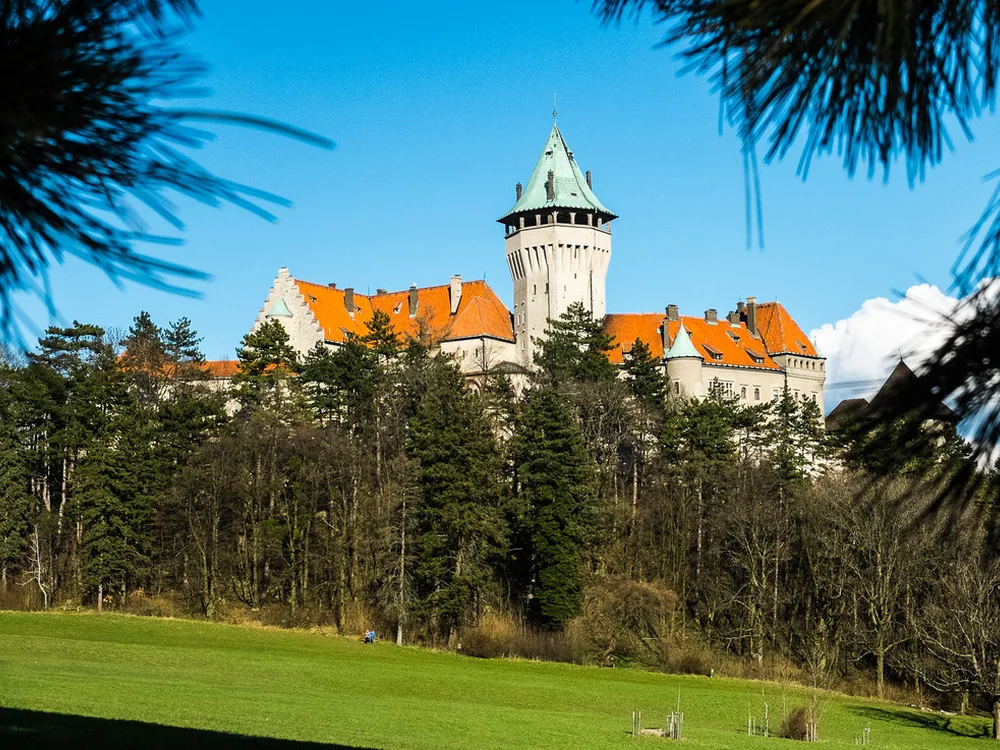
© Castles & Palaces
Quick Facts
- Hours
- Tue–Fri Varies. Sat & Sun 10:00–16:00. Closed Mon
- Day trip from
- €280
- Duration
- 1–1.5 hours
- Best time
- Summer weekends when not reserved for academy conferences
- Booking
- Required — book 7+ days ahead
- Nearest city
- Trnava
Featured Tour
From Bratislava: Three Castles Private Tour — Devín, Červený Kameň & Smolenice
Cancellation available · Instant confirmation
Highlights
- ✦Smolenice Castle looks medieval because Jozef Pálffy Jr. spent 45 years (1900–1945) rebuilding a genuine ruined medieval castle in neo-Gothic style, explicitly modelling it on Kreuzenstein Castle in Austria — but used reinforced concrete as the structural material beneath the stone facing, making it an early example of modern construction methods employed in a romantic-historicist architectural project
- ✦The castle's current function is as peculiar as its construction: since 1953 it has been the Slovak Academy of Sciences' primary conference residence, hosting academic symposia, research workshops, and scientific meetings in a neo-Gothic setting that most international conference participants find somewhat incongruous — a quality the Academy appears to regard as an asset
- ✦The 15th-century original was built specifically to control the mountain pass through the Little Carpathians between Bratislava and the Váh valley — the same pass that the modern road still uses; standing on the castle terrace, the logic of its defensive position, blocking the only viable route through the forested ridge, is immediately apparent
- ✦The Pálffy family, who both ruined the castle (through neglect) and restored it (through a 45-year project), were one of the great aristocratic dynasties of the Kingdom of Hungary — descendants of the same family that held [Červený Kameň Castle](/castles/slovakia/cerveny-kamen-castle) nearby, and whose archives, possessions, and architectural patronage are scattered across western Slovakia
- ✦Public access to Smolenice is genuinely limited in a way that is not standard heritage management: when the Academy has a conference, the castle is closed to visitors, with no fixed advance notice; the unpredictability of access is part of the site's character and worth knowing before making a dedicated trip
Tickets & tours
Book through GetYourGuide
Smolenice Castle sits on a forested spur of the Little Carpathians above the village of Smolenice, commanding the mountain pass that links the Bratislava basin with the Váh valley to the north. The pass is not dramatic by Alpine standards — the Little Carpathians are a modest ridge, their highest points below 800 metres — but in the 15th century, before roads capable of handling heavy transport had been cut through the ridge, this was one of the few viable routes between the two most important corridors in western Slovakia. The castle that guards it was built for exactly this reason in the 1420s, when the Kingdom of Hungary was investing in border and pass control across the length of its mountain frontiers.
The history of Smolenice over the following centuries is a compression of the history of many small fortress-castles in Central Europe: military utility that declined with changing warfare, aristocratic ownership that provided neither adequate resources nor adequate attention for maintenance, damage from the wars of the late 17th and early 18th centuries, and a slow transition from functioning residence to romantic ruin. Rákóczi's War of Independence (1703–1711) — the last major Hungarian uprising against Habsburg control — brought military damage. The Napoleonic era brought further disruption to property that was already barely maintained. By the time Count János Pálffy inherited the castle in 1777, it was in advanced disrepair, and he could not afford the cost of restoration.
The Pálffy family had deep roots in this part of Slovakia — they held [Červený Kameň Castle](/castles/slovakia/cerveny-kamen-castle), visible from the ridge to the south, as their primary seat, and Smolenice was one of several properties they accumulated without fully developing. For a century and a quarter after 1777, the castle sat as a picturesque ruin in the forest above the village, visited occasionally by romantic-era travellers and painted more frequently than it was maintained.
Jozef Pálffy Jr.'s decision to rebuild the castle starting in 1900 was therefore simultaneously an act of family piety, an architectural project, and a personal obsession that would occupy the remaining forty-five years of his life. His model was Kreuzenstein Castle in Lower Austria — itself a Victorian-era reconstruction of a medieval ruin using genuine medieval building fragments collected from across Central Europe. Pálffy took the concept but applied it differently: rather than assembling genuine medieval materials, he commissioned a full neo-Gothic architectural programme in external masonry, using reinforced concrete as the structural material beneath the stone facing. This was a genuinely unusual technical choice for a castle project in 1900 — reinforced concrete was at that point primarily an industrial building material — and it reflects a pragmatic approach to the romantic project that is more modern in spirit than the aesthetic would suggest.
The result, completed in 1945, is a castle with an entirely convincing neo-Gothic silhouette — towers, crenellations, a chapel, a great hall, a surrounding wall — that is, beneath the stone surfaces, a reinforced concrete building. The interior spaces have the proportions and decorative vocabulary of a medieval residence, but the structural logic is 20th-century. The question of whether this makes Smolenice authentic or inauthentic is less interesting than the fact that the same question applies, in different terms, to almost every medieval building that has been substantially repaired, extended, or restored over the centuries.
The Slovak Academy of Sciences received the castle in 1953, following the expropriation of aristocratic properties after the Communist takeover of 1948. The Academy's decision to use it as a conference and residential centre rather than a museum was pragmatic: the building is well-suited to the purpose, with reception rooms, sleeping quarters, a library, and a dining hall that can accommodate a working academic symposium. The castle's isolation in the forested Carpathian foothills provides the focused atmosphere that serious academic meetings require. International symposia have been held here regularly since the 1960s.
For visitors, the consequence is an access pattern unlike any standard heritage site: the castle is open to the public only when it is not being used for Academy events, primarily on summer weekends. There is no fixed calendar of visitor openings published far in advance. The simplest approach for most visitors is the GetYourGuide private three-castle tour that combines Smolenice with [Devín Castle](/castles/slovakia/devin-castle) and [Červený Kameň Castle](/castles/slovakia/cerveny-kamen-castle) in a single Bratislava day — this guarantees access arrangements are handled by the tour operator, who books entry in advance. The view of the castle from the forest approach road is itself worth the detour: the towers and walls emerging from the tree canopy in a forest glade have the quality of the romantic image that Pálffy was attempting to create.
[Červený Kameň Castle](/castles/slovakia/cerveny-kamen-castle), 15 kilometres south across the ridge, is the more significant Pálffy family fortress — a genuine Renaissance stronghold with one of the best-preserved castle museums in Slovakia, including the original Pálffy family arsenal and treasury. [Devín Castle](/castles/slovakia/devin-castle), at the confluence of the Danube and Morava rivers near Bratislava, is the most historically resonant site in Slovak national mythology — the cliff where Great Moravia and modern Slovak national identity intersect.
History
The original castle at Smolenice was built in the 1420s to control the Little Carpathians mountain pass — a pass-control fortress in the Kingdom of Hungary's border fortification programme, positioned to manage the route connecting the Bratislava basin with the Váh valley. Several aristocratic families held the castle through the 15th to 17th centuries, using it as both a pass-control installation and a noble residence. Rákóczi's War of Independence from 1703 to 1711 brought military damage, and by the early 19th century the castle was in advanced disrepair. Count János Pálffy inherited the ruined structure in 1777 but could not afford restoration.
The transformation came a century later, in 1900, when Jozef Pálffy Jr. began a 45-year reconstruction project in neo-Gothic style, using reinforced concrete construction and modelling the rebuilt castle partly on Kreuzenstein Castle in Austria. The result — by 1945, when reconstruction was substantially complete — was a neo-Gothic castle that reads as fully medieval at first encounter, its relationship to genuine medieval fabric filtered through a century of romantic vision.
The Communist takeover of 1948 expropriated the Pálffy family properties, and the castle was transferred to the Slovak Academy of Sciences in 1953, which has operated it as a conference and research centre since. Public access is limited.
How to Visit
Getting there: Smolenice village is 50 km northeast of Bratislava — about 45 minutes by car via the E65/R1 motorway (exit Trnava, then minor roads). No reliable public transport reaches the castle directly; a car is effectively required.
Tickets: Walk-up entry €8 adult, €4 child — when open. The castle operates as a Slovak Academy of Sciences conference centre and public access is limited to periods when no academy events are scheduled, typically some summer weekends; confirm availability at sav.sk before making the trip. The GetYourGuide tour — a private full-day Bratislava tour combining Smolenice with Devín Castle and Červený Kameň Castle; the operator handles access arrangements — book in advance.
Practical tips: Never make a dedicated trip without first confirming the castle is open — check sav.sk or email the Academy in advance. The forest approach road offers a striking view of the neo-Gothic towers emerging from the tree canopy, worth the drive even if interior access is unavailable. Allow 1 to 1.5 hours inside.
Combine with: Červený Kameň Castle is 15 km south — the primary Pálffy family fortress with one of Slovakia's best castle museums. Devín Castle sits at the Bratislava Danube-Morava confluence, the most historically resonant site in Slovak national mythology.
Frequently Asked Questions
Yes, but with significant caveats. The castle is managed by the Slovak Academy of Sciences as a working conference centre, not as a standard tourist attraction. Public visits are possible when the castle is not reserved for Academy events — typically some summer weekends — but there is no reliably published calendar of visitor openings. The safest approach is to contact the Academy in advance (sav.sk) or to book the GetYourGuide private tour, which handles access arrangements in advance.
Location
Smolenice Castle, 919 04 Smolenice, Slovakia
Nearby Castles
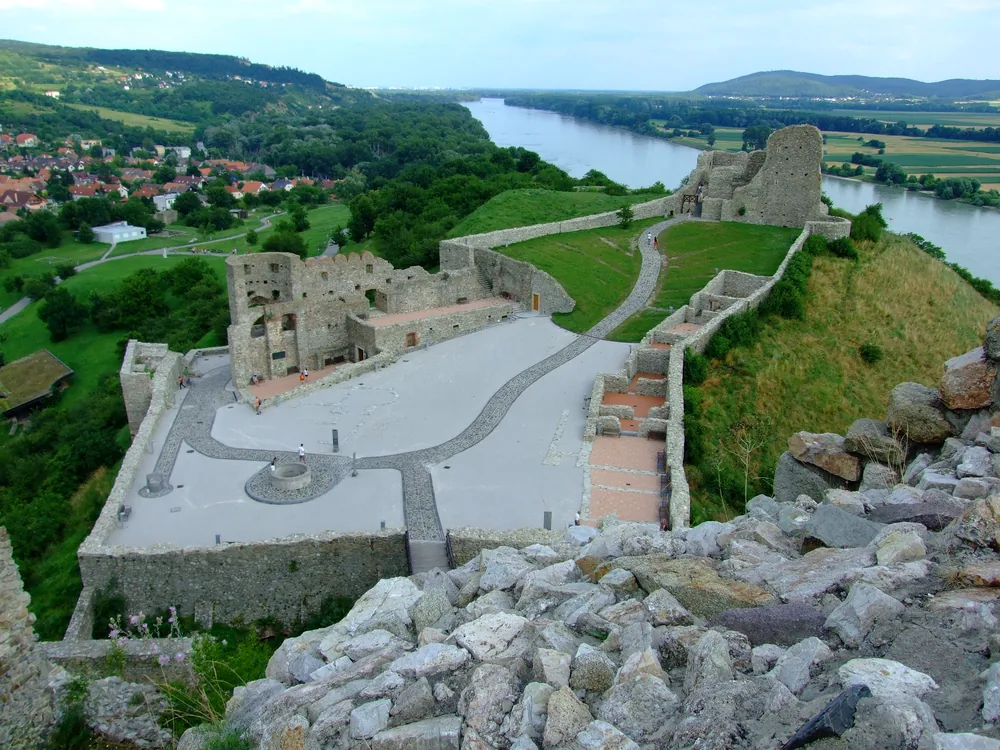
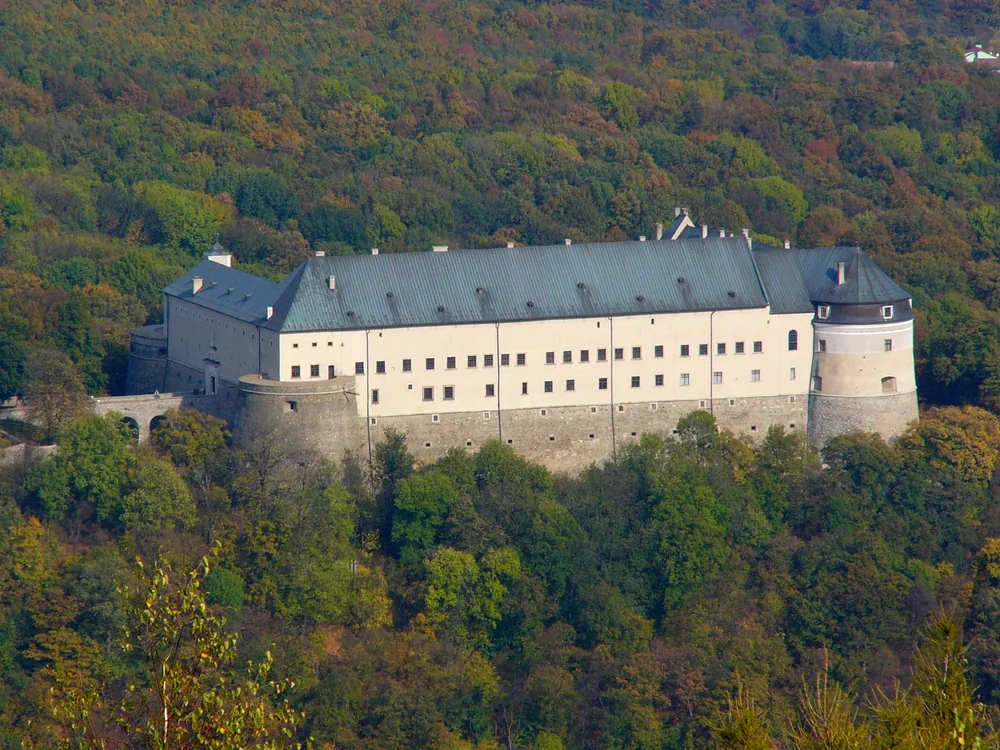
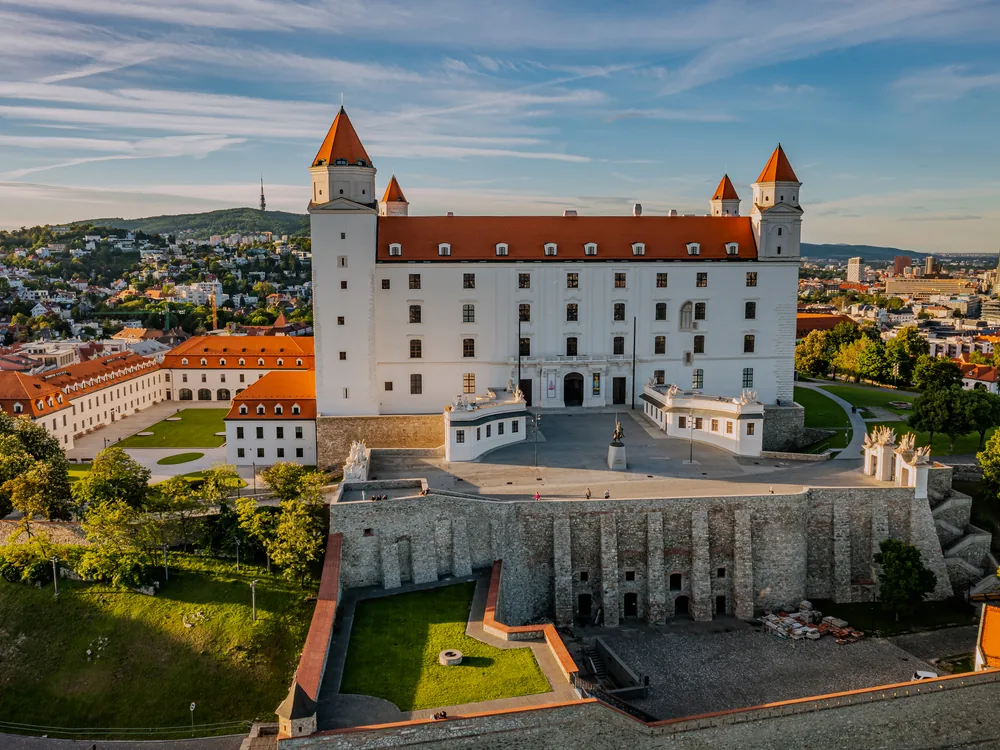
Tours & Tickets
Powered by GetYourGuide
From
€280/ person