
Castle of Ponferrada
Castillo de los Templarios de Ponferrada
Spain · Castilla y León · Near Ponferrada
Built 1178 · Gothic military architecture with Romanesque elements — square towers, battlemented curtain walls, irregular pentagonal plan adapted to rocky promontory
This page is part of an independent travel guide and is not affiliated with, endorsed by, or operated by Castle of Ponferrada.
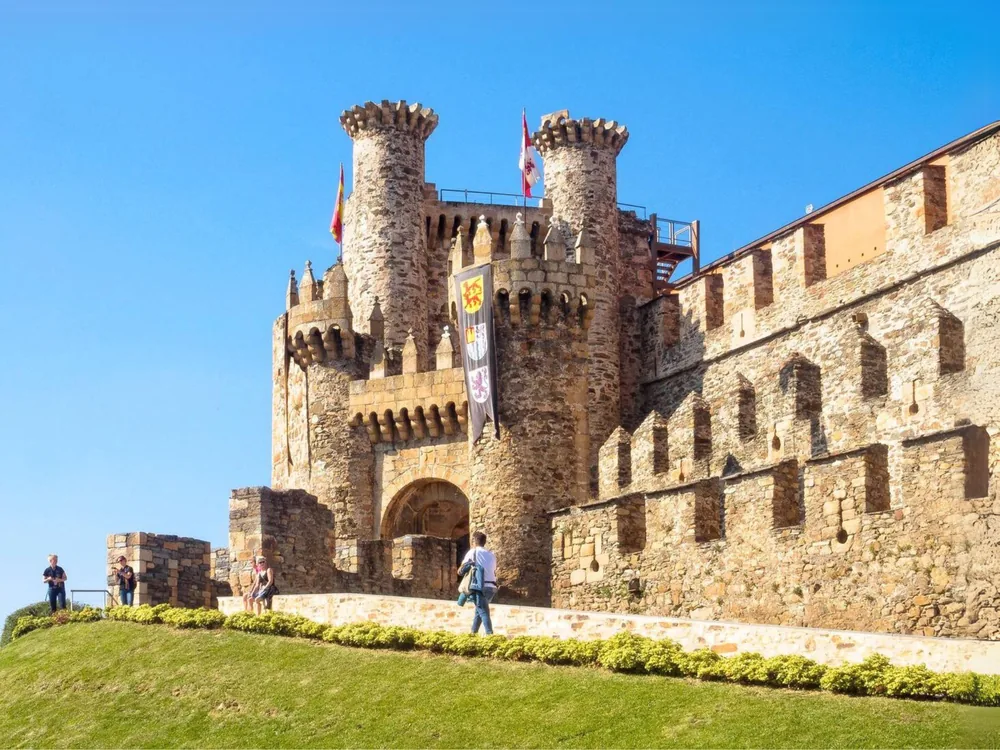
© Castles & Palaces
Quick Facts
- Hours
- Tue–Sun 10:00–14:00, 16:00–20:00. Closed Mon
- Guided tour from
- €12.5
- Duration
- 1.5–2 hours
- Best time
- May to October
- Nearest city
- Ponferrada
Featured Tour
Ponferrada: Castle of the Templars Entry and Guided Tour
Cancellation available · Instant confirmation
Highlights
- ✦The largest Templar castle in Spain — a pentagonal fortress of 16 towers built by the Knights Templar Order in the 12th–13th centuries to protect pilgrims on the Camino Francés route
- ✦Camino de Santiago arrival point — the castle entrance ramp is the moment pilgrims walking the French Way first enter Ponferrada; the castle clock tower is the first recognisable landmark from the Camino path
- ✦Torre del Reloj (Clock Tower) — the most photographed element of the fortress, rising above the main gate; panoramic views across the Bierzo valley and the Sil river
- ✦The castle library — a Gothic hall that houses exhibits on Templar history, the Camino de Santiago, and the archaeological finds from the castle site
- ✦16 towers surviving in various degrees of completeness — the perimeter walk around the curtain walls demonstrates the scale of the Templar building programme
- ✦Free entry every Wednesday — making it one of few significant Spanish castle sites accessible without charge on a regular day
Skip the queue with a guided tour
Skip-the-line tickets & expert guides
The Castle of Ponferrada is the largest surviving fortification built by the Knights Templar in Spain, and one of the most complete examples of Templar military architecture anywhere in Europe. It stands on a rocky promontory at the confluence of the Sil and Boeza rivers in the town of Ponferrada, in the Bierzo valley of Castilla y León — a strategic position that the Templar Order exploited for over a century as both a military stronghold and a centre for the protection of pilgrims walking the Camino de Santiago.
The story of the castle begins before the Templars. A fortification occupied this promontory in the late Roman period and was rebuilt under Visigothic rule. The Moorish occupation left its traces, and when the Christian reconquest reached this part of Castilla y León in the 11th century, a modest defensive tower was already standing. In 1178, King Fernando II of León donated the fortress and the town of Ponferrada to the Knights Templar, charging the Order with protecting the pilgrims of the Camino Francés — the most-travelled of the Camino de Santiago routes, which passes directly through the town and past the castle walls. The Templars spent the next 130 years transforming the original structure into one of the most formidable fortresses in northwest Spain.
The Order's characteristic approach to military architecture is visible throughout: the irregular pentagonal perimeter follows the natural contours of the rocky outcrop rather than imposing a geometric plan; the towers are square rather than round, a Templar preference; and the defensive system is layered, with an outer wall protecting an inner ward and the central keep. The architects worked continuously throughout the 13th century, adding towers, deepening the cisterns, and extending the curtain walls down toward the river. By the time the Templar Order was dissolved in 1312 — Pope Clement V suppressing it under pressure from Philip IV of France, whose accusations of heresy and sorcery were largely fabricated pretexts for seizing the Order's assets — the Ponferrada fortress was a substantial military complex with 16 towers and a complete circuit of walls.
After the Templars, the castle passed through a succession of Castilian lords. The Count of Lemos held it in the 14th–15th centuries; Queen Isabella I took it as part of the Castilian crown's consolidation of regional power in the late 15th century. Military use ended relatively early compared with other Spanish fortifications — the castle was abandoned as a residence by the 16th century and fell into gradual disrepair. A major restoration programme beginning in the 20th century has stabilised the fabric and opened the site to visitors.
The 16 towers that survive in various states of completeness can be walked in sequence along the curtain walls. The Torre del Reloj (Clock Tower), the main gate tower with its prominent clock face added in the 17th century, is the dominant feature from the street and the point through which both medieval pilgrims and modern visitors enter the castle. The clock tower's upper platform provides views across the Bierzo valley, the Sil river, and on clear days toward the mountains of the Sierra del Teleno to the south.
The castle's relationship with the Camino de Santiago is direct and still active. The Camino Francés route, which carries 60–70% of all Camino pilgrims, enters Ponferrada across the medieval bridge over the Boeza river and reaches the castle ramp — the same approach pilgrims have used for eight centuries. The clock tower is typically the first monument a pilgrim walking from the Meseta sees after the long descent from O Cebreiro. The castle was, for medieval pilgrims, both a place of safety (the Templars were explicitly charged with pilgrim protection) and a landmark confirming they had reached the Bierzo valley, the final stage before Galicia.
The castle interior, accessible with the entry ticket, covers three main areas: the outer ward with its exhibits on castle construction and Templar military equipment; the inner ward with the central keep and the Gothic library hall; and the curtain wall walk connecting the towers. The library hall hosts permanent exhibitions on the history of the Knights Templar and on the Camino de Santiago's passage through Ponferrada and the Bierzo valley. The interactive elements include a detailed model of the castle at its peak and exhibits on the Templar dissolution.
Ponferrada's castle is not only a monument to medieval military engineering but also a well-preserved example of what the Camino de Santiago's infrastructure looked like before the pilgrim hostels and commercial tourism of the modern route replaced it. The Templars were, in part, a logistics operation as much as a military one: they provided safe passage, waymarkers, and emergency provisions. The castle was the Order's visible statement of that commitment in the Bierzo.
Visiting on a Wednesday is particularly worthwhile — entry is free, and the mid-week reduced visitor flow makes it easier to spend time on the tower walls without crowds. The Torre del Reloj platform is best in late afternoon when the light comes from the west over the Bierzo valley.
History
Donated by King Fernando II of León to the Knights Templar in 1178. The Order built the current fortress progressively throughout the 12th and 13th centuries, completing the main tower circuit by the time of the Templar suppression in 1312. Passed to the Counts of Lemos, then to the Castilian crown under Isabella I. Abandoned as a military residence by the 16th century; restoration ongoing since the 20th century.
How to Visit
Getting there: Ponferrada is on the A-6 motorway between Madrid and A Coruña, approximately 190km west of León. By rail, Ponferrada is on the León–Monforte line (Renfe); roughly 3–4 hours from Madrid. The castle is a 10-minute walk from the train station.
Guided tour: The GetYourGuide-listed guided tour (Guías Bierzo) includes the castle entrance ticket and a 1.5-hour guided walk with a local guide, followed by free time to explore the castle on your own. The guide speaks Spanish only — there is no English or French option on this listing. The meeting point is the castle entrance ramp.
Self-guided visit: The castle can be visited without a guide using the on-site information panels (Spanish/English/French). The numbered route covers all 16 towers and the main interior halls.
Camino pilgrims: If you're walking the Camino Francés, the castle is directly on your route through Ponferrada. The albergue municipales in Ponferrada are within 10 minutes' walk.
Tickets: Walk-up entry €6 adult, €3 child. The GetYourGuide guided tour (Spanish only) includes the entrance ticket and skip-the-line access — book in advance.
Practical tips: May to October — best for the Torre del Reloj viewpoint and Camino de Santiago atmosphere in the town.
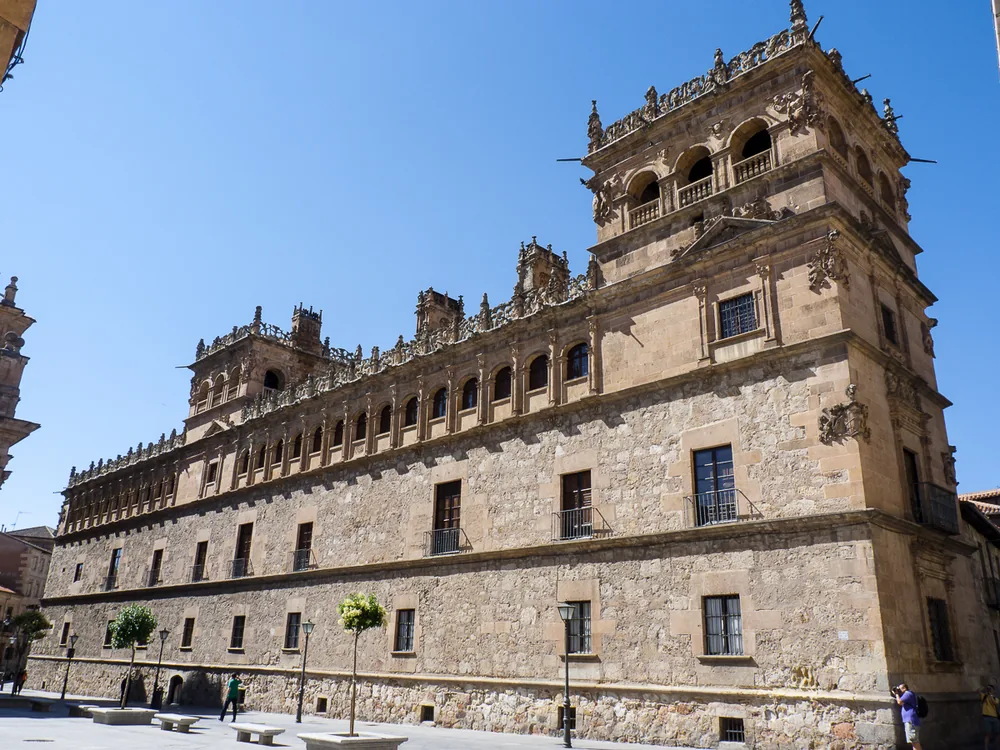
Combine with: Monterrey Palace.
Frequently Asked Questions
Yes — the GetYourGuide guided tour includes the castle entrance ticket as part of the booking, along with a 1.5-hour guided walk led by a local guide and free time afterward to explore independently. Note that the guide speaks Spanish only. Visitors who buy walk-up entry directly at the gate (€6 adult, €4 for groups of 15+, free on Wednesdays) pay for admission only, with no guide included.
Location
Av. del Castillo, s/n, 24400 Ponferrada, León, Spain
Nearby Castles
Tours & Tickets
Powered by GetYourGuide
From
€12.5/ person