
Oberhofen Castle
Schloss Oberhofen
Switzerland · Canton of Bern, Bernese Oberland · Near Thun
Built 1200 · Multi-period lakeside castle on the southern shore of Lake Thun; a high medieval hill fort (Balm Castle) occupied the ridge above the village before the Eschenbach family established a new moated residence directly on the lake shore in the 13th century; passed to the Habsburgs in 1306 following the Eschenbach-Wittelsbach conspiracy; came under Bernese control after the Habsburg defeats at Sempach (1386) and the Burgdorferkrieg, and was subsequently used as a Bernese bailiff's seat; a Turkish-style smoking room, Moorish garden kiosk, and a neo-Gothic tower were added by the Pourtalès family during an 1849–1852 romantic renovation that gave the castle its present picturesque silhouette; since 1954 a branch of the Historical Museum of Bern, with rooms furnished to show the evolution of Swiss noble domestic life from the 13th to the 19th century; the lakeside terrace and formal garden make it one of the most visually distinctive sites on Lake Thun
This page is part of an independent travel guide and is not affiliated with, endorsed by, or operated by Oberhofen Castle.
© Castles & Palaces
Quick Facts
- Hours
- Tue–Sun 11:00–17:00. Closed Mon
- Day trip from
- €224
- Duration
- 1.5–2 hours
- Best time
- May to October
- Nearest city
- Thun
Featured Tour
Lake Thun: 3 Castles Tour — Oberhofen, Spiez & Thun with Entry Tickets
Cancellation available · Instant confirmation
Highlights
- ✦Oberhofen Castle rises directly from Lake Thun's southern shore — the walls drop straight into the water, the castle's own jetty projects into the lake, and arriving by boat (the tourist steamer stops at the castle jetty) gives a medieval-arrival experience that the road approach from the village does not
- ✦The 1849–1852 Pourtalès renovation that gave the castle its current romantic silhouette introduced an eclectic decorative programme unusual for a Swiss lakeside residence: a Turkish-style smoking room with Moorish tilework and an Ottoman-influenced divan, a neo-Gothic tower, and a formal garden with a Moorish kiosk — reflecting the 19th-century aristocratic enthusiasm for Orientalist decoration that also shaped the Brighton Pavilion and the Royal Alcázar restorations
- ✦The rooms of the castle-museum span six centuries of Swiss noble domestic life, from a 13th-century Gothic hall through Baroque state rooms to a fully furnished Victorian bedroom — making Oberhofen one of the few places in Switzerland where the material culture of aristocratic domesticity is presented in temporal sequence within the building that housed it
- ✦The castle's history reflects the geopolitical turbulence of medieval Switzerland in concentrated form: founded by the Eschenbach family, sold to the Habsburgs in 1306, lost by the Habsburgs after their Swiss defeats, administered by Bern as a bailiff's castle, then privately owned through the Stiger and Pourtalès families — seven centuries of Swiss territorial consolidation compressed into one lakeside building
- ✦Lake Thun itself — a glacial lake of extraordinary clarity, ringed by the Bernese Alps (the Eiger, Mönch, and Jungfrau visible from the castle terrace on clear days) — sets a visual context that makes Oberhofen one of the most scenic castle visits in Europe, independent of what the museum rooms contain
Tickets & tours
Book through GetYourGuide
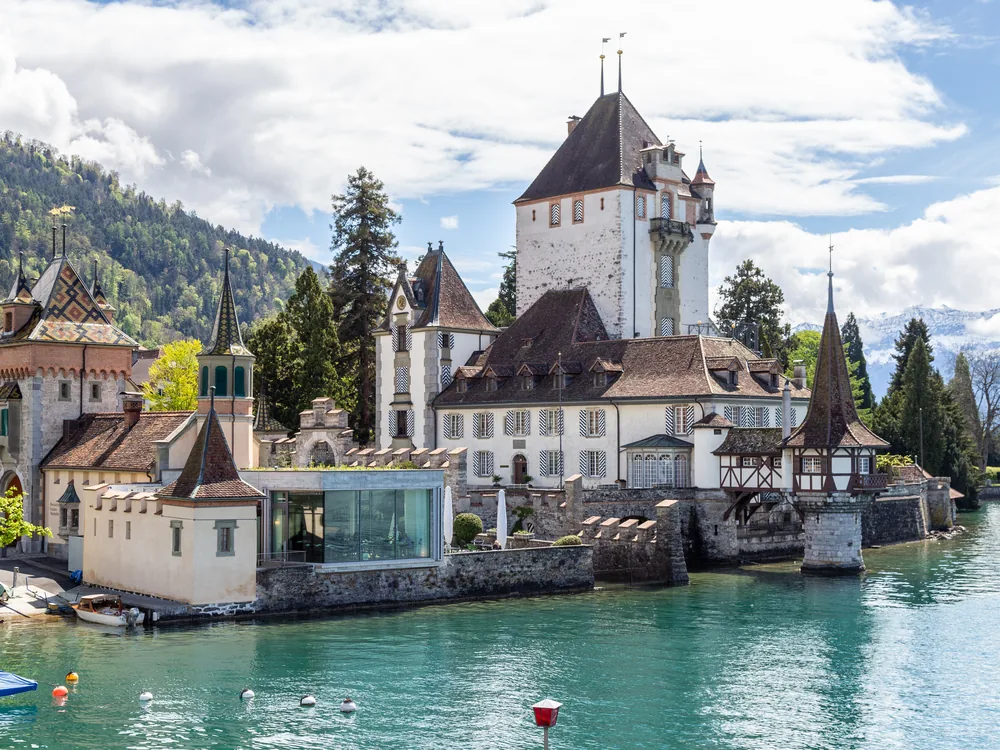
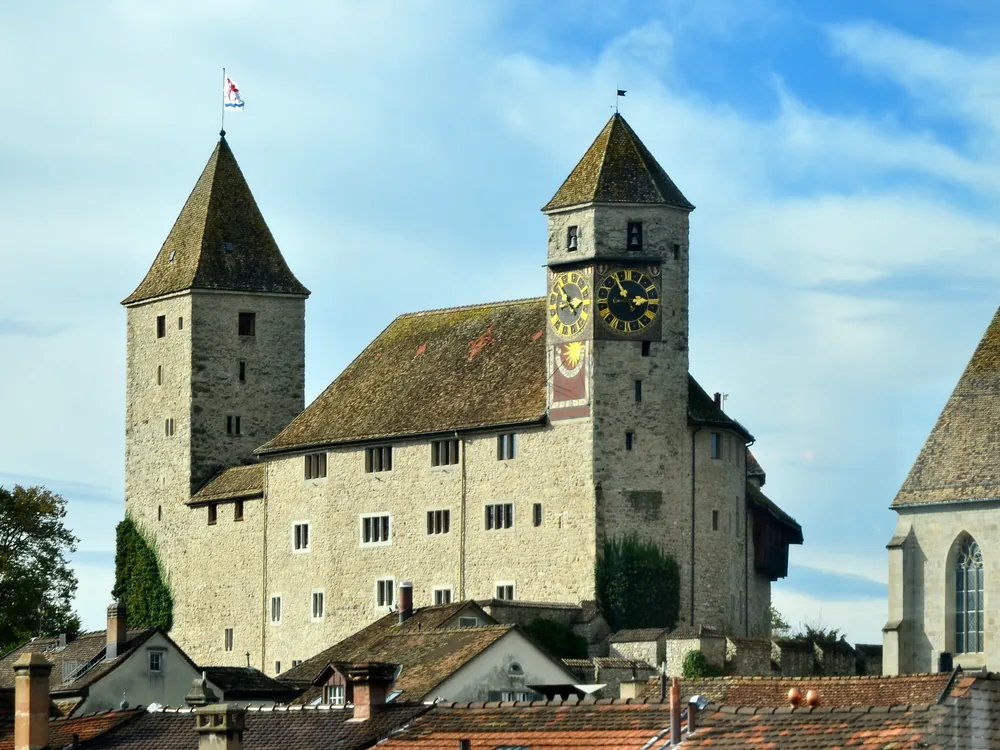
Oberhofen Castle stands on the southern shore of Lake Thun in the Bernese Oberland, between the town of Thun to the west and the village of Spiez to the east, at a point where the lake narrows and the mountains behind the southern shore begin to rise toward the high Alps. The castle occupies a position that is aesthetically deliberate: it sits right at the water's edge, the walls dropping into the lake on the north side, with a formal garden running between the castle and the lake terrace. From the water, arriving by the tourist steamer that still stops at the castle's own jetty, the building presents itself as the romantic image of a lakeside castle — towers, pointed roofs, crenellated walls reflected in the lake — with the Bernese Alps as backdrop.
The site has been fortified since before the current castle was built. A high medieval hill fort called Balm Castle occupied the ridge above the village, offering defensive altitude but no lakeside access. The Eschenbach family, who inherited the lakeside property around 1200 through a marriage with the Wittelsbach line, made the decision to build a new castle directly on the shore rather than on the ridge — trading defensive height for lakeside access, a choice that reflected the shift from purely military architecture toward the combined defensive-and-residential function of the High Medieval castle. The moat on the landward side compensated for the loss of natural elevation.
The Eschenbachs' connection with Oberhofen ended badly. In 1308, Walter von Eschenbach was one of the assassins of Emperor Albert I of Habsburg — a political miscalculation that led directly to the confiscation of the family's Swiss properties. The castle passed to the Habsburgs in 1306 (some sources suggest earlier, as payment for political debts) and was administered as an imperial possession through the late medieval period. Habsburg control of the Swiss territories was progressively eroded through the 14th century as the forest cantons and their allies consolidated Swiss independence: the battle of Sempach (1386), where Duke Leopold III of Habsburg was killed by Swiss confederate forces, was the decisive military event, and Oberhofen came under Bernese control in the years that followed.
As a Bernese bailiff's seat, the castle served an administrative function through the 15th to 18th centuries — the bailiff governed the surrounding territory from here, collected taxes, administered justice, and maintained the fabric of the building as a working governmental residence rather than a private home. This administrative period left no dramatic architectural changes but maintained the castle in good structural condition through the period when many Swiss medieval buildings were falling into disrepair.
The Stiger family purchased the castle in 1651 and began the transition from bailiff's seat to private residence. Their sale to the Pourtalès family in the early 19th century set up the most architecturally consequential chapter in the castle's modern history. Gustave-Adolphe de Pourtalès undertook a comprehensive renovation between 1849 and 1852 that transformed the castle's appearance: the neo-Gothic tower, the romantic silhouette, and — most individually — the interior's eclectic decorative programme, which included a Turkish-style smoking room fitted with Moorish tilework and an Ottoman-influenced divan. The Moorish smoking room was a fashionable aristocratic gesture of the period — the Brighton Pavilion, Leighton House in London, and several Rhineland villas of the same decades reflect the same Orientalist taste — but it remains unusual in a Swiss medieval castle context.
The Bernese Historical Museum acquired Oberhofen in 1954 and established it as a branch museum displaying Swiss noble domestic life across six centuries, using the castle's own rooms as the exhibition space. The result is a visit that moves through Gothic halls, Baroque reception rooms, Romantic-era bedrooms, and the Victorian domestic interiors of the Pourtalès period — a temporal sequence through the material culture of Swiss aristocratic life in a building that was actually inhabited throughout.
The lake view from the castle's terrace garden is a significant part of the visit. Lake Thun is a glacial lake of extraordinary clarity — at 18 kilometres long and 186 metres deep, it retains its alpine water quality in a way that lowland Swiss lakes do not. On clear days, the Eiger, Mönch, and Jungfrau are visible above the Bernese Oberland to the south. The formal garden, running between the castle walls and the lake jetty, was redesigned as part of the Pourtalès renovation and maintains the romantic-era planting scheme.
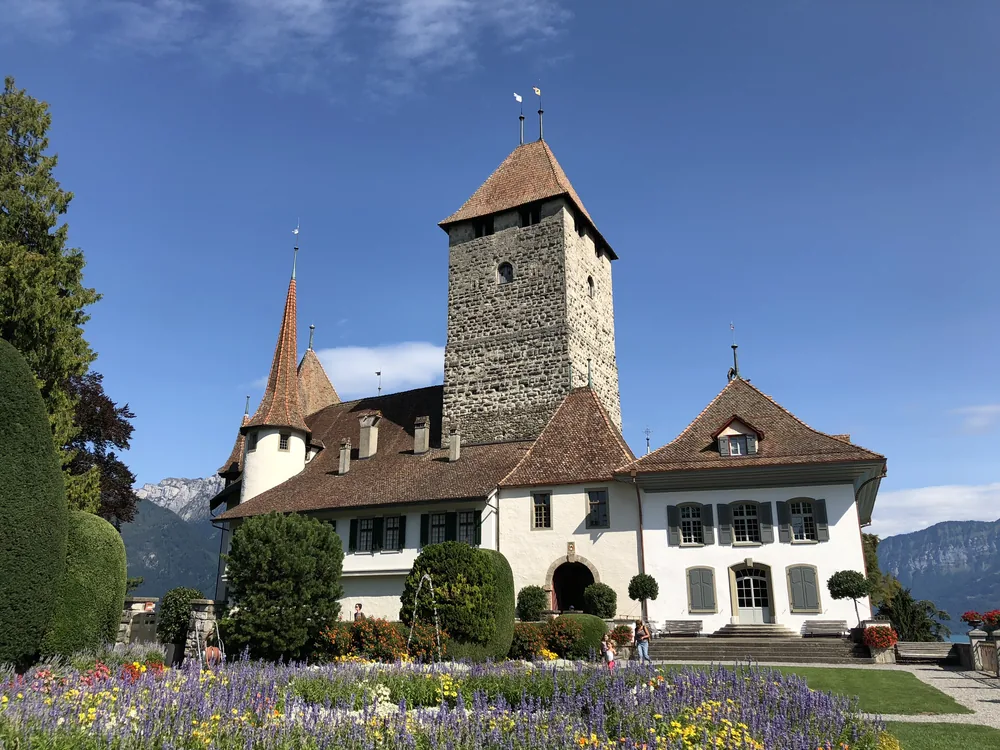
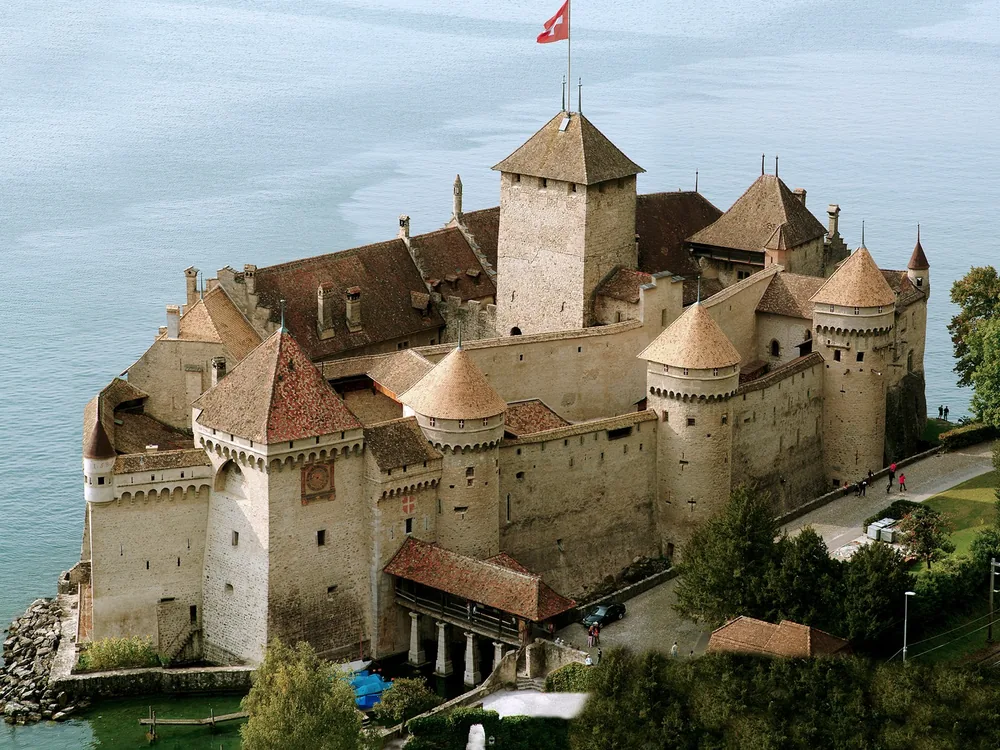
The Lake Thun 3 Castles Tour from Interlaken covers Oberhofen, [Spiez Castle](/castles/switzerland/spiez-castle), and Thun Castle in a single half-day with included entry tickets — the most efficient way to see all three major Lake Thun fortifications in one visit. [Château de Chillon](/castles/switzerland/chateau-de-chillon), at the eastern end of Lake Geneva, is the reference point for Swiss lakeside castle architecture: larger, more famous, and architecturally more significant, but sharing with Oberhofen the water-edge position and the medieval-romantic combination that defines this Alpine castle type.
History
The Eschenbach family established a moated castle directly on Lake Thun's southern shore around 1200, replacing an earlier hill fort with a lakeside fortification that used the water itself as its primary defence. The castle passed to the Habsburgs in 1306, either by purchase or confiscation following the Eschenbach family's political difficulties. Habsburg defeat at the Battle of Sempach in 1386 consolidated Swiss confederate control of the Bernese Oberland, and Oberhofen came under Bernese administration as a bailiff's seat. The Stiger family purchased the castle in 1651.
The 19th century brought the renovation that gave the castle its current character. The Pourtalès family acquired the property, and Gustave-Adolphe de Pourtalès commissioned a comprehensive Romantic renovation between 1849 and 1852: a neo-Gothic tower, a Moorish smoking room, and a formal garden that terraced down to the lakeside — each element a different strand of 19th-century historicist taste applied simultaneously to a single building. The juxtaposition of medieval Gothic, orientalising Moorish, and formal French garden design within one lakeside castle of relatively modest scale is precisely what makes the interior so instructive as a record of Romantic-era taste.
The Bernese Historical Museum acquired the castle in 1954 and established it as a branch museum of Swiss noble domestic life. Open May to October.
How to Visit
Getting there: Oberhofen am Thunersee is 10 km east of Thun on Lake Thun's southern shore. By boat: the BLS lake steamer from Thun stops at the castle's own jetty — the recommended approach, since arriving by water with the walls dropping into the lake gives the full visual impact. By bus: BLS bus from Thun to Oberhofen village (15 minutes), then a short walk to the castle. By car: limited parking near the castle; Thun or Interlaken are convenient bases.
Tickets: Walk-up entry CHF 12 adult, CHF 6 child — paid at the entrance; open May–October, Tuesday–Sunday only (closed Mondays and November–April). The GetYourGuide tour is a 3.5-hour Lake Thun 3 Castles Tour from Interlaken covering Oberhofen Castle, Spiez Castle, and Thun Castle with all entry tickets included — book in advance.
Practical tips: Do not miss the Turkish smoking room on the upper floor — the Moorish tilework, Ottoman-style divan, and hanging lanterns are the most individually unusual room in any Swiss castle, installed during the 1849–1852 Pourtalès renovation. Walk the lake terrace garden before entering the museum to understand the castle's relationship with the water. The BLS lake steamer circuit (Thun–Oberhofen–Spiez) combines the two main Lake Thun castles with a scenic boat crossing in either direction.
Combine with: Spiez Castle (15 km east by lake steamer, the other major Lake Thun fortress on its own vineyard peninsula) and Château de Chillon (60 km southwest on Lake Geneva, the most famous Swiss lakeside castle and the most visited historic monument in the country).
Frequently Asked Questions
The Turkish smoking room is a Victorian-era decorative room installed during the 1849–1852 Pourtalès renovation, fitted with Moorish tilework, an Ottoman-style divan, hanging lanterns, and geometric patterns inspired by Islamic architectural decoration. Orientalist interior design of this type was fashionable in European aristocratic circles from the 1830s–1880s — the Brighton Pavilion, Leighton House in London, and several German Rhineland villas of the period reflect the same taste. At Oberhofen it is the most individually unusual room in the castle and a key part of the museum visit.
Location
Schlossstrasse 1, 3653 Oberhofen am Thunersee, Switzerland
Nearby Castles
Tours & Tickets
Powered by GetYourGuide
From
€224/ person