
Spiez Castle
Schloss Spiez
Switzerland · Canton of Bern, Bernese Oberland · Near Thun
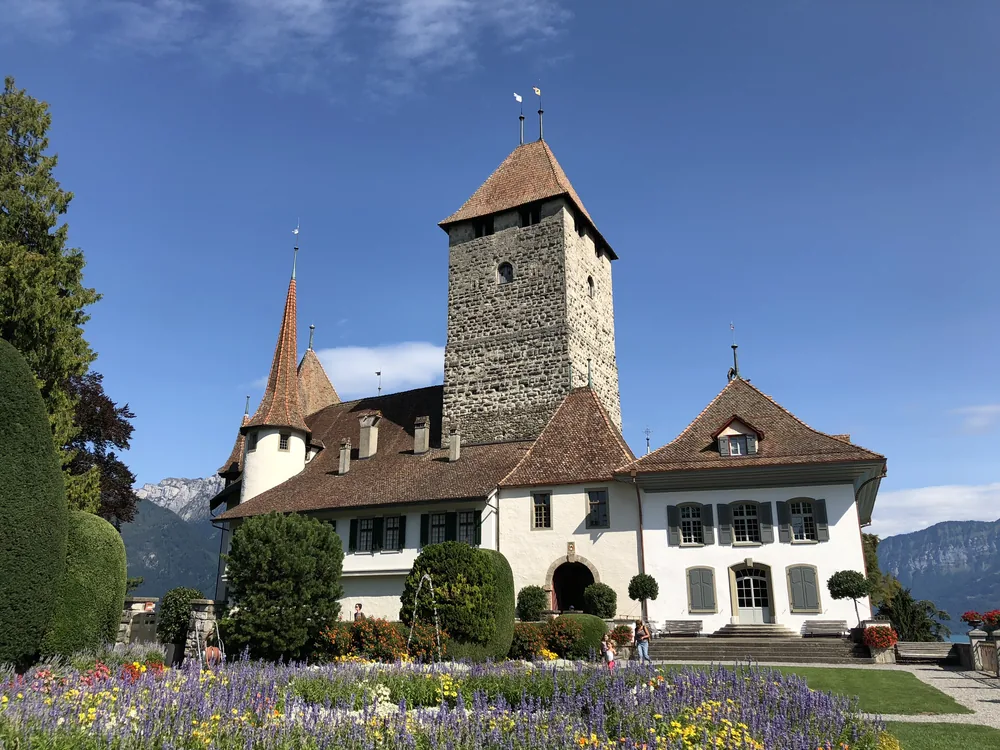
Built 933 · Multi-period castle on a peninsula projecting into Lake Thun; the earliest documented fortification is credited to King Rudolph II of Burgundy in 933, though permanent stone construction dates from the 12th century; the Romanesque keep and parts of the surrounding walls survive from this period; the castle was held by the Bubenberg family from 1338 until their line died out in 1506 — one of the most consequential aristocratic families in 15th-century Swiss history; a Baroque residential wing (the 'New Castle') was added and extended through the 17th and 18th centuries by the von Diesbach and von Erlach families; the entire ensemble — medieval towers, Romanesque church, Baroque wing, and surrounding vineyard peninsula — makes Spiez one of the most compositionally complete castle landscapes in Switzerland; the Spiez vineyard, planted on the south-facing slopes of the peninsula, claims a history of approximately 1,000 years and is the highest north-Alpine vineyard, producing a distinctive Riesling-Sylvaner
This page is part of an independent travel guide and is not affiliated with, endorsed by, or operated by Spiez Castle.
© Castles & Palaces
Quick Facts
- Hours
- Tue–Sun 10:00–17:00. Closed Mon
- Day trip from
- €224
- Duration
- 1.5–2 hours
- Best time
- April to October
- Nearest city
- Thun
Featured Tour
Lake Thun: 3 Castles Tour — Oberhofen, Spiez & Thun with Entry Tickets
Cancellation available · Instant confirmation
Highlights
- ✦The Spiez vineyard on the south-facing slopes of the castle peninsula is approximately 1,000 years old — the highest north-Alpine vineyard, producing a Riesling-Sylvaner under the Spiez wine label; wine tastings at the castle make the visit as much about viticulture as military history, and the combination of vineyard landscape, lake views, and medieval castle is distinctive even by Swiss standards
- ✦The Bubenberg family, who held Spiez from 1338 to 1506, produced one of the most consequential military leaders in Swiss history: Adrian von Bubenberg, who commanded the Bernese forces at the Battle of Murten (1476) — the decisive defeat of Charles the Bold of Burgundy that ended French-Burgundian military dominance in western Switzerland; the castle's period of greatest political significance coincides exactly with this family's tenure
- ✦The castle's compositional variety — a Romanesque keep and church from the 12th century, a Gothic residential range, a Baroque 'New Castle' wing from the 17th–18th centuries, and the surrounding vineyard — represents seven centuries of organic architectural development on the same peninsula, making Spiez one of the most temporally layered castle sites in Switzerland
- ✦The Romanesque church within the castle precincts (open year-round, free of charge) is one of the most complete examples of 12th-century church architecture in the Canton of Bern — small, stone-vaulted, with frescoes dating from the medieval period; it forms a quiet counterpart to the more theatrical castle buildings around it
- ✦The peninsula position gives Spiez a visual profile that is recognisably its own: approached from the lake by the BLS steamer, or from the Bern–Brig railway line that passes directly through Spiez town, the castle-vineyard-peninsula composition appears as a single landscape unit rather than a building isolated in a landscape
Tickets & tours
Book through GetYourGuide
Spiez Castle stands on a small peninsula that juts into the southern shore of Lake Thun, between Thun and Interlaken, in the Bernese Oberland. The peninsula is approximately 800 metres long and narrows to a point at its northern tip where the castle's medieval keep rises from the vineyard. The south-facing slopes of the peninsula are planted with vines — an unbroken tradition of approximately 1,000 years, making the Spiez vineyard one of the oldest surviving vineyards in Switzerland and the highest north of the Alps. The castle, the church, the vineyard, and the lake are a single compositional unit: you cannot visit Spiez without encountering all four, and the best visits combine them deliberately.
The earliest documentation of a fortification at Spiez credits King Rudolph II of Burgundy with establishing a presence here in 933, though the documentary evidence for the early medieval period is thin and the 933 date should be treated as traditional rather than precisely confirmed. What is certain from archaeological and architectural evidence is that a permanent stone fortification existed on the peninsula by the 12th century: the Romanesque keep (the central tower visible from the lake) and the small church within the castle precincts both date to this period. The church is a notable survival in its own right — small, stone-vaulted, with medieval frescoes and the complete architectural programme of a 12th-century Romanesque chapel, still in the original form rather than later-modified. It is open year-round and free of charge, which means visitors arriving outside the castle-museum season can still experience the most historically significant single room in the complex.
The castle passed through several noble families before arriving in the possession of the Bubenberg family in 1338, and it is the Bubenberg period (1338–1506) that produced the castle's most historically significant figure. Adrian von Bubenberg, lord of Spiez in the late 15th century, commanded the Bernese forces at the Battle of Murten in 1476 — the engagement in which the combined Swiss confederate and Bernese army decisively defeated Charles the Bold, Duke of Burgundy, ending French-Burgundian military dominance in western Switzerland and establishing the military reputation that would make Swiss mercenary forces the most sought-after in Europe for the following century. The Bubenberg family died out in 1506 and the castle passed to the von Diesbach family, then to the von Erlachs — both significant Bernese patrician families whose additions and modifications shaped the 17th and 18th-century residential character of the 'New Castle' wing.
This Baroque wing, added and expanded through the 17th and 18th centuries, is what gives Spiez its distinctive dual-character: a medieval fortress at its core, with a comfortable Baroque residential wing attached. The von Erlach family were serious architectural patrons elsewhere in the canton — they were involved with the great Baroque transformation of Bern in the late 17th century — and the New Castle at Spiez reflects their ability to commission competent work without dramatic extravagance. The rooms are well-furnished rather than showpiece.
The castle museum, which occupies both the medieval and Baroque sections, presents the history of the building and its families through furniture, portraits, arms, and applied art of the appropriate periods. The organisation is sensible rather than spectacular; the rooms are shown furnished rather than as bare archaeological spaces. But the museum visit is, for most people, the least important reason to come to Spiez. The reason to come is the combination of things that only this peninsula offers: the vineyard on the slope below the castle walls, the lake visible between the vine rows, the Romanesque church around the corner from the Baroque wing, and the view from the keep of the full panorama of Lake Thun with the Bernese Alps rising behind the southern shore.
The vineyard's primary grape variety is Riesling-Sylvaner, which produces a dry white wine with notable acidity and the mineral character that glacial soils tend to deliver. The Spiez wine cooperative runs tastings from the castle during the season, and the October harvest is the vineyard's most animated period. The claim of approximately 1,000 years of continuous viticulture at Spiez is consistent with the 933 founding date and the documented medieval wine production in this part of the Bernese Oberland — it is plausible without being precisely verifiable, in the way that most ancient viticulture claims are.
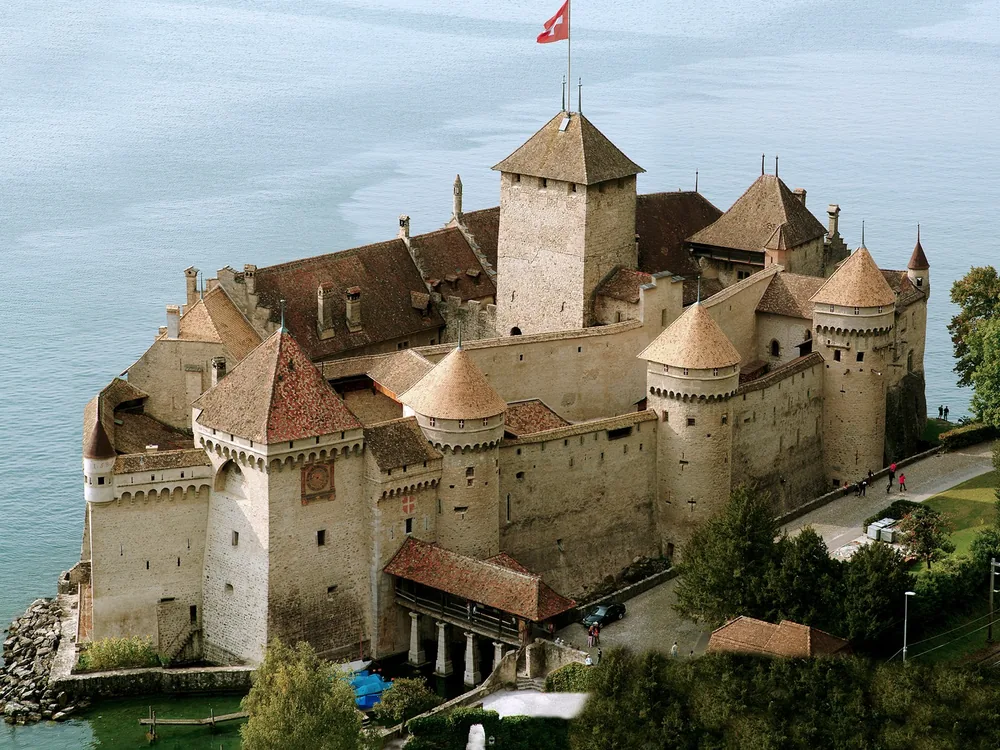
The Lake Thun 3 Castles Tour from Interlaken combines Spiez with [Oberhofen Castle](/castles/switzerland/oberhofen-castle) and Thun Castle in a half-day with entry tickets included — the most efficient circuit for visitors who want to see all three major Lake Thun fortifications in a single outing. [Château de Chillon](/castles/switzerland/chateau-de-chillon) at the eastern end of Lake Geneva represents the other great Swiss lakeside castle tradition: larger, more famous, and positioned differently relative to water and mountain, but sharing with Spiez the fundamental combination of water, mountains, medieval walls, and a landscape that was being fought over long before the buildings we visit were constructed.
History
The earliest documented fortification at Spiez dates to 933, traditionally credited to King Rudolph II of Burgundy, though the site's strategic position on the Lake Thun peninsula had been recognised for longer. The stone Romanesque keep and chapel were built in the 12th century, forming the core of the visible medieval structure that survives today. The castle passed through several noble families in the 13th and 14th centuries before the Bubenberg family acquired it in 1338, holding Spiez for nearly 170 years.
The Bubenberg name reached its widest historical significance in 1476, when Adrian von Bubenberg commanded the Bernese forces at the Battle of Murten, defeating Charles the Bold of Burgundy in one of the defining engagements of Swiss confederate history. The Bubenberg line died out in 1506, and the castle passed to the von Diesbach and subsequently von Erlach families. A Baroque wing was added and extended in the 17th and 18th centuries, developing the residential character of the estate alongside the medieval keep and chapel.
The state acquired the castle in the early 19th century, and in 1929 the castle and estate were transferred to the Kanton Bern for conservation. The museum is open from April to October; the Romanesque church is open year-round; and the vineyard on the peninsula continues in production.
How to Visit
Getting there: Spiez is on the main Bern–Interlaken InterRegio rail line, approximately 30 minutes from Bern and 20 minutes from Interlaken. The castle is a 10-minute walk downhill from Spiez station. By boat: the BLS lake steamer from Thun or Interlaken stops at Spiez — arriving by water with the peninsula castle above gives the best first impression. By car: parking is available near the castle entrance.
Tickets: Walk-up entry CHF 10 adult, CHF 5 child — the Romanesque church within the castle precincts is free and open year-round. The GetYourGuide tour is a 3.5-hour Lake Thun 3 Castles Tour from Interlaken covering Oberhofen Castle, Spiez Castle, and Thun Castle with all entry tickets included — book in advance.
Practical tips: Walk the vineyard slope below the castle walls before entering — the combination of vines, lake, and medieval tower visible above is the defining Spiez image. Book a wine tasting from the castle's own 1,000-year-old vineyard through the Stadt Spiez tourism office if visiting April–October (harvest is in October). The 12th-century Romanesque chapel inside the precincts is free and open year-round — even if you visit off-season, this is worth seeing as one of the most complete Romanesque chapel interiors in canton Bern.
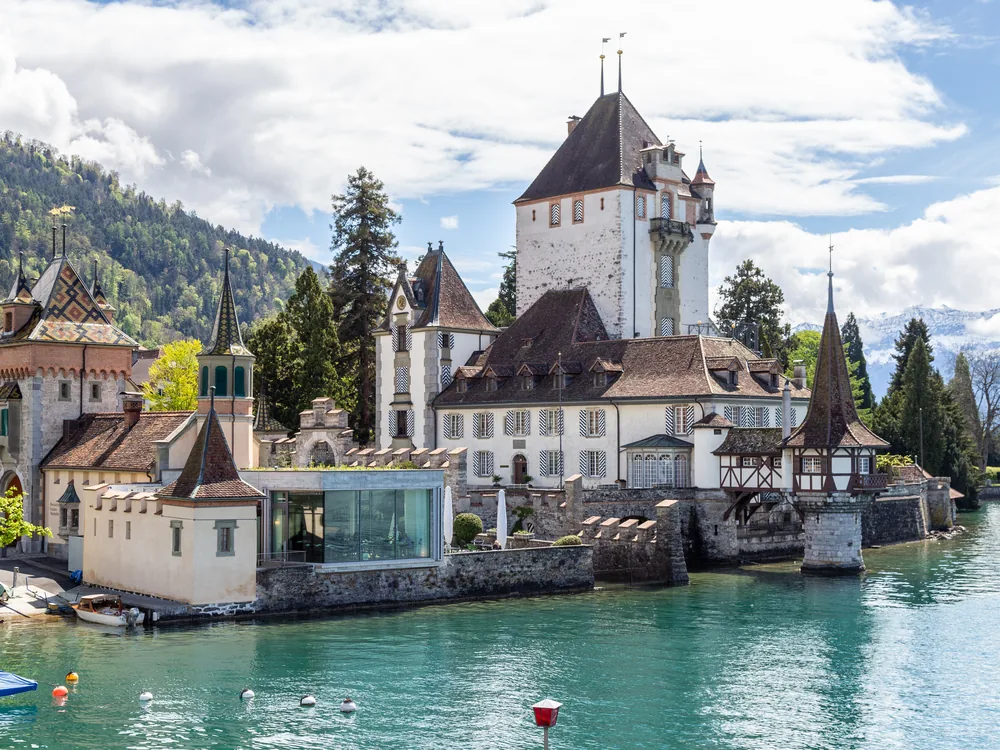
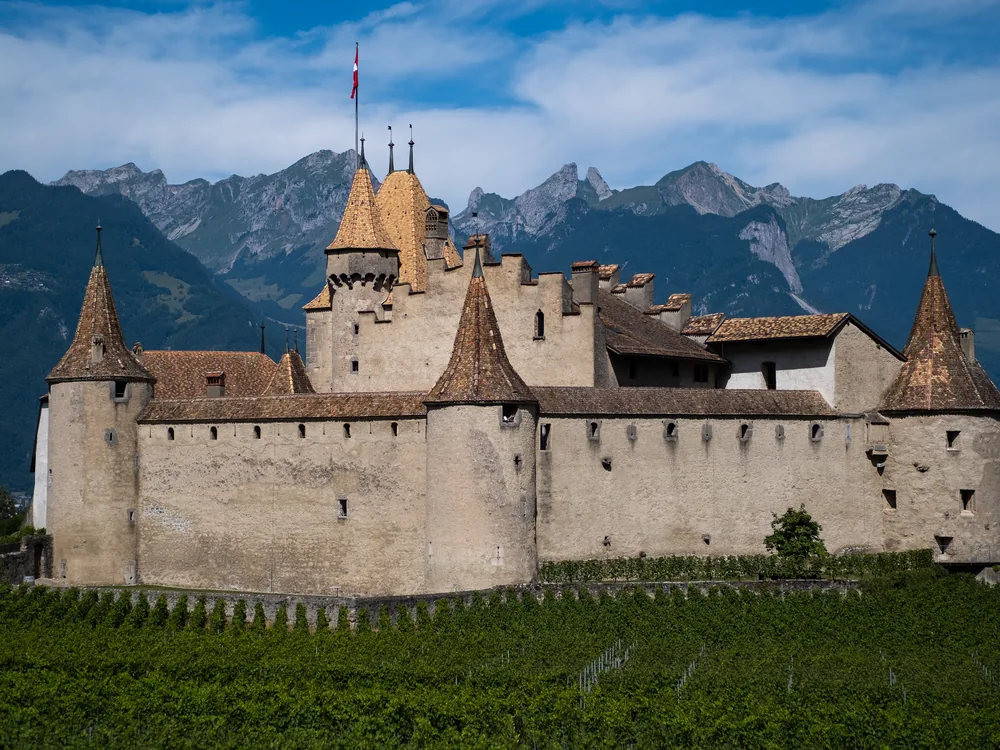
Combine with: Oberhofen Castle (20 km northeast by lake steamer, the other major Lake Thun castle with the Turkish smoking room and formal garden) and Aigle Castle (55 km southwest at the mouth of the Rhône Valley, a vineyard-embedded wine castle that pairs naturally with Spiez's viticulture theme).
Frequently Asked Questions
The Spiez vineyard on the south-facing slopes of the castle peninsula claims approximately 1,000 years of continuous viticulture — consistent with the castle's 10th-century founding. It is the highest north-Alpine vineyard and produces a Riesling-Sylvaner white wine with a mineral character typical of glacial soils. Wine tastings are available at the castle during the season, and the October harvest is the most lively time to visit. The combination of medieval castle, vineyard, and lake views makes Spiez an experience not replicable elsewhere in Switzerland.
Location
Schloss Spiez, 3700 Spiez, Switzerland
Nearby Castles
Tours & Tickets
Powered by GetYourGuide
From
€224/ person