
Citadel of Namur
Citadelle de Namur
Belgium · Wallonia, Namur Province · Near Namur
Built 940 · Medieval / Vauban / 19th-century
This page is part of an independent travel guide and is not affiliated with, endorsed by, or operated by Citadel of Namur.
© Unsplash
Quick Facts
- Hours
- Daily 10:00–18:00
- Day trip from
- €950
- Duration
- 2–3 hours
- Best time
- April to October
- Nearest city
- Namur
Featured Tour
From Brussels: Namur, Huy, Bouillon & Dinant Day Trip
Cancellation available · Instant confirmation
Highlights
- ✦Claimed to be the most besieged fortress in European history
- ✦Commanding the strategic confluence of the Meuse and Sambre rivers
- ✦Underground passages and galleries spanning multiple centuries
- ✦Cable car ascent from the city centre
- ✦Panoramic views over Namur and the Ardennes countryside
Tickets & tours
Book through GetYourGuide
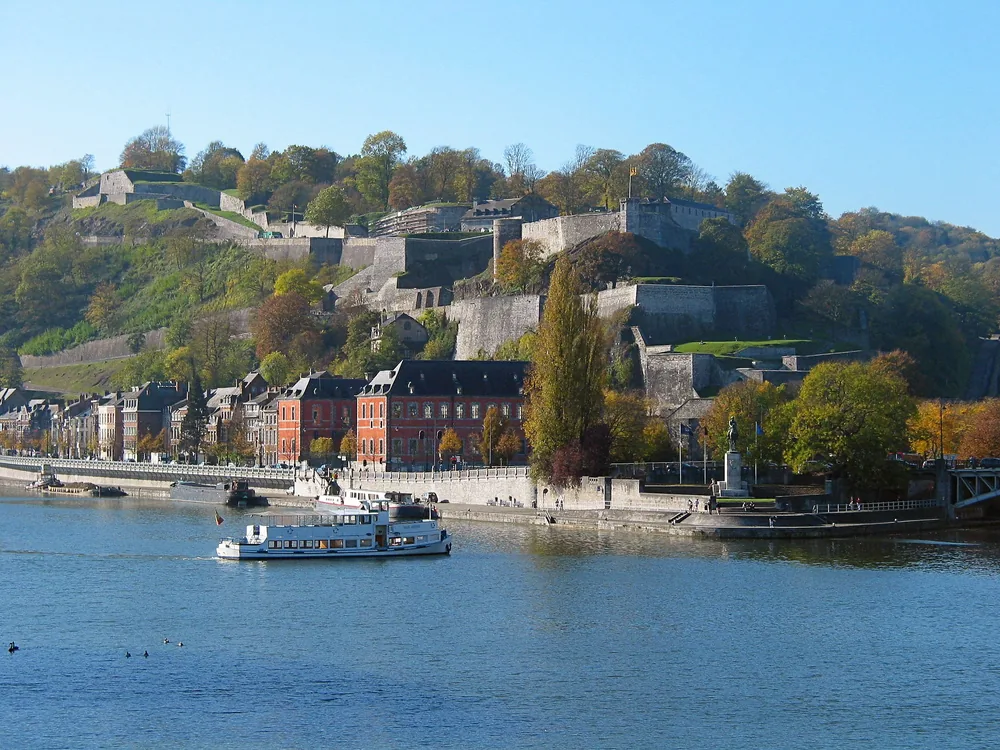
The Citadel of Namur crowns a steep rocky promontory above the confluence of the Meuse and Sambre rivers — one of the most strategically important points in northwestern Europe, where armies have fought over this hill for more than a thousand years. It is widely claimed to be the most besieged fortress in European history: the Counts of Namur, Burgundians, Spanish, French, Dutch, and Germans all fought for control of this key junction between France, Germany, and the Low Countries. The current fortifications layer medieval walls with Vauban-era modifications and 19th-century works, covering 8 km of underground passages open to visitors. A cable car connects the city centre to the plateau above, from which panoramic views extend over the city and into the Ardennes.
History
A fortress was established on the Namur promontory around 940 by the Counts of Namur. The city changed hands repeatedly through the medieval and early modern periods — taken by the Spanish, then the French under Louis XIV (with Vauban designing new fortifications), then the Dutch, then Napoleon, then besieged by German forces in both World Wars. After 1945 the military ceased using the citadel and it opened progressively as a heritage and tourism site.
How to Visit
Getting there: Namur is 60 minutes from Brussels by train (frequent IC services from Brussels-Midi/Centrale). The citadel is above the city centre — reach it by cable car from the Sambre riverbank (the easiest option), on foot (20-minute walk), or by the scenic Route Merveilleuse road. By car from Brussels: 65 km via the E411.
Tickets: Adult €9, child €5. No advance booking required — tickets at the citadel entrance. Underground passage guided tours are included during the main season. The GetYourGuide "From Brussels: Namur, Huy, Bouillon & Dinant Day Trip" covers the Namur Citadel alongside three other Wallonia fortress cities in a full private day from Brussels.
Practical tips: Allow 2–3 hours — the site is large and the 8 km of underground passages are the highlight. Take the cable car up for the view over the Meuse–Sambre confluence, and descend via the Route Merveilleuse road if you have a car for a different perspective on the fortifications.
Combine with: Huy Castle is 30 km east along the Meuse. Citadel of Dinant is 30 km south for a full Meuse valley fortress day.
Frequently Asked Questions
The claim is made by the citadel itself and is widely cited — the strategic importance of the Meuse-Sambre confluence meant virtually every major power that fought over the Low Countries targeted Namur. The exact count of sieges is debated, but the number is exceptional.
Location
Route Merveilleuse 64, 5000 Namur, Belgium
Nearby Castles
Tours & Tickets
Powered by GetYourGuide
From
€950/ person