
Trsat Fortress
Trsatski grad
Croatia · Rijeka, Primorje-Gorski Kotar County, Croatia · Near Rijeka
Medieval hilltop fortress above Rijeka's Rječina River canyon; substantially rebuilt in the early 19th century by Austrian General Laval Nugent in a Romantic-historicist style; circular towers, panoramic terraces, and a mortuary chapel containing Nugent's mausoleum
This page is part of an independent travel guide and is not affiliated with, endorsed by, or operated by Trsat Fortress.
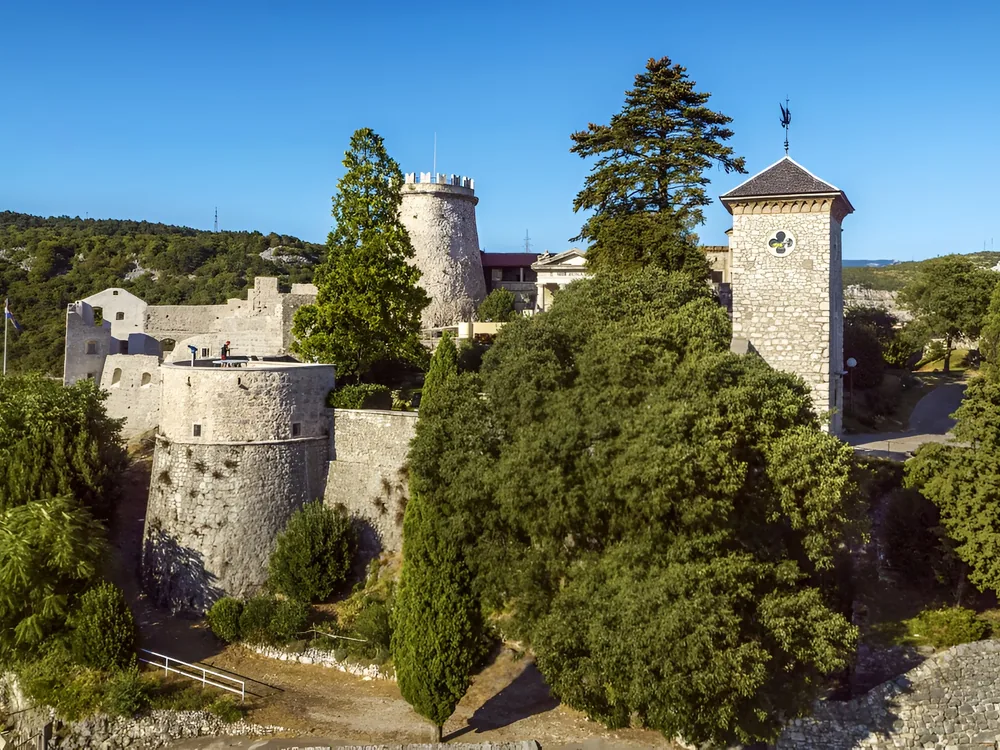
© Castles & Palaces
Quick Facts
- Hours
- Daily 09:00–21:00
- Guided tour from
- €30
- Duration
- 1–1.5 hours
- Best time
- April to October
- Nearest city
- Rijeka
Featured Tour
Rijeka: Historical Walking Tour with Trsat Fortress
Cancellation available · Instant confirmation
Highlights
- ✦The Petar Kružić Stairway — 561 stone steps ascending from the Rječina River canyon floor to the fortress gate, built in the 16th century by Petar Kružić, Croatian captain of Klis Fortress, as an act of devotion to the nearby Trsat Shrine; ascending the stairway is the classic Rijeka experience
- ✦The Frankopan family connection — Trsat was a principal stronghold of the Frankopan family, one of the most powerful Croatian noble dynasties of the medieval period, whose fortresses span the entire region of Kvarner and Lika
- ✦The mausoleum of General Laval Nugent — the fortress's 19th-century romantic redesign was commissioned by the Irish-Austrian general who purchased it after the Napoleonic Wars; his mausoleum in the fortress courtyard contains his grave and that of his wife
- ✦Panoramic views over the Kvarner Gulf and the islands of Cres, Lošinj, and Krk — the fortress hilltop gives the widest unobstructed view of the Kvarner coastline of any easily accessible point above Rijeka
- ✦The GetYourGuide guided walking tour from Rijeka covers the fortress alongside Rijeka's historic centre, with entrance included
Skip the queue with a guided tour
Skip-the-line tickets & expert guides
Trsat Fortress stands on a clifftop above the Rječina River canyon at the eastern edge of Rijeka, at an elevation that commands both the river valley and the Kvarner Gulf coastline. The view from the fortress terrace takes in the islands of Cres, Lošinj, and Krk across the bay — a panorama that explains immediately why this position was considered essential by successive rulers of the region.
The approach to the fortress is as memorable as the view. The Petar Kružić Stairway — 561 stone steps built in the 16th century by the Croatian military captain Petar Kružić as an act of devotion to the Trsat Marian shrine just below the fortress — ascends the canyon wall from the Rječina River at the base to the fortress gate at the top. The stairway has become the defining experience of visiting Trsat, and the combination of the climb and the view from the summit is what most visitors remember. An alternative road approach exists for those unable to make the climb.
The fortress's medieval structure was substantially transformed in the early 19th century when the Irish-Austrian military general Laval Nugent, who had served in the Napoleonic Wars under the Austrian crown, purchased the abandoned fortress and commissioned a romantic reconstruction in the Historicist style fashionable among European aristocrats of the period. Nugent added circular towers, arcaded terraces, decorative elements, and — most distinctively — a mortuary chapel and mausoleum in the fortress courtyard, which contains his own burial place and that of his wife. The mausoleum remains intact and is one of the more unusual heritage features in the Croatian Kvarner region.
The GetYourGuide guided walking tour from Rijeka covers the fortress alongside the city's historic harbour and old town in a programme with the fortress entrance included.
History
A fortified position on the Trsat cliff above the Rječina gorge existed from Roman times, and the medieval fortress built by the Frankopan family — one of Croatia's most powerful noble dynasties — developed through the 13th–15th centuries. The Frankopans held extensive territories across Kvarner, Lika, and Gorski Kotar, and Trsat was their primary defensive position above Rijeka. The nearby Trsat Marian shrine, founded in the 13th century and one of Croatia's most important pilgrimage sites, is associated with the legend of the Holy House of Loreto — said to have been miraculously transported to Trsat from Nazareth in 1291, before being carried on to Loreto in Italy three years later. The Frankopan family fell from power in the early 18th century after conspiring against the Habsburg emperor, and the fortress passed through various hands. General Laval Nugent purchased it after the Napoleonic Wars and carried out the Romantic-era reconstruction that defines the fortress's current appearance. The fortress has been open to visitors since the 20th century and the courtyard hosts outdoor concerts and cultural events in summer.
How to Visit
Getting there: Trsat is a hilltop neighbourhood of Rijeka, 2 km from the city centre. The standard approach is via the Petar Kružić Stairway from Titov Trg square in central Rijeka — the stairway entrance is signposted, and the 561 steps take 15–20 minutes at a comfortable pace. A road leads to a car park just below the fortress for those arriving by car or taxi. Rijeka is connected to Zagreb by train and bus (2.5–3 hours) and has a ferry connection to the islands.
Tickets: Walk-up entry to the fortress is approximately €3 per adult, €1 per child. The GetYourGuide guided walking tour from Rijeka confirms the fortress entrance as included in the tour price. The tour covers the fortress and Rijeka's historic centre with a professional English-speaking guide.
Practical tips: After descending from the fortress, the Trsat Shrine (Gospa Trsatska) just below the fortress gate is worth a brief visit — it is one of the oldest Marian shrines in Croatia and has an interesting collection of votive offerings. Allow 1–1.5 hours for the fortress and 30 minutes for the shrine and stairway descent. Summer evenings are popular for the sunset views from the fortress terrace.
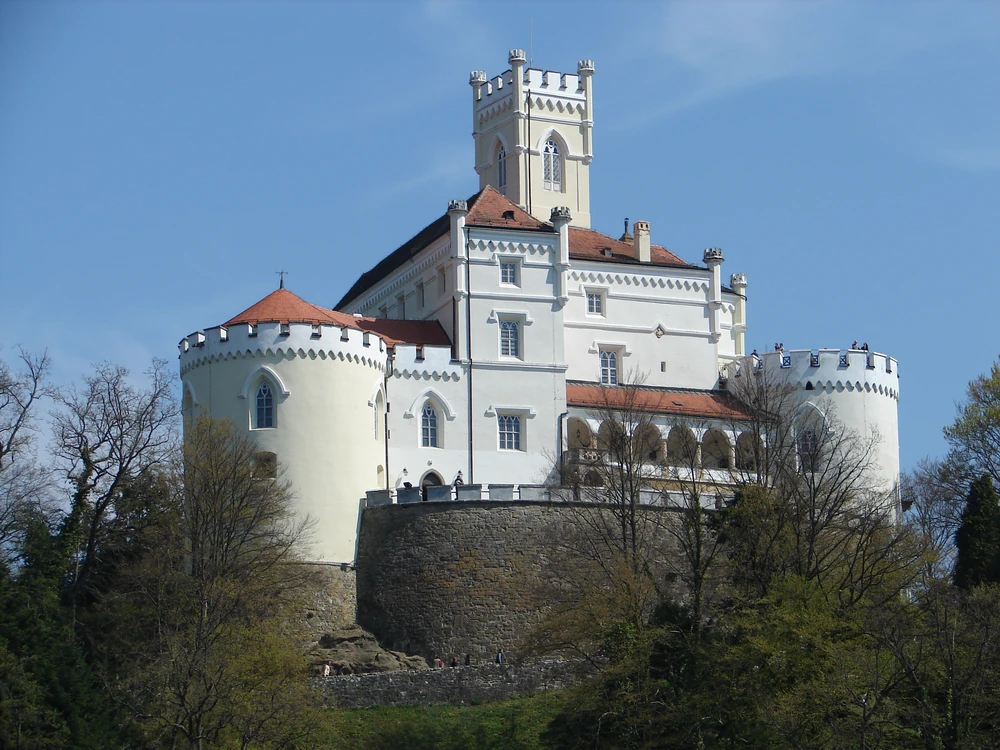
Combine with: Frankopan Castle (~80 km southeast in Ogulin — a 15th-century Frankopan stronghold in continental Croatia, with the chasm where the poet Ivana Brlić-Mažuranić set her stories) and Trakošćan Castle (~150 km east in the Zagorje hills — the most romantic of Croatia's Romantic-era rebuilt castle, the Drašković family's lakeside neo-Gothic masterpiece).
Frequently Asked Questions
Laval Nugent (1777–1862) was an Irish-born Austrian field marshal who distinguished himself in the Napoleonic Wars, commanding Austrian forces in Italy and later serving as commander of the Austrian forces in the Italian campaigns of the 1820s. As a successful military commander with Austrian aristocratic connections (he was given the title Count Nugent), he purchased Trsat Fortress as a summer residence and personal project. The Romantic reconstruction was typical of European aristocratic fashion of the period — the early 19th century saw many ruined medieval castles reborn as Romantic retreats by aristocrats who viewed the medieval past through a picturesque lens. Nugent's choice to include his own mausoleum in the reconstruction gave the project a personal dimension unusual even by the standards of Romantic-era castle projects.
Location
Trsat 51000, Rijeka, Croatia
Nearby Castles
Tours & Tickets
Powered by GetYourGuide
From
€30/ person