
Castle of Caccamo
Castello di Caccamo
Italy · Sicily · Near Palermo
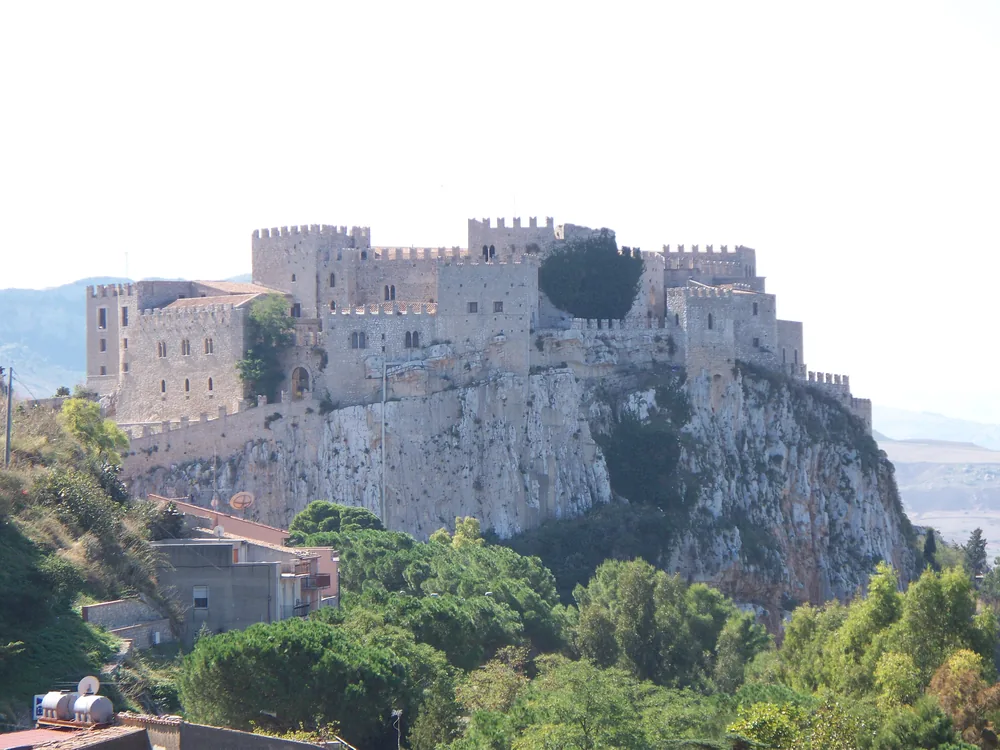
Built 1093 · Norman military architecture with subsequent Hohenstaufen, Aragonese, and Spanish additions — a large irregular castle spread across a rocky limestone spur 520 metres above sea level
This page is part of an independent travel guide and is not affiliated with, endorsed by, or operated by Castle of Caccamo.
© Castles & Palaces
Quick Facts
- Hours
- Daily 09:00–13:00, 15:00–19:00
- Day trip from
- €199
- Duration
- 1–1.5 hours
- Best time
- April to June and September to October
- Nearest city
- Palermo
Featured Tour
From Palermo: Medieval Castle Tour of Caccamo and Cefalù
Cancellation available · Instant confirmation
Highlights
- ✦One of Sicily's largest and best-preserved feudal castles — 24 rooms across multiple towers and halls on a site continuously fortified since Norman rule in the late 11th century
- ✦Chiaramonte Hall (Sala della Congiura) — the room where the 1160 conspiracy against William I of Sicily is said to have been plotted; barrel-vaulted ceiling and 12th-century stonework
- ✦520 metres above sea level — the castle's position on the limestone spur gives it views across the Sicanian Mountains, the Palermo coast, and, on clear days, as far as Ustica island
- ✦The Norman heritage — the original tower and curtain walls built by Robert of Calatabiano in 1093 during the Norman consolidation of Sicily under Roger I; over 900 years of continuous occupation visible in the layered architecture
- ✦The village of Caccamo below — a medieval hill town essentially unchanged in plan, with the 18th-century Piazza dei Vespri, the church of San Giorgio, and the narrow limestone-paved lanes that are themselves a reason to visit
- ✦Combined access via a Palermo day trip also including Cefalù — the most convenient way to visit from Palermo combines the castle with Cefalù's Norman cathedral and medieval seaside town
Skip the queue with a guided tour
Skip-the-line tickets & expert guides
The Castle of Caccamo stands on a limestone spur 520 metres above the Sicanian Mountains, roughly 40 kilometres south of Palermo, and has done so in essentially the same profile since Robert of Calatabiano built the first Norman tower here in 1093. It is one of the largest feudal castles in Sicily and one of the best-preserved examples of Norman military architecture on the island — a distinction worth emphasising, since Norman Sicily produced some of the most remarkable buildings in medieval Europe, and Caccamo survives when many comparable fortifications have been substantially rebuilt or reduced to fragments.
The Norman Conquest of Sicily, led by the Hauteville brothers Roger I and Robert Guiscard between 1061 and 1091, was one of the most culturally productive military campaigns of the Middle Ages. The Normans — French-speaking descendants of Viking settlers in Normandy — imposed military control over a society of Arab Muslims, Byzantine Greeks, Jews, and Lombard settlers, and produced an extraordinary hybrid culture in which all four traditions coexisted and produced some of medieval Europe's most unusual artistic output. The Palatine Chapel in Palermo, the cathedral of Cefalù, and the castle at Caccamo are all products of this Norman synthesis.
Caccamo's castle was built on a site that commanded the valley of the Torto river and controlled the approach routes between the Palermo coastal plain and the interior. Robert of Calatabiano's original tower was the nucleus around which subsequent lords expanded the complex. The most significant expansion came under the Chiaramonte family, one of medieval Sicily's most powerful feudal dynasties, who held Caccamo for much of the 13th and 14th centuries and transformed the Norman tower into the multi-hall fortress that visitors see today.
The Chiaramonte contribution is most visible in the castle's most historically charged room: the Sala della Congiura (Hall of the Conspiracy), a barrel-vaulted chamber where, according to Sicilian tradition, the 1160 conspiracy against King William I of Sicily — the so-called Matteo Bonello conspiracy — was planned. Bonello, a Sicilian baron dissatisfied with William's centralised Norman rule, allegedly gathered his co-conspirators in this room to plot the assassination of the king's chief minister, Maio of Bari. Whether the room's specific attribution is historically accurate or a later tradition is debated, but the hall preserves its 12th-century vaulting and the stones that generations of Sicilian lords would have known.
The castle's plan is irregular, dictated by the shape of the limestone outcrop, and spreads across multiple levels. The 24 rooms accessible to visitors include the original Norman keep, the Chiaramonte additions, later Aragonese modifications (Sicily passed to the Crown of Aragon in 1282 after the Sicilian Vespers rebellion), and 16th-century Spanish alterations during the period when Sicily was a possession of the Habsburg monarchy. Each addition is distinguishable in the stonework and window forms.
The village of Caccamo below the castle is itself an argument for visiting rather than simply registering the castle from afar. The medieval street plan survives essentially intact — limestone-paved lanes too narrow for any vehicle wider than a donkey cart, 18th-century palazzi built against Norman-era foundations, the church of San Giorgio with its ornate Baroque façade, and the Piazza dei Vespri at the village centre. The walk up from the village piazza to the castle entrance involves a short steep stretch on an uphill road.
The most practical way to visit Caccamo from Palermo is the combined day trip that also takes in Cefalù — the Norman cathedral town on the Tyrrhenian coast 70 kilometres east of Palermo. The GetYourGuide listing for this tour (TAOTRAVEL, from €199, live guide in English and French) visits Cefalù first (three hours: the cathedral, the medieval town, and free time for lunch or the beach) and then Caccamo Castle in the afternoon (guided, approximately 1.5 hours at the castle). The departure point is Hotel Politeama in central Palermo. This itinerary is the logical approach for first-time visitors to Sicily based in Palermo: Cefalù Cathedral is one of the finest Norman churches in the Mediterranean, and Caccamo's castle is the island's best-preserved feudal fortress — combining them in a single day makes geographic sense (they are roughly on the same east–northeast axis from Palermo, though in opposite directions, so the tour involves a full day of driving).
For visitors with a hire car, Caccamo can be reached independently in about 45 minutes from Palermo on the A19 motorway (exit at Trabia/Termini Imerese, then south to Caccamo). Parking is available in the village; the approach road to the castle is accessible but narrow. The castle's position means that the walk up from the village and the views from the castle battlements across the Sicanian Mountains reward the visit at any time of day, though the afternoon light from the west is generally better for the hillside views.
History
The original Norman tower was built in 1093 by Robert of Calatabiano under Roger I's consolidation of Sicily after the Norman conquest. The Chiaramonte family — one of Sicily's most powerful medieval dynasties — expanded the castle in the 13th–14th centuries. Sicily's transfer to the Crown of Aragon in 1282 (after the Sicilian Vespers) brought Aragonese modifications; Spanish Habsburg rule in the 16th century added further changes. The castle has been continuously maintained and is now managed by the municipality of Caccamo.
How to Visit
Getting there: Caccamo is about 45 minutes from Palermo by car via the A19 motorway (exit Trabia/Termini Imerese, then south). Parking is available in the village; the approach road is accessible but narrow. By public transport, buses from Palermo to Caccamo are infrequent — a hire car or a guided day trip is the most practical option.
Tickets: Entry costs €5 for adults (children €3); buy at the castle door with no booking required. The GetYourGuide full-day trip from Palermo covers Cefalù first (3 hours, including the Norman Cathedral) then Caccamo Castle in the afternoon with a live guide in English and French, departing from Hotel Politeama in central Palermo.
Practical tips: The walk from the village piazza up to the castle entrance is a short but steep uphill road — wear comfortable shoes. Don't miss the Sala della Congiura (Hall of the Conspiracy), a barrel-vaulted 12th-century chamber where Sicilian tradition places the plotting of the 1160 Matteo Bonello conspiracy against King William I.
Combine with: Cefalù Cathedral, 70km northeast of Caccamo, is the finest Norman church in Sicily and pairs naturally with the castle — both are products of Roger I's Norman kingdom and are included together in the GetYourGuide day trip from Palermo. The village of Caccamo itself is worth an hour on foot before or after the castle visit.
Frequently Asked Questions
Yes — Caccamo Castle is the first Sicilian castle featured on this site. Sicily's Norman heritage (Palermo's Palatine Chapel, Cefalù Cathedral, Monreale Cathedral) is one of the Mediterranean's richest and least-visited collections of medieval art; Caccamo is the best-preserved feudal castle from the same Norman period and region.
Location
Piazza dei Vespri, 90012 Caccamo PA, Italy
Nearby Castles
Tours & Tickets
Powered by GetYourGuide
From
€199/ person