
Rocca Albornoz di Narni
Rocca Albornoziana di Narni
Italy · Umbria — Terni Province, hilltop city of Narni, above the Nera Valley · Near Terni
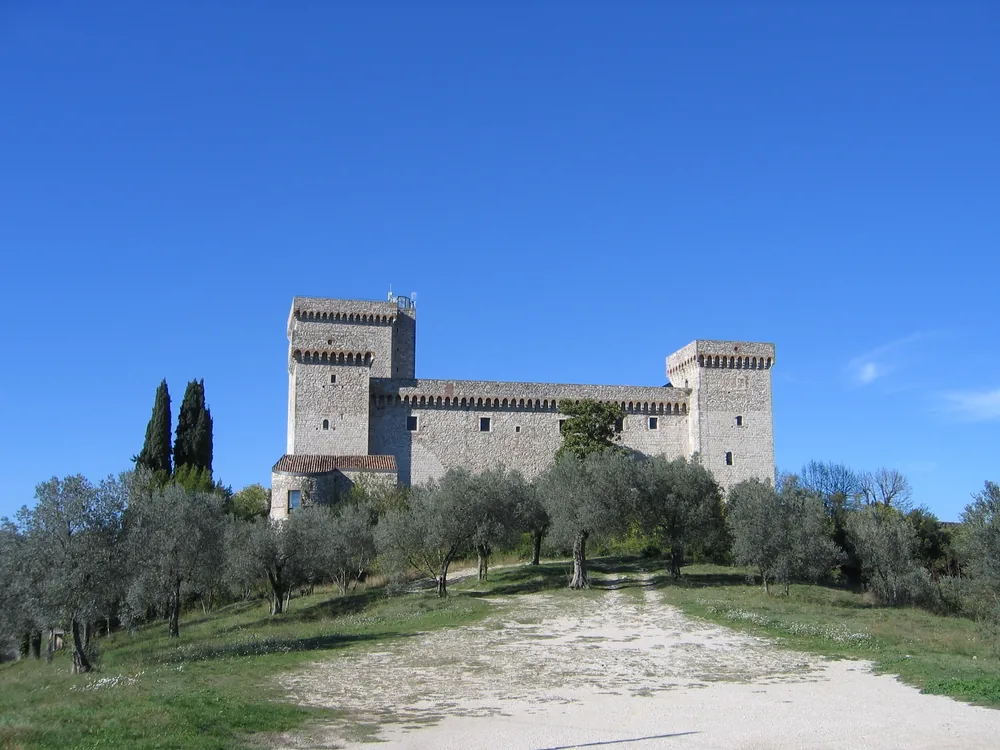
Built 1370 · 14th-century papal fortress; four cylindrical corner towers and a central courtyard built 1367–1374 by Cardinal Gil Álvarez de Albornoz on a hilltop above the Nera Valley gorge; one of a chain of papal fortifications across Umbria and Lazio erected to anchor restored papal authority over the Papal States; notable for a sealed underground prison with Inquisition-era prisoner graffiti discovered during 20th-century renovation
This page is part of an independent travel guide and is not affiliated with, endorsed by, or operated by Rocca Albornoz di Narni.
© Castles & Palaces
Quick Facts
- Hours
- Tue–Fri 10:30–17:00. Sat & Sun 10:30–17:30. Closed Mon
- Entry via GetYourGuide
- €10
- Duration
- 1 hour (self-guided with audio guide)
- Best time
- April to October
- Nearest city
- Terni
Featured Tour
Narni: Rocca Albornoz with Audio Guide
Cancellation available · Instant confirmation
Highlights
- ✦Built by Cardinal Gil Álvarez de Albornoz, the Spanish-born papal legate who spent two decades reconquering the Papal States for Pope Innocent VI and erected a chain of four-towered fortresses across Umbria and Lazio to hold the recovered territory permanently
- ✦A secret underground prison, sealed and forgotten for generations, was discovered during late-20th-century renovation — its walls still bearing Inquisition-era graffiti, carved crosses, inscriptions, and drawings left by prisoners in the cells below the courtyard
- ✦Four cylindrical corner towers rise from the hilltop enclosure, commanding panoramic views across the Nera Valley gorge, the forested hills of southern Umbria, and the route of the ancient Via Flaminia threading along the valley floor below
- ✦Narni's Latin name was Narnia — the name C. S. Lewis encountered in an atlas as a child and gave to the imaginary world of his Chronicles of Narnia, making this hilltop fortress the real-world counterpart to one of English literature's most famous invented lands
- ✦A single self-guided audio-guide ticket covers the four towers, the central courtyard, the panoramic gorge views, and the underground prison — moving from medieval battlements to Inquisition cells in a single compact one-hour visit
Skip the queue with a guided tour
Skip-the-line tickets & expert guides
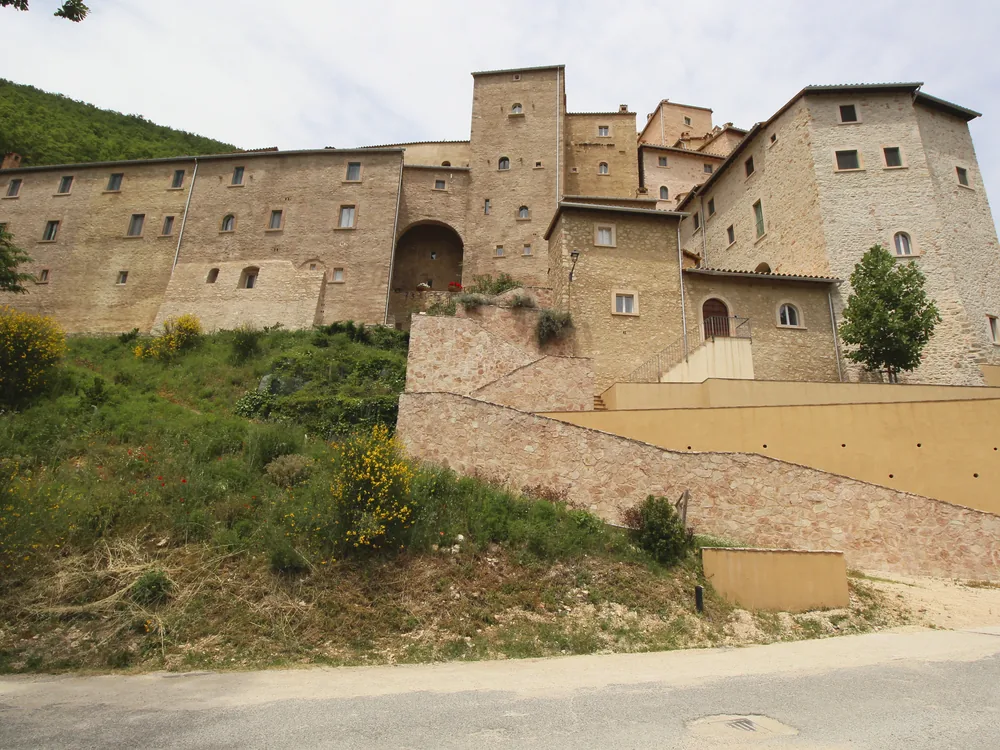
Narni sits on a rocky spur above the Nera Valley gorge in southern Umbria, and its hilltop fortress — the Rocca Albornoziana — commands the gorge as effectively today as it did when construction began in 1367. The landscape below is one of those central Italian views that feel almost implausibly complete: wooded limestone cliffs dropping to a river that catches the afternoon light, with the ancient road of the Via Flaminia threading along the valley floor toward Rome. The rocca above it is one of the finest surviving examples of the Albornozian fortress type — the chain of papal strongholds built across Umbria and Lazio in the second half of the 14th century by one of the most formidable administrators of the medieval papacy.
Cardinal Gil Álvarez de Albornoz — Egidio Albornoz in Italian — was a Spanish cardinal appointed by Pope Innocent VI as his legate for Italy in 1353, with a near-impossible assignment: to restore papal authority over the Papal States, which had dissolved into a patchwork of competing signorie during the Avignon period. Albornoz spent two decades reconquering the region city by city, and he understood that any restoration of territorial authority needed permanent architectural expression. The fortresses he constructed — at Narni, Spoleto, Assisi, Viterbo, and elsewhere — followed a consistent formula: four cylindrical towers at the corners of a rectangular enclosure, a residential tower, and a central courtyard, positioned to dominate the town below and deny rivals the high ground. The Narni rocca, completed between 1367 and 1374, represents the mature form of this programme.
What distinguishes the Narni fortress from its Albornozian siblings is what lies beneath it. During renovation work in the late 20th century, workers discovered a sealed underground space that had been forgotten and closed for an uncertain span of time — apparently used as a place of detention by the Inquisition and then shut away. The walls of the underground cells preserve an archive of prisoner-made imagery: carved crosses, drawings, names, dates, and more cryptic marks that speak of desperation, faith, or the basic human need to leave some trace of presence. The underground prison section is included in the self-guided audio tour and is one of the most atmospheric spaces in central Italy's catalogue of historic sites.
There is one further layer to Narni's identity that visitors discover with varying degrees of surprise. The town's Latin name was Narnia, and it was this name — encountered by a young C. S. Lewis in an atlas — that he gave to the imaginary world of his Chronicles of Narnia. Narni has embraced the connection without overplaying it. The hilltop fortress stands on its own merits as a medieval papal stronghold with a genuinely dark underground history; the Narnia association is a biographical footnote that happens to be true and tends to delight younger visitors considerably.
History
Narni's commanding position above the Nera Valley gorge gave it strategic significance from antiquity through the medieval period. The town stood on the Via Flaminia — the Roman road connecting Rome to Rimini — and some form of fortification occupied the hilltop through successive medieval lords. The Rocca Albornoziana takes its name from Cardinal Gil Álvarez de Albornoz, appointed papal legate by Pope Innocent VI in 1353 to restore the Papal States to direct papal control after decades of fragmentation. Albornoz prosecuted this mission with a combination of military force and political negotiation over two decades, and he built a series of fortresses to make the reconquest permanent; Narni's rocca was constructed between 1367 and 1374, near the end of his campaign, and represents the mature form of his architectural programme. The fortress subsequently served as a seat of papal administration and as a prison — a role whose full extent became apparent only in the late 20th century, when renovation work revealed a sealed underground section with carved prisoner graffiti that had been concealed for generations. The walls of this underground space preserve imagery left by prisoners across an uncertain span of centuries, constituting one of the most unusual surviving archives of Inquisition-era captivity in Italy. The rocca passed through various administrative uses after the end of direct papal authority and was eventually restored and opened to visitors with a self-guided audio tour covering the towers, courtyard, views, and underground prison.
How to Visit
Getting there: Narni is 13 km north of Terni, which is served by regular trains from Rome Termini (around 1 hour). From Terni, local buses connect to Narni Scalo (the lower town) from where the old town — and the rocca — are accessible by foot up the steep medieval road, or by local taxi. A car is the most practical option for reaching the hilltop town directly; parking is available near the town centre.
Tickets: Walk-up entry is €10 for adults and €5 for children. The GetYourGuide entry ticket includes the self-guided audio guide and covers access to the towers, the central courtyard, and the underground prison section — bookable online in advance.
Practical tips: The underground prison is the most unusual and memorable element of the visit — allow time to move through it carefully rather than rushing to the tower views. The gorge panorama is sharpest in clear weather; mornings tend to give better light over the Nera Valley below. The full self-guided circuit takes around one hour at a comfortable pace.
Combine with: The underground Narni Sotterranea — the medieval monastery and Inquisition prison complex beneath the town centre, a separate attraction from the rocca but thematically continuous — makes a full Narni day combining the hilltop fortress with the hidden underground city beneath the streets.
Frequently Asked Questions
Narni's Latin name was Narnia — a name that appears on medieval and early modern maps and atlases. C. S. Lewis encountered it as a child and used it for the imaginary world of his Chronicles of Narnia, published from 1950. Lewis never visited Narni and appears to have taken the name for its sound rather than any literary association, but the town has since embraced the link. The hilltop fortress, the Nera Valley gorge, and the underground prison all predate the Chronicles by many centuries; the Narnia connection is a biographical footnote that resonates particularly with younger visitors.
Location
Via della Rocca, 05035 Narni TR, Italy
Nearby Castles
Tours & Tickets
Powered by GetYourGuide
From
€10/ person