
Rocca di Albornoz
Rocca di Albornoz
Italy · Marche · Near Sassoferrato, Marche
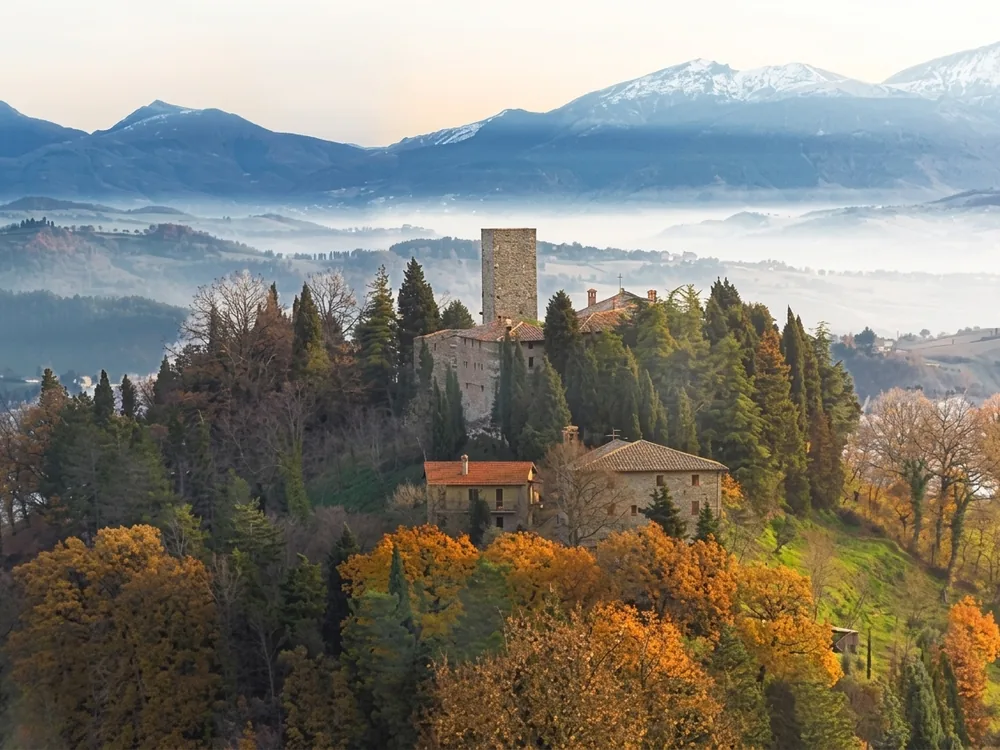
Built 1360 · 14th-century papal fortress built for Cardinal Gil Álvarez Carrillo de Albornoz as part of his systematic campaign to reassert Avignon papal control over the rebellious Papal States of central Italy; the fortress occupies the highest point of the Sassoferrato hilltop, commanding panoramic views over the surrounding Marche hills and the Sentino valley; the access to the fortress summit uses an original medieval staircase approximately 55 cm (22 inches) wide, making it unsuitable for visitors with mobility impairments; maximum 15 visitors permitted at one time; very affordable entry (approximately €3)
This page is part of an independent travel guide and is not affiliated with, endorsed by, or operated by Rocca di Albornoz.
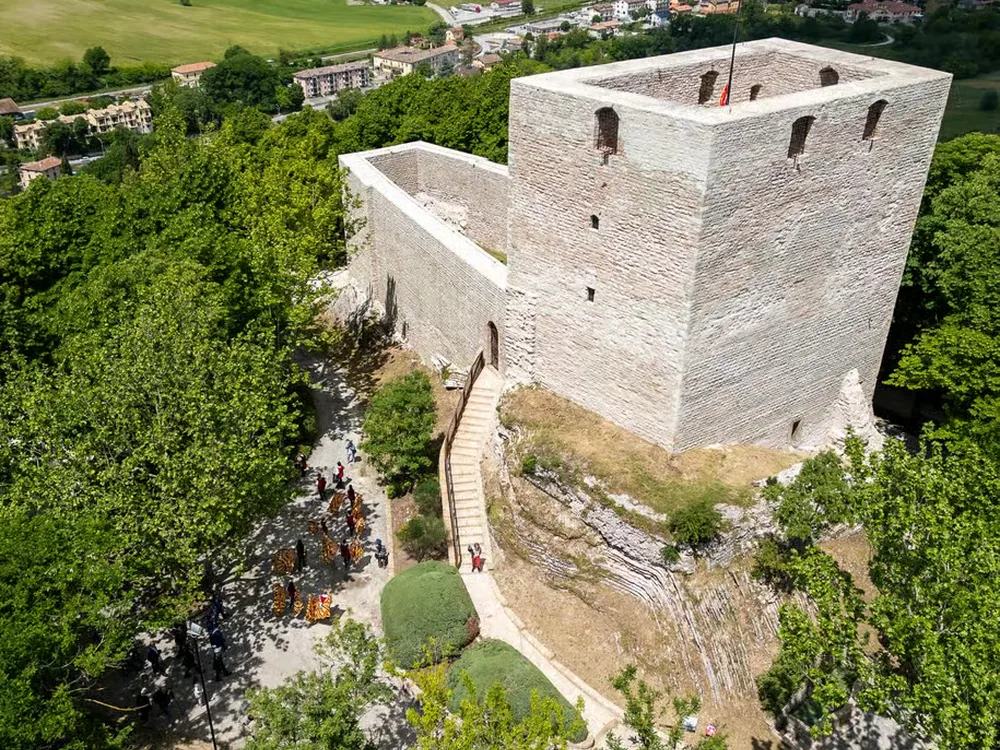
© Castles & Palaces
Quick Facts
- Hours
- Wed–Fri 10:00–13:00 / 15:00–18:00. Sat & Sun 10:00–18:00. Closed Mon & Tue
- Entry via GetYourGuide
- €3
- Duration
- 45 minutes–1 hour
- Best time
- April to October
- Nearest city
- Sassoferrato, Marche
Featured Tour
Rocca di Albornoz in Sassoferrato: Admission Ticket
Cancellation available · Instant confirmation
Highlights
- ✦The fortress is named for Cardinal Gil Álvarez Carrillo de Albornoz — a Spanish cardinal sent by the Avignon popes in the 1350s to reassert papal control over the fractious Papal States, who built or rebuilt a network of fortresses across Umbria, Lazio, and the Marche to do so; that a Spanish cardinal's name appears on an Italian hilltop fortress is the result of the Avignon papacy's particular political geography
- ✦IMPORTANT accessibility note: the summit access uses an original medieval staircase approximately 55 cm (22 inches) wide — narrower than most interior doorways; not suitable for visitors with mobility impairments, wheelchair users, or claustrophobia; maximum 15 visitors at one time
- ✦The panoramic views from the summit take in the surrounding Marche hills, the Sentino valley, and the town of Sassoferrato below — the town name (literally 'Sassoferrato', meaning iron rock) derives from a medieval word for the hard local stone that both the town's buildings and the fortress walls are built from
- ✦Entry costs approximately €3 — one of the most affordable paid heritage site visits in Italy, reflecting the town's limited tourism infrastructure rather than any diminishment of the historical significance of the Cardinal Albornoz network of which this fortress is a documented part
- ✦Sassoferrato was the birthplace of the Baroque painter Giovanni Battista Salvi (known as 'il Sassoferrato'), whose devotional Madonnas hang in many major European collections including the National Gallery in London; the town's combination of Renaissance painting birthplace and medieval papal fortress gives it more cultural depth than its limited visitor numbers suggest
Skip the queue with a guided tour
Skip-the-line tickets & expert guides
Cardinal Gil Álvarez Carrillo de Albornoz was Spanish — born in Cuenca, educated in Toulouse, Archbishop of Toledo before political conflict forced him to leave Castile in 1350. He spent the rest of his life working for the Avignon popes, and his principal assignment was one of the more difficult administrative and military tasks in 14th-century Europe: restoring order to the Papal States. That this task fell to a Spanish cardinal is the result of the Avignon papacy's particular political situation — the popes, resident in France from 1309, had lost effective control of their Italian territories, which were governed by warring local signorie of varying legitimacy, and needed a figure with both diplomatic skill and military authority to reclaim them. Albornoz was the man they chose, and the network of fortresses he built or rebuilt across Umbria, Lazio, and the Marche — including the Rocca di Albornoz in Sassoferrato — remains his most visible legacy in Italy.
The Rocca di Albornoz at Sassoferrato occupies the highest point of the town's hilltop. Sassoferrato itself sits on a ridge above the Sentino valley in the Marche region, approximately 70 kilometres south of Ancona in the Apennine foothills. The town name derives from a medieval Latin term meaning iron rock or hard stone, referencing the local geological character of the site — the same stone used to build both the town's medieval houses and the fortress walls. The Rocca's position at the summit commands a panoramic view over the surrounding hills and valleys that made it both militarily useful and visually obvious from a considerable distance.
Albornoz received his mandate from Pope Innocent VI in 1353 and spent the following years conducting a systematic campaign to impose Avignon papal authority on the central Italian territories. His methods combined diplomatic negotiation with direct military action, and his building programme — the series of fortresses known as the Albornozian network — was designed to give the papacy permanent physical presence in the territories it was reclaiming. Other fortresses in the same network include the Rocca Maggiore at Assisi, the La Rocca fortress at Spoleto, and the Rocca Paolina at Perugia (though the last was later substantially modified). The Sassoferrato example is one of the smaller and less celebrated of these sites, which accounts for the very modest visitor numbers and the equally modest admission price.
Before booking, the accessibility note requires careful reading: the access to the fortress summit uses an original medieval staircase approximately 55 centimetres (22 inches) wide. This is narrower than the standard interior doorway width and significantly narrower than any modern building's stairwell. It is a genuine medieval architectural feature, preserved because no later modifications altered it, and it is the only means of ascending to the summit. Visitors with claustrophobia, mobility impairments, walking difficulties, or any condition affecting their ability to manage a narrow, steep stone stair should not attempt the ascent. Maximum 15 visitors are permitted on the summit at any one time, which is a practical limit given the staircase rather than a crowd-control measure.
The views from the summit justify the climb for those who can manage it. The Marche Apennines spread in all directions — rolling hill country with visible towns, agricultural fields, and the characteristic terracotta-roofed settlements of central Italy at various distances. The Sentino valley below Sassoferrato runs northwest to southeast and was, in the Roman period, the site of one of the most significant battles in Mediterranean history: the Battle of the Sentinum in 295 BC, where a Roman army defeated a coalition of Samnites, Gauls, Umbrians, and Etruscans in a battle that secured Roman control of the Italian peninsula. The landscape visible from the Rocca's summit is the same landscape where that coalition formed and dispersed.
Sassoferrato is also the birthplace of Giovanni Battista Salvi, known as il Sassoferrato (1609–1685), whose devotional paintings of the Virgin Mary — technically Baroque in period but stylistically more reminiscent of 15th-century Italian masters — hang in major collections across Europe, including the National Gallery in London and the Uffizi in Florence. His Madonnas are known for their specific colour palette (deep blue robes, luminous pale skin) and their emotional directness, qualities that made them popular as devotional images in Catholic households across the following centuries. A town that produced both a 14th-century papal fortress and a 17th-century devotional painter is more culturally layered than its limited visitor infrastructure suggests.
The GetYourGuide admission ticket is among the most affordable paid heritage site visits in Italy. The site is operated with minimal infrastructure — no café, no shop, no English-language audio guide — and the experience is correspondingly straightforward: walk up the hill, climb the narrow stair, look at the walls and the view, descend. For visitors with a specific interest in the Cardinal Albornoz building programme and the political geography of the 14th-century Papal States, this is a worthwhile stop on a broader Marche itinerary. For visitors looking for a full heritage day, Sassoferrato is best combined with the Romanesque Cathedral of San Ansovino in nearby Camerino or the historic town of Fabriano (famous for its medieval paper-making industry) as part of a wider Marche hill-towns circuit.
The wider Albornoz fortress network extends across central Italy in ways that reward a dedicated itinerary for visitors with specialist interest in 14th-century papal history: the Rocca Maggiore at Assisi (the most famous of the Albornoz forts, recently restored and fully accessible), the fortezza at Spoleto, and the Rocca Albornoziana at Spoleto are all day-reachable from Sassoferrato on a two-day Umbria-Marche circuit. Seen in that context, the Sassoferrato rocca is the smallest and most austere of the network — a useful counterpoint to the more elaborated examples.
History
The Rocca di Albornoz at Sassoferrato was built in the 1360s as part of Cardinal Gil Álvarez Carrillo de Albornoz's campaign to reassert Avignon papal control over the Papal States. Albornoz, a Spanish cardinal sent by Pope Innocent VI, built or rebuilt a network of fortresses across Umbria, Lazio, and the Marche as permanent physical expressions of restored papal authority in the region. The Sassoferrato rocca is among the smaller examples of this network. The original medieval staircase (approximately 55 cm wide) survives and remains the only means of reaching the summit; maximum 15 visitors are permitted at one time.
How to Visit
Getting there: By car from Ancona: approximately 70 km south-southwest via the SS76 to Fabriano, then south on local roads to Sassoferrato. From Perugia: approximately 70 km east via Gubbio. Limited public transport — check regional bus timetables from Fabriano or Gubbio.
Tickets: GetYourGuide admission (approximately €3). Walk-up entry also available.
IMPORTANT: The summit access staircase is approximately 55 cm wide — narrow, steep, and medieval. Not suitable for mobility-impaired visitors, wheelchair users, or anyone with claustrophobia. Maximum 15 visitors at one time.
Practical tips: April to October.
Combine with: Fabriano (30 km northwest, famous for medieval paper-making) or Gubbio (40 km west, one of the best-preserved medieval Umbrian towns) for a broader Apennine hill-towns day.
Frequently Asked Questions
Gil Álvarez Carrillo de Albornoz (c.1310–1367) was a Spanish cardinal appointed by the Avignon popes to restore papal control over the Papal States of central Italy, which had effectively become independent under local signorie during the papacy's residence in France (1309–1377). Albornoz conducted a sustained military and diplomatic campaign from 1353 onwards, building or rebuilding a network of fortresses — including this one at Sassoferrato — as permanent papal strongholds. His fortresses are known as the Albornozian network and appear across Umbria, Lazio, and the Marche.
Location
Via della Rocca, 60041 Sassoferrato AN, Italy
Nearby Castles
Tours & Tickets
Powered by GetYourGuide
From
€3/ person