
Villa d'Este
Villa d'Este a Tivoli
Italy · Lazio — Tivoli · Near Tivoli
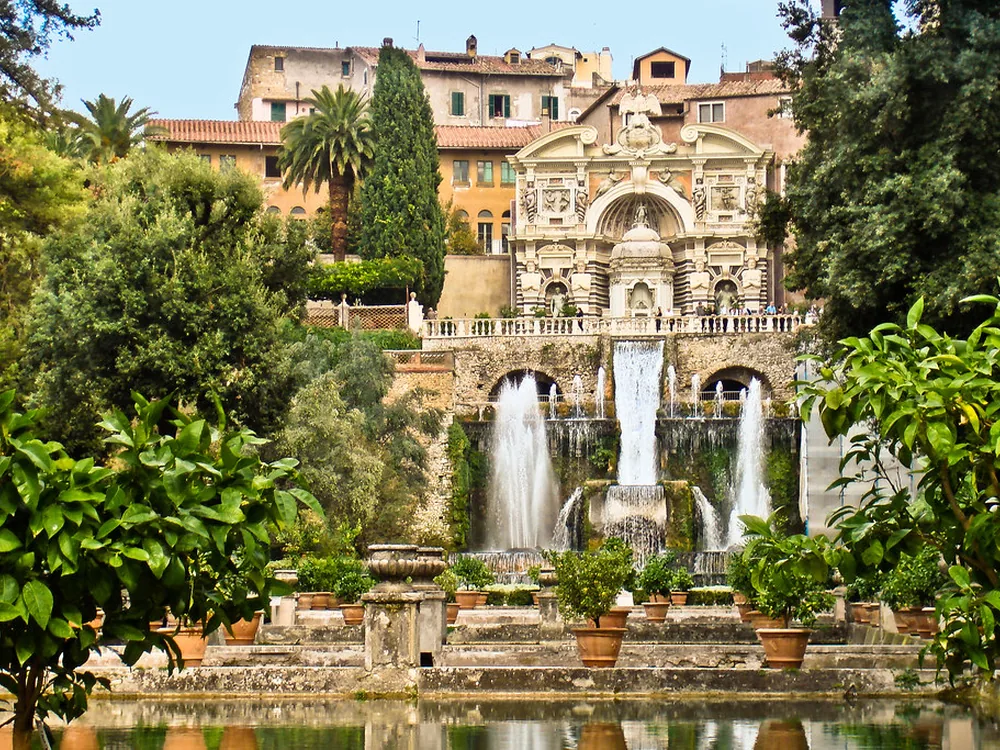
Built 1560 · Mannerist Renaissance villa and terraced garden, designed by architect and antiquarian Pirro Ligorio from 1560 for Cardinal Ippolito II d'Este; built into the steep hillside of a former Benedictine convent, the villa itself is architecturally restrained — the garden's hydraulic engineering and sculptural fountains, not the building, are the site's defining achievement
This page is part of an independent travel guide and is not affiliated with, endorsed by, or operated by Villa d'Este.
© Castles & Palaces
Quick Facts
- Hours
- Tue–Sun 08:30–19:00. Closed Mon
- Guided tour from
- €65
- Duration
- 2–3 hours
- Best time
- April to June and September to October
- Nearest city
- Tivoli
Featured Tour
Villa d'Este & Villa Adriana (Hadrian's Villa): Tivoli Day Trip from Rome
Cancellation available · Instant confirmation
Highlights
- ✦Entirely gravity-fed hydraulics — every fountain, cascade, and water feature in the garden runs on water diverted from the Aniene River through underground channels engineered in the 1560s; there has never been a mechanical pump, a remarkable feat of Renaissance hydraulic engineering that still functions today
- ✦The Fontana dell'Organo (Organ Fountain) — water pressure forces air through a hidden hydraulic mechanism to genuinely play organ music on a timed cycle, a piece of 16th-century engineering so admired that it directly inspired later garden automata across Europe, including at Versailles
- ✦The Hundred Fountains (Cento Fontane) — a 130-metre avenue of three parallel water channels lined with sculpted spouts, obelisks, eagles, and small boats, connecting the Fountain of Tivoli at one end to the Fountain of Rome (Rometta) at the other
- ✦The Rometta Fountain — a miniature allegorical model of ancient Rome, complete with a scaled Tiber island, obelisk, and she-wolf, built as a piece of political theatre asserting the Este family's claim to Rome's imperial legacy
- ✦Cardinal Ippolito II d'Este — son of Lucrezia Borgia and grandson of Pope Alexander VI — built the villa after losing the papal election twice, converting his political frustration into a garden explicitly designed to outshine the city that had rejected him
Skip the queue with a guided tour
Skip-the-line tickets & expert guides
Villa d'Este occupies the site of a former Benedictine convent on the hillside above Tivoli, thirty kilometres east of Rome — a position Cardinal Ippolito II d'Este acquired in 1550 after his appointment as governor of Tivoli, a consolation post following his second unsuccessful bid for the papacy. Rather than accept a diminished political future, Ippolito commissioned the architect and antiquarian Pirro Ligorio to build a residence and garden that would assert, through sheer engineering ambition, the Este family's cultural and dynastic standing against the Rome that had twice denied him.
The villa building itself is comparatively modest — a repurposed convent with frescoed reception rooms — because the real architectural statement is the garden. Ligorio's design descends the hillside in a series of steep terraces, and the entire hydraulic system that animates it runs on gravity alone: water diverted from the Aniene River through a purpose-built tunnel feeds every fountain, cascade, and water joke in the garden without a single mechanical pump, a feat of engineering that remains functional more than four and a half centuries later. The Fontana dell'Organo is the garden's most celebrated demonstration of this system — hydraulic pressure forces air through a concealed mechanism to play genuine organ music on a timed cycle, a piece of theatrical engineering so influential that it shaped the design of later garden automata across Europe, most famously at Versailles under Louis XIV.
The garden's other set pieces extend the same logic of water as spectacle and argument. The Hundred Fountains form a 130-metre avenue of three parallel channels studded with carved spouts, obelisks, eagles, and miniature boats, linking two allegorical endpoints: the Fountain of Tivoli and the Fountain of Rome. The latter, known as the Rometta, is a scaled allegorical model of the ancient city — a miniature Tiber island, an obelisk, a sculpted she-wolf — built as a direct visual claim that Tivoli, and by extension the Este family, inherited Rome's imperial legitimacy. The Owl Fountain, another hydraulic set piece, once used water pressure to reproduce birdsong that fell silent whenever a mechanical owl appeared, a piece of Mannerist wit typical of the garden's combination of engineering and allegory.
Villa d'Este was inscribed as a UNESCO World Heritage Site in 2001, recognised as one of the finest and most influential examples of Italian Renaissance garden design — a garden that treated water not as a passive landscape feature but as an engineered, programmable medium for political and artistic statement. Its influence radiated well beyond Italy: the terraced hydraulics and thematic fountain programme became a reference point for the great formal gardens of the following two centuries, Versailles most prominent among them.
Most visitors reach Villa d'Este as part of a combined day trip that also covers Hadrian's Villa (Villa Adriana), the sprawling 2nd-century imperial palace complex on the plain below Tivoli — one of the largest and most luxurious residences ever built in Roman antiquity, and itself independently UNESCO-listed. The pairing is a long-standing convention on the Tivoli tourist circuit, since the two sites sit within a few kilometres of each other and together represent, in a single day, both the ancient Roman and Renaissance high points of the town's architectural history.
History
The site was originally a Benedictine convent, granted to Cardinal Ippolito II d'Este in 1550 following his appointment as governor of Tivoli — a position that followed his second failed attempt to be elected pope. Ippolito, son of Lucrezia Borgia and grandson of Pope Alexander VI, commissioned Pirro Ligorio, an architect and antiquarian with deep knowledge of ancient Roman engineering (Ligorio had studied and documented nearby Hadrian's Villa extensively), to convert the site into a residence and garden that would rival anything in Rome. Construction of the garden's hydraulic infrastructure began around 1560 and continued in phases over subsequent decades, funded in part by antiquities and building materials salvaged from Hadrian's Villa nearby. Ippolito died in 1572 before the garden was fully complete, and subsequent Este family members continued refining the fountains and plantings into the early 17th century. The villa passed through various hands after the Este line's decline, suffered a period of neglect and vandalism in the 19th century, and was extensively restored in the 20th century after passing into Italian state ownership; it now operates as a state museum.
How to Visit
Getting there: Villa d'Este is in central Tivoli, a short walk from the town's main square. By car from Rome, the drive takes approximately 45–60 minutes via the A24 motorway or the older Via Tiburtina. By public transport, regional COTRAL buses run from Rome's Ponte Mammolo metro station to Tivoli (approximately 50 minutes), and the villa is a 10-minute walk from the Tivoli bus terminus. There is no direct train service to central Tivoli.
Tickets: Walk-up entry is approximately €13 for adults, with reductions for EU citizens aged 18–25 and free entry for under-18s; tickets can be booked in advance online through Italy's state museum ticketing system to avoid queues on busy days. The GetYourGuide day trip from Rome includes skip-the-line entry to Villa d'Este, transport, and a bonus stop at Hadrian's Villa on the same outing — the most efficient option for visitors without a car who want both UNESCO sites in one day. Note that the €65 price covers the full day trip and both sites, not a single-site entrance fee.
Practical tips: The Fontana dell'Organo performs on a timed cycle roughly every two hours — check the schedule at the entrance so a visit doesn't miss it. The garden is steep and involves considerable stair-climbing; comfortable shoes are essential. Visit in the morning in summer to avoid both the heat and the largest tour groups. The garden's water features are at their fullest and most photogenic in spring and early autumn.
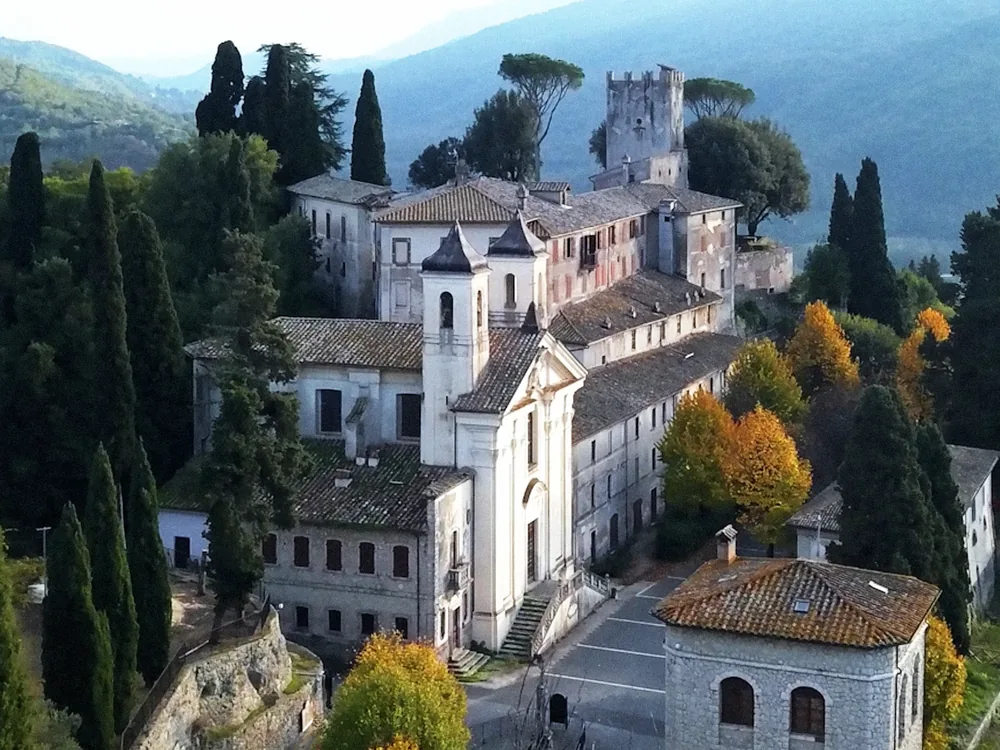
Combine with: Hadrian's Villa (Villa Adriana), 5 km southwest of central Tivoli — the 2nd-century emperor's vast palace complex, one of the largest residences ever built in ancient Rome and independently UNESCO-listed; the two sites are near-universally combined into a single Tivoli day trip. Castello del Gallo in the nearby Tivoli hills offers a smaller, less-visited counterpoint for those extending their time in the area.
Frequently Asked Questions
The entire hydraulic system runs on gravity alone. Water is diverted from the Aniene River through a tunnel built specifically for the garden in the 1560s, and the natural drop in elevation down the hillside terraces provides enough pressure to power every fountain, cascade, and water feature — including the Organ Fountain's genuine music — without any mechanical pump. It is one of the most sophisticated surviving examples of Renaissance hydraulic engineering, and much of the original 16th-century plumbing is still in use today.
Location
Piazza Trento, 5, 00019 Tivoli RM, Italy
Nearby Castles
Tours & Tickets
Powered by GetYourGuide
From
€65/ person