Castle Verhildersum
Museum Borg Verhildersum
Netherlands · Leens, Groningen Province · Near Groningen
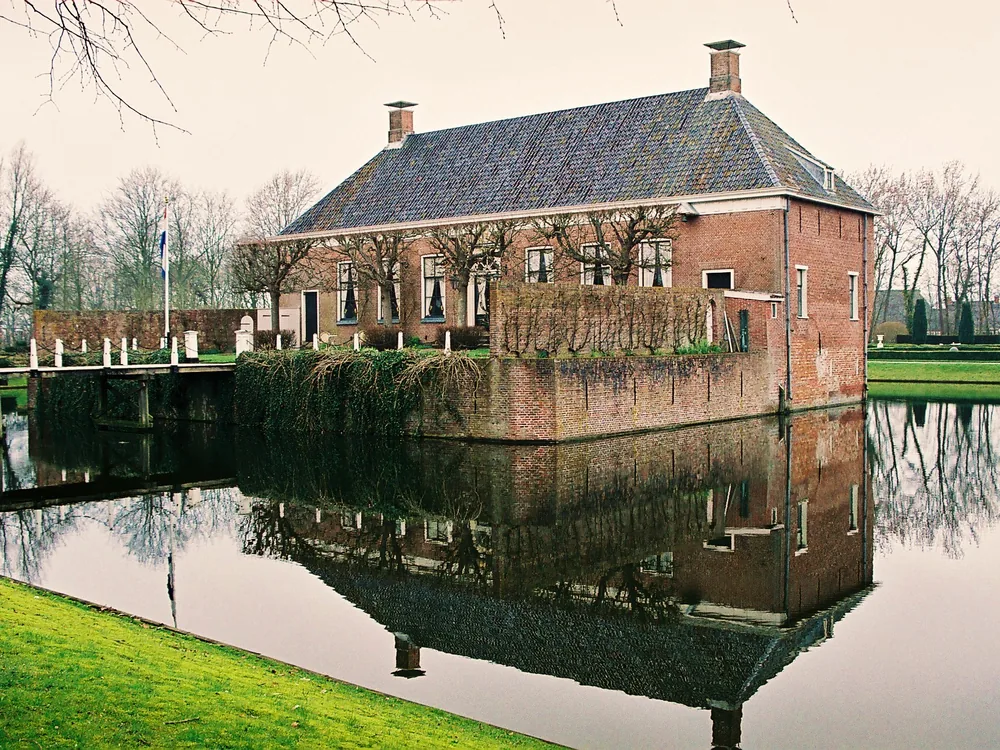
Built 1830 · Groninger Borg — the regional estate-house type unique to the clay soil lowlands of Groningen Province: a large brick manor house surrounded by a water-filled moat, with farm buildings, workers' cottages, and outbuildings arranged in an enclosed ensemble; the Verhildersum main house dates from the early 19th century (substantial reconstruction on an older estate site); the complex preserves the full working estate structure from the grand rooms of the owners to the farm labourers' quarters, presented as an integrated social history museum
This page is part of an independent travel guide and is not affiliated with, endorsed by, or operated by Castle Verhildersum.
© Castles & Palaces
Quick Facts
- Hours
- Tue–Sun 11:00–17:00. Closed Mon
- Entry via GetYourGuide
- €10
- Duration
- 1.5–2.5 hours (main house, workers' quarters, garden, and outbuildings)
- Best time
- May to September
- Nearest city
- Groningen
Featured Tour
Leens: Museum Borg Verhildersum Estate Admission
Cancellation available · Instant confirmation
Highlights
- ✦Groninger Borg — the regional estate-house type unique to this province: a large brick manor on a moated site, surrounded by farm buildings and workers' cottages, presenting the full social hierarchy of a 19th-century agricultural estate in a single ensemble
- ✦Multi-perspective social history — the museum presents the estate from three distinct viewpoints simultaneously: the noble family's grand reception rooms and personal quarters; the farm manager's middle-class household; and the labourers' spartan shared quarters — a deliberately layered approach to social history that is unusual in Dutch heritage
- ✦Part of the Six Groninger Wadden Museums network — Verhildersum is one of a coalition of six historic estate museums in the Groningen Wadden coastal area, each presenting a different aspect of the distinctive Gronings estate culture; a combined visit across several borgen gives a comprehensive picture of the regional type
- ✦Moated estate setting — the water-filled moat encircling the main house and outbuildings is a characteristic feature of the Groninger Borg type, reflecting both the defensive instincts of the low-lying peat and clay landscape and the water management traditions of a province that has lived below or near sea level for centuries
- ✦Groningen clay landscape context — the flat, intensely cultivated clay polder landscape surrounding the estate is part of the historical experience; Leens sits in the Hogeland (High Land) region, the elevated clay ridge between the Groningen city and the Wadden Sea coast, a landscape of enormous agricultural fields, isolated farmsteads, and the distinctive wierde (artificial terp mounds) on which historic settlements were built
Skip the queue with a guided tour
Skip-the-line tickets & expert guides
Museum Borg Verhildersum in Leens, Groningen Province, is a moated estate complex that presents one of the most distinctive and least-known forms of Dutch heritage: the Groninger Borg. The 'borg' is a type of fortified manor house unique to the clay soil lowlands of Groningen — a large brick house surrounded by a water-filled moat, with farm buildings, workers' cottages, and outbuildings arranged in a closed ensemble — that developed from the late medieval period as the dominant architectural expression of noble and patrician status in the province. Dozens were built; fewer than a dozen survive in anything approaching their original form. Verhildersum is one of the most complete and one of the few to operate as a museum with a deliberate curatorial approach.
The estate at Leens has origins older than the current house — a fortified position on the Hogeland, the elevated clay ridge between Groningen city and the Wadden Sea coast, that served the families who controlled this productive agricultural land. The current main house dates primarily from the early 19th century, a substantial rebuilding on the older estate footprint that gives the complex its present character: solidly Georgian-provincial in its brick proportions, with large sash windows and a formal garden layout that reflects Enlightenment taste arriving late to the Groningen countryside. Around the main house the full ensemble survives: the coach house, the farm manager's house, the workers' quarters, the barns, and the moat that separates the formal world of the estate from the flat clay fields beyond.
The museum's distinctive approach is its insistence on showing the estate from three simultaneously occupied social positions. The grand rooms of the main house — the reception rooms, the dining room, the private family quarters — present the perspective of the noble family who owned the estate and defined its formal social identity. The farm manager's house (the rentmeesterwoning) presents the comfortable middle-class household of the man who administered the land, mediated between the family and the workers, and held a position of authority without belonging to either the noble or the labouring class. The workers' quarters present the spartan, communal living conditions of the farm labourers who actually worked the land: shared sleeping arrangements, minimal furniture, tools stored alongside personal possessions. Moving between these three domestic registers within a single estate visit produces a kind of social history that is unusually immediate — the physical proximity of the three households, and the architectural gradations that expressed their different statuses, is clearer when experienced in person than it is in any exhibition text.
This social layering is not accidental — it is the explicit curatorial premise of Verhildersum. The museum was developed with the intent of making the hierarchical structure of a 19th-century Groningen estate visible and tangible in a way that a conventional house-museum focused on the family's possessions alone would not achieve. The result is a visit that accommodates both those interested in decorative arts and period rooms (the main house delivers this) and those more interested in social and agricultural history (the workers' quarters and farm buildings deliver this).
Verhildersum is part of the Zes Groninger Waddenmusea — the Six Groninger Wadden Museums — a network of six historic estate museums in the coastal clay area of Groningen Province, each presenting a different borgen type and historical angle on the distinctive Gronings estate culture. The network idea reflects the genuine plurality of the borg type: no single example captures all its variations, and the six together form a comprehensive picture of how this regional form of noble and patrician self-presentation played out across different social levels and time periods. Other borgen in the network include Verhildersum's neighbours at Menkemaborg in Uithuizen and Coenderborg in Bedum.
The landscape context of Verhildersum is itself part of the visit. The Hogeland — the elevated clay ridge on which Leens sits — is a landscape unlike anything in the Netherlands south of the Rhine: enormous open fields of reclaimed clay peat, with scattered farmsteads, church towers visible across flat distances, and the distinctive wierden (artificially elevated mounds, pre-dating the medieval dike system, on which early settlements were built to stay above flood level). The Wadden Sea coast is visible on a clear day to the north, and the entire coastal strip is part of the UNESCO-inscribed Wadden Sea World Heritage area, one of the world's most important migratory bird habitats. Verhildersum combines cultural heritage with a landscape of considerable ecological and visual interest that rewards the effort required to reach it from Groningen city.
History
Historic estate site on the Hogeland clay ridge, Groningen Province, with origins in the medieval borg tradition. Current main house substantially rebuilt in the early 19th century. Estate operated as an agricultural holding through the 19th and early 20th centuries. Conservation and museumification in the later 20th century. Verhildersum established as a museum presenting the estate's full social hierarchy. Part of the Six Groninger Wadden Museums (Zes Groninger Waddenmusea) network.
How to Visit
Getting there: Leens is approximately 35 km north of Groningen city. By car: take the N361 north toward Winsum then Leens — approximately 35 minutes. By bus: Bus 63 from Groningen runs to Leens with reduced frequency; check arriva.nl for current schedules. A car is strongly recommended.
Tickets: Entry approximately €10 at the gate, covering the main house, farm manager's house, workers' quarters, outbuildings, garden, and moat. The GetYourGuide estate admission is the most convenient way to confirm availability, especially outside peak season.
Practical tips: The park is open year-round and free at all times — a worthwhile stop even if you arrive outside museum hours (Tue–Sun, generally April–October). Confirm winter and shoulder-season opening at borgverhildersum.nl before making the trip.
Combine with: Menkemaborg in Uithuizen (20 minutes northeast) is the most natural second borg for a two-estate Hogeland day. Groningen city (35 minutes south) rounds out the visit with the Groninger Museum and the Martinitoren.
Frequently Asked Questions
A borg is a fortified manor house type unique to Groningen Province — moated, enclosed, with farm outbuildings in a single ensemble — that served as the seat of the local nobility and patrician families. Unlike the tower-based medieval castles of the Rhine, or the water castles of Holland, the borg is a distinctively agricultural, estate-based building type rooted in the clay soil lowlands of Groningen. Fewer than a dozen survive in their original form; Verhildersum is one of the most complete.
Location
Wierde 40, 9965 TE Leens, Groningen, Netherlands
Nearby Castles
Tours & Tickets
Powered by GetYourGuide
From
€10/ person