
Rapperswil Castle
Schloss Rapperswil
Switzerland · St. Gallen canton, Lake Zurich (Obersee) · Near Zurich
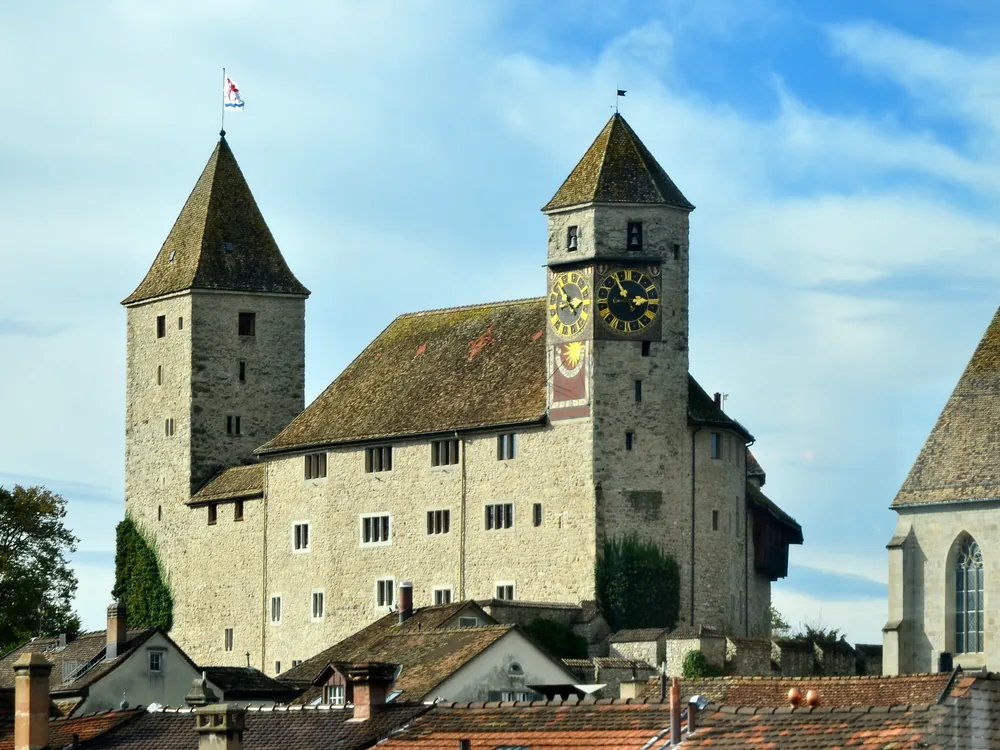
Built 1220 · Medieval hilltop castle on a promontory into Lake Zurich (Obersee), built around 1220 by the Counts of Rapperswil; three-tower design on a rocky outcrop controlling the crossing point of the upper Lake Zurich narrows; passed through Habsburg and Toggenburg hands across the 13th and 14th centuries; besieged and partly destroyed during the Old Zürich War (Alter Zürichkrieg) in the 1440s, then rebuilt; the castle thereafter served various administrative and residential functions for the Swiss Confederation; since 1930 the castle has housed the Polish Museum Rapperswil (Muzeum Polskie w Rapperswilu) — a museum dedicated to Polish history, culture, and the Polish diaspora in exile, reflecting the long-standing Polish exile community in Rapperswil dating from 19th-century political exiles; the town of Rapperswil is known as the City of Roses for its extensive rose gardens; the castle's promontory position on the upper Lake Zurich narrows, with the lake on three sides and the town below, gives it a distinctive visual quality among Swiss lake castles
This page is part of an independent travel guide and is not affiliated with, endorsed by, or operated by Rapperswil Castle.
© Castles & Palaces
Quick Facts
- Hours
- Tue–Sun 10:00–17:00. Closed Mon
- Day trip from
- €111.46
- Duration
- 1–1.5 hours (castle + museum + rose garden)
- Best time
- May to October
- Nearest city
- Zurich
Featured Tour
From Zurich: Rapperswil, Einsiedeln, Lindt Home of Chocolate
Cancellation available · Instant confirmation
Highlights
- ✦The Polish Museum Rapperswil is one of the most historically unexpected features of any Swiss castle: established in 1870 by Count Władysław Plater, a Polish political exile, and formally institutionalised in 1930 when the castle was designated as the museum's permanent home, it houses archives and collections documenting Polish history, literature, art, and the experience of successive waves of Polish political exile; the museum's existence in a Swiss lake castle reflects Rapperswil's position as a refuge for Polish émigré communities throughout the 19th and 20th centuries — partitioned Poland sent its political refugees to Western Europe, and a substantial community of exiled Polish intellectuals, artists, and independence activists settled around Rapperswil and Zurich from the failed uprisings of 1830 and 1863 onward; the Solidarity-era Polish emigration of the 1980s added a further layer to this history
- ✦The Rapperswil wooden bridge across the Lake Zurich narrows at this point — reconstructed in 1878 and one of the longest wooden bridges in Europe at approximately 841 metres — was first built in the medieval period as the primary land crossing of the upper Lake Zurich; controlling this crossing was the original strategic purpose of the castle on the promontory above; the bridge (now pedestrian-only) connects Rapperswil directly to the opposite shore and is one of the most photogenic and most walked routes in the canton of St. Gallen; crossing it on foot gives a direct spatial understanding of why the castle was built here
- ✦The rose gardens of Rapperswil — which earn the town its designation as the Rose City (Rosenstadt) — are planted on terraces below and around the castle, containing approximately 15,000 rose plants in 600 varieties; the combination of the medieval castle above, the rose terraces descending to the lakefront, and the view across the Lake Zurich narrows creates a specific summer landscape quality that Swiss tourism has been featuring since the 19th century; roses are at their peak in June and July; the International Society of Friends of the Rose has designated Rapperswil as one of its world centres
- ✦The Old Zürich War (Alter Zürichkrieg) of 1436–1450 was one of the most destructive internal Swiss conflicts of the 15th century, fought primarily between the City of Zurich (allied with Austria under Habsburg patronage) and the Swiss Confederation (allied with France); Rapperswil, as a Habsburg ally, was besieged by Confederation forces in the 1440s and partly destroyed; the rebuilding after the siege produced the castle's current form; the war ended with Zurich's submission to the Confederation and marked the consolidation of Swiss federal identity that would characterise the Confederation in the following centuries
- ✦The GetYourGuide day trip linked on this page is a shared tour from Zurich covering Rapperswil as a first stop, then Einsiedeln monastery (Benedictine pilgrimage site with one of Switzerland's most dramatic baroque interiors), then the Lindt Home of Chocolate near Kilchberg — it is not a Rapperswil-focused guided castle visit; the tour is branded primarily around the chocolate museum and the group is bused between stops; disclosed plainly because visitors booking it for castle content specifically should know the Rapperswil stop is sightseeing time rather than a dedicated castle tour; independent travellers from Zurich reach Rapperswil by S7 S-Bahn in 40 minutes — the simplest and most flexible approach
Tickets & tours
Book through GetYourGuide
Rapperswil Castle stands on a rocky promontory at the narrows of Lake Zurich (Obersee), above the town of Rapperswil-Jona in the canton of St. Gallen, approximately 40 kilometres east of Zurich. The castle's position on the promontory — with lake water visible on three sides and the medieval town grid below — gives it the visual quality of a lake island castle while remaining connected to the mainland. The wooden pedestrian bridge across the narrows at this point, originally a medieval crossing and reconstructed in its current 841-metre form in 1878, was the reason the castle was built here: controlling the land route across the upper Lake Zurich narrows was the strategic purpose of the medieval fortification.
The castle was built around 1220 by the Counts of Rapperswil, a comital family of regional importance in the upper Lake Zurich area. Ownership passed through Habsburg hands and then to the Toggenburg counts across the 13th and 14th centuries. During the Old Zürich War (1436–1450) — one of the most destructive internal Swiss conflicts of the 15th century, fought between Zurich in its Habsburg alliance and the Swiss Confederation with French support — Rapperswil was besieged by Confederation forces in the 1440s and partly destroyed. The rebuilding after the siege produced the castle's current three-tower form on its rocky outcrop. After Zurich's submission to the Confederation ended the war, Rapperswil entered a period of Swiss Confederation administration and lost its earlier political centrality.
The most historically unexpected feature of the castle is its current occupant. Since 1930, the Polish Museum Rapperswil (Muzeum Polskie w Rapperswilu) has occupied the castle building — a museum dedicated to Polish history, culture, and the Polish diaspora experience in exile. The museum's origins trace to 1870, when Count Władysław Plater, a Polish political exile, established an archive and collection in Rapperswil documenting Polish history and the experience of the successive Polish diaspora communities that had settled in Switzerland. Rapperswil's connection to Polish exile culture runs through the 19th and 20th centuries: Polish political exiles from the failed uprisings of 1830 and 1863 against Russian and Prussian partition settled in Western Europe, with a significant community around Rapperswil and Zurich; the Solidarity-era emigration of the 1980s added further layers. The collection documents this diaspora history alongside the broader history of Poland through art, archives, and material culture — an institution whose existence in a Swiss lake castle is genuinely unexpected and whose specific holdings are of serious interest to anyone engaged with Polish cultural history.
The town of Rapperswil is designated the Rose City (Rosenstadt) for its extensive rose gardens — approximately 15,000 plants in 600 varieties planted on terraces below and around the castle, descending toward the lake promenade. The combination of the castle on the hill, the rose terraces, and the Lake Zurich view across the narrows has been the defining image of Rapperswil in Swiss tourism since the 19th century, and the gardens are at their most spectacular in June and July.
The GetYourGuide product linked on this page is a 9-hour day trip from Zurich branded around three stops — Rapperswil, Einsiedeln monastery, and the Lindt Home of Chocolate museum — in which Rapperswil is the first sightseeing stop. This is not a Rapperswil-focused guided castle tour; the tour's emphasis and marketing is primarily around the chocolate museum. The €111 price covers all three stops in private group format. Disclosed plainly because visitors specifically seeking the castle and museum should know the GetYourGuide tour's character before booking. Independent visitors can reach Rapperswil from Zurich by S7 S-Bahn in 40 minutes — the most flexible option, allowing time in the rose garden, castle museum, and on the wooden bridge at your own pace.
History
The Counts of Rapperswil built the castle around 1220 to control the crossing at the Lake Zurich narrows — the point where the Obersee narrows enough for a causeway, making Rapperswil the natural toll and transit point on the lake route between the Alpine interior and Zurich. Ownership passed through Habsburg and Toggenburg hands in the 13th and 14th centuries. The Old Zürich War of 1436 to 1450 brought a siege by Swiss Confederation forces in the 1440s, partly destroying the castle; it was rebuilt in its current form after the conflict.
The castle's unexpected second identity came in 1870, when Count Władysław Plater established a Polish archive and collection at Rapperswil — Zurich canton was a safe haven for the Polish émigré community displaced by Russian, Prussian, and Austrian partition of Poland, and the castle became a repository of Polish cultural patrimony held outside occupied Polish territory. The Polish Museum Rapperswil was formally established in 1930 as the castle's permanent occupant, expanding its collections across successive waves of Polish émigré communities through the 20th century.
The castle now houses the Polish Museum, with rose gardens surrounding the promontory and an S-Bahn connection from Zurich in 40 minutes.
How to Visit
Getting there: From Zürich: 40 minutes by S7 S-Bahn (direct, frequent service) — by far the most practical option for a focused castle visit. By car: 35 minutes on the A3 lakeside motorway. The castle is a 10-minute uphill walk from Rapperswil station through the old town.
Tickets: Walk-up entry CHF 5 adult, CHF 3 child for the Polish Museum inside the castle (Tuesday–Sunday; closed Mondays). The castle exterior, rose gardens, and terrace are free to access year-round. The GetYourGuide tour is a 9-hour day trip from Zürich combining Rapperswil as its first stop with Einsiedeln Benedictine monastery and the Lindt Home of Chocolate museum — it is not a castle-dedicated guided experience; for a focused Rapperswil visit the S-Bahn is simpler and more flexible — book in advance if choosing the tour.
Practical tips: Walk the 841-metre wooden pedestrian bridge across the Lake Zurich narrows after visiting the castle — crossing it gives the clearest spatial sense of why the castle was built on this exact promontory (to control the crossing). The rose gardens peak in June and July with approximately 15,000 plants in 600 varieties. The Polish Museum inside is genuinely worth 30–45 minutes: the story of why a Polish exile archive ended up in a Swiss lake castle is one of European history's more surprising footnotes.
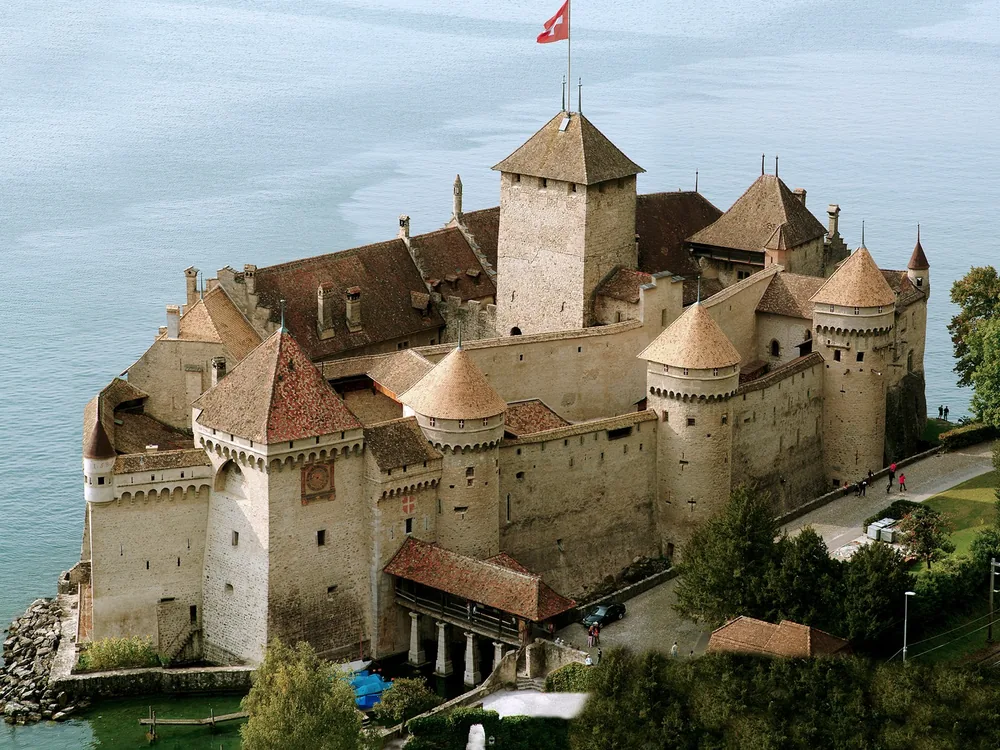
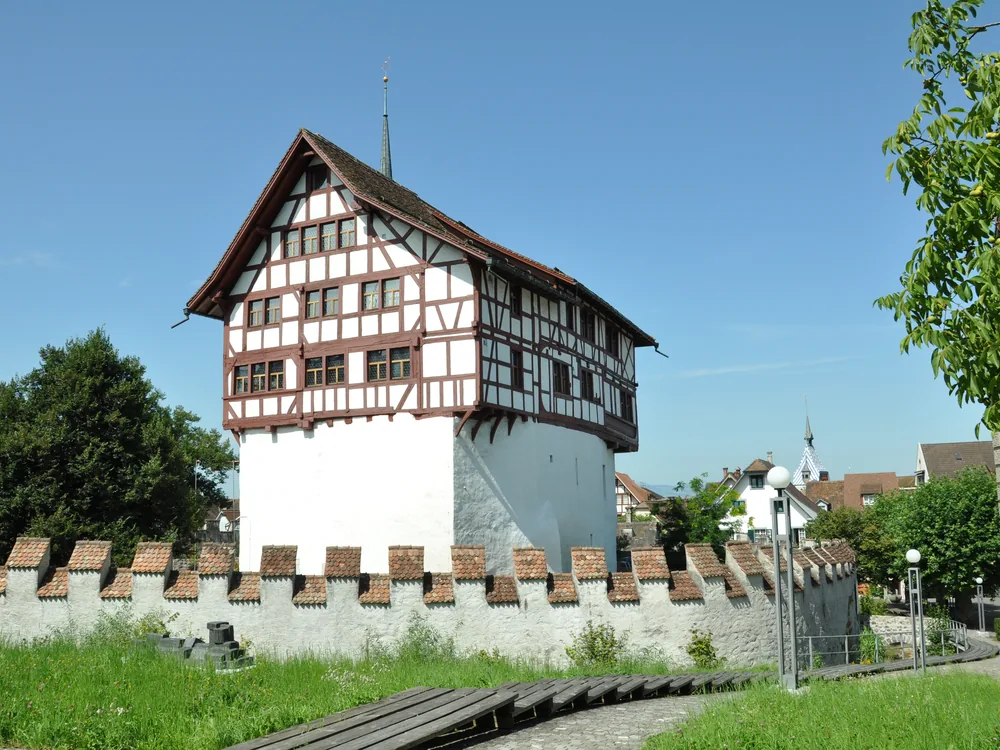
Combine with: Zug Castle (25 km west on Lake Zug, easily reached by train from Rapperswil via Zürich) and Château de Chillon (on Lake Geneva, Switzerland's most visited historic monument, for a broader Swiss castle circuit).
Frequently Asked Questions
Rapperswil has a long-standing connection to Polish exile communities. After the failed Polish uprisings of 1830 and 1863 against partition, significant numbers of Polish political exiles settled in Switzerland, with a community centred around Rapperswil and Zurich. Count Władysław Plater established an archive and collection in Rapperswil in 1870 documenting Polish history and the diaspora experience. In 1930, the Polish Museum was formally established in the castle building as its permanent home. The museum's collections cover Polish history, art, and literature with a particular focus on exile and diaspora culture.
Location
Lindquartier, 8640 Rapperswil-Jona, Switzerland
Nearby Castles
Tours & Tickets
Powered by GetYourGuide
From
€111.46/ person