
Germany · Updated May 2026
The Best Castles in Germany: From Fairy Tales to Gothic Ruins
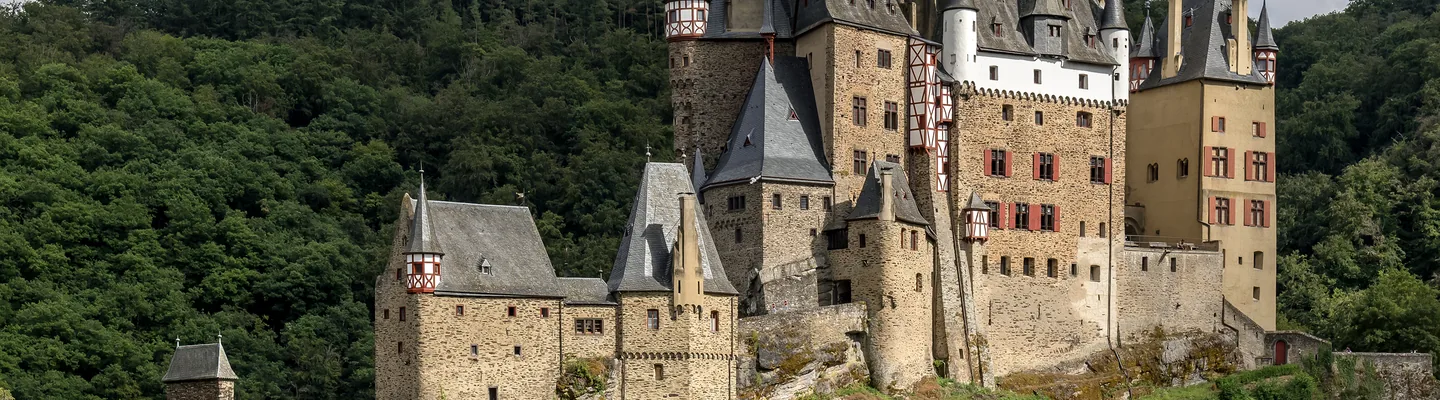
Germany has more castle sites than any country in Europe — over 20,000 documented fortifications, from the Rhine Gorge's medieval toll-towers to Bavaria's 19th-century romantic fantasies. The country's castle landscape spans every architectural style and historical period, from the Romanesque keeps of the Holy Roman Empire to the Neo-Gothic dream-palaces commissioned by eccentric kings in the age of railways and Romanticism.
Three castles stand above the rest in terms of visitor numbers, architectural quality, and the sheer force with which they occupy their landscapes.
1. Neuschwanstein Castle — The World's Most Famous Castle
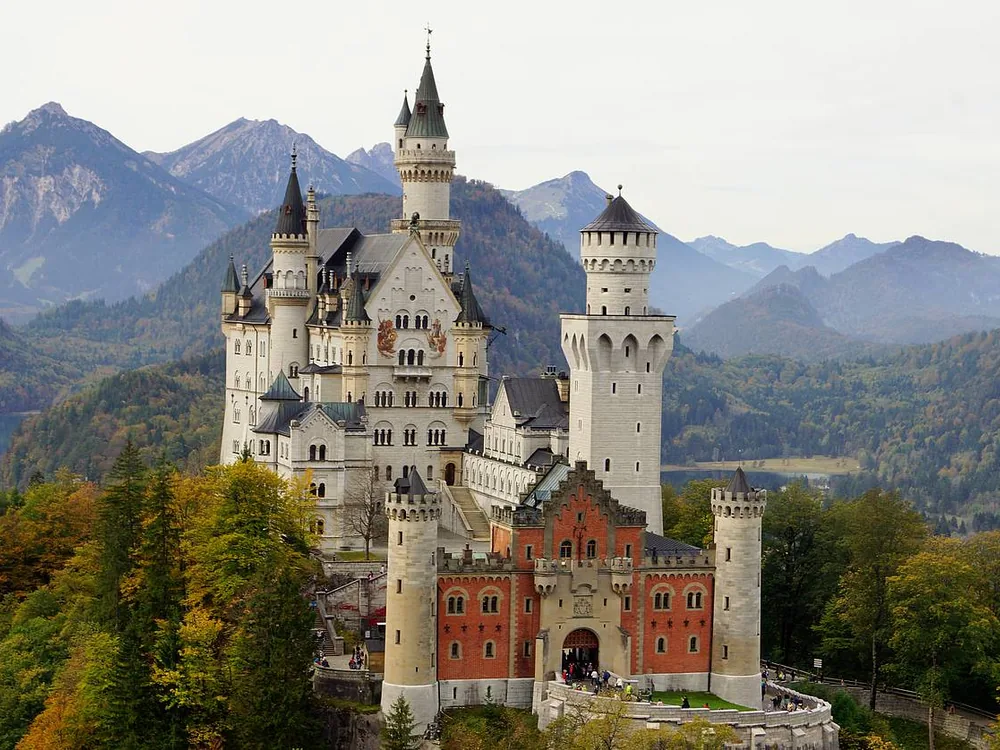
Neuschwanstein is the castle that other castles aspire to be. Built by the reclusive King Ludwig II of Bavaria between 1869 and 1886 as a personal fantasy of medieval chivalry and Wagnerian opera, it has become — through Disney's adoption of it as the model for Cinderella's Castle — the global archetype of what a castle should look like.
The reality is even more extraordinary than the photographs suggest. The exterior — white limestone towers erupting from a forested ridge above turquoise lakes, with the Bavarian Alps behind — is the single most spectacular castle setting in Europe. The interior, where every room is a theatrical set piece from Wagner's operas painted by court artists, is one of the strangest and most concentrated expressions of 19th-century royal obsession anywhere.
Ludwig lived here for only a handful of nights. He was declared insane and removed from power in 1886, and died under mysterious circumstances in Starnberger See six weeks later. The Bavarian government opened the castle to the public seven weeks after his death, ostensibly to pay his debts. It has not closed since.
Essential info: Book 30+ days ahead in summer — tickets genuinely sell out. Train from Munich to Füssen (2h), then bus to Hohenschwangau village. The Marienbrücke bridge gives the iconic view.
2. Heidelberg Castle — Europe's Most Romantic Ruin
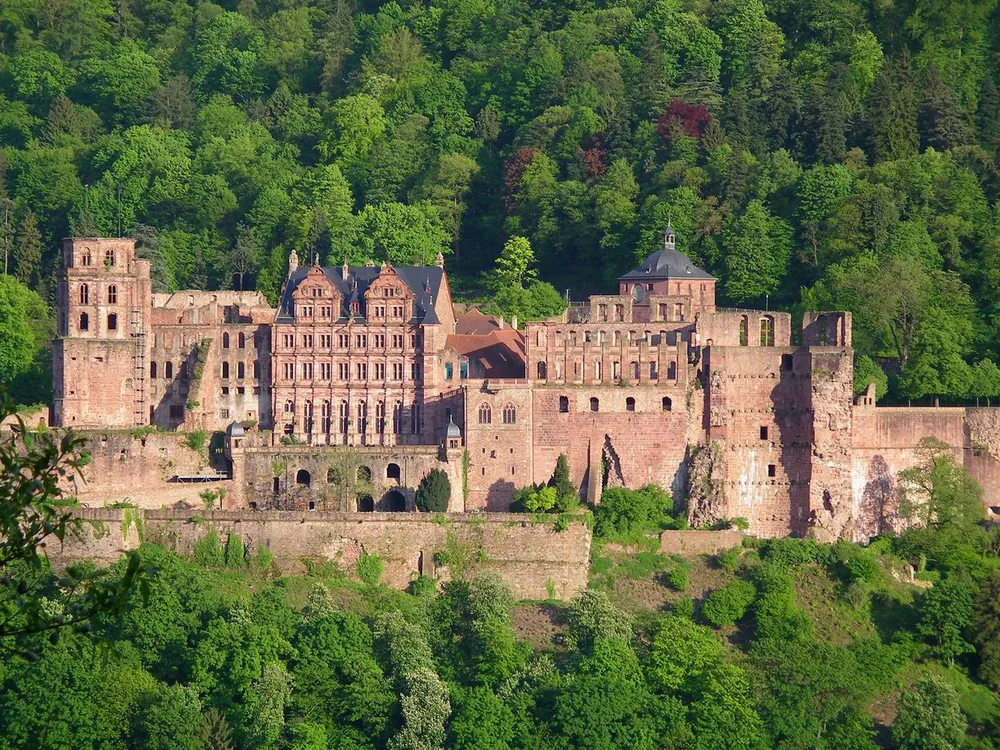
Heidelberg occupies a unique position in the European castle canon: it is simultaneously a ruin and a palazzo, a place of genuine historical grandeur and a masterwork of picturesque decay. The French armies of Louis XIV blew it up twice (1689 and 1693) and lightning destroyed the last standing wing in 1764. What they left behind inspired the entire Romantic movement's aesthetic of noble ruins.
Victor Hugo visited and declared it magnificent as it was. Mark Twain spent weeks in Heidelberg and wrote that the ruined castle was the most poetically beautiful thing he had ever seen. The 19th century debated whether to restore it or preserve the ruin — and ultimately chose, wisely, the ruin.
The intact sections are equally impressive. The Friedrichsbau is one of the finest Renaissance façades in northern Europe. The Great Hall hosted imperial councils. The Great Heidelberg Tun in the cellar — the world's largest wine barrel, with a dance floor on top — is one of Germany's most improbable curiosities.
Essential info: Train to Heidelberg Hauptbahnhof (50 min from Frankfurt), then funicular to the castle. The Heidelberg Illuminations (last Saturday of June, July, September) recreate the French bombardments with light and fireworks — spectacular.
3. Hohenzollern Castle — The Kaisers' Ancestral Seat
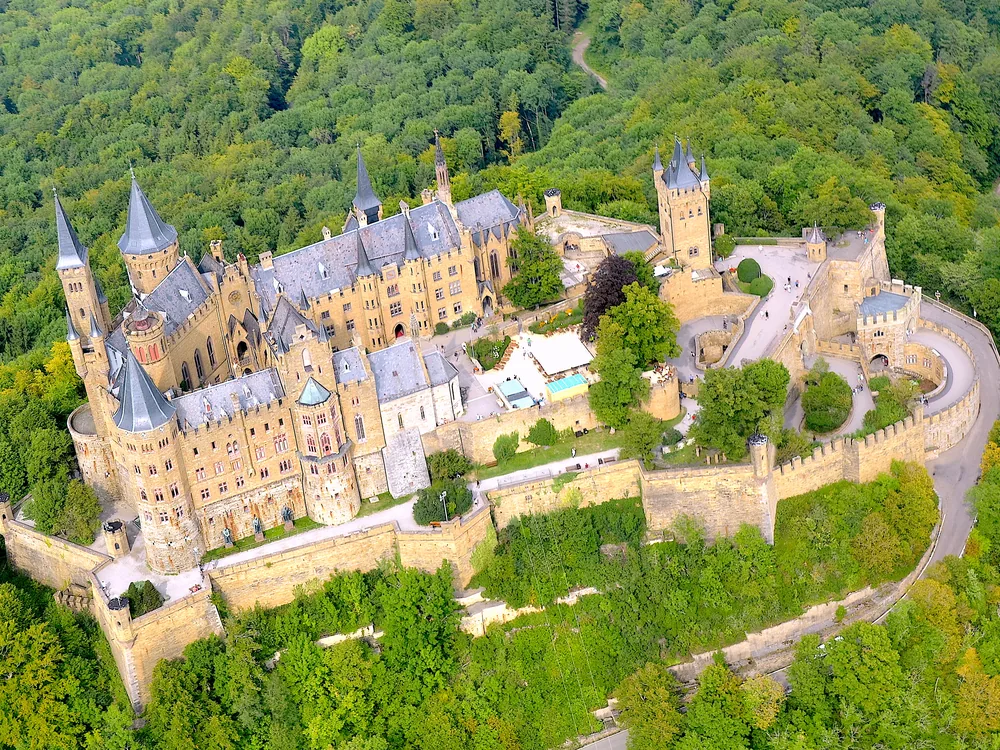
Hohenzollern is Germany's most dramatically sited castle: a Neo-Gothic fortress on a solitary 855-metre peak in the Swabian Alps, visible for 30 kilometres across the Swabian plateau. It is the ancestral home of the Hohenzollern dynasty, who rose from minor Swabian lords in the 11th century to become the Electors of Brandenburg, Kings of Prussia, and finally the German Kaisers whose reign ended with the abdication of Wilhelm II in 1918.
The castle today is largely a 19th-century reconstruction — the third on the site — built by Crown Prince Friedrich Wilhelm as an imperial ancestor-shrine. The Neo-Gothic architecture is theatrically excellent. The Treasury holds the Prussian Crown Jewels, including the Royal Crown of 1701 and personal objects of Frederick the Great. The views from the summit — on clear days extending to the Alps — are among the finest in southern Germany.
Essential info: Train to Hechingen (50 min from Stuttgart), then taxi to the castle (15 min). The castle in low cloud is spectacular — autumn and winter are underrated visiting seasons.
Planning a German Castle Trip
- ✦Southern Bavaria circuit: Munich is the perfect base for both Neuschwanstein (2h) and a day trip combining Munich beer gardens with the castle. The Bavaria Castle Route connects Neuschwanstein with Hohenschwangau, Linderhof and Herrenchiemsee.
- ✦Heidelberg as a base: Halfway between Frankfurt and Stuttgart, Heidelberg makes a natural overnight stop for anyone travelling the Rhine Valley or Baden-Württemberg. The old university town is one of Germany's most attractive.
- ✦Hohenzollern day trip: Stuttgart to Hohenzollern and back is comfortable in a day, or combine with Tübingen (Germany's most charming university town, 15km away).
- ✦Best season: Neuschwanstein is overwhelming in July–August — visit in May, September or October for reasonable crowds. Heidelberg works year-round; winter fog on the ruined towers is particularly atmospheric.
Castles in this Guide
germany · Bavaria
Neuschwanstein Castle
The fairy-tale castle that inspired Disney's Sleeping Beauty
germany · Baden-Württemberg
Heidelberg Castle
Europe's most romantic ruin — a Renaissance palace half-destroyed and twice as beautiful
germany · Swabia
Hohenzollern Castle
The ancestral seat of the Kaisers — a Neo-Gothic peak rising from the Swabian Alps