
Château de Pierry
Château de Pierry
France · Pierry, Marne, Grand Est (Champagne) · Near Épernay
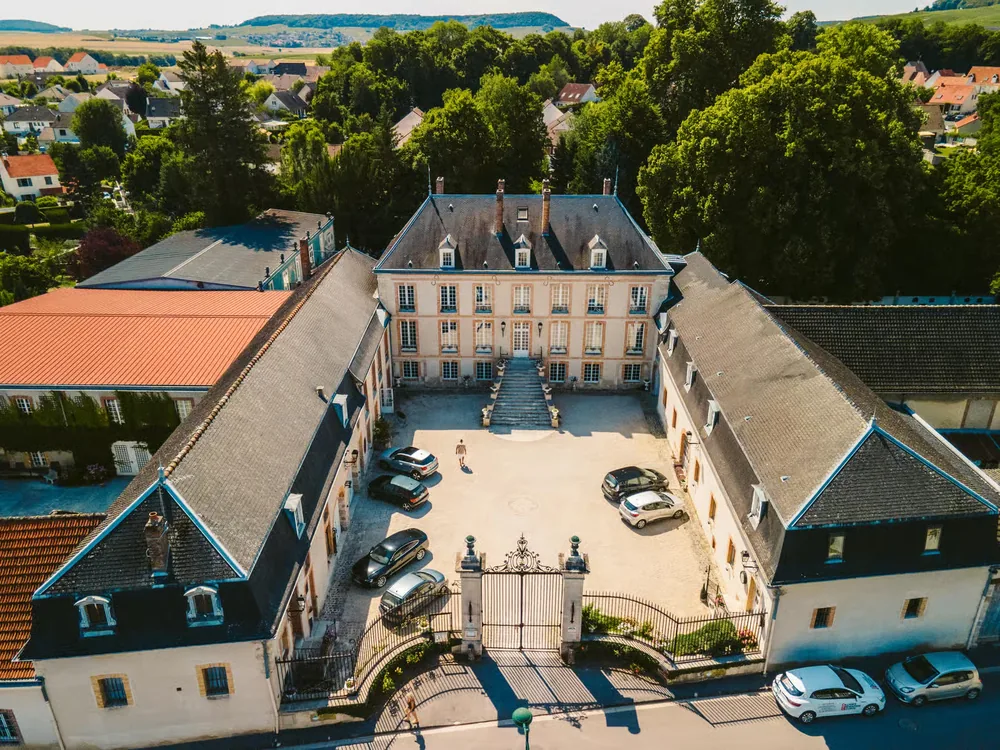
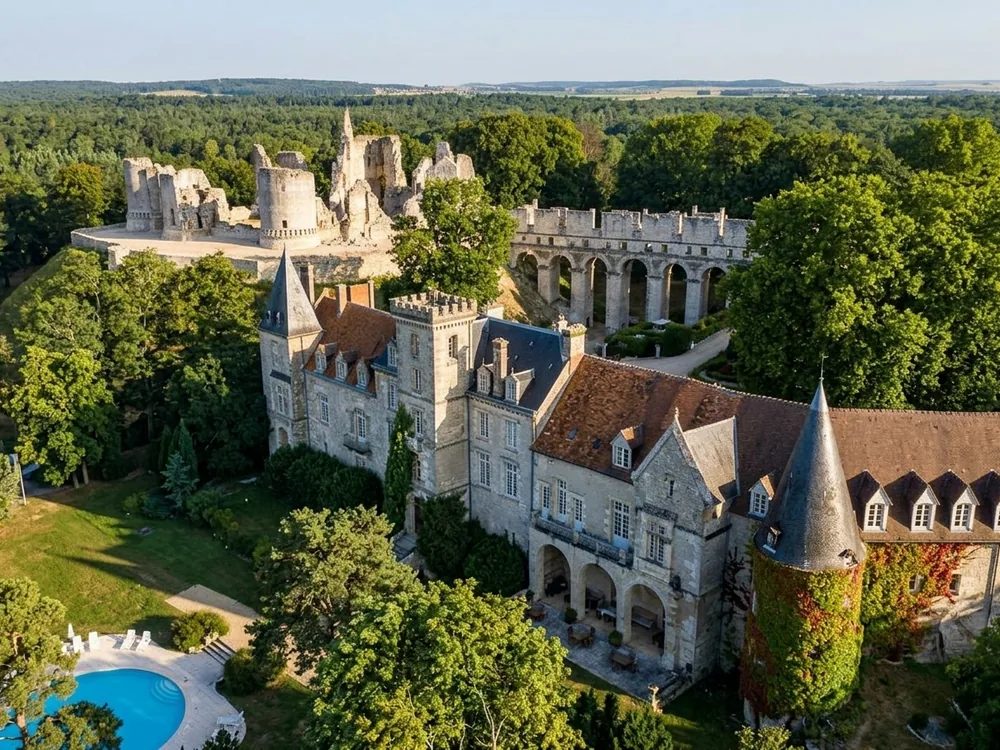
Built 1750 · 18th-century French provincial château — a symmetrical two-storey limestone manor of modest but elegant proportions, characteristic of the prosperous Champagne wine merchant class of the mid-18th century; notable features include an English-style landscape garden, a vaulted 18th-century wine cellar with a Champagne press still in position, and two significant interior galleries: the Gallery of the Kings of France (70 painted portraits) and the Champagne Dynasties gallery (40 portraits of the major families who created the Champagne wine trade)
This page is part of an independent travel guide and is not affiliated with, endorsed by, or operated by Château de Pierry.
© Castles & Palaces
Quick Facts
- Hours
- Daily 10:00–18:00
- Guided tour from
- €14
- Duration
- 1.5–2 hours (self-guided with audio guide/booklet: galleries, garden, wine cellar, press, tasting)
- Best time
- May to October
- Nearest city
- Épernay
Featured Tour
Château de Pierry: Self-Guided Tour with Wine Galleries and Cellar
Cancellation available · Instant confirmation
Highlights
- ✦Gallery of the Kings of France — 70 royal portraits spanning the French monarchy from Clovis to Louis XVI, assembled in the château's principal gallery; the collection is unusual for a provincial estate and reflects the 18th-century Champagne merchant class's aspirations to cultural prestige as well as commercial success
- ✦Champagne Dynasties gallery — 40 portraits of the founding families of the Champagne wine trade: Moët, Clicquot, Perrier-Jouët, Bollinger, and their contemporaries; a reminder that the great Champagne houses were personal enterprises created by specific individuals, many of them women (the Veuve Clicquot and Lily Bollinger portraits are here), in a narrow window of the 18th and 19th centuries
- ✦Wine cellar and 18th-century Champagne press — the vaulted cellar beneath the château preserves an 18th-century Champagne press still in its original position; the cellar visit explains the méthode champenoise at the scale of a small historic estate rather than a large commercial house
- ✦Tasting by the glass included — the admission price includes a glass of Champagne or Coteaux Champenois (the region's still wine); the estate produces its own wine from vineyards immediately surrounding the château
- ✦Location: 2km from Épernay — Pierry sits directly south of Épernay, the self-styled 'Champagne capital' whose Avenue de Champagne houses the headquarters of Moët & Chandon, Perrier-Jouët, and a dozen other major houses; the château is the most accessible historic estate in the immediate Épernay environs
Skip the queue with a guided tour
Skip-the-line tickets & expert guides
Château de Pierry stands 2 kilometres south of Épernay — the town whose Avenue de Champagne houses the headquarters of a dozen major Champagne houses and which calls itself the Champagne capital of the world — in the village of Pierry, on the Côte des Blancs ridge where Chardonnay grapes have been grown for the Champagne trade since the 18th century. It is a small, elegant 18th-century provincial château with an unusual combination of features: two significant portrait galleries, a working historic wine cellar with a press in its original position, an English landscape garden, and an admission price that includes a glass of estate wine.
The château was built around 1750 at the height of the prosperity of the Champagne wine trade. The méthode champenoise — the technique of secondary fermentation in the bottle that creates the wine's characteristic bubbles — was developed in the late 17th and early 18th centuries, attributed in tradition to Dom Pérignon at the Abbey of Hautvillers (just north of Épernay) though the reality involves multiple practitioners over several decades. The commercial explosion that followed, as the courts of Europe developed an appetite for sparkling Champagne as the defining luxury beverage of the aristocracy and later the bourgeoisie, created the fortunes that built the great Champagne houses and the smaller estates around Épernay. Château de Pierry is a surviving example of this prosperity at the smaller-estate level: not a merchant's townhouse on the Avenue de Champagne, but a rural manor built by someone who had benefited from the trade and wanted to express their status in stone and garden.
The château's two portrait galleries are its most distinctive features. The Gallery of the Kings of France contains 70 portraits spanning the French monarchy from Clovis — the Frankish king who converted to Christianity in 496 AD and established the basis for French royal ideology — to Louis XVI, who was guillotined in 1793. The collection is not a survey of great French court portraiture; it is a provincial catalogue of French royal iconography, assembled by someone who wanted a comprehensive visual record of the dynasty and found it useful for display. The Champagne Dynasties gallery, by contrast, is specific to this region: 40 portraits of the founding families of the Champagne wine trade, assembled in the order of their commercial prominence. Moët, Clicquot, Perrier-Jouët, Bollinger, Heidsieck, Mumm — the names on the gallery's portraits are familiar from supermarket shelves worldwide; the portraits themselves serve as a reminder that these were real people, many of them women, who created specific commercial enterprises in specific historical circumstances.
The Veuve Clicquot portrait is worth pausing over. Barbe-Nicole Ponsardin married François Clicquot in 1798; he died in 1805, leaving her the widowed head of a struggling wine house at age 27. Over the next four decades she transformed it into one of the most successful Champagne businesses in Europe, developing the technique of remuage (riddling) that clarified the wine without removing its bubbles, expanding into the Russian market (she smuggled wine through the Napoleonic blockade), and establishing the yellow label that still defines the house. She is one of the most consequential businesswomen of the 19th century and her portrait here — alongside those of the male heads of the other major houses — places her correctly in the commercial history of the Champagne region.
The wine cellar beneath the château is the most atmospheric element of the visit. Vaulted in the 18th-century manner, it preserves a full Champagne press in its original position — the large wooden basket-press used to extract juice from the grapes before fermentation. The press is no longer operational (modern houses use pneumatic presses), but its presence in the original cellar setting makes the mechanics of early Champagne production legible in a way that the sanitised visitor centres of the large Épernay houses do not. The cellar visit explains the méthode champenoise at the scale of a small historic estate, where the entire process was once visible within a single building rather than distributed across industrial facilities.
The English landscape garden surrounding the château is a pleasant extension of the visit: a low-formality green space in the late-18th-century English style (the fashion for English gardens over French formal gardens spread rapidly through continental Europe in the 1750s–1780s), with the estate vineyards visible beyond. The admission price includes a glass of estate wine — either Champagne or the still Coteaux Champenois — which is served either during the cellar visit or at the end, depending on the visit format on the day.
For visitors making a day in the Épernay area, Château de Pierry provides a human-scale, historically textured alternative to the industrial-scale cellar tours of the major Champagne houses. The Avenue de Champagne's great houses (Moët & Chandon, Pol Roger, Perrier-Jouët) offer impressive infrastructure and well-engineered visitor experiences; Château de Pierry offers a more intimate and more historically specific encounter with the estate culture from which those industrial houses grew.
History
Champagne wine trade established in 18th century around Épernay and Reims. Château de Pierry built c. 1750 at height of Champagne prosperity. Portrait gallery collection assembled by 18th–19th century owners. Champagne dynasties — Clicquot, Moët, Perrier-Jouët, Bollinger — build major houses in Épernay through 19th century. Château de Pierry preserves its estate structure through changes of ownership. Self-guided visit with audio guide and wine tasting format established.
How to Visit
Getting there: The château is 2 km south of Épernay town centre. Épernay is reachable by train from Reims (~25 min) and from Paris Est (~1.5 hours). From Épernay, a car or taxi is needed to reach Pierry — the estate is not on a bus route; the drive takes about 5 min via the D951 south.
Tickets: Walk-up admission is €14 for adults, €7 for children, and includes both portrait galleries, the English landscape garden, the historic wine cellar with its original 18th-century press, and a glass of estate Champagne or Coteaux Champenois. The GetYourGuide self-guided visit covers the same full visit and can be booked online. Confirm hours before visiting — the château is independently managed and winter opening (November–March) is limited.
Practical tips: Harvest season (late September to mid-October) is the most atmospheric time, with the estate vineyards in active use and the cellars receiving new wine. Pace the visit to allow time in the cellar — the 18th-century press in its original position is the most distinctive feature and the guide booklet provides the best context for what you're seeing.
Combine with: Pierry is 2 km from Épernay's Avenue de Champagne, where the great Champagne houses — Moët & Chandon, Perrier-Jouët, Pol Roger — offer cellar tours that pair naturally with Château de Pierry's historic estate visit. The two types of experience complement each other: Pierry for estate history and portrait culture, the Avenue houses for industrial-scale méthode champenoise production.
Frequently Asked Questions
The 'Champagne Hillsides, Houses and Cellars' UNESCO inscription (2015) covers the historic Champagne producing landscape including the main Reims and Épernay wine houses and the protected vineyard hillsides. Château de Pierry is located within the Champagne wine region but is not specifically named in the inscription. The Sintra UNESCO inscription listed above refers to a different site (Monserrate Palace, Portugal) and does not apply here.
Location
5 Rue du Château, 51530 Pierry, Marne, France
Nearby Castles
Tours & Tickets
Powered by GetYourGuide
From
€14/ person